What Are the Dimensions of a Full-Size Quilt?
If you’ve ever tried to buy bedding, you know how confusing quilt sizes can be. Maybe you’ve brought home a quilt that barely covers your mattress, or perhaps it hung so low it nearly brushed the floor. You’re not alone—many people struggle to find the right fit for their beds, especially when it comes to full-size quilts.
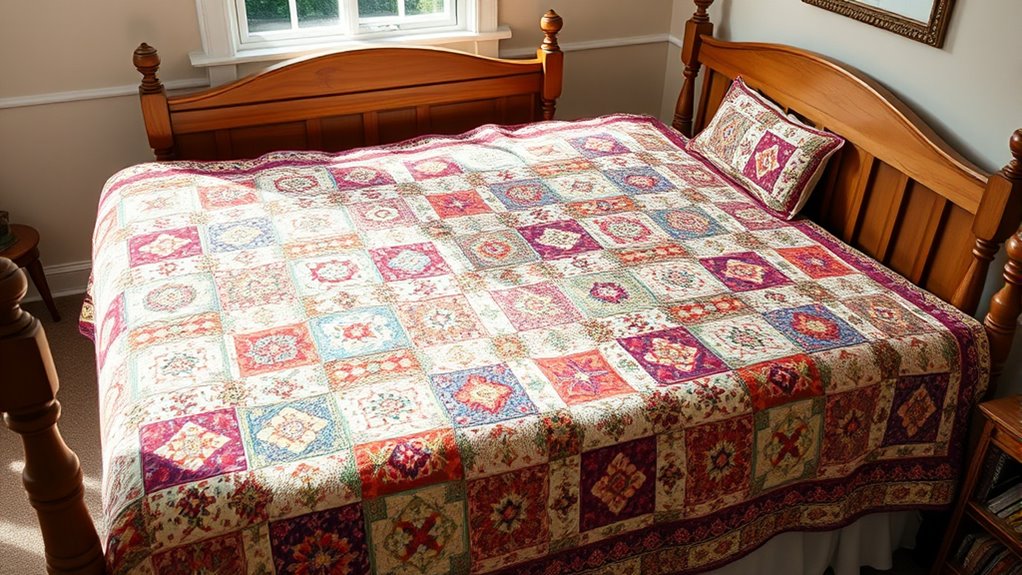
That’s why understanding the dimensions of a full-size quilt is so important. A full-size quilt typically measures 80 inches by 90 inches, making it perfect for standard full beds. This size provides ample coverage for both the mattress and pillows.
Keep in mind that overhang preferences and the thickness of batting can affect your quilt’s dimensions. Measuring your bed accurately helps guarantee a perfect fit.
If you’re curious about more factors that can influence quilt sizing, you might find additional insights helpful.
Key Takeaways
- A typical full-size quilt measures 80 inches by 90 inches, fitting standard full beds.
- When deciding on quilt size, think about how much overhang you prefer. This helps ensure the quilt gives you the coverage you want.
- It’s also wise to add a few extra inches. This can account for any shrinkage after washing and the thickness of the batting you choose.
- Keep in mind, quilt dimensions can vary depending on the design and the manufacturer’s specifications.
- Taking accurate measurements of your bed is key. That way, you can achieve the perfect fit for your quilt.
Understanding Full-Size Quilt Dimensions
In relation to full-size quilt dimensions, you’ll typically find that they measure around 80 inches by 90 inches. This size is ideal for a queen bed, offering enough coverage while allowing for a bit of drape.
When considering quilt sizing, it’s essential to think about the mattress dimensions and how much overhang you prefer.
Your fabric choices also play a significant role in the overall aesthetic and functionality of your quilt. Selecting fabrics that complement each other not only improves the design but also affects the quilt’s weight and warmth.
Fabric selection is crucial; it enhances both your quilt’s design and its warmth, ensuring a beautiful and functional piece.
For instance, cotton is a popular choice because it’s breathable and easy to work with.
As you plan your quilt, keep these dimensions and fabric considerations in mind. They’ll guarantee your finished project meets both your practical needs and design vision, creating a cozy addition to your home.
Standard Measurements for Full-Size Quilts
When selecting a full-size quilt, you’ll typically encounter standard measurements of around 80 inches by 90 inches.
This quilt size is designed to fit a standard full bed, providing ample coverage for both the mattress and the pillows.
It’s essential to take these measurements into account when shopping or planning your quilt project.
Your fabric choices can greatly affect the overall look and feel of your quilt.
Whether you prefer cotton for its softness or a blend for durability, the fabric you choose should complement the quilt size.
Keep in mind, if you’re making a quilt, you might want to add extra inches for shrinkage or quilting.
How to Measure Your Bed for a Quilt
Sure! Here’s your modified text with a more conversational flow:
To get the perfect quilt for your bed, it helps to start by understanding the different bed sizes out there. Once you know what size bed you have, it’s really important to measure it accurately—this way, you’ll end up with a quilt that fits just right. There are actually some handy techniques you can use to make sure you’re measuring everything correctly. So, let’s break down the basics together and walk through the best ways to measure your bed, making sure your new quilt will be a perfect match.
Bed Size Basics
Measuring your bed for a quilt is essential to confirm a perfect fit. Start by determining your bed dimensions, which vary based on the type of bed you have.
Standard sizes include twin, full, queen, and king, so knowing your specific measurements helps you choose the right quilt types.
For instance, a queen bed typically measures 60 inches wide by 80 inches long. A king bed measures 76 inches wide by 80 inches long.
Don’t forget to account for any additional layers, like mattress toppers, since these can affect how much overhang you want on your quilt.
Measuring Techniques Explained
Accurate measurements are essential for ensuring your quilt fits perfectly on your bed.
Start by gathering your measuring tools, like a tape measure and a notepad, so you’re ready to go.
Measure the bed’s width and length. This gives you a solid foundation for your quilt’s size.
Consider any design details you want, such as how much overhang you prefer at the sides and foot of the bed.
Don’t forget to factor in your fabric choices. Heavier fabrics might need a little extra allowance for a comfortable fit.
Think about the quilt patterns you’ll use. Pattern scaling can influence the final dimensions more than you might expect.
Finally, keep in mind that some fabrics may shrink after washing, so it’s smart to allow for that in your measurements.
Common Mistakes When Measuring for a Quilt
When you’re ready to measure for a quilt, it’s easy to make a few common mistakes that can throw off your project. One major error is not using the right measurement tools.
A tape measure is essential for accuracy. Relying on a yardstick or your own estimation can lead to inconsistencies.
Another issue arises during fabric selection. If you choose fabrics without considering their shrinkage after washing, you may end up with a quilt that’s smaller than intended.
Always pre-wash your fabrics and account for any potential shrinkage in your measurements.
Additionally, forgetting to measure the bed or intended space accurately can result in a quilt that doesn’t fit as planned.
Be sure to double-check your dimensions and don’t skip the math!
How Thickness and Overhang Affect Quilt Size
When you’re picking out a quilt, how thick it is really makes a difference in how it drapes over your bed. Thicker quilts tend to sit higher on the mattress, so they might not hang down as far on the sides as thinner ones do. On top of that, you’ll want to think about the overhang—that’s the part of the quilt that falls over the edges of your mattress. If you like your quilt to cover the sides or even touch the floor, overhang matters a lot. By keeping both thickness and overhang in mind, you’ll have a much easier time finding the perfect size quilt for your bed.
Impact of Thickness
While you might focus on the quilt’s dimensions, the thickness plays a significant role in how it fits your bed.
Quilt thickness can affect not just the look, but also the comfort and functionality. Here’s what you should consider:
- Insulation: Thicker quilts provide better warmth, making them ideal for colder climates.
- Drape: A thicker quilt may not hang as elegantly over the sides of your bed.
- Weight: Heavier quilts can feel cozier, but they might be cumbersome to handle.
- Fit: Make sure your quilt’s thickness complements your mattress height for a better fit.
- Care: Thicker quilts may require more effort during washing and drying.
Understanding quilt insulation and thickness helps you choose the perfect quilt for your needs.
Importance of Overhang
Understanding the importance of overhang is crucial for achieving the right look and functionality of your quilt. A proper overhang not only improves quilt aesthetics but also guarantees that your bedding adequately covers the mattress and any underlying materials.
Without enough overhang, your quilt may look incomplete or fail to provide the warmth and comfort you desire. Additionally, overhang benefits include protecting your mattress from dust and wear, which can extend its lifespan.
When selecting a quilt, consider both the dimensions and the desired overhang to create a balanced appearance. By focusing on these aspects, you’ll ensure your quilt serves its purpose beautifully while improving the overall decor of your bedroom.
Best Fabrics for Full-Size Quilts: What to Consider
Choosing the right fabric for your full-size quilt can make all the difference in both its look and durability. When selecting, consider various fabric types and how they complement your color choices.
Selecting the ideal fabric for your full-size quilt is crucial for achieving both aesthetic appeal and lasting durability.
Here are some factors to keep in mind:
- Cotton: A popular choice for its softness and breathability.
- Blends: Look for cotton-polyester blends for added durability and wrinkle resistance.
- Flannel: Great for cozy quilts, especially in colder climates.
- Batiks: These offer vibrant colors and unique patterns for a distinctive look.
- Pre-cuts: Save time with pre-cut fabrics, like charm packs or jelly rolls, for easy assembly.
Popular Designs for Full-Size Quilts and Their Measurements
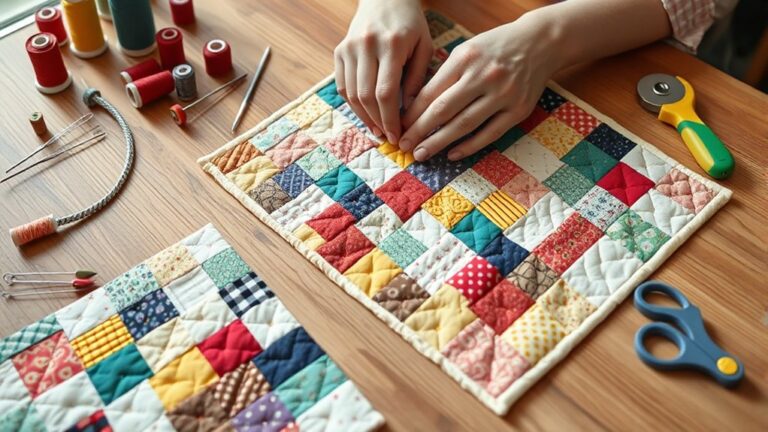
Regarding full-size quilts, the design you choose greatly impacts both aesthetics and functionality. Traditional patterns, like log cabins or flying geese, often evoke a sense of nostalgia. Modern aesthetics, on the other hand, adopt bold color combinations and clean lines.
When selecting your design, consider quilt layering techniques that improve texture and depth. These methods can make your quilt not only look but also feel more interesting.
Patchwork styles, with their eclectic fabric choices, allow you to express your personality. They’re especially great for creating seasonal themes, whether you want a cozy autumn palette or a bright summer vibe.
The colors you choose really set the mood. So, have fun experimenting with different combinations until you find something that speaks to you.
Don’t forget about quilting techniques. Hand quilting gives a charming, artisanal touch, while machine quilting offers efficiency and precision.
Ultimately, your choice of design will influence not just the quilt’s look but also how it fits into your space and lifestyle. So go ahead—explore the possibilities and create something that truly resonates with you.
Tips for Custom-Making a Full-Size Quilt
Creating a custom full-size quilt can be an exciting project
that blends creativity with practicality. To make the process
smoother, keep these tips in mind:
– Choose your fabric wisely:
Opt for durable, high-quality materials that complement your theme.
– Gather design inspirations:
Look at nature, art, or even your favorite colors to spark ideas.
– Plan your layout:
Sketch your design on paper or use quilt design software
to visualize it.
– Measure accurately:
Confirm your quilt dimensions are precise to avoid
fitting issues later.
– Experiment with techniques:
Don’t hesitate to try different quilting methods, like patchwork
or applique, for added flair.
Maintenance and Care for Full-Size Quilts
While your full-size quilt adds warmth and beauty to your space, proper maintenance is essential to keep it looking its best.
Regular quilt cleaning is key to preserving its colors and fabric integrity. You can usually machine wash your quilt on a gentle cycle, but always check the care label first.
Regular cleaning is essential for maintaining your quilt’s vibrant colors and fabric quality—always check the care label before washing.
If it’s delicate, consider hand washing or using a professional service.
For drying, avoid high heat. Air drying is often the safest method.
When it comes to quilt storage, make sure it’s in a cool, dry place. Use breathable cotton storage bags instead of plastic, which can trap moisture and lead to mold.
If you’re not using it for a while, consider folding it neatly, avoiding creases, or rolling it to maintain its shape.
With these simple steps, your quilt will remain a cherished part of your home for years to come.
What You Should Know About Quilt Size Variations?
Understanding quilt size variations is important for ensuring you choose the right fit for your bed or decor.
Quilt size trends can vary notably, impacting your selection.
Here are five key points to reflect on:
- Standard Sizes: Familiarize yourself with common dimensions like twin, full, queen, and king.
- Personal Preference: Decide how much overhang you want on your bed.
- Fabric Choices: Different fabrics may affect how a quilt drapes, influencing your visual outcome.
- Layering Options: Contemplate how your quilt will layer with other bedding items.
- Custom Sizes: If standard sizes don’t work, custom quilts are an option.
Frequently Asked Questions
What Is the History of Full-Size Quilts?
Full-size quilts have roots in various cultures, tracing back to ancient times when people used layers of fabric for warmth.
You’ll find that quilt origins often link to necessity, evolving into an art form over centuries.
As you investigate quilting traditions, you’ll notice they reflect community, storytelling, and craftsmanship.
Can I Use a Full-Size Quilt on Other Bed Sizes?
Yes, you can use a full-size quilt on other bed sizes. It often fits nicely on a queen bed, offering cozy coverage, though it might be a bit short on a king.
For twin beds, it can create a charming layered look. Just remember, quilt layering can improve aesthetics and comfort, but guarantee the bed compatibility meets your needs.
Adjusting your bedding can transform your space beautifully!
How Do I Choose a Quilt Pattern for a Full-Size Quilt?
To choose a quilt pattern for a full-size quilt, start with your personal style and the room’s decor.
Consider quilt design tips like color harmony and pattern contrast. For fabric selection, opt for high-quality cottons that complement each other.
Think about the quilt’s purpose. Is it meant to stand out as a statement piece, or will it be more functional and subtle?
Investigate different patterns, from traditional to modern, and don’t hesitate to experiment with blocks and layouts that inspire you.
What Tools Do I Need to Make a Full-Size Quilt?
Did you know that the average full-size quilt requires about 12-15 yards of fabric?
To tackle quilt assembly, you’ll need essential tools like a rotary cutter, cutting mat, and acrylic rulers for precise measurements.
Don’t forget pins or clips for securing your fabric during assembly.
For fabric selection, choose coordinating colors and patterns that speak to you.
With these tools, you’re all set to create a beautiful full-size quilt!
Are There Eco-Friendly Fabrics for Full-Size Quilts?
Yes, there are plenty of eco-friendly fabrics for full-size quilts! Look for sustainable materials like organic cotton, bamboo, or linen.
These fabrics not only reduce environmental impact but also feel great. In terms of fabric care, choose gentle detergents and cold water to preserve their quality.
Conclusion
As you wrap yourself in the warmth of your full-size quilt, imagine the cozy hug of its perfectly measured fabric draping over your bed.
You’ve mastered the art of sizing, ensuring a snug fit that improves your space. Each detail matters, making your room feel more inviting and personal.
Remember, every stitch tells a story, blending comfort with creativity. So, whether you’re snuggling up with a book or hosting friends, your quilt isn’t just a cover.
It’s a canvas of warmth and memories, inviting you to dream—and knowing the dimensions of a full-size quilt helps you create that perfect, comforting experience every time.