What Are Quilts?
If you’ve ever found yourself tossing and turning under heavy, uninspired blankets, or wishing your bedding could tell a story while keeping you cozy, you’re not alone. Many people struggle to find the right balance between comfort and style in their homes.
The good news is, quilts offer a solution that blends warmth, beauty, and meaning—making them a favorite for so many.
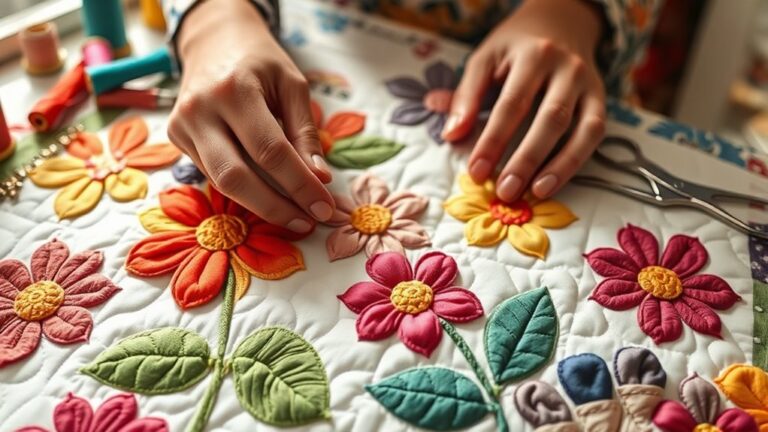
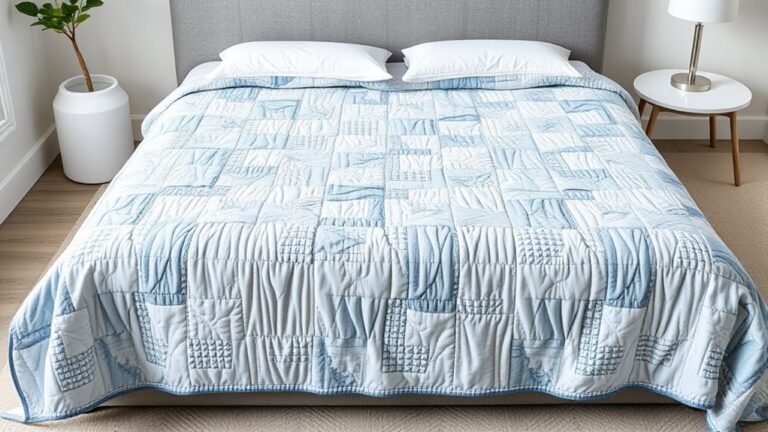
Quilts are layered textiles that blend function and art, serving as cozy bedding or decorative pieces. They consist of a top layer, batting for insulation, and a backing.
Quilting stitches these layers together, creating both tradition and creativity. With styles ranging from patchwork to modern design, each quilt tells a story, reflecting culture and heritage.
Whether you’re looking for warmth or artistic expression, there’s so much more to investigate about quilts and their unique significance.
Key Takeaways
- Quilts are layered textiles made of a top layer, batting, and backing. They serve both functional and decorative purposes.
- Throughout history, quilts have held significant meaning. They have evolved from simply providing warmth to becoming forms of artistic expression and storytelling in many cultures.
- There are many types of quilts, including traditional hand quilts, Amish quilts, Baltimore Album quilts, crazy quilts, and modern machine quilts.
- Essential quilting techniques involve both hand and machine stitching. The choice of fabric and batting also plays a big role in the quality and look of a finished quilt.
- Today, modern trends in quilting focus on sustainable materials and bold designs. Online communities are also making it easier for quilters to collaborate and develop their skills together.
What Exactly Is a Quilt?
A quilt is more than just a decorative blanket; it’s a layered textile made by stitching together three main components: the top layer, the batting, and the backing.
You might be surprised to learn that quilts have deep quilt origins, tracing back to ancient civilizations. They were initially practical items, used for warmth and protection.
Over time, however, quilts evolved into art forms, often reflecting cultural narratives and personal stories.
The quilt symbolism is rich and varied, representing community, comfort, and continuity. Each stitch can signify a connection to family and heritage, while the patterns often carry specific meanings tied to traditions.
Quilts embody rich symbolism, weaving together community, comfort, and heritage through every meaningful stitch and intricate pattern.
When you wrap yourself in a quilt, you’re not just experiencing warmth; you’re also enveloped in a tapestry of history and emotion.
Understanding these elements can deepen your appreciation for this beautiful craft and its significance in our lives.
The Historical Significance of Quilts
While many see quilts as mere household items, their historical significance runs much deeper. You might not realize that quilts have served as a canvas for storytelling, reflecting the cultural influence of the communities that crafted them.
Each stitch tells a tale, often rooted in the quilting heritage passed down through generations. From early American settlers to modern artisans, quilts have highlighted social issues, celebrations, and everyday life.
During the Civil War, for instance, women used quilting to raise funds and support troops, creating a sense of unity and purpose. Quilts also provided comfort during hard times, acting as a refuge against harsh realities.
As you delve into quilting’s history, you’ll uncover that these textile creations are not just functional. They embody the spirit, struggles, and triumphs of those who made them, enriching our understanding of cultural identity.
Different Types of Quilts You Should Know
When you’re looking into quilts, it’s helpful to get familiar with the different types out there. For instance, traditional hand quilts really highlight craftsmanship and a sense of history—they’re made with a lot of care and attention to detail. On the other hand, modern machine quilts bring efficiency and new techniques into the mix, which can be pretty exciting if you’re after something contemporary.
Knowing about these different options makes it a lot easier to pick the quilt that fits your style and needs best.
Traditional Hand Quilts
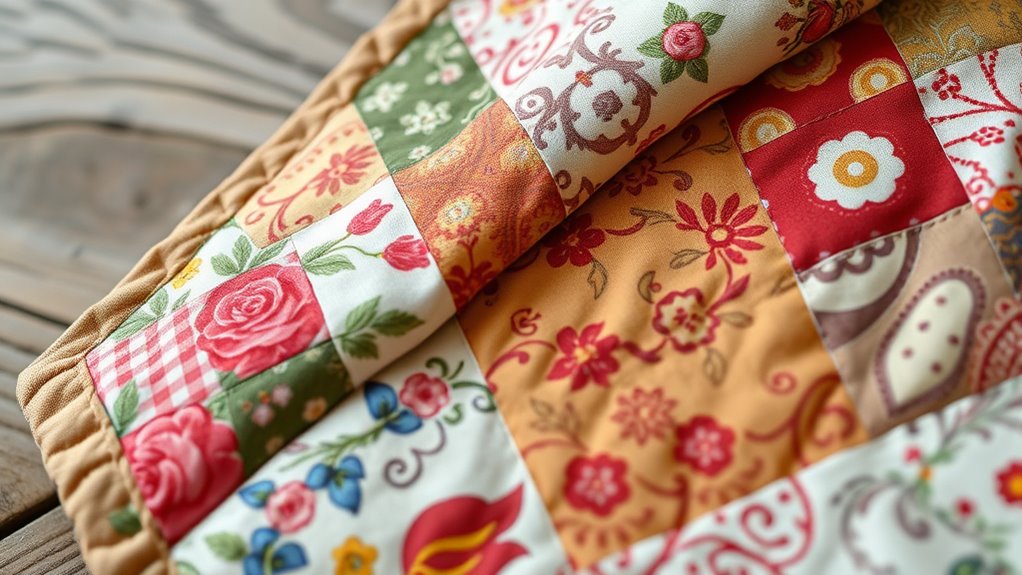
Traditional hand quilts showcase a rich tapestry of history and artistry. They’re both comforting and beautiful.
These quilts are often made using hand stitching. This helps preserve quilting traditions passed down through generations.
Each stitch tells a story. It reflects the maker’s skill and creativity.
| Quilt Type | Characteristics | Cultural Significance |
|---|---|---|
| Amish Quilts | Bold colors, intricate patterns | Symbol of faith and community |
| Baltimore Album | Appliqué designs | Celebrates local flora |
| Crazy Quilts | Irregular shapes, rich fabrics | Personal expression |
Modern Machine Quilts
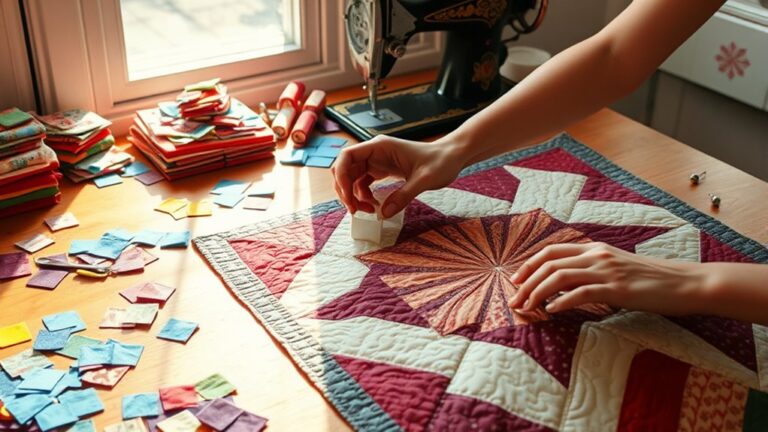
Modern machine quilts have transformed the quilting landscape, making it easier for both beginners and seasoned quilters to create stunning designs.
With the advent of modern quilting techniques, you can investigate a variety of innovative quilt patterns that push the boundaries of traditional quilting.
Using a sewing machine not only speeds up the process but also allows for precision that hand quilting often lacks.
You can experiment with bold colors, geometric shapes, and even incorporate digital printing for unique effects.
Plus, machine quilting opens up possibilities like free-motion quilting and intricate designs that enhance your work.
Essential Techniques Every Quilter Should Know
When you’re just starting out on your quilting journey, learning a few essential techniques really helps set you up for success. First off, let’s talk about fabric selection—choosing the right fabrics can truly make your project shine, so it’s worth picking up a few tips here. After that, you’ll want to get comfortable with some basic stitching techniques. Don’t worry if it feels tricky at first; with a little practice, it gets much easier!
Of course, having the right tools on hand makes everything go more smoothly. There are a few must-haves that every quilter should keep nearby, and once you get used to them, you’ll wonder how you ever managed without. As you build these skills, you’ll find your confidence growing, and you’ll be able to create beautiful quilts that you can be proud of.
Fabric Selection Tips
Choosing the right fabric for your quilt can make all the difference in your project’s success. Start by considering fabric textures; a mix of smooth and textured materials can add depth.
Pay attention to color combinations that complement each other, and don’t shy away from pattern mixing to create visual interest.
Remember to prioritize fabric durability, especially if your quilt will see heavy use.
Seasonal fabrics can set the mood, so choose prints that resonate with the time of year.
Moreover, look into eco-friendly materials for a sustainable approach.
When fabric sourcing, check local shops and online stores to find diverse print styles that inspire you.
With these tips, you’ll create a stunning quilt that reflects your unique vision.
Basic Stitching Techniques
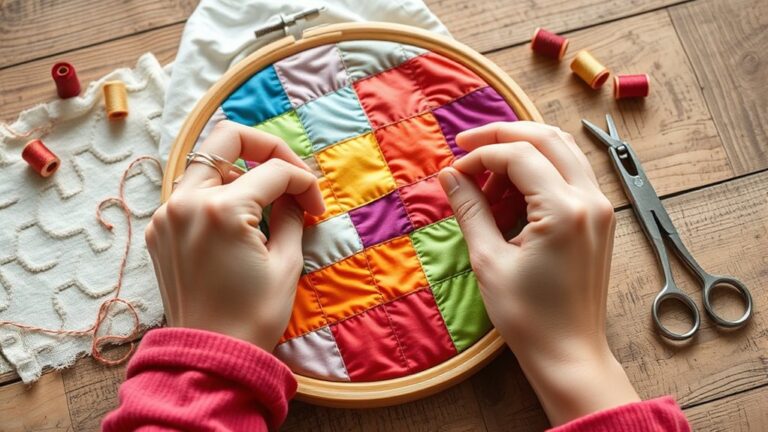
Mastering basic stitching techniques is vital for any quilter looking to improve their craft. Start with hand stitching, which allows for precision and control when attaching binding.
Learn various binding techniques, like double-fold and bias binding, to finish your quilts neatly. Next, practice machine stitching, focusing on straight lines and curves to create beautiful quilting motifs.
Experiment with different stitch lengths and patterns to add texture and depth to your work. Don’t forget to master the quarter-inch seam; it’s essential for accurate piecing.
With these foundational skills, you’ll build confidence and advance your quilting projects considerably. Keep practicing, and soon you’ll create stunning quilts that showcase your unique style!
Quilting Tools Essentials
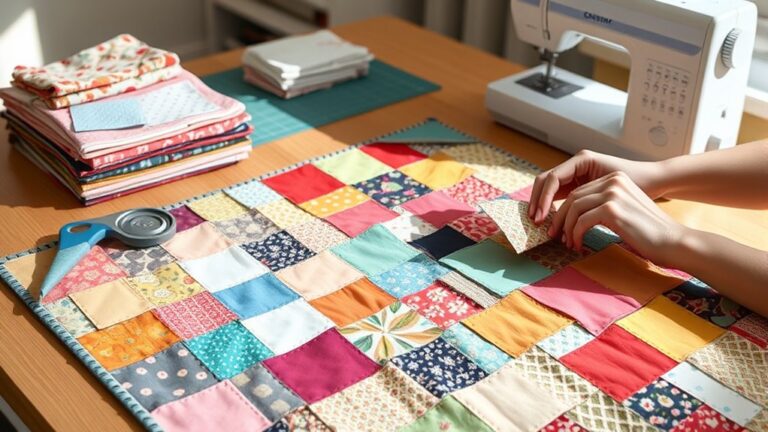
Every quilter needs a solid set of tools to transform fabric into beautiful creations.
Knowing what essential supplies to have on hand makes all the difference.
Here’s a quick overview of must-have quilting tools:
| Tool | Purpose | Tips |
|---|---|---|
| Rotary Cutter | Cut fabric precisely | Always use a cutting mat |
| Quilting Ruler | Measure and square fabric | Look for grid markings |
| Sewing Machine | Stitches layers together | Use a walking foot for thick layers |
With these essentials, you’ll streamline your quilting process and improve your skills.
Investing in quality tools helps you achieve more accurate results, making your quilting journey enjoyable and rewarding.
Get started with these foundational supplies, and watch your creations flourish!
Common Materials Used in Quilts
When creating a quilt, selecting the right materials is essential for both functionality and aesthetics. You’ll often start with fabric blends, combining cotton, polyester, or linen for durability and comfort.
Consider using historical fabrics to add a unique touch, as they can evoke a sense of nostalgia. Regarding batting options, you’ll find choices like cotton, polyester, or wool, each offering different insulation and weight.
Incorporating historical fabrics can evoke nostalgia, while various batting options provide distinct insulation and weight for your quilt.
For a modern twist, investigate sustainable materials that are eco-friendly and contribute to quilt durability. Pay attention to color fastness, ensuring your colors remain vibrant after washing.
Specialty fabrics, like silk or flannel, can give your quilt a luxurious feel, while texture variations add depth and interest. By carefully choosing these materials, you’ll create a quilt that’s not only beautiful but also long-lasting and functional.
How to Design Beautiful Quilt Patterns
When you’re thinking about designing beautiful quilt patterns, it’s fun to begin by picking out a color palette that really speaks to you. Maybe you’re drawn to soft pastels, or perhaps bold and bright colors are more your style—either way, let your instincts guide you.
After you’ve settled on your colors, it’s time to choose fabric types that will help bring your vision to life. Try mixing different textures and prints to add depth and interest, and make sure the fabrics work well together for the look you want.
Once you’ve got your fabrics sorted, planning your layout is the next step. Play around with different arrangements until you find one that feels balanced and harmonious. Don’t be afraid to move things around; sometimes the best ideas come from experimenting. In the end, your quilt will reflect your unique style and creativity.
Choosing Color Palettes
How do you choose the perfect color palette for your quilt? Start by understanding color theory and how it influences mood.
Seasonal palettes can guide your choices. Traditional colors bring a timeless feel.
Think about contrasting shades to create visual interest. Look for fabric combinations that achieve color harmony.
Here’s a simple guide:
| Palette Type | Description |
|---|---|
| Seasonal Palettes | Colors reflecting the seasons |
| Contrasting Shades | Bold colors that stand out |
| Personalized Themes | Colors that tell your story |
| Traditional Colors | Classic combinations for warmth |
Selecting Fabric Types
Selecting the right fabric types can transform your quilt from ordinary to extraordinary. Pay attention to fabric textures; they add depth and interest to your design.
For instance, combining smooth cotton with textured flannel can create a stunning contrast that draws the eye. Experiment with different fabric blends, like cotton-linen or cotton-silk, to improve your quilt’s overall feel.
Each blend brings unique qualities, affecting how your quilt drapes and wears. Don’t shy away from mixing prints and solids; this balance can uplift your pattern.
Remember, the tactile experience of your quilt is just as important as its visual appeal. So choose fabrics that not only look good together but also feel great to touch.
Happy quilting!
Planning Layout Designs
As you immerse yourself in planning your quilt layout, consider the overall impact of your design choices.
Think about how different patterns and colors will interact to create a cohesive look.
Seek out layout inspiration from various sources, like magazines or online platforms, to spark your creativity.
Don’t hesitate to investigate design variations; mixing geometric shapes with floral patterns can yield stunning results.
Here’s a quick reference table to guide your layout planning:
| Design Element | Considerations |
|---|---|
| Color Palette | Complementary vs. Contrasting |
| Block Size | Uniform vs. Varying |
| Pattern Type | Simple vs. Intricate |
| Border Style | Wide vs. Narrow |
| Overall Theme | Modern vs. Traditional |
Caring for and Maintaining Your Quilt
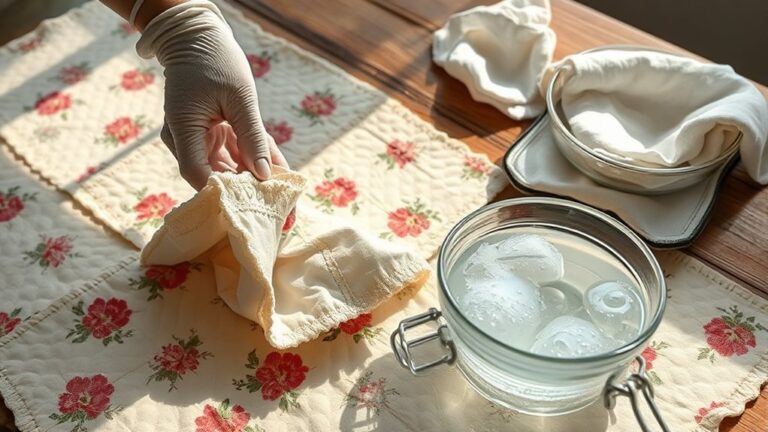
Quilts are cherished treasures that deserve proper care to guarantee their longevity and beauty. To keep your quilt in pristine condition, start by using effective quilt preservation methods.
Regularly inspect for any signs of wear or damage, and mend any issues immediately to prevent further deterioration. In terms of washing, always follow the manufacturer’s instructions.
Gentle washing in cold water is usually best. For quilt storage solutions, avoid folding your quilt to prevent creases and potential fabric damage.
Instead, consider rolling it or placing it flat in a breathable cotton bag. Keep your quilt away from direct sunlight to prevent fading and store it in a cool, dry place.
Finally, remember to air it out periodically to prevent mustiness. By following these simple steps, you’ll guarantee your quilt remains a beautiful heirloom for years to come.
Quilting as Storytelling: Weaving Narratives
Every quilt tells a story, weaving together memories, emotions, and experiences from the maker’s life. You might notice how narrative threads come alive in each stitch, forming emotional connections that resonate with viewers.
Quilt symbolism plays an essential role, as patterns and colors represent personal histories and cultural expressions. By employing various storytelling techniques, you can transform fabric into a canvas of visual storytelling, where every piece holds significance.
Quilting becomes a means of memory preservation, capturing moments that might otherwise fade. As you investigate this art form, you’ll find that each quilt carries a unique narrative, reflecting not just the maker’s journey but also the broader tapestry of shared experiences.
Whether it’s celebrating heritage or marking milestones, quilting allows you to express your story, inviting others to connect with the emotions woven into every layer.
Current Trends in Quilting
While traditional quilting techniques remain beloved, a fresh wave of trends is redefining the craft for modern makers. You’ll find that sustainable quilting has gained traction, with many opting for eco-friendly materials and repurposed fabrics.
This trend not only reduces waste but also adds unique character to each piece.
Quilting communities are flourishing online, enabling you to connect with fellow enthusiasts who share tips and techniques. These platforms foster collaboration and inspire creativity, making quilting more accessible than ever.
Here’s a quick look at some current trends:
| Trend | Description | Impact |
|---|---|---|
| Sustainable Quilting | Focus on eco-friendly materials | Reduces environmental impact |
| Modern Aesthetics | Bold colors and geometric designs | Appeals to younger quilters |
| Community Engagement | Online forums and workshops | Improves learning and sharing |
Embrace these trends to uplift your quilting experience!
Where to Find Unique Quilts for Purchase?
With the rise of online quilting communities and the emphasis on unique, sustainable creations, finding one-of-a-kind quilts has never been easier. Start by exploring online marketplaces like Etsy. There, you can uncover artisan crafts and vintage quilts from talented creators.
Social media platforms, especially Instagram and Facebook groups, are also goldmines for unique finds and inspiration.
Social media, particularly Instagram and Facebook groups, offers endless inspiration and unique quilt discoveries.
Don’t overlook local fairs and craft shows. These events let you connect with artisans directly and appreciate their work up close.
Quilt shops and fabric stores often feature local quilters, so be sure to check them out for exclusive pieces.
Estate sales can yield hidden gems, including vintage quilts that carry stories of their own.
Finally, keep an eye on charity auctions. They often showcase beautiful quilts while supporting a good cause.
Happy hunting for that perfect quilt!
Frequently Asked Questions
Can I Use Old Clothing to Make a Quilt?
Absolutely, you can use old clothing to make a quilt! It’s a fantastic way to practice upcycling techniques.
Start by selecting fabrics that are sturdy and in good condition. You should also consider the weight and texture of each piece, since these can affect how your quilt feels and holds up over time.
Cut the clothing into squares or any shapes you like, and arrange them creatively. This is where you can have fun mixing colors and patterns.
Don’t forget to wash and iron the fabric before sewing. Doing this will help you get the best results and make the sewing process easier.
You’ll not only recycle, but you’ll also create something beautiful and personal!
How Long Does It Take to Make a Quilt?
It usually takes anywhere from a few days to several weeks to make a quilt, depending on your quilting techniques and fabric selection.
If you’re new to quilting, you might need extra time to learn the basics, while experienced quilters can work faster.
Consider setting aside dedicated time each week to enjoy the process.
Ultimately, the more time you invest, the more you’ll refine your skills and create something beautiful.
What Tools Are Essential for Beginner Quilters?
To get started with quilting, you’ll need a few essential tools.
First, choose your fabric selection carefully. Cotton is a great choice for beginners.
You’ll also need a rotary cutter and mat for precise cutting, along with a quilting ruler.
Don’t forget to have quality thread and a sewing machine, which will help you follow quilt patterns easily.
Finally, a seam ripper is handy for fixing mistakes along the way!
Are Quilts Machine Washable?
Yes, quilts are generally machine washable, but quilt care depends on the fabric types used. Always check the care instructions for your specific quilt.
If it’s made from cotton or a cotton blend, you can usually wash it on a gentle cycle with cold water. Avoid bleach and opt for a mild detergent.
For quilts with delicate fabrics, consider hand washing or using a mesh laundry bag to protect them.
Can I Quilt Without a Sewing Machine?
Yes, you can quilt without a sewing machine! Hand quilting gives you a unique, personal touch.
Choose your fabrics carefully. Opt for cotton or flannel for ease and durability.
Gather your supplies like needles and thread, and take your time stitching those layers together.
It may take longer, but the satisfaction of creating something beautiful by hand is worth it.
Enjoy the process and let your creativity shine!
Conclusion
In the tapestry of life, quilts weave together memories, stories, and warmth. As you investigate this beautiful craft, keep in mind that every stitch holds the potential to connect generations.
Whether you’re creating your own masterpiece or cherishing a vintage find, you’re part of a rich tradition that transcends time.
So, welcome the artistry of quilting. It’s not just about fabric; it’s about love stitched into every piece.
Let your quilt be a tribute to your journey and the stories you’ll share—because in the end, quilts are about so much more than stitching. They’re about the connections, the history, and the meaning woven into every quilt.