How to Design a Quilt – A Step-by-Step Guide
If you’ve ever stared at a pile of beautiful fabric and felt overwhelmed by the idea of bringing your quilt vision to life, you’re not alone. Many people want to design a quilt that feels unique and personal, but aren’t sure where to start or how to make all the pieces come together.
Finding the right process can make all the difference—and the good news is, there are simple steps you can follow to turn inspiration into a stunning finished quilt.
Designing a quilt starts with uncovering inspiration from nature, art, or personal stories. Sketch your ideas, focusing on themes and layout.
Choose your fabrics based on texture, weight, and colors that complement each other. When cutting, use precise measurements for accuracy.
Piece your blocks together using techniques like chain piecing, and investigate different quilting methods.
Finally, add borders and a label that tells your quilt’s story. You’ll uncover more tips to make your quilt truly special.
Key Takeaways
- Gather inspiration from nature, art, and personal themes to help shape your quilt design concept.
- Choose fabrics that work well together. Focus on texture, weight, and sustainability as you make your selections.
- Use precise cutting tools and techniques, so your quilt blocks have accurate measurements.
- Try chain piecing along with basic sewing techniques. This can make your assembly process smoother and more efficient.
- Think about different quilting methods and binding techniques. This will help you finish your quilt with a polished look.
How to Start Designing Your Quilt
How do you begin designing your quilt? Start by exploring various inspiration sources.
Look around your home, nature, or even art galleries; you might find colors and patterns that spark your creativity.
Consider themes or stories you want your quilt to convey.
Next, grab a sketchbook and create some design sketches.
Don’t worry about perfection; just let your ideas flow.
Experiment with different layouts and block styles to see what resonates with you.
You can also use digital design tools if you prefer a modern approach.
As you sketch, think about how different elements will come together.
Keep refining your designs until you feel excited about a particular concept.
Remember, this is your quilt, so trust your instincts and have fun with the process!
Your unique vision will guide you as you move forward in creating a beautiful piece.
Choosing the Right Fabrics and Colors
When you’re picking out fabrics and colors for your quilt, it really helps to get familiar with different fabric types and their textures. Some fabrics feel soft and cozy, while others might be crisp or silky—it all depends on the vibe you want for your quilt.
And let’s not forget about color! Knowing a little bit about color theory can totally transform the look of your project. It’s all about finding colors that work well together so your quilt has that nice, pulled-together feel.
Fabric Types Overview
Choosing the right fabrics and colors for your quilt can greatly impact its overall aesthetic and feel.
Here’s a brief overview of key fabric types to evaluate:
- Fabric Weights: Light cottons for summer quilts or heavier fabrics for warmth.
- Fabric Textures: Soft flannels add coziness, while crisp cottons provide structure.
- Fabric Patterns: Playful florals or geometric designs can set the quilt’s tone.
- Fabric Durability: Opt for high-quality materials that withstand wear and tear.
When you’re fabric sourcing, remember to prioritize sustainability.
Look for eco-friendly options that not only improve your quilt’s beauty, but also help reduce environmental impact.
Color Theory Basics
Selecting the right colors for your quilt can transform your fabric choices into a cohesive design. Start with the color wheel to understand color combinations and relationships.
Warm colors, like reds and yellows, evoke energy, while cool colors, such as blues and greens, create calmness. Aim for color harmony by balancing these tones, considering color saturation for vibrancy or subtlety.
Use color contrast to make certain elements pop and draw attention to specific areas of your quilt. Remember, color psychology plays an essential role in how your quilt is perceived. Think about the emotions different colors evoke.
Cutting Fabric: Techniques for Precision
When it comes to cutting fabric, having the right tools really makes all the difference if you want your cuts to be precise. You’ll want to pay close attention to how you measure—accuracy here will save you a lot of hassle later on. And don’t forget about how you layer your fabric; getting this step right helps ensure your cuts stay clean and consistent. Let’s take a closer look at these important details so you can get the best results on your quilting project.
Essential Cutting Tools
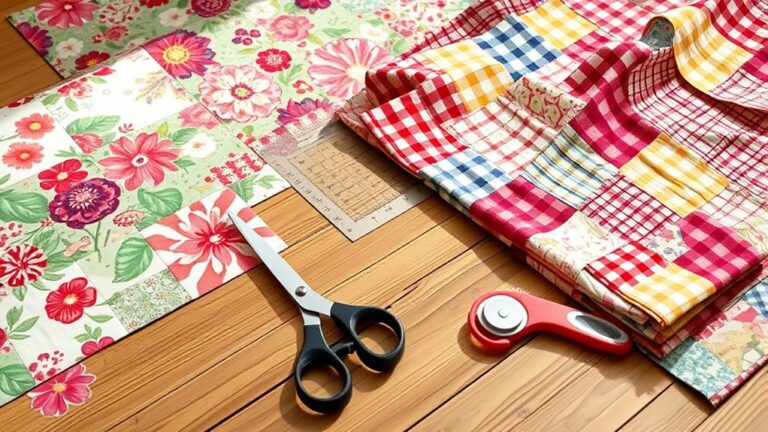
Cutting fabric with precision is vital for a successful quilt, and having the right tools makes all the difference.
Here’s what you need to guarantee cutting accuracy:
- Rotary cutters: Perfect for clean, straight lines.
- Cutting mats: Protect your surfaces and extend your blade life.
- Fabric scissors: Ideal for intricate cuts and curves.
- Ruler guides: Help you measure and cut accurately every time.
Don’t forget to use marking tools to outline your designs. Fabric weights are also helpful for holding your pieces steady while you work.
Safety blades are essential for protecting your hands, and regular tool maintenance keeps everything in top shape.
With these vital cutting tools, you’ll set the foundation for a beautifully designed quilt!
Accurate Measurement Techniques
Having the right tools sets the stage for your quilting journey, but accurate measurement techniques take your work to the next level.
Start by using reliable measurement tools like rulers and cutting mats to improve measurement accuracy. Familiarize yourself with measurement charts and standards to guarantee you’re cutting fabric precisely.
Practice consistently to develop your measurement skills, as good measurement practice reduces errors. Always double-check your measurements to catch potential measurement errors early.
Here are some quick measurement tips: measure twice before cutting, align your fabric carefully, and keep your tools in good condition.
Fabric Layering Strategies
To achieve precision in your quilting, understanding fabric layering strategies is essential. The right combination of fabric textures and layering methods can elevate your quilt’s visual appeal while ensuring quilt stability.
Here are some tips to contemplate:
- Color contrasts: Use bold and muted tones to create striking design harmonies.
- Fabric weight: Balance heavier fabrics with lighter ones for better drape and durability.
- Visual balance: Distribute patterns evenly across your layers to maintain aesthetic appeal.
- Pattern dynamics: Experiment with various designs to add depth and movement to your quilt.
Planning Your Quilt Layout and Pattern
As you commence designing your quilt, planning the layout and pattern is essential to achieving a cohesive look.
Start by gathering layout inspiration that resonates with you. Think about historical influences and personal themes that could shape your quilt’s narrative.
Consider incorporating seasonal motifs to infuse life into your design.
Using design software can help you visualize pattern variations and block arrangements.
Focus on symmetry techniques to maintain visual balance, ensuring that your quilt feels harmonious.
Here’s a quick table to guide your planning:
| Aspect | Considerations |
|---|---|
| Layout Inspiration | Historical influences |
| Pattern Variations | Seasonal motifs |
| Quilting Styles | Symmetry techniques |
Piecing Your Quilt Blocks Together
Now that you’ve got your quilt layout all planned out, it’s time to start piecing those blocks together. First, take a little time to choose fabric combinations that really look good next to each other—this is your chance to play with color and pattern. Once you’re happy with your choices, double-check your measurements so everything fits together just right.
And when you’re ready to start sewing, it helps to get familiar with a few basic techniques. These will make the whole process smoother and help your design really come to life. Just take it one step at a time, and enjoy watching your quilt take shape!
Selecting Fabric Combinations
While selecting fabric combinations for your quilt, consider how colors and patterns will interact within your blocks. Achieving color harmony and effective pattern mixing is essential for a cohesive look.
Think about your personal style and the seasonal themes you want to express. Use mood boards to visualize your ideas and find project inspiration.
- Fabric texture: Combine smooth and textured fabrics for depth.
- Fabric scale: Mix large prints with smaller motifs to create balance.
- Quilt motifs: Choose fabrics that complement your block designs.
- Fabric sourcing: Investigate local shops and online resources for unique finds.
Ensuring Accurate Measurements
Verifying accurate measurements is essential for piecing your quilt blocks together seamlessly.
Start by gathering your measurement tools, like a rotary cutter, cutting mat, and quilting ruler. These will help you achieve precise cuts for each fabric piece.
When you’re ready to cut, double-check your quilting scaling to verify your blocks fit together perfectly.
Always measure twice before cutting; this small step can save you from costly mistakes.
If you’re working with different block sizes, create a chart to keep track of dimensions.
Remember, consistency is key. Use the same tools throughout to maintain uniformity in your quilt.
Sewing Techniques Overview
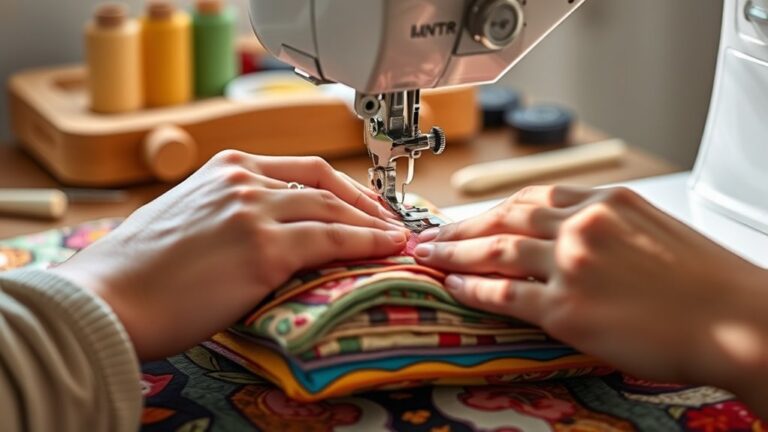
As you plunge into sewing your quilt blocks together, mastering a few key techniques will make the process smoother and more enjoyable.
Start by confirming your sewing machine’s maintenance is up to date. A well-oiled machine runs like a dream.
Next, consider these essential techniques:
- Chain piecing: Speed up your sewing by connecting multiple pieces without cutting the thread.
- Pressing seams: Flatten your seams for a crisp finish, using a hot iron.
- Matching points: Align fabric pieces carefully to create seamless designs.
- Quality thread: Use a good quality thread to prevent breakage and confirm durability.
Finally, implement effective fabric storage solutions to keep your materials organized and easily accessible.
Happy sewing!
Adding Borders and Sashing for Style
Adding borders and sashing can transform your quilt from simply functional to truly stunning. You’ll want to investigate various border styles, like simple strips or intricate pieced borders, to improve your design.
Regarding sashing techniques, think about how they can frame your blocks and create a cohesive look. Pay attention to color balance; a well-chosen sashing fabric can tie your quilt together beautifully.
Consider how sashing can elegantly frame your blocks, enhancing cohesion and color balance in your quilt design.
As you add borders, consider quilt dimensions. Too wide can overwhelm, while too narrow may underwhelm.
Focus on pattern integration. Guarantee your borders complement the central design without clashing.
Aim for design harmony by choosing fabrics that maintain fabric contrast yet resonate with each other.
Ultimately, your choices will affect the visual impact of the finished quilt. So take your time to create a layout that reflects your unique style.
Enjoy the process of making your quilt truly stand out!
Quilting Techniques: Machine vs. Hand Quilting
With your borders and sashing in place, it’s time to contemplate how you’ll finish your quilt.
You’ve got two main options: machine quilting or hand quilting.
Each has its own vibe and advantages.
- Machine advantages: Faster quilting speed allows for larger projects.
- Hand benefits: Offers more artistic expression and a personal touch.
- Stitching styles: Machine quilting provides precision, while hand quilting gives you unique fabric manipulation.
- Comfort factor: Hand quilting often feels more intimate and cozy.
Your choice depends on your skill levels and personal preference.
If you’re after project longevity and durability, machine quilting might suit you best.
However, if you value the meditative process and comfort of hand quilting, that could be your go-to.
Consider what speaks to your creativity and how you want your finished quilt to feel, and you can’t go wrong!
Finishing Touches: Binding and Labeling Your Quilt
How do you want your quilt to make a lasting impression?
The finishing touches can boost your work from good to unforgettable.
Start with binding techniques. Choose between single fold, double fold, or bias binding to frame your quilt beautifully.
Each method adds a unique flair, so pick one that complements your quilt’s design.
Next, think about label design. A label not only identifies your quilt but also tells its story.
Include your name, date, and a special message or inspiration behind your creation.
You can sew the label onto the back or incorporate it into the quilt top for a unique touch.
Take your time with these final steps.
They’ll enrich your quilt’s overall aesthetic and guarantee it’s cherished for years to come.
Essential Tools for Successful Quilt Design
After perfecting your quilt’s finishing touches, gathering the right tools is key to bringing your design vision to life. Equip yourself with essential items that improve your creative techniques and support your artistic expression.
Consider these tools:
- Color Palette Guide: Helps you choose harmonious colors for fabric selection.
- Graph Paper: Perfect for layout exploration, allowing you to visualize patterns and variations.
- Rotary Cutter and Mat: Essential for precise cutting, ensuring clean edges in your quilting styles.
- Inspiration Notebook: Jot down design inspirations and ideas that strike you throughout the day.
With these tools at hand, you’ll streamline your process and boost your quilt design. Welcome the journey of pattern variation and let your creativity flow!
Common Quilt Design Problems and Solutions
Every quilter faces challenges along the creative journey, but recognizing and addressing common design problems can save you time and frustration.
One common issue is fabric distortion. Make sure you’re using the right fabric and pre-wash it to minimize this.
If you notice design flaws, try adjusting your pattern scaling for a better fit.
Color clashes can ruin a quilt’s aesthetic, so test swatches together before committing.
Block alignment is essential for a polished look. Always double-check measurements as you sew.
If you’re struggling with thread tension, practice on scrap fabric to find the right balance.
Your batting choice affects quilt weight and drape, so choose wisely based on the final look you want.
Finally, keep in mind that small adjustments can lead to big improvements. By addressing these problems early, you’ll improve your quilt design experience and create a masterpiece you’ll be proud of!
Frequently Asked Questions
What Is the History Behind Quilt Design and Patterns?
Quilt design has deep roots, blending traditional techniques with various cultural influences.
You’ll find famous quilts reflecting historical events or community stories. They often showcase unique fabric choices and color theory.
As you investigate modern trends, notice how contemporary quilters adapt these age-old patterns. Many reinvent them with new materials and techniques.
Understanding this history enriches your own quilt-making journey. It allows you to connect with the artistry of those who came before you.
How Do I Choose a Theme for My Quilt?
To choose a theme for your quilt, start by exploring inspiration sources like nature, art, or personal memories.
Once you’ve settled on a theme, think about your color palette. Select hues that resonate with your idea.
Then, immerse yourself in fabric selection, ensuring it complements your theme.
Finally, create design sketches to visualize how everything will come together. This process will help you craft a quilt that’s distinctly yours.
Can I Use Recycled Fabrics for My Quilt Design?
Absolutely, you can use recycled fabrics for your quilt design! Imagine transforming old clothes into a cozy masterpiece, each piece telling its own story.
When sourcing materials, consider fabric types like cotton, denim, or linen. These can add unique textures and colors to your quilt.
Just confirm they’re clean and in good condition before using them. Embracing recycled fabrics not only creates a beautiful quilt but also supports sustainability.
That makes your project even more meaningful.
What Are Common Mistakes Beginners Make in Quilt Design?
Common mistakes beginners make in quilt design include poor color selection, which can lead to clashing tones.
Many skip thorough layout planning, resulting in uneven designs. When it comes to fabric choices, they often mix incompatible materials that don’t work well together.
Furthermore, beginners sometimes ignore pattern scaling. This can make large patterns overwhelm smaller quilts, or the other way around.
How Do I Maintain My Quilt’s Quality Over Time?
To maintain your quilt’s quality over time, think of it as a cherished book. Each page tells a story.
Use proper quilt care by washing it gently in cold water with mild detergent, and avoid harsh chemicals. Air dry it flat or on a low heat setting.
For fabric preservation, store it in a cool, dry place away from sunlight.
Regularly inspect for wear and repair any damage to keep your quilt’s history alive.
Conclusion
Now that you’ve got the tools and techniques, it’s time to let your creativity soar like a kite in the wind.
Trust your instincts as you piece together your quilt, turning fabric into a beautiful tapestry of memories and warmth.
Remember, every stitch tells a story, so welcome the journey.
With patience and practice, you’ll create a masterpiece that reflects your unique style.
Happy quilting, and may your quilt design be as vibrant as your imagination!