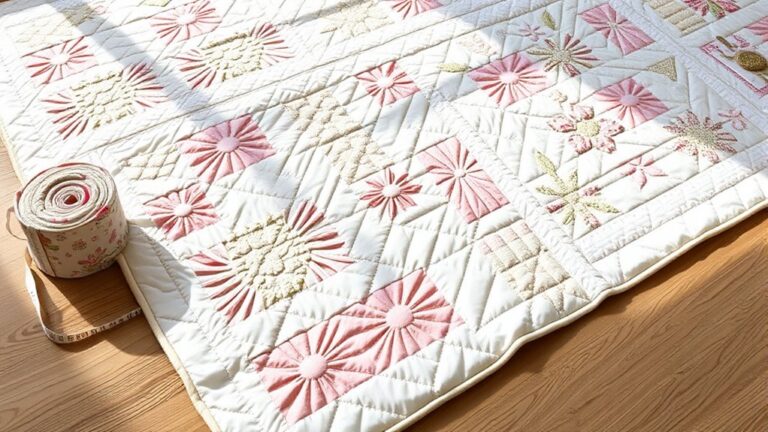
How to Hang a Quilt on Your Wall
If you love displaying your favorite quilts but struggle with how to hang a quilt on your wall without damaging it or your space, you’re not alone. Many people want to show off their beautiful pieces but worry about sagging, fading, or leaving unsightly holes behind.
Finding the right method can be confusing, but there are plenty of smart solutions out there to help you hang your quilt safely and stylishly.
To hang a quilt on your wall safely, use a rod and sleeve for even weight distribution. Avoid nails or tacks that could damage your wall; instead, opt for removable adhesive hooks or quilt hangers.
Make sure your hanging hardware can support the quilt’s weight and hang it at eye level for maximum visibility.
Don’t forget to keep your quilt away from direct sunlight and rotate its position occasionally.
You’ll uncover even more tips and techniques soon!
Key Takeaways
- Use a quilt sleeve on the back to distribute weight evenly and avoid fabric damage.
- Opt for removable adhesive hooks or quilt hangers to prevent wall damage.
- Make sure the hanging hardware can support the quilt’s weight. It’s a good idea to use a level so your quilt hangs straight.
- You might also consider decorative clips or frames. These options can add some protection and a bit of style.
- Try to keep quilts out of direct sunlight, and remember to rotate their position every so often. This helps minimize wear over time.
How to Hang Your Quilt Without Damage
When you want to display your quilt without causing damage, it’s essential to choose the right hanging method.
First, consider quilt safety; you don’t want to risk tears or wear. Using a sleeve on the back of your quilt can help distribute its weight evenly, ensuring it hangs securely.
Make sure to attach the sleeve with care, avoiding any adhesives that could harm the fabric.
Next, think about wall preservation. Avoid nails or tacks that can leave marks or holes.
Instead, opt for removable adhesive hooks or a quilt hanger that won’t damage your wall. If you’re using a rod, make sure it’s sturdy enough to support the quilt’s weight.
Lastly, keep your quilt away from direct sunlight to prevent fading. By taking these precautions, you can enjoy your quilt’s beauty while maintaining its integrity and protecting your walls.
Understanding Different Quilt Hanging Methods
While choosing the right method to hang your quilt may seem challenging, understanding the various options can simplify the process. Different quilt types require different approaches, so consider your quilt’s weight and size.
For lighter quilts, using wooden dowels or curtain rods can be effective. This allows for easy swapping based on your wall aesthetics.
If you have a heavier quilt, try using quilt hangers or clamps designed specifically for stability.
You can also opt for Velcro strips or adhesive hooks for a no-fuss solution. Each method has its pros and cons, influencing how your quilt interacts with the space.
Think about how you want your quilt to look on the wall and choose a method that complements your decor. Remember, the right hanging method not only showcases your quilt beautifully but also improves your overall wall aesthetics.
Tools You’ll Need for Hanging Your Quilt
Choosing the right method to hang your quilt sets the stage for what tools you’ll need.
First, gather your hanging hardware, which could include quilt hangers, rods, or clips, depending on your chosen method. Confirm these are strong enough to support the weight of your quilt.
You’ll also want to take into account wall protection. Using soft pads or foam strips behind your hanging hardware can prevent damage to your wall’s surface.
If you’re opting for nails or screws, think about using wall anchors to guarantee stability without risking any damage.
A level is essential for making certain your quilt hangs straight, while a measuring tape helps you position it perfectly at eye level.
Finally, a ladder might come in handy if your quilt is larger or if you’re working with high ceilings.
With these tools, you’ll be ready to showcase your beautiful quilt with ease.
How to Use Quilt Hangers Effectively
Using quilt hangers effectively can improve your quilt’s display, so it’s important to follow some key steps.
Start by choosing the right quilt hanger styles that suit your decor and the quilt’s weight. Consider whether you prefer traditional wooden hangers, modern metal options, or decorative brackets.
Next, think about mounting options. Wall-mounted hangers might require anchors for drywall, while tension rods can work well in tighter spaces.
Here’s a simple guide to help you choose:
| Quilt Hanger Style | Best For | Mounting Options |
|---|---|---|
| Wooden | Heavier quilts | Wall mounted |
| Metal | Modern decor | Tension rods |
| Decorative Bracket | Aesthetic appeal | Wall mounted or hooks |
Why a Rod and Sleeve Is Ideal for Hanging Quilts
If you want a stylish and practical way to hang your quilts, a rod and sleeve system is an excellent choice.
This method not only showcases your quilt beautifully but also protects it from damage.
Here’s why it works so well:
- Versatile rod types: You can choose from wood, metal, or decorative options to match your decor.
- Custom sleeve lengths: Tailor the sleeve to your quilt’s dimensions for a perfect fit.
- Easy installation: Simply slide the quilt onto the rod and hang it up.
- No visible hardware: The rod and sleeve keep the focus on your quilt, not the hanging method.
- Adjustable height: You can easily change the display height to suit your space.
Using a rod and sleeve not only improves your quilt’s appearance,
Using a rod and sleeve enhances your quilt’s display while providing a practical and elegant hanging solution.
but also offers a practical solution for showcasing your cherished creations.
Creative Alternatives: Clips & Tacks
While a rod and sleeve system is a fantastic option, clips and tacks offer creative alternatives for hanging quilts that can be just as effective.
You can explore different types of clips, like decorative clips or even simple binder clips, which make it easy to adjust your display as needed.
Tack options such as pushpins or thumbtacks can work well too, especially if you want something less permanent.
Think about the display style you want, whether you’re showcasing seasonal themes or drawing attention to unique quilt textures.
It’s a good idea to choose clips or tacks that coordinate with your quilt’s colors and work well with its fabric, so everything feels cohesive.
For mounting, just make sure your chosen method can support your quilt’s weight without causing any damage.
With these alternatives, it’s easy to refresh your decor and change things up for new seasons or moods, all while keeping your quilt beautifully on display.
Protect Your Quilt: Essential Best Practices
To keep your quilt in pristine condition, follow these essential best practices.
Protecting your quilt guarantees its beauty and longevity, especially against environmental factors like light and humidity.
Here are some quilt preservation techniques you should use:
- Avoid direct sunlight: Hang your quilt in a shaded area to prevent fading.
- Control humidity: Keep the room well-ventilated and avoid dampness to prevent mold.
- Use acid-free materials: When using hangers or frames, choose acid-free materials to avoid damage.
- Rotate regularly: Change the display position every few months to minimize wear on specific areas.
- Clean gently: If needed, use a soft brush or vacuum with a fabric attachment to remove dust.
Implementing these practices will help maintain your quilt’s vibrant colors and structural integrity.
This way, you can ensure it remains a cherished piece in your home for years to come.
Maintain Your Quilt’s Condition: Top Tips
Maintaining your quilt’s condition is essential for preserving its beauty and value. Start by ensuring proper quilt storage when it’s not on display. Use acid-free tissue paper to help maintain its shape and avoid creasing.
Store it in a cool, dry place, away from direct sunlight to prevent fading. When it comes to fabric care, gently vacuum your quilt with a soft brush attachment to remove dust.
If your quilt needs cleaning, hand wash it in cold water with a mild detergent. Avoid harsh chemicals that can damage the fibers.
Always check for any signs of wear or damage, and address them immediately. Repair any loose threads or fabric before they become bigger issues.
Hanging Multiple Quilts: Tips for Displaying Together
If you’ve taken the time to care for your quilts, displaying them can enhance your home’s decor.
Hanging multiple quilts together creates a stunning visual impact.
Here are some tips to help you coordinate your display:
- Choose a color palette: Use quilt color coordination to guarantee harmony in your selection.
- Vary sizes: Mix large and small quilts to create depth and interest.
- Experiment with arrangements: Try different display arrangement techniques, like a grid or staggered layout.
- Incorporate frames: Adding frames can boost the overall look and protect your quilts.
- Use uniform hangers: Consistent hangers keep the focus on your beautiful quilts.
What Makes a Good Quilt Hanger?
When you’re picking out a quilt hanger, one of the first things to think about is how durable the material is. You want something sturdy enough to handle the weight of your quilt, especially if it’s on the heavier side. Nobody wants to see their hard work come crashing down!
It’s also important to check the weight capacity. Some hangers are better suited for lighter throws, while others are built to hold those thick, cozy quilts. So, make sure the hanger you choose matches the weight of your quilt.
And of course, let’s not forget about looks. The design matters, too! You’ll want a quilt hanger that not only supports your quilt but also complements its style and blends nicely with your room decor. After all, your quilt deserves to be displayed beautifully.
Material Durability Importance
Choosing the right materials for your quilt hanger is crucial, as they directly affect the durability and longevity of your display. You want to guarantee that your chosen materials contribute to fabric longevity and quilt preservation.
Here are some key factors to take into account:
- Wood: Solid wood provides a sturdy, attractive option that resists warping.
- Metal: Strong metals like steel can support heavier quilts without bending or breaking.
- Fabric: Use durable fabric for any hangers that will touch your quilt, preventing wear.
- Adhesives: Choose archival-safe glues to avoid damaging the quilt over time.
- Fasteners: Reliable, rust-resistant fasteners guarantee your quilt stays securely displayed.
Weight Capacity Considerations
Selecting the right materials lays the groundwork for considering weight capacity, which is key to a successful quilt hanger. Start by evaluating the weight distribution of your quilt; heavier quilts require sturdier hangers.
Different fabric types also play a role. For instance, cotton quilts can be lighter than wool or layered quilts.
Verify your hanger can support the quilt’s total weight without sagging or bending. A solid wooden dowel or a strong metal rod can provide the necessary strength.
When mounting, use appropriate anchors and screws to secure the hanger to the wall. Take time to confirm it can handle the quilt’s weight over time.
Proper weight capacity considerations will keep your quilt beautifully displayed without risk of damage.
Aesthetic Design Choices
While a quilt’s function is important, its display can greatly improve your space’s aesthetic appeal.
To create an engaging quilt hanger, consider the following design choices:
- Color Palettes: Choose a hanger that complements your quilt’s colors for harmony.
- Visual Balance: Make certain your quilt is centered and balanced within the space.
- Texture Contrast: Pair the quilt with a hanger that contrasts in texture, adding depth.
- Theme Coordination: Match the hanger style with your room’s overall theme for cohesion.
- Lighting Effects: Use strategic lighting to highlight your quilt, enhancing its visual impact.
Additionally, think about wall placement and seasonal displays to keep your decor fresh.
These choices will raise your quilt from mere fabric to a stunning focal point.
Frequently Asked Questions
Can I Hang a Quilt in a Bathroom or Kitchen?
You can hang a quilt in a bathroom or kitchen, but you need to take into account quilt care and moisture. High humidity can lead to mildew, damaging your quilt.
If you decide to hang it, guarantee proper ventilation and avoid areas with direct water exposure. Think about using a protective barrier like a frame or a moisture-resistant backing.
Just keep an eye on it to prevent any moisture-related issues. Your quilt deserves the best care!
How Do I Choose the Right Wall Color for My Quilt?
To choose the right wall color for your quilt, consider color psychology and fabric contrast. Think about how you want the space to feel; warm colors can energize, while cool tones promote calm.
Look for a wall color that complements or contrasts with your quilt’s fabrics. If your quilt’s vibrant, a neutral wall might accentuate it, while a bold shade can make a more subtle quilt pop.
Trust your instincts, and enjoy the process!
What’s the Best Height to Hang My Quilt?
You should hang your quilt at eye level for the best wall aesthetics. This typically means placing the center of the quilt around 57 to 60 inches from the floor.
This height improves quilt placement, making it a focal point in the room. Adjust slightly based on your furniture and personal preference.
Keeping it accessible and visually striking will create a harmonious look that draws attention without overwhelming the space.
Can I Wash My Quilt After Hanging It?
Washing your quilt after hanging it is like giving it a rejuvenating spa day. You can absolutely wash your quilt, but keep quilt care in mind.
Use a gentle cycle with cold water to preserve the fabric. Avoid harsh detergents and opt for something mild to protect its colors and texture.
After washing, air dry it flat to maintain its shape. This way, you guarantee your quilt stays beautiful for years to come!
How Do I Store My Quilt if I Change Displays?
To store your quilt during display rotation, start by folding it neatly to avoid creases.
Use acid-free tissue paper between layers to protect fabric and maintain its shape.
Place the quilt in a breathable cotton storage bag or a dry, dark space to prevent damage from light and humidity.
Avoid plastic bags, as they can trap moisture.
Regularly check on your quilt to guarantee it stays in pristine condition for future displays.
Conclusion
So, now that you know how to hang your quilt without turning your wall into Swiss cheese, you might think it’s a piece of cake.
Ironically, the real challenge isn’t the hanging method. It’s resisting the urge to take it down and snuggle with it every time you walk by!
Just remember, a beautifully displayed quilt on your wall can spark joy while still being a cozy reminder of its warmth.
Enjoy your new look, and happy quilt hanging!