5 Simple Steps to Fold a Quilt for Storage
If you love quilts, you know how tricky it can be to keep them looking their best while in storage. Many people struggle with folding their favorite quilts in a way that preserves their beauty and prevents permanent creases or damage. If this sounds familiar, you’re not alone—and finding the right method to fold a quilt for storage can make all the difference.
To fold your quilt for storage, start by laying it flat on a clean surface to smooth out wrinkles.
Fold it in half lengthwise, then again widthwise, reducing bulk.
Next, fold it into thirds by bringing one end over the middle and the other on top.
To prevent creases, consider adding acid-free tissue paper between folds.
Finally, choose a breathable storage option like a fabric bag or cotton sheet.
There’s more to learn about keeping your quilt safe and beautiful!
Key Takeaways
- Lay the quilt flat on a clean surface. Smooth out any wrinkles for an even fold.
- Fold the quilt in half lengthwise and make sure the edges are aligned neatly.
- Next, fold it in half again widthwise. This helps minimize bulk and keeps its shape.
- Tuck one end over the middle, then place the other end on top. This way, you’ll create thirds.
- For storage, put the folded quilt in a breathable container. Avoid plastic to prevent moisture buildup.
Choosing the Right Space for Quilt Storage
When you’re ready to store your quilt, choosing the right space is vital for its longevity. Look for a climate-controlled area to maintain ideal humidity levels.
Avoid places like attics or basements that can fluctuate in temperature and moisture, as this can damage your quilt over time. Use sturdy storage containers to protect your quilt from dust and pests.
Make sure these containers are breathable. Plastic bags can trap moisture, leading to mildew, so it’s best to steer clear of those.
Keep your quilt out of direct sunlight exposure, which can fade colors and weaken fabric fibers. Consider using organization techniques like labeling containers or creating a dedicated storage shelf to make retrieval easier.
Preparing Your Quilt for Folding
After ensuring your quilt is stored properly, it’s time to prepare it for folding. Start by checking your quilt for any stains or dirt. Addressing these issues now will help maintain its beauty and longevity.
Use a gentle fabric cleaner if needed, and let it air dry completely before proceeding. This step is essential for quilt care, as it prevents any moisture from causing damage during storage.
Next, lay your quilt flat on a clean, dry surface. Smooth out any wrinkles or creases. These can lead to permanent folds over time, so it’s worth taking a moment here.
Lay your quilt flat on a clean, dry surface and smooth out any wrinkles to prevent permanent folds.
If your quilt has delicate fabrics, consider placing a clean sheet between layers for added protection. This simple act aids in fabric preservation, ensuring your quilt remains vibrant and intact.
With these preparations done, you’re ready to move on to the folding process. Taking a little extra care now will help keep your quilt in top shape for years to come.
Step-by-Step Techniques for Folding Your Quilt
Folding your quilt correctly is essential to keeping it looking its best. Start by laying your quilt flat on a clean surface, smoothing out any wrinkles.
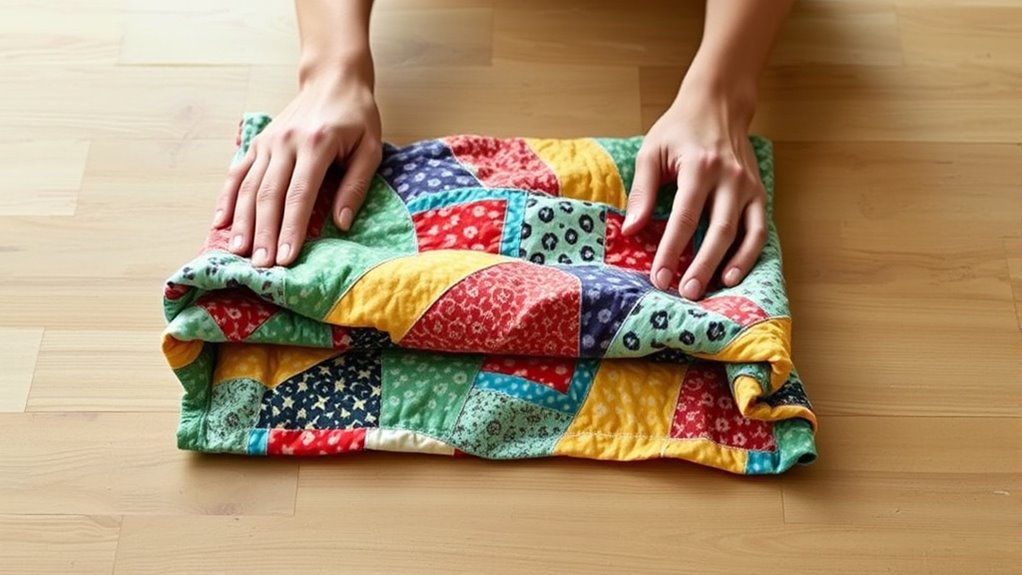
Fold the quilt in half lengthwise, making sure the edges align neatly. Next, fold it in half again, this time widthwise. This simple technique reduces bulk and helps maintain the quilt’s shape.
Now, fold the quilt into thirds by bringing one end over the middle, then folding the other end on top. This method not only makes storage easier, but also promotes better quilt care by allowing for improved airflow around the fabric.
Finally, store your quilt in a breathable bag or on a shelf. Try to avoid plastic covers, since that improves fabric longevity.
Tips to Prevent Creases and Damage
To keep your quilt looking pristine, it’s important to take some precautions against creases and damage. First, consider the quilt materials; delicate fabrics like silk or vintage cotton require extra care.
To preserve your quilt’s beauty, handle delicate fabrics like silk and vintage cotton with extra care.
When folding, avoid sharp creases by using a soft surface and laying the quilt flat. If you plan to store it for an extended storage duration, consider rolling it instead of folding.
This technique minimizes crease formation and protects the fabric’s integrity. Next, use acid-free tissue paper between folds to provide cushioning and prevent compression.
Make certain that the storage area is cool, dry, and dark to avoid fading and mildew, especially for quilts made of natural fibers. Finally, check on your quilt periodically to make sure it’s in good condition.
How to Choose the Best Storage Options for Your Quilts?
Choosing the right storage options for your quilts can make all the difference in preserving their beauty and longevity.
Start by selecting appropriate quilt storage materials that are breathable and non-acidic. Avoid plastic bags, as they can trap moisture and lead to mold.
Instead, consider fabric storage bags or cotton sheets for wrapping. These materials help your quilts breathe and stay fresh.
To maintain moisture control, use silica gel packets or moisture-absorbing products in your storage space. This helps prevent mildew and deterioration.
Here’s a quick comparison of storage options:
| Storage Option | Pros |
|---|---|
| Fabric Storage Bags | Breathable, prevents dust |
| Cotton Sheets | Soft, non-abrasive, easy to wrap |
| Plastic Bins | Stackable, protects from pests |
| Vacuum-Sealed Bags | Space-saving, good for short-term |
| Cedar Chests | Natural pest repellent, stylish |
Choose wisely, and your quilts will remain in gorgeous condition for years!
Frequently Asked Questions
How Often Should I Clean My Quilt Before Storage?
You should clean your quilt before storage at least once a season, depending on how often you use it.
Regular quilt care helps maintain its freshness and prevents dust or allergens from settling in.
If you notice any spills or stains, clean it immediately.
Always follow the manufacturer’s instructions for washing to guarantee it stays in good condition.
Keeping a consistent cleaning frequency will prolong your quilt’s life and beauty.
Can I Store My Quilt in a Vacuum-Sealed Bag?
Yes, you can store your quilt in a vacuum-sealed bag, but be cautious. Imagine your grandmother’s heirloom quilt shrunk and creased after a long vacuum storage.
To avoid this, make sure it’s clean and completely dry before sealing. Vacuum storage helps protect against dust and pests, but it may compress fibers, affecting quilt care.
Consider using breathable storage bags for long-term preservation to maintain its beauty and integrity.
What Types of Materials Are Best for Quilt Storage?
For quilt storage, you’ll want to use breathable materials like cotton fabrics. They help prevent moisture buildup, which can lead to mold.
Opt for storage containers made of sturdy, non-plastic materials to allow air circulation while keeping your quilt safe from dust. Avoid plastic bags that trap humidity.
If you can, line your container with cotton or muslin for added protection. This keeps your quilt in great shape for years to come!
Is It Safe to Store Quilts in a Basement or Attic?
Storing quilts in a basement or attic can be a recipe for disaster.
If you want to keep your quilts safe, avoid these spots.
They often attract quilt pests and lack climate control, exposing your quilts to moisture and temperature fluctuations.
Instead, opt for a climate-controlled space where you can monitor humidity and temperature.
It’ll save you from a world of trouble, ensuring your quilts stay in tip-top shape for years to come.
How Do I Prevent Mold and Mildew During Storage?
To prevent mold and mildew during storage, focus on humidity control and proper ventilation.
Store your quilt in a cool, dry place with low humidity levels. Use moisture absorbers, like silica gel packets, to keep the environment dry.
Make certain there’s good airflow around the quilt by avoiding tight storage spaces.
Regularly check the storage area for any signs of moisture. If possible, use a dehumidifier to maintain the best conditions.
Conclusion
Storing your quilt is like tucking a cherished memory into a safe place.
Just as you wouldn’t throw a family photo into a drawer, you want to treat your quilt with care.
By following these five simple steps, you’re not just preserving fabric; you’re safeguarding stories woven into every stitch.
Take a moment to fold your quilt thoughtfully.
That way, your quilt will be ready to warm your heart (and home) for years to come.
With these easy tips, quilt storage becomes a simple act of love.