What Are the Big Dimensions of a Full-Size Quilt?
If you’ve ever struggled to find the perfect bedding for your double bed, you’re not alone. Many people are frustrated by quilts that are either too short or don’t drape nicely over the sides.
Finding the right size can be confusing, especially with so many options out there. A full-size quilt measures about 81 by 96 inches, making it just right for your double or full bed. This dimension guarantees ample coverage for a cozy night’s sleep.
When selecting a quilt, keep in mind that sizes can vary slightly based on patterns and manufacturers, so measuring carefully is important.
If you want to investigate fabric options, patterns, and maintenance tips, there’s plenty more to reflect on to make your quilting experience even better.
Key Takeaways
- A full-size quilt typically measures approximately 81 by 96 inches, making it suitable for double or full beds.
- These dimensions provide ample coverage for various sleeping arrangements, so you can count on comfort.
- You might notice some variations in size because different manufacturers and custom designs can affect the measurements.
- Always measure the quilt flat on a clean surface, which helps ensure accuracy in both width and length.
- Don’t forget to include any borders or embellishments in your measurements, since that can help you achieve a better fit.
What Is a Full-Size Quilt?
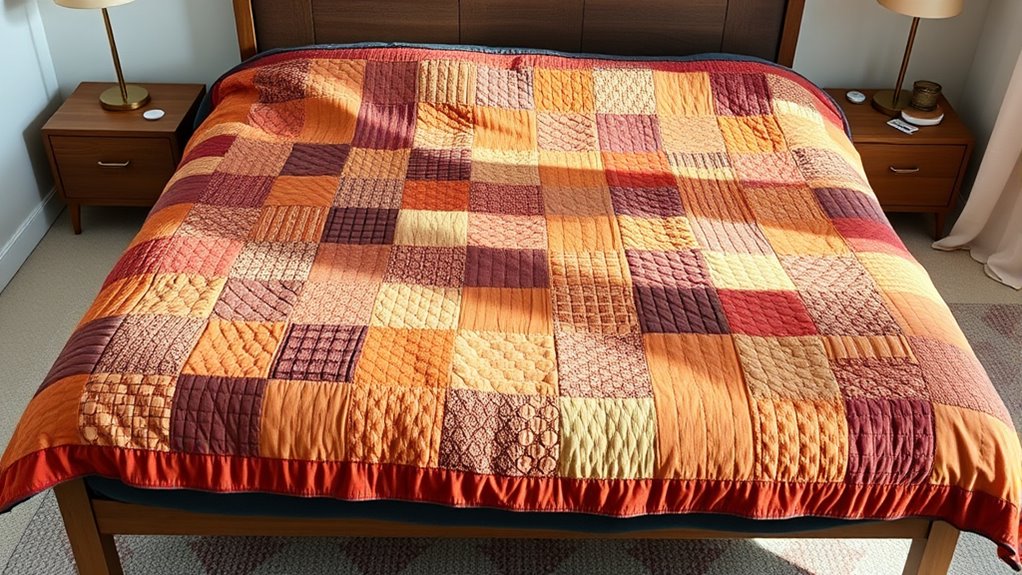
A full-size quilt is more than just a cozy bed covering; it’s a versatile bedding option that typically measures around 81 by 96 inches.
You’ll find that full-size quilts provide ample coverage for a double or full bed, making them ideal for a range of sleeping arrangements.
The historical significance of full-size quilts can’t be overlooked. They’ve been a staple in homes for generations, often crafted with care and creativity.
Each stitch tells a story, reflecting the artistry and heritage of the maker.
When you choose a full-size quilt, you’re not just adding warmth to your bedroom; you’re also embracing a piece of history.
From vibrant patterns to intricate designs, full-size quilts often carry emotional weight, connecting you to the past while enhancing your decor.
Standard Dimensions for Full-Size Quilts
In regard to standard dimensions, full-size quilts typically measure around 81 by 96 inches.
This size is perfect for a double bed, providing ample coverage and comfort.
When selecting your quilt, consider the fabric types you prefer.
Cotton is a popular choice for its breathability and softness.
Flannel offers warmth for cooler nights.
Another aspect to think about is quilt weights.
Depending on the fabric type and batting used, quilts can range from lightweight to heavy.
Lightweight quilts are great for layering, while heavier ones provide extra warmth during colder months.
Knowing these dimensions and factors helps you make an informed decision when choosing a full-size quilt.
Whether you’re creating your own or buying one, understanding the standard sizes and material options will help you find the perfect fit for your bed and personal style.
How to Measure Your Quilt for Accuracy?
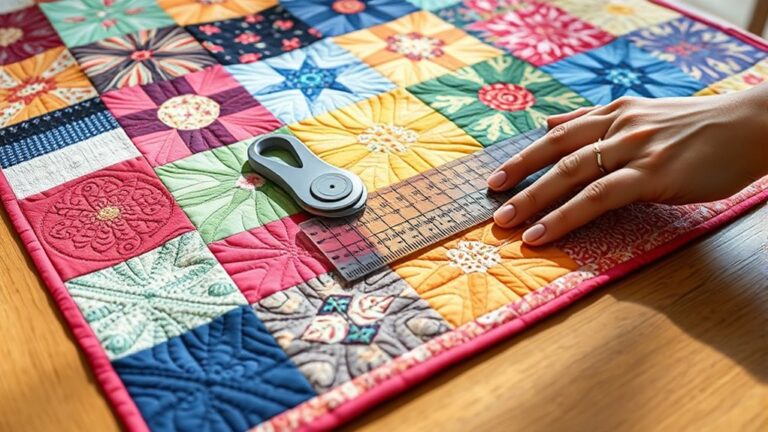
Finding the right size for your full-size quilt is important, but it’s just as vital to measure it accurately. Start by laying your quilt flat on a clean, even surface.
Use measuring tools like a fabric tape measure or a ruler for precise readings. Measure the width and length at several points, especially if your quilt has a unique shape or design.
This guarantees quilt accuracy, capturing any variations. Don’t forget to include any borders or embellishments in your measurements, as they contribute to the overall size.
Record each measurement as you go, noting the largest dimensions for a better fit. If you’re planning to use the quilt with specific bedding or furniture, double-check those dimensions too.
Variations in Full-Size Quilt Sizes
How can quilt sizes vary so much? Regarding full-size variations, you’ll find that different manufacturers and patterns can lead to quilt size differences.
For instance, a standard full-size quilt typically measures around 81 by 96 inches, but you might come across options that are slightly larger or smaller. This inconsistency often arises from regional preferences, design choices, and the intended use of the quilt.
Some quilters prefer a more generous size for draping over a bed, while others might stick to the traditional dimensions. Furthermore, custom quilts can throw off the standard measurements entirely.
Quilters often choose generous sizes for draping or stick to traditional dimensions, while custom quilts can vary widely.
It’s essential to check the specific dimensions before committing to a pattern or fabric cut. Understanding these variations guarantees you get the right fit for your needs, whether you’re making a cozy bedspread or a decorative piece.
Don’t forget to account for any shrinkage after washing, too!
Best Batting for Full-Size Quilts
Choosing the right batting for your full-size quilt can make all the difference in its overall look and feel. You’ll find several batting types available, each offering unique benefits.
Cotton batting gives a soft, breathable finish, while polyester provides durability and loft. If you’re after a cozy, warm quilt, consider wool batting. It’s excellent for insulation and drapes beautifully.
When it comes to batting thickness, think about your quilt’s purpose. Thicker batting adds warmth and a puffier appearance, which is ideal for colder climates.
On the other hand, thinner batting offers a lighter feel and is perfect for warmer weather or decorative quilts.
Always keep in mind how your chosen batting affects the quilting process, as some types can shift more than others. Test different batting options to see what suits your style and needs best; the right choice can enhance your quilt from good to stunning.
Fabric Requirements for Full-Size Quilts
After selecting the right batting, the next step involves determining the fabric requirements for your full-size quilt.
You’ll need to evaluate various fabric types and color schemes that suit your style and preferences. Here’s a quick breakdown:
- Main Fabric: For the quilt top, you’ll typically need around 8 to 10 yards of your chosen main fabric. This can be a blend of cotton or other quilting fabrics.
- Backing Fabric: Plan for about 5 to 7 yards of backing fabric. This should complement your main fabric and add depth to the overall design.
- Binding Fabric: You’ll need about ½ yard to 1 yard for the binding. Choose a contrasting or coordinating fabric to frame your quilt beautifully.
Popular Full-Size Quilt Patterns and Designs
When it comes to full-size quilts, there are so many patterns out there to suit just about anyone’s style. If you’re drawn to classic looks, traditional patchwork patterns never go out of fashion—they have that timeless, cozy charm. On the other hand, if you prefer something a bit more up-to-date, modern geometric designs can give your quilt a fresh, contemporary vibe. And for those who feel inspired by the outdoors, nature-themed motifs are a great way to bring a little bit of the outside world right into your home.
Traditional Patchwork Patterns
While exploring traditional patchwork patterns, you’ll uncover a rich tapestry of designs that have stood the test of time.
These patterns not only reflect a deep patchwork history but also showcase various traditional techniques.
Here are three popular designs you might consider:
- Log Cabin: A classic that symbolizes home and warmth, featuring alternating light and dark fabrics.
- Double Wedding Ring: A romantic design representing unity, often made with intricate curves and vibrant colors.
- Nine-Patch: Simple yet versatile, this pattern uses a grid of nine squares, allowing for endless creativity.
Modern Geometric Designs
As traditional patchwork patterns have their charm, modern geometric designs bring a fresh perspective to full-size quilts. These designs often use clean lines and bold shapes, making them visually striking and contemporary.
You’ll find that modern color palettes, featuring vibrant hues or muted tones, can enhance the overall aesthetic of your quilt. Minimalist patterns, such as triangles, hexagons, or simple squares, offer a sleek look that complements modern interiors.
When piecing together your quilt, consider how these geometric elements can transform your space. By embracing these designs, you not only create a functional piece but also a work of art that reflects your personal style.
Immerse yourself in the world of modern quilting and investigate endless possibilities!
Nature-Inspired Motifs
Nature-inspired motifs breathe life into full-size quilts, capturing the beauty of the great outdoors.
You’ll find that these designs resonate with many, offering a comforting connection to nature.
Here are three popular nature themes you might consider:
- Floral Patterns: Bright, colorful flowers can create a lively and cheerful atmosphere in your quilt.
- Leaf Designs: Incorporating different leaf shapes and colors can bring a serene, earthy vibe to your project.
- Animal Imagery: Delicate depictions of birds, butterflies, or woodland creatures can add whimsy and charm.
Tips for Quilting a Full-Size Project
When tackling a full-size quilt project, it’s essential to stay organized and focused.
Start by selecting high-quality fabrics that complement each other. Fabric selection directly impacts the final look, so take your time with this step.
Use various quilting techniques like piecing, appliqué, and quilting patterns to add depth and interest. This variety will make your quilt more dynamic and visually appealing.
Here’s a quick reference table to help you stay on track:
| Step | Tips | Tools Needed |
|---|---|---|
| Planning | Sketch your design | Pencil, graph paper |
| Fabric Selection | Choose a cohesive color palette | Fabric swatches |
| Assembly | Pin pieces to avoid shifting | Pins, sewing machine |
| Quilting | Practice stitch consistency | Quilting foot, thread |
With attention to detail and a clear plan, you’ll find the process enjoyable and rewarding.
Happy quilting!
Caring for Your Full-Size Quilt
After putting in the effort to create your full-size quilt, it’s important to care for it properly. This helps maintain its beauty and longevity.
Caring for your quilt ensures its beauty and longevity, making your effort truly worthwhile.
Here are some quilt maintenance tips to keep your quilt looking fresh:
- Regular Washing: Wash your quilt gently in cold water using a mild detergent. This will help preserve the colors and fabric integrity. Try to avoid bleach.
- Stain Removal Techniques: For stains, act quickly! Blot, don’t rub, using a damp cloth and mild soap. Always test any cleaning solution on a small area first.
- Storage: When you’re not using your quilt, store it in a cool, dry place. Avoid plastic bags, since they can trap moisture. Instead, go for breathable cotton storage.
Taking these small steps can really help your quilt look its best for years to come.
When to Consider Custom Quilt Sizes?
If your bed has unique dimensions, going for a custom quilt could be the perfect solution. Sometimes, standard sizes just don’t cut it—maybe you have an unusually tall mattress or a bed shape that’s a bit outside the norm. In these cases, a custom quilt ensures you get the coverage and fit you want.
But it’s not just about size. Maybe you have a particular design in mind or want certain colors and patterns that reflect your style. Custom quilts let you bring those ideas to life, making your bedding truly one-of-a-kind.
Unique Bed Dimensions
Many beds come in unique dimensions that standard quilts just can’t accommodate.
If you’ve got one of those unique bed styles or uncommon mattress sizes,
you might want to contemplate custom quilt sizes.
Here are three situations where custom options make sense:
- Platform Beds: These often have lower profiles that standard quilts may not cover adequately.
- Adjustable Beds: With their varying positions, a tailored quilt guarantees a snug fit without bunching.
- Oversized Mattresses: If you own a California King or other non-standard size, custom quilts are a must for proper coverage.
Specialty Design Requirements
In relation to quilts, unique design preferences can also play a significant role in determining size.
If you’re using specialty fabrics or incorporating unique techniques, a standard size might not work.
Custom quilt sizes allow you to showcase your creativity while ensuring a perfect fit.
| Considerations | Custom Size Benefits |
|---|---|
| Specialty Fabrics | Tailored to your fabric’s characteristics, enhancing visual appeal. |
| Unique Techniques | Accommodates intricate designs, ensuring they shine without being cramped. |
| Special Occasions | Perfect for gifts where personalization matters. |
| Non-Standard Beds | Fits unusual bed dimensions, providing a seamless look. |
When you’re ready to craft that special quilt, think about these factors to make the best decision.
Personal Aesthetic Preferences
How can your personal style influence the dimensions of a quilt?
When you choose to customize a quilt, your aesthetic preferences play an essential role.
Your color choices and design elements should align with your space and personality.
Here are three key factors to take into account:
- Room Size: A larger room may benefit from a bigger quilt to create balance and harmony.
- Intended Use: If it’s for a specific function, like a bedspread or wall hanging, dimensions should reflect that.
- Design Complexity: Intricate patterns might look better on a larger scale, enhancing your personal style.
Frequently Asked Questions
What Materials Are Best for a Full-Size Quilt Backing?
For a full-size quilt backing, you’ll want to use cotton blends for their durability and comfort. They’re breathable and easy to work with, making them a popular choice.
Consider pairing your backing with appropriate batting types like cotton or polyester for added warmth and loft. These materials work well together, ensuring your quilt feels cozy and looks great.
Don’t forget to pre-wash your fabrics to prevent any shrinkage later on!
How Much Do Full-Size Quilts Typically Weigh?
Imagine wrapping yourself in a cozy cloud; that’s the feel of a full-size quilt. Typically, these quilts weigh between 6 to 12 pounds, depending on your fabric choices.
Thicker materials like flannel or batting add heft, while lighter fabrics keep it airy. So, if you’re seeking comfort without the bulk, consider your options carefully.
Your quilt’s weight can transform your cozy experience into something truly special.
Can I Use a Full-Size Quilt on a Queen Bed?
Yes, you can use a full-size quilt on a queen bed, but you might find it doesn’t offer complete bed coverage.
A full-size quilt typically measures around 84 by 90 inches, which may leave some areas of your queen bed exposed.
If you prefer a snug fit, consider layering it with a bed skirt or additional blankets to improve coverage and create a cozy look.
What Tools Do I Need for Quilting a Full-Size Project?
For quilting a full-size project, you’ll need some fantastic tools. First, gather great fabric selection; choose delightful designs and colors that inspire you.
Next, grab quality quilting techniques like rotary cutters, cutting mats, and rulers to guarantee precision. Don’t forget pins and a sturdy sewing machine for seamless stitches.
Finally, a comfortable workspace with ample light will help you create your masterpiece effortlessly. Happy quilting!
How Long Does It Take to Make a Full-Size Quilt?
Making a full-size quilt usually takes anywhere from 20 to 40 hours, depending on your quilt making techniques and skill level.
If you plan ahead and manage your time effectively, you can break it down into manageable sessions.
Consider setting aside specific hours each week to stay on track.
Conclusion
In conclusion, knowing the big dimensions of a full-size quilt can truly improve your quilting experience.
As the saying goes, “Measure twice, cut once,” so always double-check your measurements for accuracy.
Whether you’re choosing batting or exploring patterns, each detail matters in creating a beautiful quilt.
With the right care, your quilt can become a cherished heirloom, providing warmth and comfort for years to come.
So, immerse yourself in your next project with confidence and creativity, keeping the big dimensions of a full-size quilt in mind!