What Size Is a Baby Quilt?
Are you struggling to figure out what size is a baby quilt? You’re definitely not alone—many new parents and gift-givers find themselves overwhelmed by all the options.
With so many baby quilt sizes out there, it’s easy to feel uncertain about which size will actually suit your needs.
Baby quilts typically measure between 30×30 inches and 36×52 inches. The 30×30 inch size is great for strollers or play mats, while the 36×52 inch option fits cribs perfectly.
You might also find variations like lap quilts at 40×50 inches and toddler quilts around 42×58 inches. Choosing the right size guarantees your little one stays cozy and safe.
Finding the best fit for your nursery décor or choosing the right fabric can improve your quilt experience even further.
Key Takeaways
- Baby quilts typically range from 30×30 inches to 36×52 inches. This size variety caters to different needs and uses.
- A 30×30 inch quilt is perfect for strollers or as a play mat.
- On the other hand, a 36×52 inch quilt fits well in cribs. It provides ample coverage for infants.
- There are also variations, like lap quilts that measure around 40×50 inches, and toddler quilts that are about 42×58 inches. These are great options for older children.
- Always check crib dimensions to ensure a safe and proper fit for the quilt. This helps keep your baby comfortable and secure.
What Are the Standard Sizes of Baby Quilts?
In relation to baby quilts, you’ll typically find a few standard sizes that work best for different needs. Most commonly, baby quilt dimensions range from 30×30 inches to 36×52 inches.
The smaller size, around 30×30 inches, is perfect for stroller use or as a play mat. It’s handy when you need something lightweight and portable for outings or tummy time.
The 30×30 inch quilt is ideal for strollers and play mats, offering lightweight portability for outings and tummy time.
On the other hand, the larger size of 36×52 inches fits well in cribs, providing ample coverage for your little one. This makes it a great choice for bedtime or naptime comfort.
You might also come across quilt size variations like lap quilts and toddler quilts. A lap quilt, often around 40×50 inches, can adapt with your child as they grow.
Meanwhile, a toddler quilt usually measures 42×58 inches. These sizes are nice options when your baby transitions to a toddler bed.
Choosing the right size guarantees your baby stays cozy, whether they’re napping or playing. Knowing these standard sizes helps you make an informed decision when selecting the perfect quilt for your needs.
How to Choose the Right Size for Your Baby’s Crib
When you’re picking out a quilt for your baby’s crib, start by checking the crib’s measurements to make sure the quilt will fit just right. It’s also a good idea to think about how thick the quilt is, since this can really affect how cozy and comfortable your little one feels through the night. Paying attention to these details can really help your baby sleep better and more peacefully.
Crib Dimensions Consideration
Choosing the right size for your baby’s crib is essential for safety and comfort. A properly sized crib guarantees your little one can sleep soundly without risk.
When considering crib dimensions, you’ll want to focus on standard measurements to confirm your quilt fits perfectly.
| Crib Size (inches) | Quilt Size (inches) | Notes |
|---|---|---|
| 28 x 52 | 36 x 52 | Standard for most cribs |
| 30 x 54 | 38 x 54 | Slightly larger option |
| 27 x 39 | 30 x 40 | Compact cribs available |
| 32 x 48 | 34 x 48 | For specialized designs |
Make sure to check the crib size to verify your quilt fitting is just right. This way, you create a cozy and safe environment for your baby.
Quilt Thickness Recommendations
While selecting the right quilt thickness for your baby’s crib, you’ll want to take into account both comfort and safety.
Quilt batting comes in various thickness options, typically ranging from lightweight to medium. For infants, a thinner quilt is often safer, reducing the risk of overheating and guaranteeing better airflow.
A 100% cotton batting is a popular choice, as it’s breathable and soft against your baby’s skin. If you prefer a bit more warmth, opt for medium thickness, but be cautious of over-bundling.
Always check the manufacturer’s guidelines to verify the quilt meets safety standards. By considering these factors, you can create a cozy and secure environment for your little one.
Common Uses for Baby Quilts in Everyday Life
Baby quilts serve a variety of practical purposes in everyday life, making them essential for new parents. You can use them as cozy blankets for nap time, offering warmth and comfort.
Their everyday versatility means they’re perfect for playtime, providing a soft surface for your little one to crawl or play on. When it’s time to travel, a baby quilt easily fits in your diaper bag, so your baby always has a familiar blanket wherever you go.
You might also find baby quilts useful during diaper changes, creating a clean, cushioned space. They’re great for adding a decorative touch to a nursery, too, enhancing the room’s aesthetic while being functional.
Finally, baby quilts make thoughtful gifts for expecting friends, showcasing your care in a unique way. With so many practical applications, you’ll wonder how you ever managed without one!
Baby Quilts vs. Other Types of Quilts: What’s the Difference?
When comparing baby quilts to other types of quilts, you’ll notice some key differences tailored to specific needs. Baby quilts are generally smaller, typically around 36 by 50 inches. This makes them perfect for cribs or strollers.
In contrast, larger quilts are designed for beds or decorative purposes. They serve a different function and cover more area.
You’ll also find a variety of baby quilt styles, often featuring playful patterns and soft colors that appeal to infants. These designs prioritize comfort and safety, using materials that are gentle against a baby’s sensitive skin.
Quilt care is another vital difference. Baby quilts often require more delicate washing methods to maintain their softness and integrity.
On the other hand, larger quilts might handle more robust cleaning. Understanding these distinctions will help you choose the right quilt for your little one, ensuring both functionality and style.
Best Fabrics for Baby Quilts
When you’re picking out fabrics for a baby quilt, comfort really is the most important thing. Most people love soft cotton because it feels gentle against a baby’s delicate skin. Plus, it’s easy to care for and holds up well to frequent washing—something that’s definitely important with little ones!
You might also want to think about organic fabric options. These are great if you’re looking for something safe and eco-friendly. Organic cotton, for example, is grown without harsh chemicals, making it an excellent choice for babies with sensitive skin or for parents who want to keep things natural.
Soft Cotton Choices
Choosing the right fabric for a baby quilt can make all the difference in comfort and durability. Soft cotton is a top choice because it’s gentle against a baby’s skin and easy to care for.
When exploring fabric types, opt for 100% cotton for breathability and softness. You’ll find various prints and colors, making it fun to create the perfect quilt.
Always check the care instructions; most cotton fabrics can be machine washed and dried, making maintenance a breeze. Pre-washing is a good idea too, as it helps prevent shrinkage and color bleeding.
Organic Fabric Options
If you’re looking for fabrics that are even gentler on your baby’s skin, organic options are a fantastic choice. These eco-friendly options are made without harmful chemicals, ensuring a safer environment for your little one.
When you choose organic fabrics, you’re not just prioritizing your baby’s comfort. You’re also supporting sustainable fabric sourcing practices that benefit the planet.
Cotton, bamboo, and linen are excellent organic materials for baby quilts. They’re soft, breathable, and hypoallergenic, making them perfect for sensitive skin.
Plus, many organic fabrics come in adorable prints and colors, so you won’t sacrifice style. By opting for organic, you’re creating a cozy haven for your baby while making a responsible choice for the environment.
How to Measure and Sew Your Own Baby Quilt
Measuring and sewing your own baby quilt can be a rewarding project that allows you to customize every detail. Start by measuring the desired size, usually around 36” x 48”. This gives you enough space for little ones to play or sleep.
Next, choose your fabric selection. Opt for soft, breathable materials like cotton or flannel that are gentle on a baby’s skin.
Once you have your fabric, cut it into squares or rectangles according to your design. You can also investigate various quilting techniques, such as patchwork or applique, to add visual interest.
Don’t forget to leave extra fabric for seam allowances.
As you sew, keep your seams consistent to guarantee a neat finish. Finally, add a backing and batting before quilting layers together.
Matching Your Baby Quilt With Nursery Decor
To create a harmonious nursery, it’s essential to match your baby quilt with the overall decor. Start by considering your color schemes; choose hues that complement the walls, furniture, and other textiles.
If you’ve got a soft pastel palette, opt for a quilt that echoes those shades. Next, think about pattern coordination. If your nursery features bold prints, a quilt with a simpler design can balance the visual elements.
Conversely, if the room is relatively neutral, a vibrant quilt can serve as a focal point. Don’t forget to incorporate thematic elements that reflect your personality or interests, whether it’s animals, stars, or floral designs.
Safety Tips for Choosing a Baby Quilt
When selecting a baby quilt, safety should always be your top priority. Start by checking if the quilt meets safety standards set by organizations like the Consumer Product Safety Commission. These guidelines guarantee the quilt is free from harmful chemicals and materials.
Next, consider fabric safety. Opt for natural fibers like cotton, which are less likely to irritate your baby’s sensitive skin.
Opt for natural fibers like cotton to ensure safety and comfort for your baby’s sensitive skin.
Avoid quilts with loose threads or embellishments that could pose choking hazards. It’s important to keep these risks in mind when making your choice.
Verify the quilt is appropriately sized for your crib or play area, preventing any risk of suffocation or entrapment. Look for quilts that are lightweight yet warm, allowing for comfort without overheating.
Finally, always supervise your baby while they’re using the quilt, especially during sleep. By following these tips, you can choose a baby quilt that not only looks great but also prioritizes your little one’s safety.
Beyond the Nursery: Uses for Baby Quilts
Baby quilts aren’t just for the nursery; they can be incredibly versatile in your daily life.
These cozy creations offer numerous practical applications that extend beyond the crib.
Here are some great ways to use them:
- Playtime Mat: Spread it out for a soft, safe area where your little one can play.
- Stroller Blanket: Use it to keep your baby warm during outings in chilly weather.
- Decorative Throw: Add a splash of color to your living room or nursery décor.
- Gift Ideas: Handmade baby quilts make thoughtful gifts for baby showers or first birthdays.
With their charming designs and functionality, baby quilts are more than just a nursery essential.
They’ll become a cherished part of your family’s everyday life.
Embrace their versatility and see how they can brighten your moments together!
How to Shop for Baby Quilts Online
Shopping for baby quilts online can be an enjoyable experience, especially with so many options available.
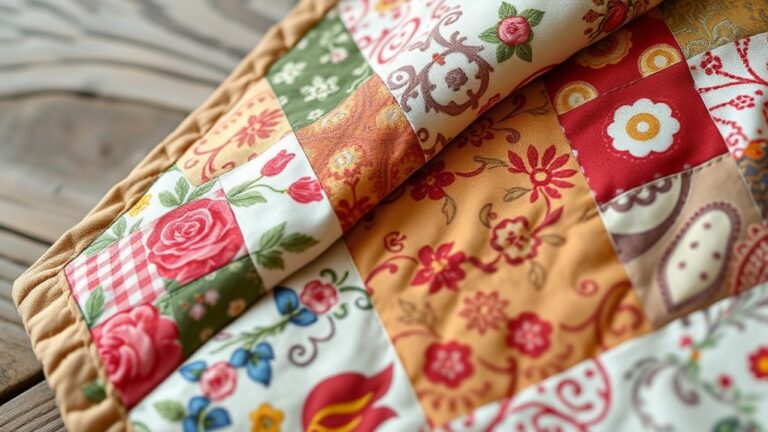
Start by exploring various baby quilt styles, from classic patchwork to modern designs. Knowing your preferred aesthetic can help narrow down your choices.
Use online shopping tips to make your experience smooth. First, read product descriptions carefully to understand the materials and dimensions.
Look for customer reviews to gauge quality and durability. Don’t forget to check return policies, just in case the quilt isn’t quite what you expected.
Set a budget beforehand to avoid overspending, and consider filtering search results by price range. If you’re looking for unique pieces, check out handmade options on platforms like Etsy.
Finally, take your time! Enjoy browsing until you find that perfect baby quilt that matches your style and needs.
Happy shopping!
Frequently Asked Questions
How Do I Care for a Baby Quilt?
To care for a baby quilt, you should regularly check for stains and wash it gently in cold water with mild detergent. Avoid bleach to protect the fabric.
For quilt cleaning, consider air drying or using a low heat setting in the dryer. Keep it away from direct sunlight to prevent fading.
Following these maintenance tips helps keep the quilt looking fresh and cozy for your little one.
Can Baby Quilts Be Used for Toddlers?
Absolutely, you can use baby quilts for toddlers, but consider a few factors.
As they grow, toddlers often need more coverage and space. A toddler quilt offers benefits like warmth and comfort, perfect for those chilly nights.
When doing a quilt size comparison, keep in mind that toddler quilts are generally larger. So, if you find a baby quilt that still fits, it can serve as a cozy option for your little one.
What Is the Weight of a Typical Baby Quilt?
A typical baby quilt weighs between 2 to 5 pounds, depending on the baby quilt dimensions and quilt fabric types.
Lightweight materials like cotton keep it cozy without being too heavy, while flannel or minky can add some heft.
When you choose a quilt, consider how it’ll feel for your little one during naps or bedtime. You want it warm and comforting, yet easy for you to handle during washing and care.
Are There Any Safety Concerns With Baby Quilts?
Baby quilts can be as cozy as a warm hug, but you should be cautious.
Safety concerns arise mainly from the materials used. Avoid quilts with loose batting or heavy fabrics that can pose suffocation risks.
For safe sleeping, opt for lightweight, breathable materials, like cotton.
Always guarantee your baby’s sleep space is clear of any loose bedding to promote a safe and comfortable environment.
Prioritize your little one’s safety above all!
How Do I Store Baby Quilts When Not in Use?
To store baby quilts when not in use, you’ll want to use effective storage solutions.
First, fold the quilt using neat folding techniques to avoid creases.
Place it in a breathable cotton bag or a plastic container with ventilation holes.
Keep it in a cool, dry place, away from direct sunlight.
If you have multiple quilts, consider labeling the bags for easy access.
This way, your quilts stay fresh and ready for use!
Conclusion
In the grand adventure of parenthood, a baby quilt isn’t just a cozy blanket; it’s a superhero cape for snuggles!
Choosing the right size and fabric can feel like a quest for the Holy Grail, but it’s totally worth it.
With a perfect quilt, you’re not just decorating. You’re creating a magical world for your little one.
So go ahead, wrap your baby in warmth and style, and let those nursery dreams soar to new heights with the perfect baby quilt size!