What Size Is a Crib Quilt?
Finding the perfect crib quilt size can be surprisingly stressful. Between keeping your baby safe and creating a cozy, stylish nursery, it’s easy to feel overwhelmed by all the choices out there.
If you’re unsure what dimensions are best for your little one’s comfort, you’re not alone—many parents struggle with this same question when setting up the nursery.
Crib quilts typically measure between 36×48 inches and 40×60 inches, with the ideal size around 36×52 inches. This snug fit guarantees safety, reducing the risks of entrapment and suffocation.
When choosing a crib quilt, consider how its size complements other bedding elements like sheets and bumpers. A well-fitted quilt also improves your nursery’s decor.
Want to know more about selecting the perfect quilt for your space? Keep exploring for additional insights and tips!
Key Takeaways
- Crib quilts typically measure between 36×48 inches and 40×60 inches for a snug fit in standard cribs.
- For most families, the ideal size for a crib quilt is around 36×52 inches. This offers a good balance between coverage and manageability.
- If you’re using a compact crib or want to layer, smaller quilts work well. For more coverage, you can always choose a larger size.
- Picking the right quilt size also helps your bedding look cohesive with crib sheets and bumpers, so everything fits together nicely.
- Most importantly, using the correct size quilt reduces the risk of entrapment and suffocation, helping keep your infant safe.
What Sizes Should You Expect for Crib Quilts?
When choosing a crib quilt, you’ll typically find sizes ranging from 36 by 48 inches to 40 by 60 inches. These crib quilt dimensions are designed to fit standard cribs, ensuring a snug and secure fit for your little one.
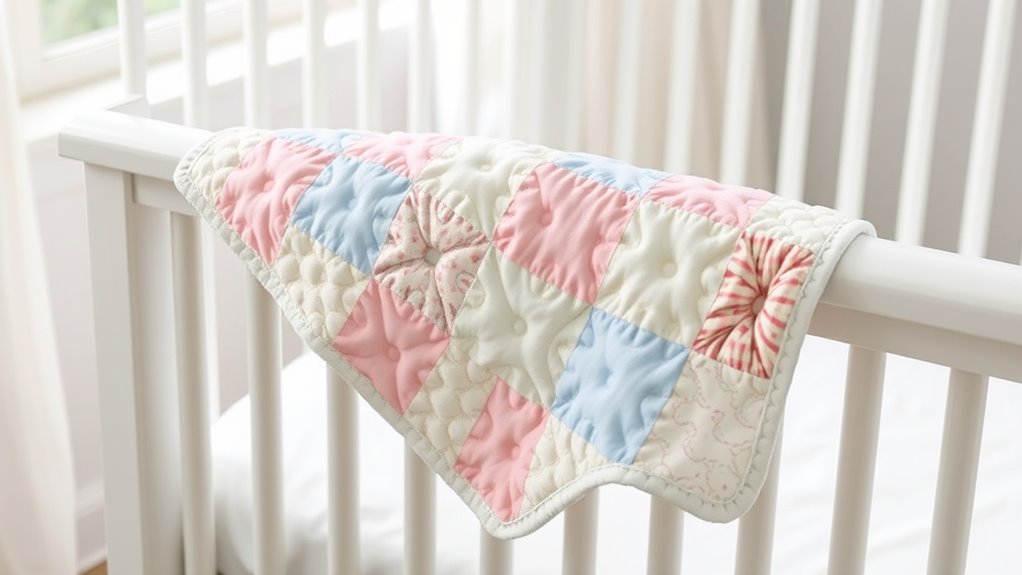
You’ll want to reflect on the quilt’s style as well. There are various crib quilt styles, from classic patchwork to modern prints, each adding a unique touch to the nursery decor.
A smaller quilt may be perfect for a more compact crib or for layering, while larger options can provide additional coverage or even serve as a decorative throw.
When selecting, think about how the size and style will complement your nursery theme. Ultimately, it’s about finding the right balance between practicality and aesthetics, ensuring your baby’s comfort while enhancing the room’s overall look.
Why Size Matters for Crib Quilts
When you’re picking out a crib quilt, size really does matter—it’s all about keeping your baby safe and comfortable. If the quilt is the right size, you don’t have to worry as much about things like entrapment, which is always a relief for parents. Plus, when the quilt fits just right, it works so much better with the rest of your bedding. Paying attention to these details can really make setting up your nursery feel a lot smoother and more reassuring.
Optimal Dimensions For Safety
Choosing the right size for a crib quilt is essential for your baby’s safety. A properly sized quilt helps prevent suffocation hazards and guarantees that your little one stays cozy without overheating.
Here are three key dimensions to take into account for ideal crib safety:
- Size: Aim for a quilt that’s about 36×52 inches. This fits standard crib dimensions well.
- Thickness: Choose a lightweight quilt to minimize the risk of your baby becoming trapped or smothered.
- Fit: Make sure the quilt isn’t too large, since excess fabric can bunch up and create safety issues.
Compatibility With Bedding Sets
While selecting a crib quilt, it’s crucial to reflect on how it fits with your bedding set.
Proper quilt compatibility guarantees that your crib bedding not only looks great but also works functionally with the other elements in the nursery.
A well-sized quilt complements sheets and bumpers, creating a cohesive look while providing comfort for your baby.
| Bedding Element | Recommended Quilt Size |
|---|---|
| Crib Sheets | 36″ x 52″ |
| Crib Bumpers | 27″ x 52″ |
| Quilt | 30″ x 40″ |
| Mattress | 28″ x 52″ |
| Pillow | 12″ x 16″ |
Common Materials Used in Crib Quilts
Crib quilts are often crafted from a variety of materials, each contributing to their comfort and durability. Choosing the right fabric types can improve the look and feel of your quilt, while ensuring it stands up to daily use.
Here are three common materials you’ll often find in crib quilts:
- Cotton: This is the most popular choice due to its softness and breathability. It also comes in a wide range of quilt patterns, making it easy to match your nursery decor.
- Flannel: Known for its warmth, flannel is perfect for cooler climates. It adds a cozy touch that many parents appreciate.
- Bamboo: This eco-friendly option is hypoallergenic and moisture-wicking, making it ideal for sensitive skin.
How to Measure Your Crib for the Perfect Fit
Measuring your crib accurately is vital for a perfect-fitting quilt.
Start by grabbing a measuring tape.
Begin your project by reaching for a measuring tape. Accurate measurements set the foundation for a perfectly fitting quilt.
Measure the length and width of the crib mattress, as this directly influences your quilt fitting.
Don’t forget to measure the height from the mattress to the top of the crib rails if you want extra coverage.
When you’re done with crib measuring, jot down your measurements.
For a snug fit, add a few inches to both the length and width to account for any shrinkage or settling.
If you’re using a quilt that might bunch or shift, consider those extra inches even more.
Once you have your dimensions, you can confidently shop for or create your crib quilt.
A well-measured crib not only improves the quilt’s appearance but also guarantees safety and comfort for your little one.
Happy measuring!
Differences Between Crib Quilts and Other Bedding
Knowing the right size for your crib quilt is just the start.
Understanding how crib quilts differ from other bedding can help you make the best choice for your little one.
Here are three key differences:
1. Size: Crib quilts are specifically designed to fit standard crib dimensions, typically around 36 by 52 inches.
Other bedding, like toddler or twin quilts, is larger.
2. Design: Crib quilt styles often showcase playful themes and vibrant colors, tailored to nursery aesthetics.
In contrast, adult bedding usually features more subdued patterns.
3. Functionality: Crib quilts prioritize warmth and softness, while other bedding may focus on durability or style.
Crib quilt patterns often emphasize comfort for your baby, ensuring their safety and coziness.
Choosing the right crib quilt not only improves your nursery’s look but also provides a snug, comforting space for your baby.
Key Safety Features to Look for in Crib Quilts
When you’re picking out a crib quilt, safety should really be at the top of your list. It’s a good idea to choose quilts that are made from non-toxic fabrics, so you know your baby isn’t exposed to any harmful chemicals. Also, take a close look at the stitching—secure, tight stitching helps prevent loose threads that could be risky for little fingers.
Paying attention to these details can make all the difference in keeping your baby safe and comfy while they rest.
Fabric Material Safety
Choosing the right fabric for a crib quilt is essential for your baby’s safety and comfort.
You want to make sure the materials are not only cozy but also safe.
Here are three key features to take into account:
1. Fabric Durability:
Look for fabrics that withstand frequent washing and maintain their quality over time.
This makes certain your quilt stays safe and beautiful.
2. Hypoallergenic Options:
Opt for materials that won’t irritate your baby’s sensitive skin.
Natural fibers like cotton are often a great choice.
3. Non-Toxic Dyes:
Verify that the colors used are free from harmful chemicals.
This protects your little one from potential allergens.
Secure Stitching Quality
Beyond fabric material, secure stitching quality plays an essential role in ensuring your crib quilt is safe for your baby. When choosing a quilt, pay attention to stitching techniques.
Look for double-stitched seams or reinforced corners, as these provide extra strength and prevent unraveling. Weak stitching can lead to loose threads, which pose a choking hazard.
Thread durability is just as significant. Opt for quilts made with high-quality threads that withstand wear and tear.
Check for tight, even stitches that won’t easily come undone over time. By focusing on these key aspects, you’ll help create a safer sleeping environment for your little one.
This way, you can ensure that the quilt remains intact throughout its use. Safety really does start with secure stitching!
Stylish Crib Quilt Options for Your Nursery
Crib quilts come in a variety of styles, making it easy to find one that perfectly complements your nursery’s theme. Whether you’re aiming for a cozy or chic look, here are some stylish options that stand out:
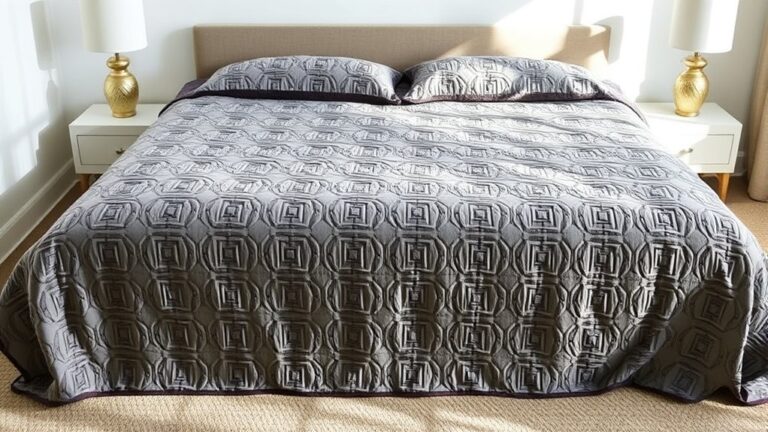
- Modern Designs: Sleek, geometric patterns can add a contemporary touch to your nursery. Look for quilts with clean lines and muted colors for a sophisticated vibe.
- Vibrant Patterns: Bright, bold colors and playful motifs can energize the space. Choose quilts featuring animals, nature, or fanciful designs to stimulate your baby’s imagination.
- Classic Prints: Timeless patterns like polka dots or stripes never go out of style. These options can create a warm, inviting atmosphere while easily coordinating with other nursery decor.
With these stylish crib quilt options, you can create a beautiful and functional space for your little one to grow and dream.
Caring for Your Crib Quilt
Taking care of your crib quilt doesn’t have to be complicated—it just takes a little bit of know-how. If you want your quilt to keep looking its best and last for years, a few simple habits can make a big difference.
First, you’ll want to pay attention to how you wash it. Gentle washing really helps preserve the fabric and colors. When it’s time to put the quilt away, storing it the right way is just as important as cleaning it.
Washing Instructions For Quilts
Regarding maintaining your quilt’s beauty and longevity, knowing the right washing instructions is essential.
Here are some helpful quilt care washing tips to keep your crib quilt in great condition:
- Use Cold Water: Always wash your quilt in cold water to prevent fading and shrinking.
- Gentle Cycle: Select a gentle cycle on your washing machine to avoid damaging the fabric and stitching.
- Air Dry: Instead of using a dryer, hang your quilt to air dry.
This helps preserve its shape and prevents any potential shrinkage.
Following these steps will guarantee your quilt remains vibrant and cozy for years to come.
Storing Quilts Properly
To keep your quilt in top shape, proper storage is key. Start by folding your quilt neatly, avoiding creases that can form over time.
Use breathable fabric bags or cotton sheets for quilt storage, steering clear of plastic, which can trap moisture and cause mildew.
If you’re not using your quilt year-round, consider a seasonal rotation. Store away summer quilts in the colder months and vice versa.
This not only protects the fabric but also keeps your space organized.
Before storing, verify the quilt is clean and dry to prevent any unwanted odors or mold.
Top Places to Buy Crib Quilts
When you’re on the hunt for the perfect crib quilt, exploring various options can lead you to some fantastic finds.
Here are three top places to contemplate:
1. Etsy: This is a goldmine for unique patterns.
You can find handmade quilts that reflect your style and often support small businesses.
2. Target: They offer a variety of crib quilts, including eco-friendly options made from organic materials.
You can easily pick up something stylish and safe for your baby.
3. Local Craft Fairs: These events often feature local artisans who create one-of-a-kind quilts.
It’s a great way to uncover unique designs while supporting your community.
Evaluating Custom Crib Quilts: Are They Worth It?
Why consider a custom crib quilt? If you’re looking for something unique that matches your nursery’s theme, custom designs can be a fantastic choice.
They not only add a personal touch but also allow you to select colors, patterns, and fabrics that resonate with your style.
However, it’s crucial to weigh cost considerations. Custom quilts often come with a higher price tag than store-bought options.
You need to decide if the investment aligns with your budget and if the quilt will be a lasting keepsake or simply decorative.
Additionally, think about the quality. A well-made custom quilt can last for years and might become a cherished family heirloom.
Ultimately, if you value personalization and craftsmanship, a custom crib quilt could be worth it. Just make sure it fits your financial plan and meets your expectations regarding design and durability.
Frequently Asked Questions
Can Crib Quilts Be Used for Older Children?
Yes, crib quilts can definitely be used for older children! Their longevity makes them a versatile choice as you shift to a toddler bed.
Since crib quilts are typically smaller, they fit nicely on toddler beds, providing warmth and comfort. As your child grows, they can still enjoy the familiar design and softness of their crib quilt.
This helps make bedtime feel cozy and inviting during this important change in their life.
How Do I Choose the Right Design for My Nursery?
Choosing the right design for your nursery is like painting a dreamscape. You’ll want to start with a soothing color scheme that makes the space feel cozy and inviting.
Don’t shy away from pattern mixing; playful stripes and soft florals can dance together beautifully. Consider your baby’s personality and your own style.
Balance vibrant hues with calming tones, creating a harmonious retreat where both you and your little one can thrive.
Are Crib Quilts Machine Washable?
Yes, most crib quilts are machine washable, making crib quilt care straightforward. Just be certain to follow the care instructions on the label, as materials can vary.
Regular washing helps maintain cleanliness and safety for your little one. Always check for any loose threads or damage before washing to guarantee crib quilt safety.
Keeping your quilt clean and safe contributes to a healthy nursery environment for your baby.
What Is the Average Price Range for Crib Quilts?
You’ll find crib quilts ranging from about $30 to $150, which can feel like a wealth of options.
The price often varies based on crib quilt materials and craftsmanship.
Cheaper quilts might use basic cotton, while higher-end ones may feature organic fabrics or intricate designs.
Typically, crib quilt dimensions are around 36 by 52 inches, so consider both quality and size when you’re shopping to get the best value for your little one.
Can Crib Quilts Be Used as Play Mats?
Yes, you can definitely use crib quilts as play mats! Their versatility makes them a great option for tummy time or play sessions.
Just confirm the quilt is thick enough for comfort and check for any loose threads to maintain safety. While crib quilts add a cozy touch, remember they’re primarily designed for bedding.
Always supervise your little one during playtime to confirm a safe environment. Enjoy those fun moments together!
Conclusion
When choosing a crib quilt, size really does matter for both comfort and safety. A well-fitted quilt not only improves the nursery’s style but also guarantees your little one stays cozy without the risk of suffocation.
While custom quilts can be tempting, bear in mind that quality and safety should always come first. So, whether you opt for a standard size or a personalized piece, keep your baby’s well-being at the forefront of your decision-making.
Ultimately, making sure you select the right crib quilt size provides peace of mind and keeps your nursery both stylish and safe for your baby.