Mastering Machine Quilting With a Walking Foot
If you’ve ever struggled with uneven stitches, puckered fabric, or just can’t seem to get your quilt layers to feed smoothly, you’re not alone. Many quilters find mastering machine quilting with a walking foot to be a challenge, especially when aiming for professional-looking results at home.
The good news is, with the right know-how and tools, you can overcome these common frustrations and enjoy the quilting process.
To master machine quilting with a walking foot, you’ll want to verify your machine’s properly set up with the right needle and adjusted tension. Attach the walking foot securely and check for alignment.
Use quality fabrics, like cotton blends, for stable stitching. A rotary cutter and fabric stabilizers will help you achieve precision.
Maintain even stitches by practicing techniques and exploring creative projects. Stick around, and you’ll uncover even more tips and tricks to enhance your quilting skills!
Key Takeaways
- Use a walking foot to achieve even stitching and prevent fabric puckering during machine quilting.
- Select appropriate fabrics and batting types. This helps ensure both stability and the desired loft in your quilt.
- Properly attach and adjust the walking foot. Doing so is key for optimal performance and stitch quality.
- Utilize essential tools like rotary cutters and fabric stabilizers. These help with precise cutting and reduce fabric shifting.
- Experiment with various techniques and project ideas. This is a great way to enhance your walking foot quilting skills and boost creativity.
How to Use a Walking Foot for Machine Quilting
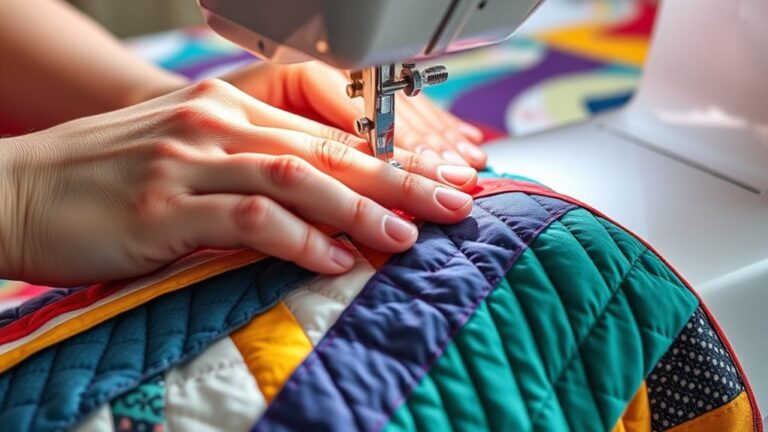
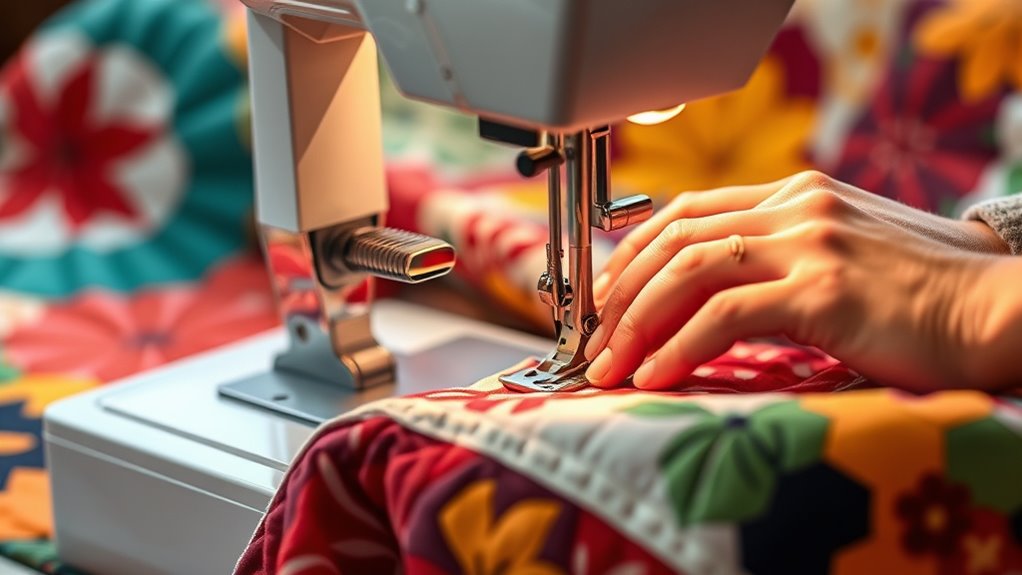
When you want to achieve even stitching in your machine quilting, using a walking foot is essential. This specialized foot helps feed the fabric evenly, preventing puckering and ensuring your quilting thread lays smoothly.
Start by selecting the right fabric. Opt for cotton or a cotton blend for best results. These materials hold stitches well and provide stability.
Next, choose a high-quality quilting thread that complements your fabric selection. A thicker thread can add texture, while finer threads offer a more delicate finish.
Adjust your machine’s tension to accommodate your chosen thread. This helps ensure it flows smoothly through the needle.
As you quilt, guide the fabric gently but firmly, allowing the walking foot to do its job. Maintain a consistent speed, and watch for any changes in stitch quality.
With practice, you’ll master the art of using a walking foot, leading to beautifully quilted projects.
Preparing Your Sewing Machine for Walking Foot Quilting
Preparing your sewing machine for walking foot quilting involves a few key steps to guarantee smooth operation.
Start by selecting the right needle choice. A size 90/14 or 80/12 universal needle typically works well for most quilting projects.
Next, check your thread tension. It should be balanced to avoid puckered seams. You might need to adjust it based on your fabric and batting thickness.
Here’s a quick reference table to help you with these settings:
| Step | Action |
|---|---|
| Needle Choice | Use a size 90/14 or 80/12 universal |
| Thread Tension | Adjust for balanced seams |
| Fabric Type | Consider weight and thickness |
| Batting Type | Select based on desired loft |
Attaching and Adjusting Your Walking Foot Made Easy
Now that your sewing machine is set up for walking foot quilting, it’s time to focus on attaching and adjusting your walking foot.
Understanding the walking foot basics helps you avoid common misconceptions, ensuring a smoother quilting experience.
Grasping the fundamentals of the walking foot helps clear up misconceptions, paving the way for a seamless quilting journey.
To attach your walking foot effectively, follow these simple steps:
- Remove the presser foot: Loosen the presser foot screw and take off the standard foot.
- Align the walking foot: Position it over the needle area, making sure it fits securely.
- Secure it: Tighten the screw to hold the walking foot in place.
- Adjust the height: Use the foot’s lever to set the height based on your fabric thickness.
Must-Have Tools for Successful Walking Foot Quilting
Successful walking foot quilting hinges on having the right tools at your fingertips. To start, gather essential quilting accessories like a quality walking foot, which helps you achieve even stitches across multiple layers of fabric.
Don’t forget a good rotary cutter and mat; they make cutting precise and easy. These tools can really save you time and frustration.
Fabric stabilizing tools, such as spray starch or fusible web, can help keep your pieces from shifting during quilting. It’s a simple step that adds a lot of stability to your work.
A walking foot quilting guide is also invaluable, as it helps maintain consistent spacing between your stitching lines. This can make all the difference, especially for beginners.
Finally, consider using a seam ripper for quick corrections. It’s a must-have for any quilter and can save you from a lot of headaches.
With these tools in your arsenal, you’ll set yourself up for success and enjoy a smooth quilting experience. So, equip yourself wisely, and let your creativity flow!
Even Stitching Techniques With a Walking Foot
With the right tools at your disposal, achieving even stitching is within reach.
With the right tools, mastering even stitching in your quilting projects is easily attainable.
When using a walking foot, focus on the following techniques to guarantee even tension and stitch consistency throughout your quilting project:
- Adjust your machine settings: Verify your stitch length is consistent and appropriate for your fabric type.
- Use quality thread: Opt for thread that matches your fabric to minimize tension issues.
- Maintain a steady pace: Keep a consistent speed while sewing to avoid uneven stitches.
- Support your quilt: Use your hands to guide the fabric. This helps prevent bunching and ensures even feeding through the walking foot.
Exploring Creative Quilting Patterns With a Walking Foot
Once you’re ready to get creative, your walking foot can really open up a world of possibilities. It’s amazing how many unique geometric designs and playful curved lines you can try out with just this one tool. You don’t have to stick to straight lines—with a walking foot, you can experiment with all kinds of patterns that add depth and personality to your quilts.
And the best part? It doesn’t have to be complicated! Even if you’re just starting out, you can test out new designs and see what catches your eye. Let’s take a closer look at how you can make the most of these exciting quilting options.
Unique Geometric Designs
Geometric designs can transform your quilting projects into stunning works of art. By using a walking foot, you can easily create unique geometric motifs that showcase your creativity.
Investigate various pattern variations to boost your quilting game. Here are some ideas to inspire you:
- Triangles: Create dynamic patterns that play with light and shadow.
- Hexagons: Incorporate these shapes for a modern, honeycomb effect.
- Squares: Use repetition for a classic, structured look.
- Diamonds: Add elegance and movement to your quilts.
Experimenting with these geometric designs not only improves the visual appeal of your quilts but also builds your confidence and skills as a quilter.
Don’t hesitate to mix and match these motifs for truly unique results!
Curved Line Techniques
After mastering geometric designs, you might feel inspired to investigate the fluidity of curved lines in your quilting. Curved line variations can add a dynamic touch to your projects, creating a sense of movement and elegance.
Start by practicing gentle arcs, focusing on smooth shifts. Use your walking foot to guide you, ensuring even stitching as you navigate curves.
Experiment with different sizes and shapes of arcs; they can turn simple patterns into intricate designs. As you gain confidence, try combining arcs with other elements for a unique look.
How to Troubleshoot Your Walking Foot?
Have you ever faced issues with your walking foot during a quilting project?
You’re not alone. Troubleshooting common issues can save your quilt from frustration.
Start by checking the foot compatibility with your machine.
Confirm it’s attached properly for peak performance.
Here are some key troubleshooting techniques:
- Tension adjustments: Incorrect tension can lead to stitch skipping or uneven feeding.
- Fabric bunching: If you notice fabric bunching, try using a walking foot with built-in noise reduction.
- Maintenance tips: Regularly clean and oil your walking foot to keep it in top shape.
- Attachment methods: Double-check the attachment method to confirm it’s secure.
Tips for Maintaining Your Walking Foot
Maintaining your walking foot is key to smooth quilting.
Regular cleaning is essential; lint and dust can accumulate, affecting performance.
After each project, take a moment to wipe the foot with a soft brush or cloth.
For deeper cleaning, remove the foot and clean the feed dogs as well.
Make necessary foot adjustments to guarantee it’s properly aligned with your needle.
If you notice uneven stitching or fabric bunching, check the height and position of your walking foot.
It should glide effortlessly over your fabric.
Periodically inspect the foot for wear and tear.
If you spot any damage, consider replacing it to avoid complications in your quilting.
Choosing the Right Fabric for Walking Foot Quilting
When selecting fabric for walking foot quilting, it’s essential to reflect on both texture and weight to achieve the best results.
The right fabric can make a significant difference in your project’s outcome.
Here are some key factors to take into account:
- Fabric Weight: Heavier fabrics like canvas or denim provide durability, while lighter cottons drape beautifully.
- Fabric Blend: A mix of cotton and polyester can improve durability without sacrificing softness.
- Fabric Texture: Smooth fabrics glide easily under the walking foot, while textured options add visual interest.
- Fabric Prints and Colors: Choose prints that complement your design and colors that resonate with your theme.
Creative Quilting Projects Using Your Walking Foot
Walking foot quilting opens up a world of creative projects that can improve your skills and spark your imagination. You can immerse yourself in modern quilt designs, experimenting with geometric patterns and bold colors.
Try a simple quilt top made from rectangles and triangles. It’s a great way to practice your walking foot technique while creating something stunning.
For a unique twist, consider incorporating textured finishes. Use different thread weights or even add decorative stitches to uplift your project.
A quilted table runner with a mix of straight lines and curves can add depth and visual interest.
Don’t forget to investigate other items like placemats or wall hangings. These smaller projects are perfect for honing your skills without the commitment of a larger quilt.
You’ll not only improve your technique but also create beautiful pieces that showcase your creativity. Get started and enjoy the journey of walking foot quilting!
Frequently Asked Questions
Can I Use a Walking Foot on All Sewing Machines?
Yes, you can use a walking foot on most sewing machines, but it’s best to check your machine’s manual for compatibility.
The walking foot benefits include even fabric feeding, which makes it perfect for quilting techniques like straight-line and echo quilting.
With this foot, you’ll find it easier to handle multiple layers, resulting in smoother, more professional-looking projects.
What Types of Fabric Work Best With a Walking Foot?
You’ll find that cotton blends work best with a walking foot, especially medium-weight fabrics.
These blends offer stability and ease while quilting.
Lighter fabric weights can shift, making it harder to achieve even stitches.
Heavier fabrics might be cumbersome.
Stick to cotton blends and medium weights for smooth results.
Experimenting with different fabric types will help you uncover what works best for your specific projects and improve your quilting experience.
How Do I Clean My Walking Foot Effectively?
Cleaning your walking foot is like giving your sewing machine a rejuvenating spa day. For effective walking foot maintenance, first, unplug your machine.
Remove the foot and use a soft brush to sweep away lint and debris. You can also wipe it down with a damp cloth.
For stubborn grime, a bit of rubbing alcohol works wonders. Regular cleaning techniques keep your walking foot in top shape, ensuring smooth, beautiful quilting every time!
Is a Walking Foot Suitable for Free-Motion Quilting?
A walking foot isn’t ideal for free-motion quilting. While it’s great for straight lines and even feeding multiple layers, it restricts your movement, which you need for free-motion techniques.
You’ll miss out on the creative freedom that comes with the ability to manipulate the fabric. If you want to investigate intricate designs, consider switching to a free-motion foot.
A free-motion foot offers the flexibility and control you need for those artistic stitches.
How Does a Walking Foot Differ From a Regular Presser Foot?
Think of a walking foot as a trusty companion on a quilting journey, keeping your fabric layers in harmony.
Unlike a regular presser foot, a walking foot features feeding mechanisms that help guide multiple layers evenly, preventing shifting.
The benefits of using a walking foot include better stitch quality and reduced puckering.
You’ll find it especially useful for quilting and sewing straight lines, making your projects smoother and more professional-looking.
Conclusion
Mastering machine quilting with a walking foot opens up a world of creativity. By following these tips and techniques, you’ll be well on your way to stitching beautiful quilts that showcase your unique style.
Remember, practice makes perfect. Don’t be afraid to experiment and make mistakes along the way.
Every quilter has to learn the ropes before they can hit the ground running. So, take your time and enjoy the process.
Most importantly, embrace the journey of mastering machine quilting with a walking foot. Happy quilting!