How to Begin Quilting With a Step-By-Step Guide
Starting your first quilt can feel overwhelming—so many fabrics, tools, and techniques to choose from! If you’ve ever felt confused about where to begin or worried you’ll make a mistake, you’re not alone. Many people struggle with getting started, but the good news is that quilting can be a rewarding and relaxing hobby once you know the basics.
Whether you want to create something beautiful for your home or give a handmade gift, we’re here to guide you every step of the way.
To begin quilting, start by choosing quality fabrics like cotton and selecting a simple block pattern. Gather essential tools like a rotary cutter, mat, and sewing machine.
Familiarize yourself with key terms such as quilt sandwich and binding. Prepare your fabric by pre-washing and cutting accurately.
Consider using either hand or machine quilting methods, depending on your preference. Finally, learn how to properly bind and care for your quilt.
There’s so much more to discover in this creative journey!
Key Takeaways
- Start by selecting quality fabrics like cotton and simple block patterns that evoke happiness and suit your personal style.
- Gather essential tools, including a rotary cutter, cutting mat, sewing machine, and seam ripper. These will help make quilting more efficient and enjoyable.
- Understand key quilting terminology, such as quilt sandwich, blocks, and binding. This will enhance your knowledge and make it easier to communicate with other quilters.
- Prepare fabric by pre-washing, cutting accurately, and arranging pieces before sewing. Taking these steps ensures greater precision in your project.
- Choose appropriate batting, layer the quilt top and backing, and apply binding carefully. This careful attention will give your quilt a polished finish and help it last for years to come.
Choosing Your Fabrics and Tools for Quilting
Choosing the right fabrics and tools is essential for your quilting journey. Start by exploring various fabric types like cotton, linen, and blends. Cotton is a popular choice for its durability and ease of use, while linen offers a unique texture.
When selecting fabrics, consider how different color combinations will work together. Think about the mood you want to create. Vibrant colors can energize a space, while softer hues promote calm.
Next, invest in quality tools. A rotary cutter, cutting mat, and quilting ruler will make your cutting precise and efficient.
Don’t forget to grab some good scissors for trimming threads and a sewing machine if you don’t have one. Finally, keep a seam ripper handy. Mistakes happen!
With the right fabrics and tools, you’ll set a solid foundation for your quilting projects and release your creativity.
Key Quilting Terminology Every Beginner Should Know
Starting your quilting journey? It’s super helpful to get to know some of the main terms you’ll hear along the way. You’ll come across a variety of tools, materials, and techniques that are pretty much staples for every quilter. By understanding these key words, you’ll feel more confident and find it easier to chat with other quilters about your projects.
Basic Quilting Terms Explained
Understanding basic quilting terms is essential for any beginner enthusiastic to dive into this creative craft. Familiarizing yourself with these terms not only helps you navigate patterns but also connects you to the rich quilting history.
Here are key terms you should know:
- Quilt Sandwich: The layers of fabric, batting, and backing before quilting.
- Block: A single unit of a quilt, often made from various fabric types.
- Binding: The finishing touch that edges your quilt.
- Fat Quarter: A piece of fabric cut to 18” x 22”, perfect for quilting.
- Appliqué: A technique where fabric shapes are sewn onto a base fabric.
With these terms in mind, you’re ready to begin your quilting journey!
Essential Tools and Materials
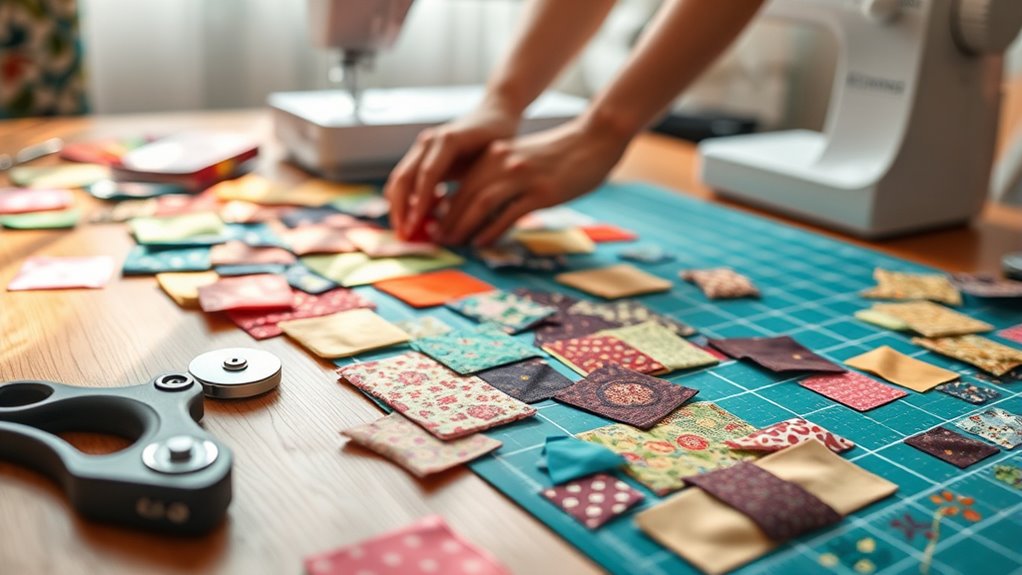
To start your quilting adventure, gathering the right tools and materials is vital. You’ll need cutting tools like rotary cutters for precision, along with various fabric types to bring your ideas to life.
Quilting rulers help guarantee accurate measurements, while marking tools let you create guidelines for sewing. Don’t forget about thread choices, since selecting the right thread can make a big difference in your project’s durability and look.
Design boards are handy for visualizing your layout before you start sewing. Pressing tools, like irons, are also essential for achieving crisp seams.
Common Quilting Techniques Defined
Quilting opens up a world of creativity, and grasping key techniques can really improve your projects.
Understanding common quilting terminology and techniques is essential for every beginner.
Here are some important concepts to get you started:
- Applique Techniques: Stitching fabric shapes onto a base fabric for decorative effects.
- Patchwork: Sewing pieces of fabric together to create a larger design.
- Quilting: The process of stitching through layers to secure them as one.
- Binding: Attaching a fabric strip around the quilt’s edges for a finished look.
- Basting: Temporarily holding layers together with large stitches or safety pins.
Familiarizing yourself with these terms will empower you as you initiate your quilting journey!
Selecting a Beginner-Friendly Quilt Pattern
When you’re just getting started with quilting, it really helps to pick a simple block pattern. That way, you won’t feel overwhelmed, and you can focus on learning the basics.
Another thing to keep in mind is choosing fabrics that work well together and match the look you’re going for. It doesn’t have to be complicated—just pick colors and prints that make you happy.
With a pattern that’s easy to follow and fabrics you love, you’ll be setting yourself up for a fun and rewarding quilting experience.
Simple Block Patterns
Choosing the right pattern is essential for beginners, and simple block patterns are a great starting point. These designs often use basic shapes and simple patchwork, making them perfect for honing your skills.
You’ll find that focusing on beginner motifs allows you to try out color combinations and fabric textures without feeling overwhelmed.
Use pattern repetition to create harmony.
Investigate various design layouts to find your style.
Experiment with different quilting themes for creativity.
Keep it simple to build confidence.
Enjoy the process of creating!
Fabric Selection Tips
Selecting the right fabric can make all the difference in your quilting experience. Start by exploring various fabric types like cotton, flannel, and blends, as they each offer unique textures and qualities.
For a beginner-friendly quilt, focus on simple color combinations that create visual appeal without overwhelming you. Seasonal fabrics can add a fun touch, so consider using fall colors or summer florals based on your theme.
Don’t shy away from pattern mixing; just make sure the colors complement each other. When sourcing fabric, look for budget fabrics at local stores or online for great deals.
Always check fabric quality to guarantee your quilt lasts. With these tips, you’ll set a solid foundation for your quilting journey.
Preparing Your Fabric: Cut and Pre-Wash
To kick off your quilting journey, prepare your fabric by cutting and pre-washing it.
This step is essential to prevent issues like fabric shrinkage and color bleeding later on.
You’ll want to choose the right fabric types and use effective washing techniques to guarantee your materials are ready.
Here are some preparation tips:
- Pre-wash benefits: Avoid future shrinkage and color bleeding.
- Cutting methods: Use sharp cutting tools for precise edges.
- Fabric grain: Cut along the grain for better alignment.
- Fabric storage: Keep washed fabric in a cool, dry place.
- Washing techniques: Follow recommended care for specific fabric types.
Essential Quilting Techniques and Stitches
Now that your fabric is all prepped and ready, let’s dive into some must-know quilting techniques and stitches. Getting familiar with these basics will make it so much easier to craft beautiful patterns and keep everything securely in place. So, what are the key stitches and techniques that every quilter should have in their toolkit? Let’s take a closer look together.
Basic Quilting Stitches Overview
Quilting stitches form the backbone of your craft, turning fabric pieces into a cohesive work of art.
Mastering basic stitch types is essential for hand quilting, giving your projects structure and style.
Here’s a quick overview of some fundamental stitches to get you started:
- Running Stitch: A simple, straight stitch ideal for outlining.
- Backstitch: Creates a strong seam, perfect for durability.
- Whip Stitch: Excellent for joining two fabric edges discreetly.
- Basting Stitch: Temporary stitches to hold layers together before final quilting.
- Stippling: A free-motion technique that adds texture and design.
Familiarizing yourself with these stitches will improve your quilting experience
and allow your creativity to flourish.
Essential Quilting Techniques Explained
While diving into the world of quilting, mastering essential techniques can really improve your projects.
Understanding various fabric textures and how they interact is vital.
You’ll also want to familiarize yourself with quilting history to better appreciate how the art form has evolved over time.
Here’s a quick reference table of essential techniques:
| Technique | Description |
|---|---|
| Piecing | Joining fabric pieces together |
| Quilting | Stitching layers for texture |
| Binding | Finishing edges for a polished look |
Step-by-Step Guide to Piecing Your Quilt Top
As you plunge into piecing your quilt top, you’ll find that breaking the process down into manageable steps can make it both enjoyable and rewarding.
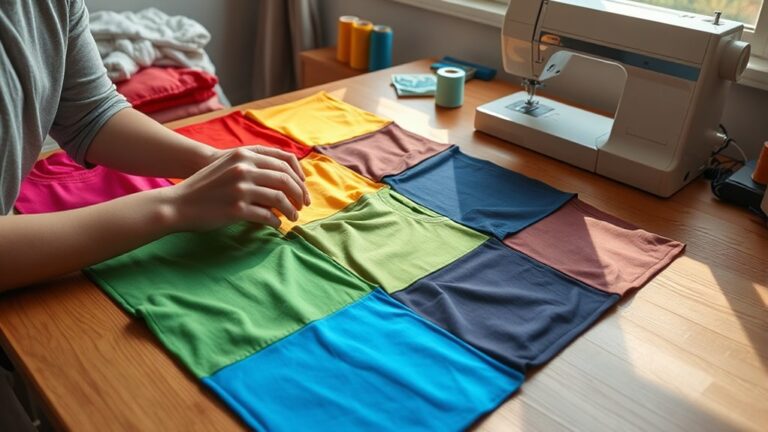
Begin with project planning, ensuring you have your design inspiration set. Consider color theory and how fabric textures interact within your chosen quilt layouts.
Next, focus on fabric sourcing. Select materials that complement each other and allow for effective pattern mixing.
Follow these key steps:
- Cut your fabric accurately for precision.
- Arrange your pieces according to your layout.
- Sew pieces together in rows, ensuring seams are consistent.
- Press seams flat to maintain structure.
- Trim any excess fabric for a neat finish.
How to Add Batting and Backing to Your Quilt
Ready to improve your quilt? Start by choosing the right batting types for your project; options like cotton, polyester, or wool each offer unique qualities.
Lay your quilt top face up, then place the batting directly on top. After that, add your backing fabrics, making sure they face down. This quilt layering helps create a neat finish.
Once everything’s in position, it’s time for fabric basting. You can use safety pins, spray adhesive, or traditional basting stitches to hold the layers together.
Make sure to secure the edges well to avoid shifting during the quilting process.
Take your time, ensuring the layers are smooth and flat. This preparation sets the stage for a beautiful quilt.
With the batting and backing in place, you’re ready to move on to the fun part: adding your quilting stitches!
Quilting Methods: Hand vs. Machine Techniques
Choosing between hand and machine quilting can feel overwhelming, especially when both methods have their own unique advantages.
Hand quilting offers a personal touch and a meditative experience, while machine quilting speeds up the process and provides precision.
Here are some key points to reflect on:
- Stitching Techniques: Hand quilting allows for creative freedom with various stitches, while machine quilting offers consistent, even stitches.
- Time Investment: Hand quilting takes longer but can be more rewarding. Machine quilting is quicker, making it perfect for larger projects.
- Quilt Finishes: Hand-quilted pieces often have a cozy, textured look. On the other hand, machine-quilted quilts can have a sleek finish.
- Skill Development: Hand quilting builds patience and technique. Machine quilting, however, improves your efficiency and speed.
- Equipment Needs: Hand quilting requires only basic supplies. Machine quilting may need a sewing machine and some accessories.
Ultimately, choose the method that resonates with you and fits your quilting goals.
Binding Your Quilt: How to Finish It Right
Binding your quilt is the final step that brings your creation to life, adding a polished edge while securing the layers together.
You’ll want to choose the right fabric for your binding, something that complements your quilt’s design and holds up well over time.
There are several binding techniques to ponder, such as straight, bias, or even scalloped edges. Each method adds its unique flair, so pick one that suits your style.
As you apply the binding, focus on those finishing touches that enhance your quilt. Press the seams carefully and make sure everything lines up perfectly.
Remember to account for quilt care. Pre-washing your binding fabric can prevent future shrinkage.
Once you’ve stitched it all down, step back and admire your handiwork. You’ve not only created a beautiful quilt but also learned valuable skills along the way!
Caring for and Storing Your Finished Quilt
After all your hard work, caring for and storing your finished quilt is essential. This helps keep it looking beautiful for years to come.
Proper quilt maintenance and storage can prevent wear and tear. That way, your quilt remains a treasured piece.
- Store in a cool, dry place to avoid moisture damage.
- Use breathable materials like cotton or linen for storage. Try to avoid plastic, since it can trap humidity.
- Fold carefully to prevent creasing and breakage of fibers. If you plan to store your quilt long-term, consider rolling instead.
- Avoid direct sunlight to prevent fading and discoloration.
- Regularly inspect for signs of pests or damage. If you notice any issues, address them promptly.
Frequently Asked Questions
How Much Fabric Do I Need for My First Quilt?
For your first quilt, you’ll typically need about 3 to 5 yards of fabric, depending on the size.
Consider using cotton fabric types, as they’re easy to work with and come in various prints.
You can find fabric sources at local craft stores or online retailers.
Don’t forget to get some batting and backing fabric, too. It’s all part of creating a cozy quilt you’ll love!
What Is the Best Sewing Machine for Beginners?
The best sewing machine for beginners often features a simple interface, adjustable stitch lengths, and a built-in needle threader. Look for machines with a free arm for easy quilting.
When you start, focus on basic functions. Advanced features can come later as you gain confidence.
Beginner quilting tips include practicing straight lines and using quality fabric. Investing in a reliable machine now will make your quilting journey smoother and more enjoyable, setting you up for success.
Can I Quilt Without a Dedicated Quilting Space?
Yes, you can absolutely quilt without a dedicated quilting space. Many quilters use portable quilting setups, like folding tables or even their dining tables.
You’ll still be able to practice various quilting techniques, such as piecing and quilting by hand or machine. Just guarantee you have a comfortable chair and good lighting.
With a little creativity, you can make any space work for your quilting projects!
How Long Does It Take to Complete a Quilt?
Completing a quilt can take anywhere from a few days to several weeks, depending on your quilting timeline and project planning.
If you’re a beginner, expect to spend more time as you learn the techniques. Choosing a simple design can speed things up.
Once you get the hang of it, you’ll find yourself finishing quilts faster. Just enjoy the process, and remember, every quilt is a chance to improve your skills!
What Common Mistakes Should Beginners Avoid While Quilting?
“Measure twice, cut once.”
To avoid common mistakes while quilting, focus on your fabric selection tips. Choose quality fabrics that complement each other.
Don’t rush this step. It sets the tone for your project.
Also, watch out for common tool mistakes. Using dull rotary blades or incorrect needle sizes can ruin your work.
Take your time, learn from your errors, and soon you’ll create beautiful quilts with confidence.
Conclusion
Now that you’ve got the basics down, quilting can feel like a warm hug, wrapping you in creativity and comfort.
Welcome your unique style as you stitch together memories and stories in every quilt you make.
Remember, practice makes perfect, and each quilting project is a chance to learn something new.
So grab your fabrics and tools, and let your imagination run wild. Your quilting journey is just beginning, and there’s so much joy ahead as you explore the world of quilting!