Step-by-Step Guide to Bind a Quilt
Binding a quilt can feel overwhelming, especially when you’re aiming for that crisp, professional finish but keep ending up with bunched corners or uneven edges.
If you’ve ever wondered how to bind a quilt the right way, you’re not alone—many people struggle to master this final step. That’s why we’ve gathered the best tools, tips, and tricks to help you breeze through the process and achieve beautiful results every time.
To bind your quilt, start by choosing a fabric that complements your design.
Trim the quilt edges evenly and cut 2.5-inch strips for binding.
Align the strips with the quilt, maintaining raw edges for a clean finish.
Secure the binding by stitching close to the edge.
You can choose between hand-stitching for control or machine-stitching for speed.
Pay attention to mitered corners for a polished look.
There’s more to investigate in achieving a professional finish!
Key Takeaways
- Choose binding fabric that complements your quilt’s design. Make sure your choice is durable and adds visual appeal by considering both color and texture.
- Cut binding strips at 2.5 inches wide. You can use straight or bias cuts, whichever fits your quilt best and helps keep the edges stable.
- Secure the binding to the quilt edges by aligning the raw edges. Keep your stitching consistent for a clean finish, and don’t forget to press the binding after sewing.
- Mastering mitered corners gives your quilt a professional look. This technique ensures smooth transitions at the corners and really enhances the overall appearance.
- Decide whether you’ll finish the binding by hand or with a machine. It depends on how much time you have and how much control you want; either way, aim for a consistent binding width for the most polished look.
How to Bind a Quilt Seamlessly
Binding a quilt seamlessly can seem challenging, but with the right techniques, you’ll create a polished edge that improves your project.
Start by choosing the right binding styles that complement your quilt aesthetics.
Choosing the right binding styles enhances your quilt’s aesthetics and elevates your overall design.
Consider fabric choices that provide a striking color contrast, enhancing the visual appeal.
For effective binding techniques, cut strips at a 45-degree angle to reduce bulk and guarantee a smooth finish.
When it comes to stitch methods, opt for a consistent seam allowance to keep everything aligned.
You can use a straight stitch or a decorative one, depending on your style preference.
As you approach the corners, take your time to create mitered edges for that professional look.
Finally, focus on those finishing touches. Press the binding and check for any loose threads.
With these steps, you’ll achieve a beautifully bound quilt that showcases your hard work and creativity.
Choosing the Right Fabric for Quilt Binding
Selecting the right fabric for quilt binding is vital to achieving a polished finish. You’ll want to take into account fabric color combinations that complement your quilt top.
A contrasting color can create a striking border, while a matching shade can provide a more subtle look. Reflect on how the binding fabric interacts with your overall palette.
Texture considerations also play an important role. A smooth fabric can improve the quilt’s elegance, while a slightly textured option might add interest and depth.
Confirm the binding fabric is durable enough to withstand wear, as it’ll frame your quilt’s edges.
Before making your final choice, lay the binding fabric against your quilt to visualize how it works. This simple test can prevent unwanted surprises later.
Preparing Your Quilt for Binding
Before you start binding your quilt, take a moment to pick out your binding fabric. You’ll want something that not only looks great with your quilt, but also holds up well over time. Once you’ve chosen your fabric, go ahead and trim the edges of your quilt so they’re nice and even. This step might seem small, but it really helps create a polished, professional look. By taking care with these details now, you’ll set yourself up for a beautiful finish later on.
Choose Binding Fabric Wisely
When you’re preparing your quilt for binding, choosing the right fabric can make all the difference.
Start by considering color coordination. Your binding should either complement or contrast with your quilt’s main colors to create a visually appealing finish.
Think about how the binding fabric will frame your quilt; it should improve the overall design without overpowering it.
Next, pay attention to fabric texture. A smooth, sturdy fabric will hold up better over time, while a softer texture can add warmth.
Make sure the binding fabric feels good in your hands and complements the quilt’s feel.
Trim Quilt Edges Evenly
To achieve a polished finish, trim your quilt edges evenly before binding.
Start by laying your quilt flat on a clean surface.
Use quilt trimming techniques like a rotary cutter and a straight ruler
to guarantee precise cuts. Check for any excess fabric or uneven seams
that might disrupt the clean lines of your quilt.
When cutting, aim for a consistent width around the entire quilt.
After trimming, consider using edge finishing methods, like zigzag stitching
or pinking shears, to prevent fraying.
This extra step can improve the durability of your quilt, making it last longer.
Once your edges are even and secure, you’re ready to move on to the binding process with confidence.
Cutting Perfect Strips for Quilt Binding
When you’re getting ready to cut strips for quilt binding, it’s important to pick the right fabric width. You’ll want to measure carefully—accuracy here makes sure all your strips are even and will fit your quilt just right. So, let’s talk about how you can do this with precision, and make the whole process a lot smoother.
Choosing Fabric Width
Choosing the right fabric width for cutting your quilt binding can make all the difference in achieving a polished finish. Start by considering your fabric selection; a standard width of 2.5 inches works well for most quilts.
Think about color coordination and how your chosen fabrics complement the quilt theme. Incorporate texture variety and print patterns to add depth and interest.
Don’t forget durability considerations. Opt for fabrics that withstand wear and tear.
When sourcing fabrics, investigate budget options like seasonal fabrics that can elevate your personal style without breaking the bank.
Ultimately, the right width not only ties your quilt together but also showcases your creativity and attention to detail. Happy quilting!
Accurate Measuring Techniques
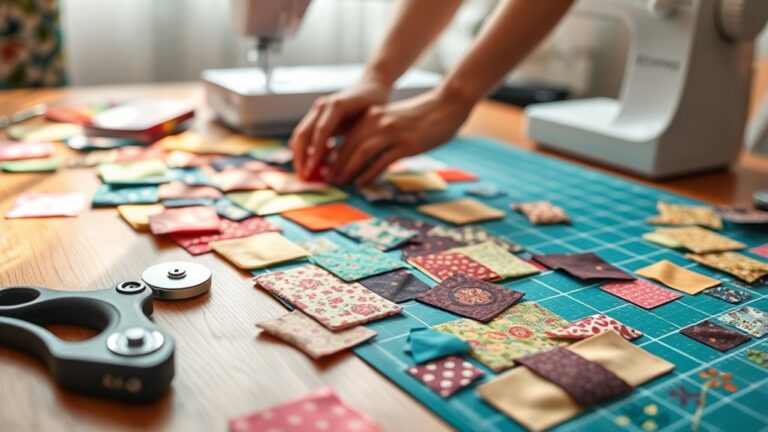
Accurate measuring is essential for cutting perfect strips for quilt binding. Begin by gathering your measuring tools, like a clear ruler and rotary cutter.
Make sure you have a cutting mat to protect your surfaces and improve measuring accuracy. Lay your fabric flat, smoothing out any wrinkles.
Use fabric markings to identify the desired strip width. This makes it easier to follow your measurements.
When you measure, always double-check your markings before cutting. This avoids wasted fabric and guarantees consistency.
Employ straight measuring techniques by aligning your ruler with the edge of the fabric. By focusing on these steps, you’ll create uniform strips that will make your quilt binding process smoother and more professional.
Happy quilting!
Secure the Binding to the Quilt Back
Securing the binding to the quilt back is an essential step that guarantees your quilt holds together beautifully.
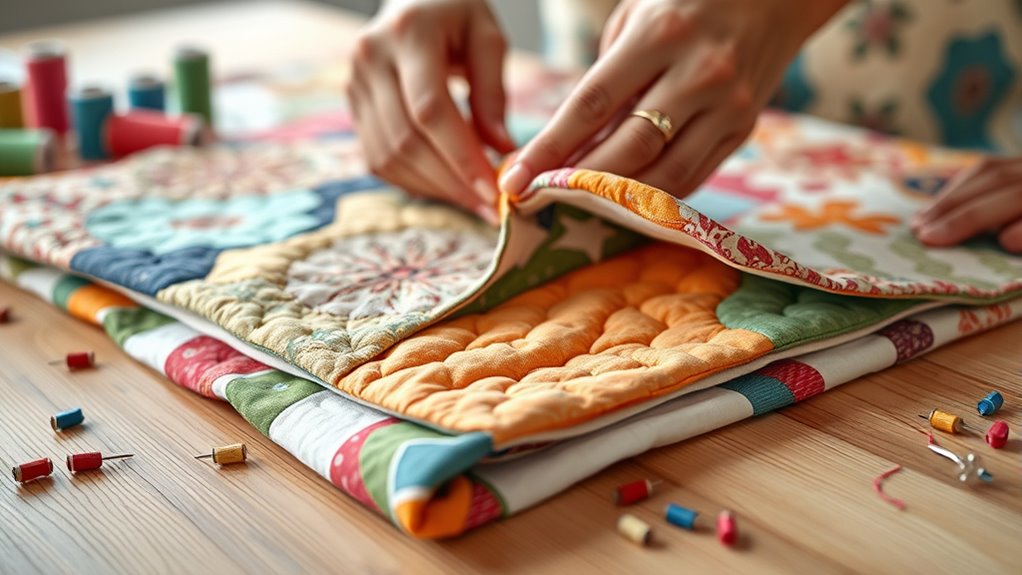
Start by laying your quilt right side up, then position the binding strip along the edges.
Use your favorite binding techniques, like a straight stitch or zigzag, to attach the binding.
Make certain the raw edges align for a clean finish.
As you sew, keep your stitches consistent and close to the edge for durability.
Don’t forget to periodically check that the binding stays flat against the quilt back.
This assures a polished look in your quilt finishes.
When you reach a corner, stop, pivot, and continue sewing, maintaining that same distance from the edge.
Once you’ve stitched all around, press the binding away from the quilt to set it in place.
This step not only secures your binding but also prepares it for the final touches.
Creating Mitered Corners Like a Pro
While you might feel intimidated by mitered corners, mastering this technique can improve your quilt’s appearance considerably.
With a bit of practice, you’ll achieve corner precision that looks professional. Here’s how to create mitered corners like a pro using effective mitered techniques:
- Measure Carefully: Verify your binding strips are cut at the right length for accurate mitering.
- Fold and Press: Fold the binding at a 45-degree angle, then press to create a sharp crease.
- Sew with Confidence: When you stitch the binding, confirm your seams are straight and secure for that polished finish.
Hand-Stitching vs. Machine-Stitching Quilt Binding
Whether you prefer the tactile experience of hand-stitching or the speed of machine-stitching, choosing the right method for binding your quilt can considerably impact both the look and durability of your finished project.
Hand stitching benefits include a more personalized touch and the ability to control every stitch. This gives your quilt a classic finish and lets you enjoy the process as you connect with your quilt on a deeper level.
Hand stitching offers a personal touch, allowing for precise control and a deeper connection to your quilt.
On the other hand, machine stitching speed can save you considerable time, especially for larger quilts. It guarantees a strong and secure bind, making it ideal for quilts that will see heavy use.
While machine stitching may lack the charm of hand stitching, it can be an excellent choice for those who prioritize efficiency.
Ultimately, the best method depends on your preferences, project needs, and how much time you have to invest in your quilting journey.
Binding Tips for a Professional Quilt Finish
If you want your quilt to look truly professional, there are a few details that make all the difference. First, think about your binding fabric—pick one that complements your quilt and feels good to work with. Once you’ve settled on the fabric, take your time preparing the binding strips, making sure they’re cut evenly and pressed well. Finally, when you’re ready to attach the binding, go slowly and secure it carefully; this last step really brings everything together and gives your quilt that polished, finished look.
Choosing Binding Fabric
Choosing the right fabric for your quilt binding can nâng cao your project from good to exceptional.
Your binding fabric not only frames your quilt but also adds a polished finish.
Here are a few tips to take into account:
– Binding Color Combinations: Choose colors that complement or contrast your quilt design effectively.
A well-thought-out color scheme can make your quilt pop.
– Fabric Texture Considerations: Opt for a texture that matches your quilt.
Smooth fabrics work well for modern quilts, while textured options can add depth to traditional designs.
– Durability: Verify your binding fabric is sturdy enough to withstand wear and tear.
That way, it will maintain the quilt’s integrity over time.
Preparing Binding Strips
Prepare your binding strips with care for a professional finish that improves your quilt.
Start by selecting high-quality fabric that complements your quilt’s design; this choice is vital for both durability and aesthetic appeal.
Cut your fabric into strips, typically 2.5 inches wide, using precise measuring techniques. You can opt for straight or bias cuts depending on your quilt’s shape and binding techniques.
For a smooth finish, press the strips in half lengthwise, guaranteeing a crisp crease.
If you’re using multiple strips, sew them together at a 45-degree angle to avoid bulk at the seams.
Taking these steps will make certain your binding not only looks polished but also stands the test of time, giving your quilt a beautiful edge.
Attaching Binding Securely
As you begin attaching the binding, guaranteeing a secure and neat finish is essential for enhancing your quilt’s overall appearance.
Here are some effective binding techniques to improve your quilt aesthetics:
- Use a consistent stitch length: This creates uniformity and helps the binding lay flat.
- Anchor corners securely: Miter your corners for a polished look, making sure they’re well-stitched to prevent unraveling.
- Press as you go: Ironing the binding as you attach it keeps everything aligned and gives a crisp finish.
With these tips, you’ll achieve a professional finish that really showcases your hard work.
Don’t rush. Take your time to guarantee every stitch is perfect, and your quilt will shine!
How to Fix Common Binding Problems?
While binding a quilt can be a rewarding experience, it’s not uncommon to encounter a few hiccups along the way. Common binding mistakes include uneven edges and misaligned seams, which can disrupt your quilt’s aesthetic.
To address these issues, start by checking your binding width. A consistent measurement helps maintain neatness and keeps everything looking tidy.
If you notice fabric fraying, consider using a fray check product to stabilize the edges. This simple step can make a big difference in your quilt’s durability.
For binding tension problems, verify you’re sewing with an appropriate stitch length and pressure. Taking a moment to check these settings can help prevent issues down the line.
If you experience fabric distortion, try adjusting your sewing speed or needle type. Sometimes, a slower speed or a different needle can provide better control.
When troubleshooting techniques, always press your seams open to avoid bulk, especially at corners. This helps your binding lay flat and look more professional.
If you find uneven binding, gently pull and adjust the fabric while stitching to achieve a smoother finish. With these tips, you’ll tackle common binding issues and improve your quilt’s overall look.
Adding Personal Touches to Your Quilt Binding
After you’ve tackled common binding issues, it’s time to reflect on how to add personal touches to your quilt binding. These details can truly make your quilt stand out and reflect your personality.
Here are some ideas to explore:
- Personal Embroidery: Add your initials or a meaningful date to the binding for a unique touch.
- Decorative Stitches: Use contrasting thread colors to create eye-catching decorative stitches along the edges.
- Fabric Appliqué: Incorporate sentimental prints or patchwork elements that resonate with you, enhancing theme coordination.
These personal touches not only beautify your quilt but also infuse it with stories and memories. Whether you choose unique labels to commemorate special occasions or opt for vibrant color contrasts, your quilt binding will become a cherished piece of art.
Personal touches not only enhance the beauty of your quilt but also weave in cherished stories and memories, making it a true work of art.
Showcasing your creativity and sentiment is a wonderful way to make your quilt even more special. Welcome these ideas and let your quilt tell your story!
Frequently Asked Questions
How Long Should My Binding Strips Be for a Queen-Sized Quilt?
For a queen-sized quilt, your binding strips should be around 2.5 inches wide and at least 320 inches long.
To calculate this, consider the quilt’s perimeter. A queen quilt is usually about 96 inches by 108 inches, which adds up to 408 inches in total.
Next, divide by the width of your fabric. If your fabric is 42 inches wide, you’ll need about 8 strips.
Can I Use Bias Binding for Straight Edges?
Absolutely, you can use bias binding for straight edges! For example, if you’re finishing a quilt with straight edges, bias binding gives you a lovely, curved finish around corners.
It’s a versatile choice among binding techniques, ensuring a neat edge finish. While it’s often preferred for curves, bias binding works perfectly on straight edges too, adding a touch of style.
Just make sure to cut your strips at a 45-degree angle for the best results!
What Tools Are Essential for Binding a Quilt?
To bind a quilt, you’ll need a few essential tools. A rotary cutter and mat will help you cut your binding strips accurately.
A sewing machine is vital for attaching the binding using various binding techniques. Don’t forget fabric choices, as it’s important to select materials that complement your quilt.
A good iron and pressing cloth can guarantee crisp folds. Binding clips or pins keep everything in place as you sew.
These tools make the process smoother and more enjoyable!
How Do I Choose a Contrasting Color for Binding?
Choosing a contrasting color for binding is like choosing a frame for a masterpiece. Immerse yourself in color theory and consider how your binding can pop against your quilt’s fabrics.
Look for fabric combinations that create a vibrant dialogue, such as a bold red against soft pastels or a deep navy with bright florals.
Trust your instincts and let your creativity flow. The right contrast will enhance your quilt from ordinary to extraordinary.
What Is the Best Way to Store Leftover Binding Fabric?
The best way to store leftover binding fabric is to keep it organized and accessible. Use clear plastic bins or fabric drawers for easy visibility.
You can also wrap smaller pieces around cardboard or a fabric roll to prevent creasing. Label each storage solution to quickly identify colors and patterns.
This way, you’ll save time and guarantee that your binding fabric is ready for your next project!
Conclusion
In the world of quilting, binding is the ribbon that ties it all together. With the right techniques, you can transform your quilt from a simple craft into a stunning masterpiece.
Remember, every stitch counts, so take your time and enjoy the process. Whether you choose to hand-stitch or machine-stitch, your personal touch will shine through.
So, go ahead and showcase your creativity. After all, a well-bound quilt is like a beautifully wrapped gift waiting to be unwrapped, and learning how to bind a quilt truly completes your quilting journey.