How to Appliqué Quilt: A Beginner’s Step-by-Step Guide
It’s easy to feel overwhelmed when starting out with appliqué quilting. Maybe your fabric frays, your stitches don’t look quite right, or you’re just not sure which tools to use.
If you’ve ever felt frustrated or stuck, you’re not alone—many people struggle with these same challenges when trying to turn their creative ideas into beautiful quilts.
Appliqué quilting transforms ordinary quilts into beautiful art pieces. Start by choosing the right fabric, like cotton or felt, and make sure to wash and iron it before cutting.
Gather essential tools, such as fabric scissors and fusible web. Decide on your stitching method, whether hand or machine, and practice common techniques like zigzag or straight stitches.
Don’t forget to add embellishments for extra flair!
You’ll find tips on avoiding common mistakes and caring for your quilt as you investigate further.
Key Takeaways
- Choose suitable fabrics like cotton or felt, and prepare them by washing, ironing, and cutting accurate shapes for your design.
- Utilize essential tools such as fabric scissors, a rotary cutter, and fusible web to secure appliqué pieces effectively.
- Opt for hand or machine stitching techniques. You can try zigzag or decorative stitches for a polished finish.
- Enhance your quilt with embellishments like fabric paints, beads, or embroidery to add unique details and textures.
- Care for your quilt by washing gently, air drying, and storing properly to maintain its beauty and longevity.
What Is Appliqué Quilting and Why Try It?
Appliqué quilting is a creative technique that allows you to add intricate designs and shapes to your quilts using fabric pieces. This method has a rich appliqué history, dating back centuries, when artisans adorned textiles with beautiful shapes and patterns.
By exploring this art form, you can tap into a world of creative inspiration and transform simple quilts into stunning masterpieces.
Explore the art of appliqué quilting to unlock your creativity and turn simple quilts into breathtaking masterpieces.
Trying appliqué quilting is a great way to express your personal style. You can choose from various designs, whether it’s flowers, animals, or abstract shapes, making each piece distinctly yours.
Plus, the process is enjoyable and satisfying, offering a chance to unwind while crafting something beautiful. As you stitch, you’ll find joy in watching your ideas come to life.
Choosing the Right Fabric for Your Appliqué Project
When you’re picking out fabric for your appliqué project, it really helps to think about the different types available and how each one might affect your design. You’ll want to play around with color and pattern, making sure they work well together and actually enhance your overall idea. In the end, choosing the right materials gives your quilting project the strong start it needs to turn out just the way you want.
Fabric Types Overview
Choosing the right fabric for your appliqué project can really make a difference in how polished your final piece looks. It helps to understand different fabric types so you can pick the best one for your design.
Think about the fabric characteristics and textures that will enhance your project. Some options will work better than others depending on the effect you want.
Here’s a quick overview:
| Fabric Type | Characteristics |
|---|---|
| Cotton | Soft, breathable, easy to sew |
| Felt | Thick, stable, no fraying |
| Silk | Smooth, lightweight, delicate |
| Linen | Textured, durable, absorbs dye |
| Fleece | Plush, warm, stretchy |
Color and Pattern Selection
Once you’ve decided on the fabric types for your appliqué project, it’s time to focus on color and pattern selection.
Start by contemplating color theory. Understanding the color wheel can help you choose hues that complement each other.
For instance, use analogous colors for a soothing effect or contrasting colors for a vibrant look.
Next, think about pattern harmony. Mixing patterns can add interest, but aim for balance.
Choose one dominant pattern and pair it with subtler ones to avoid overwhelming your design.
Don’t forget to reflect on the scale of the patterns. Larger designs can stand out, while smaller ones can serve as a backdrop.
Essential Tools for Appliqué Quilting
Appliqué quilting requires a few essential tools to guarantee your projects turn out beautifully.
Understanding appliqué history can improve your appreciation for the art, but having the right tools is essential for execution.
Here’s what you’ll need:
- Fabric Scissors: Sharp scissors are critical for clean cuts, especially around intricate designs.
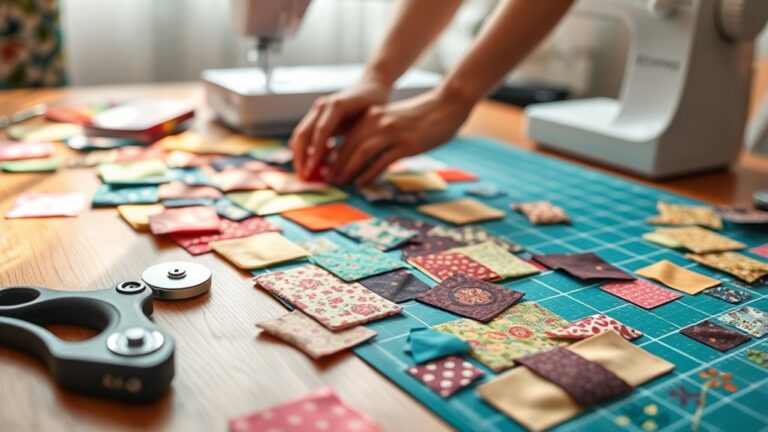
- Rotary Cutter and Mat: These help you achieve precise shapes and angles, making your work easier and more accurate.
- Wonder Under or Fusible Web: This adhesive material secures your appliqué pieces and allows for easy placement on your fabric.
- Decorative Stitches: A sewing machine with a variety of decorative stitches adds flair to your edges, ensuring your appliqué not only holds but also shines.
With these tools in hand, you’ll set the stage for a successful and enjoyable appliqué quilting experience!
Step-by-Step: Preparing Your Fabric Pieces
Preparing your fabric pieces is a crucial step in the appliqué quilting process. Proper fabric preparation guarantees your pieces are ready for effective cutting techniques and will yield a beautiful final project.
Start by washing and ironing your fabric to remove any wrinkles or shrinkage. Next, choose your desired fabric colors and patterns, then cut them into the shapes you’ll need for your design.
Here’s a quick reference table to help you with the fabric preparation steps:
| Step | Action | Tips |
|---|---|---|
| 1. Wash | Clean your fabric | Use mild detergent |
| 2. Iron | Smooth out wrinkles | Use medium heat |
| 3. Choose fabrics | Select colors/patterns | Consider contrast and harmony |
| 4. Cut shapes | Use sharp scissors | Follow your design closely |
| 5. Organize pieces | Keep them in order | Label if necessary |
With your fabric ready, you’re set for the next phase!
How to Transfer Your Appliqué Designs to Fabric
Transferring your appliqué designs to fabric is a key step that guarantees your creation comes to life with precision.
Transferring appliqué designs accurately is essential for bringing your creative vision to life with precision.
Choosing the right transferring techniques assures accurate design placement, making your project seamless. Here’s how to do it effectively:
- Tracing: Use a lightbox or window to trace your design onto fabric with a fabric pencil.
- Iron-on Transfers: Print your design on transfer paper, then iron it onto your fabric according to the manufacturer’s instructions.
- Stencils: Create or purchase stencils for your design, and use fabric paint or markers to outline.
- Freezer Paper: Cut your design from freezer paper, place it shiny side down on the fabric, and use an iron to adhere it temporarily.
Each method has its benefits, so choose one that suits your style and fabric type.
Your appliqué will look stunning with precise design placement!
Comparing Appliqué Techniques: Hand Stitching vs. Machine Stitching
While both hand stitching and machine stitching offer unique advantages for your appliqué projects, each technique brings its own charm and challenges. Hand stitching connects you to appliqué history and allows for intricate designs that showcase your craftsmanship.
You’ll enjoy the tactile experience, creating texture differences that add depth to your work. However, it can be time-consuming, requiring patience and practice.
On the other hand, machine stitching speeds up the process and makes it easier to achieve consistent results. It’s ideal for larger projects or when you’re short on time.
The machine can also create specific textures that are hard to replicate by hand, but you might miss out on that personal touch.
Ultimately, the choice between hand and machine stitching depends on your project goals and personal style. Experiment with both techniques to uncover which one resonates with you as you create beautiful appliqué quilts.
Best Stitching Methods for Your Appliqué Designs
When it comes to stitching your appliqué designs, picking the right method can really make a difference. If you enjoy adding a personal touch to your projects, hand stitching might be just what you’re looking for. It gives your work a unique, homemade feel that’s hard to beat.
On the other hand, maybe you want to get things done quickly or need your stitches to be extra sturdy. In that case, machine stitching could be the way to go. It’s great for saving time and gives your appliqué a clean, polished finish.
Hand Stitching Techniques
Mastering hand stitching techniques is vital for achieving beautifully finished appliqué designs.
To guarantee your project turns out perfectly, consider these significant elements:
1. Fabric Preparation: Prewash your fabric to prevent shrinkage and guarantee smooth application.
2. Thread Choices: Select high-quality thread that matches your fabric for durability and aesthetics.
3. Needle Types: Use the appropriate needle based on your fabric weight.
Sharp needles work best for finer materials.
4. Stitch Patterns: Experiment with different stitch patterns for securing edges and adding unique finishing touches.
Remember to make tension adjustments as needed throughout your work.
These quilting techniques will improve your project planning and boost your hand stitching skills.
Enjoy the process and watch your designs come to life!
Machine Stitching Options
Choosing the right machine stitching options can improve your appliqué designs greatly. For raw edge appliqué, zigzag stitching works wonders, providing a secure finish while keeping a playful look.
If you want something more intricate, consider decorative stitches. They add flair and personality to your projects.
When using fusible web, a straight stitch can offer a clean and straightforward finish, ensuring your pieces stay in place.
Adjusting your stitch length is essential. Shorter lengths are ideal for tight curves, while longer lengths suit straight edges.
Experiment with these options to find what best complements your style and design. Each of these techniques can raise your work, making it distinctly yours.
Enjoy the process!
Adding Embellishments for Extra Flair
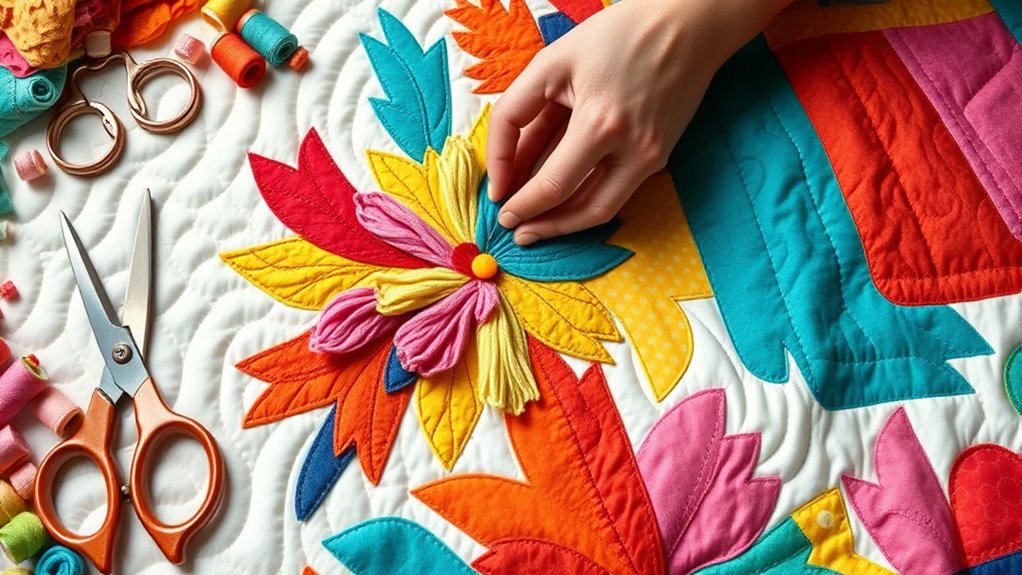
Improve your appliqué quilt by adding unique embellishments that reflect your personal style. These touches not only uplift your design but also showcase your creativity.
Here are some ideas to contemplate:
- Fabric Paints: Use fabric paints to add intricate details or color gradients to your appliqué pieces.
- Beading Techniques: Incorporate beads to create texture and sparkle, drawing attention to specific areas of your quilt.
- Embroidery: Hand or machine embroidery can outline shapes or add decorative stitches, providing depth and character.
- Ribbons and Lace: Attach ribbons or lace for a vintage feel, improving the overall aesthetic of your quilt.
Experiment with these elements, mixing and matching to see what resonates with your vision. Each embellishment you choose can tell a story, making your quilt not just a craft, but a personal masterpiece.
Avoid These Common Appliqué Mistakes
Even with all the creativity that embellishments can bring to your appliqué quilt, it’s easy to make mistakes that could affect your final design.
To help you avoid common pitfalls, here are some essential appliqué tips.
First, don’t rush the cutting process. If your fabric pieces aren’t accurately cut, they won’t fit together well, creating awkward gaps.
Second, make sure you use the right adhesive. Temporary sprays can leave residue, while fusible webbing might not hold over time, leading to frayed edges.
Also, pay attention to your stitching. Inconsistent tension can create puckering or uneven lines.
Finally, avoid skipping the pressing step. It sets your pieces in place and helps maintain their shape.
Caring for Your Appliqué Quilt
Taking care of your appliqué quilt is really important if you want it to stay beautiful and last for many years. So, let’s talk about a few simple things you can do to keep it in great shape. First, you’ll want to know the gentlest ways to wash your quilt, since appliqué details can be delicate. Then, there’s the matter of storing it—keeping it somewhere safe makes a big difference. And if you ever notice a little bit of damage, like a loose thread or small tear, don’t worry. There are easy ways to handle minor fixes before they turn into bigger problems. Let’s go through these tips together, so your quilt always looks its best.
Washing Techniques For Appliqué
When you want to keep your appliqué quilt looking its best, knowing the right washing techniques is essential.
Here are some tips to guarantee your quilt stays in top shape:
- Pre wash fabrics: Always pre wash your fabrics before you start appliquéing. This helps prevent fabric shrinking later on.
- Gentle cycle: Use a gentle cycle in your washing machine with cold water to avoid damaging the appliqué.
- Mild detergent: Choose a mild, color-safe detergent to protect the colors and fabrics.
- Air dry: Lay your quilt flat or hang it to air dry instead of using a dryer. Using a dryer can lead to further shrinking and distortion.
Following these steps will keep your quilt vibrant and intact for years to come!
Storage Best Practices
To guarantee your appliqué quilt stays beautiful and in good shape, proper storage is key. Start by choosing effective storage solutions.
Avoid folding your quilt, as this can create creases and stress on the fabric. Instead, consider rolling it gently and placing it in a breathable cotton bag or a dedicated quilt storage box.
This helps prevent dust and moisture damage. For fabric organization, keep your quilt away from direct sunlight to avoid fading.
If you’ve got multiple quilts, use acid-free tissue between them to minimize friction and protect the appliqué designs. Regularly check on your quilt to make certain it remains in pristine condition.
Repairing Minor Damage
Inspect your appliqué quilt regularly for minor damage. Catching issues early can save you time and effort later.
If you notice small tears or fraying edges, don’t panic. You can easily make repairs at home.
Here’s how to handle it:
- Identify the damage: Look for loose threads or fabric wear.
- Choose your patch: Select a fabric that matches the quilt’s design for a seamless look.
- Perform patch repair: Cut your patch slightly larger than the damaged area. Secure it with fabric mending techniques, like hand stitching or fusible web.
- Finish and inspect: Once repaired, check for stability and smooth out any wrinkles.
With these steps, you’ll keep your quilt looking beautiful and extend its life!
Frequently Asked Questions
Can I Use Any Fabric for Appliqué Quilting?
Yes, you can use various fabric types for appliqué quilting, but consider project suitability.
Cotton is a popular choice due to its durability and ease of handling, while felt adds a unique texture.
Avoid stretchy or slippery fabrics, as they can complicate your design. Always pre-wash your fabrics to prevent shrinking.
Ultimately, choose materials that complement your vision and guarantee they’ll work well together in your project.
Happy quilting!
How Do I Fix Mistakes in My Appliqué Work?
Around 30% of quilters report making mistakes during their projects, so you’re not alone!
To fix mistakes in your appliqué work, first, remove the stitches carefully using a seam ripper. Then, consider your fabric choices; some fabrics are easier to work with than others.
Once you’ve corrected the mistake, reapply your appliqué using a more secure stitch or technique.
Don’t stress. Every quilter faces challenges, and practice makes perfect!
What Is the Best Way to Store My Appliqué Supplies?
The best way to store your appliqué supplies is by using clear supply containers for easy visibility.
Organize your fabric by color or type, making it simple to find what you need.
Use smaller bins for threads, scissors, and other tools, keeping everything neat and accessible.
Label each container if you can, so you’ll always know where everything is.
This way, you’ll save time and stay inspired every time you start a new project!
Can I Mix Hand and Machine Stitching Techniques?
Absolutely, you can mix hand and machine stitching techniques! Hand stitching gives you precision and a personal touch, while machine stitching speeds up the process and offers durability.
By combining both, you can improve your projects. Try adding intricate details by hand and finishing edges with a machine for the best of both worlds.
Consider creating unique designs or layering textures. The technique benefits of blending both methods can really boost your appliqué quilting game to new heights!
How Do I Choose Colors for My Appliqué Designs?
“Variety’s the spice of life!” To choose colors for your appliqué designs, start by understanding color theory. Pick a dominant color, then select complementary shades that improve it.
Think about fabric combinations and try mixing patterns with solids for visual interest. Use a color wheel to help guide your choices, and don’t be afraid to experiment!
Trust your instincts, and keep in mind that combining different textures can create a stunning, cohesive look in your appliqué work.
Conclusion
Appliqué quilting can be a fun and rewarding craft that adds a personal touch to your quilts. Did you know that around 25% of quilters adopt appliqué techniques in their projects?
With the steps and tips outlined here, you’re well on your way to creating stunning designs. So gather your materials, release your creativity, and enjoy the process.
Your unique appliqué quilt will not only showcase your skills, but also become a cherished piece for years to come. Embrace appliqué quilting, and see how it transforms your quilting journey!