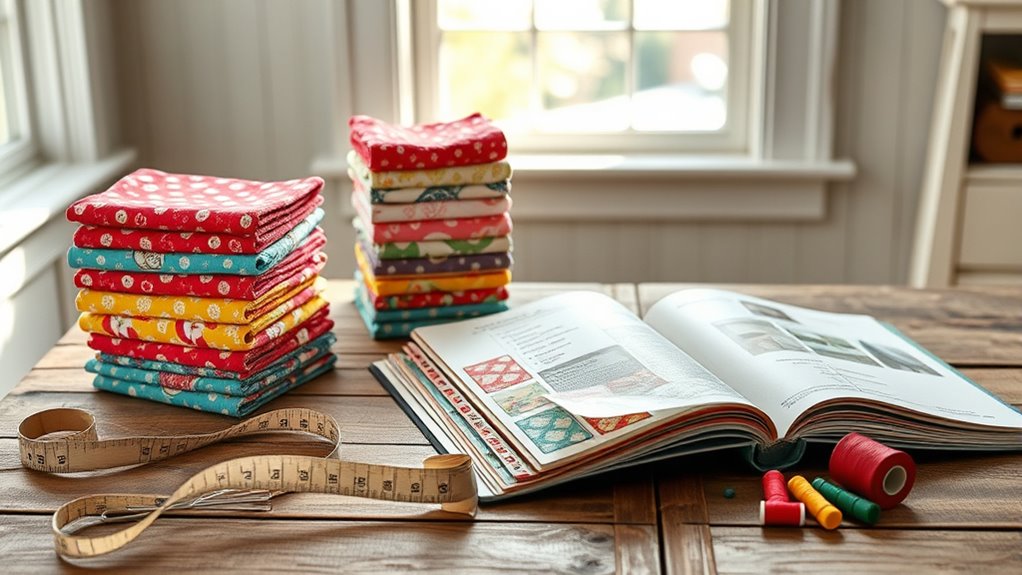
7 Key Considerations for How Many Jelly Rolls to Make a Quilt
If you’ve ever found yourself staring at a pile of fabric, wondering how many jelly rolls to make a quilt, you’re not alone. Many quilters, new and experienced alike, struggle with calculating just how much fabric they’ll need for their dream project.
It’s a common headache—one that can stall your creativity or leave you with too many scraps and not enough finished quilt. But don’t worry, we’ve been there, too, and we’re here to help you get it right.
When planning your quilt, consider the size, as larger quilts need more jelly rolls. Pay attention to fabric width; wider fabrics mean fewer rolls.
Evaluate the quilt’s complexity; simpler designs usually require less fabric. Think about fabric repeats, too; they can affect how many rolls you’ll need.
Always plan for cuts and waste to maximize your materials.
Finally, investigate where to buy quality jelly rolls for the best results. Each step can greatly influence your project success.
Key Takeaways
- Determine quilt size and complexity to estimate jelly roll requirements accurately. Larger and intricate designs need more rolls.
- Consider the fabric width. Wider fabrics yield more usable strips, which can potentially reduce the number of jelly rolls needed.
- Assess the pattern’s simplicity. Simple designs typically require fewer jelly rolls, while complex patterns demand more for variety.
- Evaluate fabric repeats. Larger repeats may need fewer rolls, but smaller repeats require additional rolls to keep things visually interesting.
- Plan for waste management and cutting techniques to optimize usage. This ensures you get precise cuts and have minimal leftover scraps.
What Size Quilt Are You Making?
When you’re planning your quilt, what size do you envision?
The quilt dimensions you choose will greatly impact your overall design and fabric choices.
Think about where you’ll use the quilt, whether it’s for a bed, a cozy throw, or a wall hanging.
Each purpose demands different sizes.
Once you’ve settled on dimensions, consider the fabrics you want.
Larger quilts may require more extensive fabric selections, while smaller ones can allow for bolder prints.
Keep in mind that different sizes also influence how you arrange your patterns and colors.
You might want to mix fabrics from various collections to create a harmonious look, but make sure you have enough yardage for your chosen dimensions.
Ultimately, your quilt size and fabric choices should reflect your personal style and functional needs, so take your time to plan accordingly.
How Fabric Width Affects Jelly Roll Needs
When you’re getting ready to plan your quilt, it really helps to know how wide your fabric is. Fabric widths aren’t always the same—standard sizes can vary quite a bit, and the kind of fabric you pick matters, too. All of this affects how many jelly rolls you’ll actually need.
Standard Fabric Widths
Understanding standard fabric widths is essential for planning your quilt, as it directly influences the amount of fabric you’ll need for your jelly roll.
Most quilting cottons come in widths of 42 to 44 inches, but some specialty fabrics may vary. When choosing your jelly rolls, consider how these widths affect your quilt patterns.
For instance, wider fabrics might yield more usable strips, reducing the number of jelly rolls required. If you’re working with different fabric types, like flannel or voile, their widths can also impact your fabric calculations.
Always measure carefully and keep fabric width in mind to guarantee you have enough material for your quilt’s design. This way, you’ll be able to create a balanced and beautiful finished piece.
Fabric Type Considerations
Choosing the right fabric type is essential because it directly impacts how many jelly rolls you’ll need for your quilt. Higher fabric quality often means you’ll use less material, so keep that in mind when calculating your jelly rolls.
If you opt for wider fabric widths, you might need fewer rolls, allowing for more efficient cutting and less waste. Pay attention to your color selection; coordinating patterns can help unify your quilt’s look, reducing the need for extra jelly rolls.
Also, consider texture variety. Different fabrics can add depth and interest, but they might require more jelly rolls if they have shorter usable lengths.
Balancing these factors will guarantee you have just what you need to create your masterpiece.
Evaluating Quilt Complexity
Evaluating the complexity of a quilt can feel overwhelming, but breaking it down into manageable parts makes the process easier.
Start with your fabric selection; choose fabrics that complement your design inspiration and fit well with your desired color coordination.
Next, consider the quilting techniques you’ll use. Some techniques require more skill and time, affecting your project timeline.
Think about layout planning, as a complex layout can increase the difficulty of your quilt.
Fabric patterns also play a significant role; intricate patterns can distract from the overall design if not balanced properly.
Don’t forget cutting strategies since efficient cutting can streamline your process and reduce frustration.
By thoughtfully evaluating these elements, you can gauge your quilt’s complexity and make informed decisions about how many jelly rolls you’ll need.
Each step you take clarifies the overall picture, making the project feel more achievable.
How Many Jelly Rolls for Various Quilt Patterns?
When you’re planning your quilt, it really helps to know how many jelly rolls you’ll need. Start by thinking about the size of the quilt you want to make, and don’t forget to check the dimensions of the jelly rolls you’re using—they can vary a bit from one brand to another.
You’ll also want to keep your chosen pattern in mind, since more intricate designs might require extra fabric for all those little pieces and matching up seams. By putting all these factors together, you’ll get a much clearer idea of how many jelly rolls to pick up for your project.
Common Quilt Sizes
Understanding common quilt sizes is essential, especially if you’re planning to use jelly rolls for your projects.
Knowing the quilt dimensions helps you choose the right fabric combinations for your desired outcome.
Here are three standard quilt sizes to take into account:
- Lap Quilt: Typically around 50″ x 60″, you’ll need about 2 jelly rolls for this cozy size.
- Twin Quilt: Measuring approximately 70″ x 90″, a twin quilt usually requires 3-4 jelly rolls to cover the larger area.
- Queen Quilt: With dimensions of about 90″ x 100″, you’ll want to use 5-6 jelly rolls for a complete look.
Jelly Roll Dimensions
Now that you’ve got a grasp on common quilt sizes, it’s time to contemplate jelly roll dimensions for your projects.
Understanding jelly roll sizes is essential for planning your quilt.
Typically, a jelly roll consists of 40 strips, each measuring 2.5 inches by 44 inches.
Depending on your quilt pattern, jelly roll usage can vary considerably.
For a simple lap quilt, one or two jelly rolls might suffice, while larger quilts could require three or more.
If you’re using patterns with intricate piecing, consider purchasing extra jelly rolls to guarantee you have enough fabric for your design.
Always double-check the yardage requirements of your chosen pattern to confirm you have what you need.
Happy quilting!
Pattern Complexity Factors
As you immerse yourself in quilt patterns, the complexity of your design greatly influences how many jelly rolls you’ll need.
Different patterns require varying amounts of fabric combinations and color coordination, affecting your jelly roll count.
Here are some factors to contemplate:
1. Simple Patterns:
Basic designs like squares or stripes typically need fewer jelly rolls, often just one or two.
2. Moderate Patterns:
More intricate layouts, such as pinwheels or triangles, may require three to four jelly rolls to guarantee you have enough fabric for diverse pieces.
3. Complex Patterns:
Elaborate designs, like kaleidoscopes or intricate patchworks, might call for five or more jelly rolls.
This allows for rich fabric combinations and extensive color coordination.
How Fabric Repeats Affect Jelly Roll Needs
When you’re planning a quilt, the fabric repeats can greatly influence your jelly roll needs. If you choose fabrics with large or bold repeats, you might need fewer jelly rolls, since each piece can cover more area.
However, if your fabrics have smaller repeats or intricate designs, you’ll likely require more jelly rolls. This helps maintain fabric variety and guarantees effective color coordination throughout your quilt.
Pay attention to how often a pattern appears in your chosen fabrics. If the repeats are frequent, you’ll want to balance them with other fabrics to avoid overwhelming your quilt’s design.
Mixing different textures and colors can create dynamic visual interest, but make sure you have enough jelly rolls on hand to achieve that balance.
Ultimately, understanding how fabric repeats affect your jelly roll needs is essential for creating a quilt that’s cohesive and visually appealing.
Planning for Cuts and Waste in Jelly Rolls
Understanding how fabric repeats shape your jelly roll needs is just the start.
To optimize your planning layout, consider these key aspects of waste management and efficient usage:
1. Fabric Cutting:
Always pay attention to the fabric grain.
Cutting along the grain helps prevent distortion, ensuring your quilt assembly goes smoothly.
2. Color Coordination:
Think about how your colors interact.
A well-planned color scheme can minimize leftover scraps, enhancing your design strategy.
3. Waste Management:
Keep track of your cuts.
Planning for potential waste during the cutting process can save you fabric and time in the long run.
Where to Buy Jelly Rolls for Your Quilt?
Finding the perfect jelly rolls for your quilt can make all the difference in your project’s success. Start by exploring local shops and fabric stores, where you can touch the fabrics and see the colors in person.
Many specialty shops offer unique jelly roll brands that you won’t find elsewhere. This gives your quilt a distinctive flair.
If you’re looking for convenience, online retailers are a great option. Websites often feature a broader selection and competitive prices.
Don’t forget to check for discount options, as some retailers offer promotions or clearance sales on jelly rolls.
Combining both local and online sources guarantees you find the best fabrics for your quilt while sticking to your budget.
Remember, whether you shop in person or online, always read reviews to confirm you’re getting quality jelly rolls that will improve your quilting experience.
Happy shopping!
Frequently Asked Questions
Can I Mix Different Jelly Roll Brands in One Quilt?
Yes, you can mix different jelly roll brands in one quilt! Just make sure to check jelly roll compatibility regarding fabric quality and color schemes.
While different brands might have slight variations in texture or dye lot, they often complement each other well.
If you focus on maintaining a cohesive look, you’ll create a beautiful quilt that showcases the unique qualities of each brand without compromising the overall design.
How Do I Choose Colors for My Jelly Roll Quilt?
To choose colors for your jelly roll quilt, think about color theory and how different shades interact.
Start by selecting a color palette that resonates with you, considering complementary, analogous, or monochromatic schemes.
Aim for fabric harmony by mixing prints and solids that balance each other.
Don’t shy away from bold contrasts, but make sure they flow together cohesively.
Lay out your fabrics to see how they play off one another before committing to your final selection.
What Tools Do I Need for Cutting Jelly Rolls?
Cutting jelly rolls is like slicing through butter with a hot knife. You’ll need a sharp rotary cutter, a cutting mat, and a clear acrylic ruler for precision.
Start with rotary cutter tips: always replace your blade when it dulls and use a steady hand for clean cuts.
Don’t forget to measure twice before you cut! With the right tools, you’ll have those jelly roll strips ready for your quilt in no time.
How Do I Store Leftover Jelly Roll Fabric?
To store leftover jelly roll fabric, you can use clear bins or fabric organizers for easy fabric organization. Roll up each strip to prevent creasing, and label them for quick access.
Consider using vacuum-sealed bags for long-term storage solutions, as they save space and protect your fabric from dust.
Keep your stored fabric in a cool, dry place to maintain its quality, ensuring it’s ready for your next project whenever you need it!
Can I Use Jelly Rolls for Other Sewing Projects?
Absolutely, you can use jelly rolls for other sewing projects! In fact, nearly 70% of quilters investigate creative uses beyond quilts.
Consider jelly roll alternatives like table runners, bags, or even clothing accents. The pre-cut strips make it easy to mix and match colors, so you can get creative with your designs.
Don’t let those leftover pieces go to waste. Turn them into something unique and fun!
Conclusion
When planning your quilt, keep in mind that a standard jelly roll contains 40 strips, each 2.5 inches wide. This makes jelly rolls super convenient for cutting down on prep time and getting straight to sewing.
If you’re making a twin-sized quilt, you might need just 2 rolls, but for larger projects, you’ll want to stock up! It all depends on your pattern and how much coverage you want.
Did you know that quilts can take anywhere from 5 to 50 hours to complete, depending on complexity? That’s a big range, but it just means you can take your time and enjoy the process.
So, gather your jelly rolls, enjoy the journey, and create something beautiful that you’ll cherish for years. Knowing how many jelly rolls to make a quilt is key to starting your quilting adventure with confidence!