How Many Fat Quarters Make Your Quilt?
If you’ve ever found yourself halfway through a quilting project only to realize you don’t have enough fabric, you’re not alone. Many quilters struggle with calculating exactly how many fat quarters they’ll need for their next masterpiece.
It can be frustrating to stop mid-project or end up with mismatched pieces. That’s why understanding how many fat quarters make your quilt is so important—so you can plan confidently and enjoy every step of the process.
To figure out how many fat quarters you need for your quilt, start by determining your quilt size. For example, a lap quilt typically requires 8 to 12 fat quarters.
Larger quilts, like a king, could need 24 to 30. Consider your design and patterns, as more intricate layouts may require extra fabric.
It’s crucial to balance colors and patterns for visual appeal.
If you want to improve your quilting project further, there’s more valuable information ahead.
Key Takeaways
- Determine quilt size first. For a lap quilt, you typically need 8-12 fat quarters for adequate coverage.
- Use the reference yardage table to estimate fabric needs based on your quilt’s dimensions.
- For larger quilts, like king sizes, you may need 24-30 fat quarters to create an effective design.
- Choose fabrics carefully. Try to balance colors and patterns to enhance the overall visual appeal.
- Accurate cutting and quality fabric selection are essential. This helps minimize waste and ensures your quilt is durable.
Why Knowing Your Fat Quarter Needs Is Crucial for Quilting
When you’re planning a quilt, knowing how many fat quarters you need is essential. It can save you time, money, and frustration.
Each fat quarter serves as a building block, influencing your fabric texture and the overall look of your quilt. If you miscalculate, you might end up short and scrambling for matching fabric. Or, you could overspend on extras you don’t need.
Each fat quarter shapes your quilt’s design; miscalculating can lead to frustration or unnecessary expenses.
Effective fat quarter storage plays a key role, too. Organizing your fabric not only keeps your workspace tidy but also helps you visualize your options.
When you see all your choices clearly, you can make better decisions about which textures and colors will complement each other. Plus, having a solid plan for your fat quarters means you can plunge into your project with confidence.
You’ll know you’ve got everything you need to create a beautiful quilt, without any last-minute panic.
How to Calculate the Size of Your Quilt
Calculating the size of your quilt is essential to confirm you have enough fabric and a well-proportioned design.
Start by determining your quilt dimensions, focusing on the length and width you want. For example, if you’d like a lap quilt that measures 60” x 72”, you can use a simple formula to estimate fabric yardage.
Here’s a quick reference table to help you visualize:
| Quilt Size | Approx. Yardage Needed |
|---|---|
| Throw (50” x 60”) | 3-4 yards |
| Lap (60” x 72”) | 4-5 yards |
| Twin (70” x 90”) | 6-7 yards |
| Queen (90” x 108”) | 8-10 yards |
Once you know your quilt dimensions, you can easily calculate the necessary fabric yardage.
This way, you’ll make sure you have enough fabric to bring your vision to life without running short!
What Quilt Design Influences Fat Quarter Usage?
Understanding your quilt dimensions helps you choose the right amount of fabric, but the design you choose also plays a significant role in determining how many fat quarters you’ll need.
The complexity of your design directly affects fabric weight and cutting efficiency. For instance, intricate patterns may require more fabric due to their layout strategy and pattern repetition.
If you plan to use multiple fabric orientations, consider how color placement impacts your aesthetic balance. This can sometimes mean you’ll need extra fat quarters.
Moreover, your chosen sewing techniques can influence how efficiently you can cut and assemble your quilt. A design that uses large blocks could be more efficient, while smaller pieces may increase fabric usage.
Keep in mind that each choice impacts your overall fabric requirements. So, think carefully about how your quilt dimensions align with your design goals to make sure you have enough fat quarters for your beautiful creation.
Determining the Number of Fat Quarters for Various Quilt Sizes
When you’re planning your quilt, figuring out how many fat quarters you’ll need for different sizes can make things so much easier. It’s always a good idea to start with some basic quilt size guidelines, just to be sure you have enough fabric on hand.
Let’s talk about how you can calculate the number of fat quarters you’ll need for your project, so you’re all set before you start cutting and sewing.
Quilt Size Guidelines
Determining the right number of fat quarters for your quilt can seem challenging, but it’s crucial for a successful project. Start by considering your quilt size and fabric dimensions.
For small quilts, you might need just a few fat quarters. Larger projects will require more, so plan accordingly.
Use effective cutting methods to maximize your fabric and minimize waste. This really helps you get the most out of your materials.
Think about your design inspiration and color theory. These elements can guide your fabric sourcing decisions and help your quilt look more cohesive.
Incorporate various quilting techniques to improve the overall look. Mixing methods can make your project feel more unique.
As you plan your project, remember to factor in storage solutions for leftover fabric. Being organized makes future projects easier.
Fat Quarter Calculations
To create a quilt that fits your vision, knowing how many fat quarters you need is key.
Fat quarter origins trace back to efficient fabric storage, making them perfect for quilters.
Here’s a simple way to calculate how many fat quarters you’ll need for various quilt sizes:
- Lap Quilt: 8-12 fat quarters
- Twin Quilt: 12-16 fat quarters
- Full/Queen Quilt: 16-24 fat quarters
- King Quilt: 24-30 fat quarters
Balancing Colors and Patterns in Fat Quarters
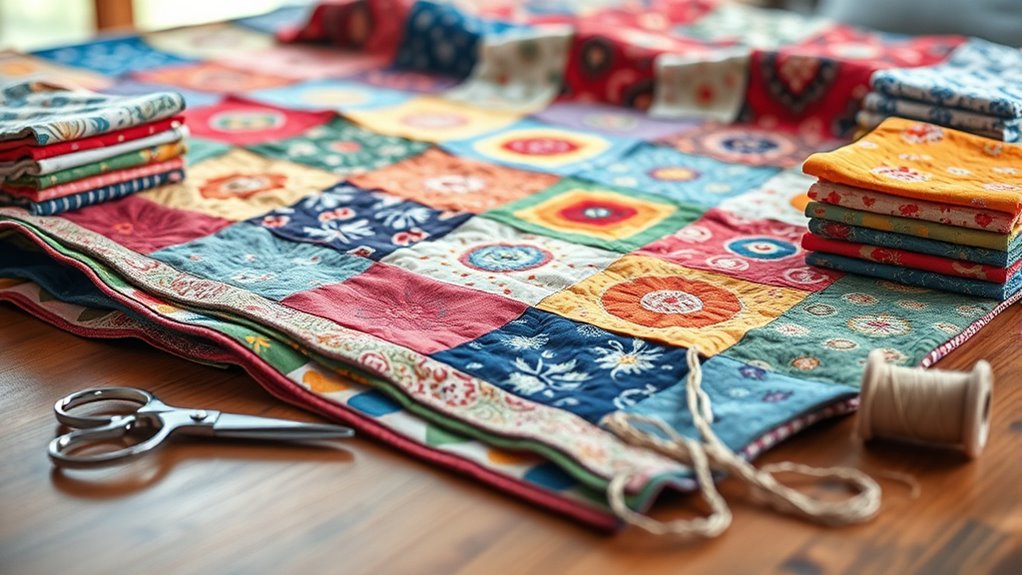
When you’re picking out fat quarters, it’s all about finding the right balance between colors and patterns. Think about choosing colors that complement each other—this helps everything look harmonious without feeling too matchy-matchy. At the same time, try to mix up the patterns a bit. Combining different prints can really bring your quilt to life and make each piece stand out.
Oh, and don’t forget about balancing lighter and darker fabrics. That contrast adds depth and keeps your design from looking flat. The key is to play around with your selections until you find a mix that feels just right to you.
Choosing Complementary Color Schemes
How can you create a stunning quilt that truly stands out?
Choosing complementary color schemes is key to achieving visual harmony.
Here are some tips to guide you:
1. Use the Color Wheel:
Select colors opposite each other for striking contrast techniques.
2. Consider Seasonal Themes:
Choose colors that reflect the mood of the season, like warm tones for fall or cool shades for winter.
3. Mind Color Saturation:
Balance bold and muted fabrics to create depth and interest.
4. Incorporate Fabric Texture:
Layer different textures to improve the overall look and feel of your quilt.
Mixing Patterns Effectively
Mixing patterns in your quilt can improve its design, making it visually intriguing.
To achieve pattern harmony, choose fabrics that share a common color palette or theme.
This creates a cohesive look while allowing for variety.
Don’t shy away from incorporating design contrast, though; it can add depth and interest.
For instance, pair bold geometric prints with softer florals to create a dynamic interplay.
When selecting fat quarters, consider the scale of your patterns.
Larger prints can dominate, so balance them with smaller designs to maintain visual interest.
Experiment with different combinations on your design wall until you find a mix that excites you.
Trust your instincts; the right blend will raise your quilt to a new level of artistry.
Balancing Light and Dark
Achieving a balanced quilt design often hinges on the interplay
between light and dark fabrics. To create color harmony, your
fabric selection should thoughtfully incorporate both ends of
the spectrum.
Here are some tips to help you balance light and dark:
1. Choose a Base Color: Start with a dominant color that
resonates throughout your fabrics.
2. Mix Values: Combine both light and dark shades of that
base color to improve depth.
3. Add Contrast: Use darker fabrics to ground your design,
while lighter ones can add brightness and energy.
4. Test Arrangement: Lay out your fat quarters side by side
to see how they interact. Adjust as needed for visual appeal.
Balancing these elements will uplift your quilt’s overall design!
Top 5 Pitfalls in Estimating Fat Quarters for Quilts
When estimating fat quarters for your quilt, you might overlook some common pitfalls that can lead to frustrating results.
First, be cautious with your fabric selection. Choosing too many busy patterns can overwhelm your design and throw off your calculations.
Second, don’t underestimate the importance of accurate cutting techniques. A small mistake can greatly reduce the usable fabric.
Third, remember to account for seam allowances. They can eat into your fabric, so plan accordingly.
Fourth, consider the quilt size. A small quilt might not need as many fat quarters as you think.
Finally, avoid impulse buying. Stick to your calculations to guarantee you have enough without going overboard.
By being aware of these pitfalls, you’ll improve your quilting experience and achieve the desired outcome.
Happy quilting!
How to Choose Complementary Fat Quarters
Choosing complementary fat quarters can improve your quilt’s design considerably, especially if you consider color theory and fabric texture.
To achieve stunning fabric combinations and guarantee color harmony, follow these tips:
Achieve stunning fabric combinations and ensure color harmony by following these essential tips for your quilt design.
- Color Wheel: Use a color wheel to identify complementary colors. Colors that are opposite each other create vibrant contrast.
- Monochromatic Schemes: Choose different shades of the same color for a subtle and sophisticated look.
- Texture Variety: Mix fabrics with different textures, like cotton and linen. This adds depth and interest to your quilt.
- Prints and Solids: Balance busy prints with solid colors. This lets each fabric shine without overwhelming the design.
Finding Quality Fat Quarters
When you’re picking out fat quarters, the kind of fabric you choose makes a big difference. Start by looking for prints that you actually like—after all, you want to enjoy working with them! But don’t stop there. It’s also important to pay attention to the fabric’s quality, so try to find ones that will hold up well and keep their color after washing. That way, your quilt won’t just look beautiful when it’s finished—it’ll also stay that way for years to come. Choosing good fabric really helps your project last longer and look its best.
Fabric Types Matter
Although it might seem tempting to grab any fat quarter that catches your eye,
the fabric type plays a crucial role in your quilt’s overall quality and durability.
Choosing wisely guarantees your quilt stands the test of time
and looks stunning.
Here are some essential factors to take into account:
- Fabric Textures: Different textures like cotton, linen, or blends affect the quilt’s feel and drape.
- Color Saturation: Look for vibrant colors that won’t fade over time, enhancing your quilt’s visual appeal.
- Weight: Heavier fabrics provide durability, while lighter ones offer ease in handling.
- Washability: Verify the fabric can withstand multiple washes without losing its charm.
Print Quality Counts
The quality of prints on your fat quarters can make or break your quilt’s aesthetic appeal. When selecting fabric, pay attention to the print quality.
High-quality prints will have vibrant colors and clear designs that won’t fade or blur after washing. You want your quilt to look stunning, and that starts with choosing fabrics that will maintain their beauty over time.
Additionally, consider the fabric texture. A soft, smooth texture not only feels great but also improves the overall look of your quilt.
Mixing textures can add depth and interest, but make certain that the print quality remains consistent across the board. By focusing on these aspects, you’ll create a quilt that’s not just beautiful but also durable and enjoyable for years to come.
Adjusting Fat Quarters for Complex Quilting Patterns
Adjusting fat quarters for complex quilting patterns can seem challenging,
but with a bit of planning, you can easily create stunning designs.
Here are some tips to help you navigate fabric selection and layout strategies:
1. Plan Your Quilt: Start with quilt planning.
Sketch your design to visualize complex patterns and identify fabric needs.
2. Choose Wisely: Focus on fabric selection that complements your color placement
and design integration. Consider contrast and harmony when making choices.
3. Mind the Orientation: Pay attention to fabric orientation.
This affects pattern repetition and can improve your overall design.
4. Utilize Efficient Techniques: Implement sewing techniques that maximize quilting efficiency.
This allows for smoother assembly and better results.
Final Tips for Successful Quilting With Fat Quarters
Successful quilting with fat quarters hinges on a few key strategies. First, organize your fabric storage effectively. Use clear bins or labeled drawers to keep your fat quarters visible and accessible.
This’ll save you time when you’re piecing your quilt and help you avoid last-minute scrambles.
Next, always pre-wash your fabrics to prevent shrinkage and color bleeding later on. This simple step plays a huge role in quilt maintenance, ensuring your finished piece remains vibrant and intact after multiple washes.
Pre-washing your fabrics is essential to prevent shrinkage and color bleeding, ensuring your quilt stays vibrant after every wash.
Also, consider the layout before you start cutting. Play around with different arrangements to find what works best for your design.
Finally, don’t hesitate to ask for help or seek inspiration from quilting communities. Sharing ideas can lead to fantastic results.
Frequently Asked Questions
Can I Use Scraps Instead of Fat Quarters for My Quilt?
Absolutely, you can use scraps instead of fat quarters for your quilt! Scrap quilting is a fantastic way to blend different fabrics, creating a unique and personalized design.
Plus, it’s a great way to use up leftover materials. Just make sure your scraps are compatible with regard to color and texture to achieve a cohesive look.
Don’t hesitate to mix and match; that’s where the charm of scrap quilting lies!
What Is the Best Way to Store Leftover Fat Quarters?
The best way to store leftover fat quarters is to invest in effective storage solutions. Consider using clear bins or fabric organizers to keep your fabric organized and visible.
You can also fold your fat quarters neatly and stack them vertically in a drawer. Labeling each bin can help you quickly find what you need.
Keep your fabrics away from direct sunlight to prevent fading and guarantee they stay in great condition for future projects.
How Do I Pre-Wash My Fat Quarters Before Quilting?
To pre-wash your fat quarters, start by soaking them in warm water with a gentle detergent for about 15 minutes.
As you watch the fabric swirl, think of the colors blending like a painter’s palette.
Rinse them thoroughly, then tumble dry on low or air dry.
This fat quarter care prevents future shrinkage and removes any chemicals, enhancing your quilt’s overall quality.
You’ll appreciate the pre-washing benefits when your finished quilt feels just right!
Are There Fat Quarter Bundles Available for Specific Themes?
Yes, you can find themed bundles that cater to specific styles or occasions! Many fabric collections offer seasonal prints, perfect for holidays or events.
When you shop, look for bundles that feature coordinating colors to guarantee your quilt comes together beautifully. These curated selections save you time and help you achieve a cohesive look.
Can I Mix Different Fabric Types in My Fat Quarters?
Absolutely, you can mix different fabric types in your fat quarters! Think of it as creating a symphony; each fabric adds its unique note.
Just keep fabric compatibility in mind. Cotton blends beautifully with other cottons, while knits or silks might clash in texture.
Pay attention to texture considerations, too. A mix of smooth and textured fabrics can create stunning visual interest.
Conclusion
So, when you plunge into the world of quilting with fat quarters, remember: choosing the right amount can feel like the difference between a masterpiece and a patchy disaster!
You wouldn’t want your quilt to look like a confused rainbow, right? By carefully calculating and selecting your fat quarters, you’re not just sewing fabric; you’re weaving together dreams.
Embrace this glorious fabric journey, and let each fat quarter bring your quilt to life like a vibrant tapestry of joy!
When you know how many fat quarters make your quilt, you can plan each step with confidence and let your creativity shine.