Free Motion Quilting Guide for Beginners
If you’ve ever felt overwhelmed trying to master free motion quilting, you’re not alone. Many beginners struggle with tension issues, uneven stitches, or simply not knowing where to start. Finding the right tools and learning the basics can feel confusing, but the good news is, help is available.
Free motion quilting lets you create intricate designs on fabric, turning your quilts into unique artistic pieces.
To get started, you’ll need essential tools like a free motion foot and proper thread. Prepare your sewing machine, choose the right fabric and batting, and practice essential techniques while avoiding common mistakes.
This creative process can be rewarding and stress-relieving. Keep exploring to uncover more tips and designs that will enhance your quilting journey!
Key Takeaways
- Free motion quilting allows creative control over machine movement to create intricate designs and patterns on fabric.
- Essential tools include a quality free motion foot, proper thread tension, and good scissors for trimming.
- Choose durable cotton blends or specialty fabrics. Make sure to pre-wash them to minimize shrinkage.
- Familiarize yourself with machine settings and practice techniques. This helps you avoid common mistakes like puckering and inconsistent stitch lengths.
- Utilize online tutorials, books, and community groups for inspiration and support as you develop your quilting skills.
What Is Free Motion Quilting and Why Should You Try It?
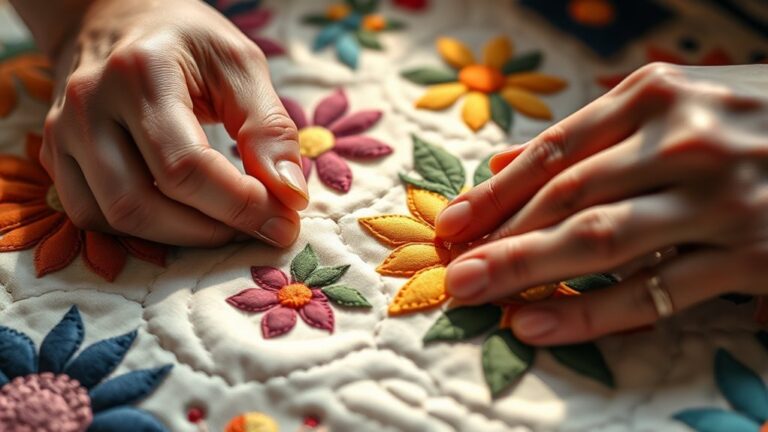
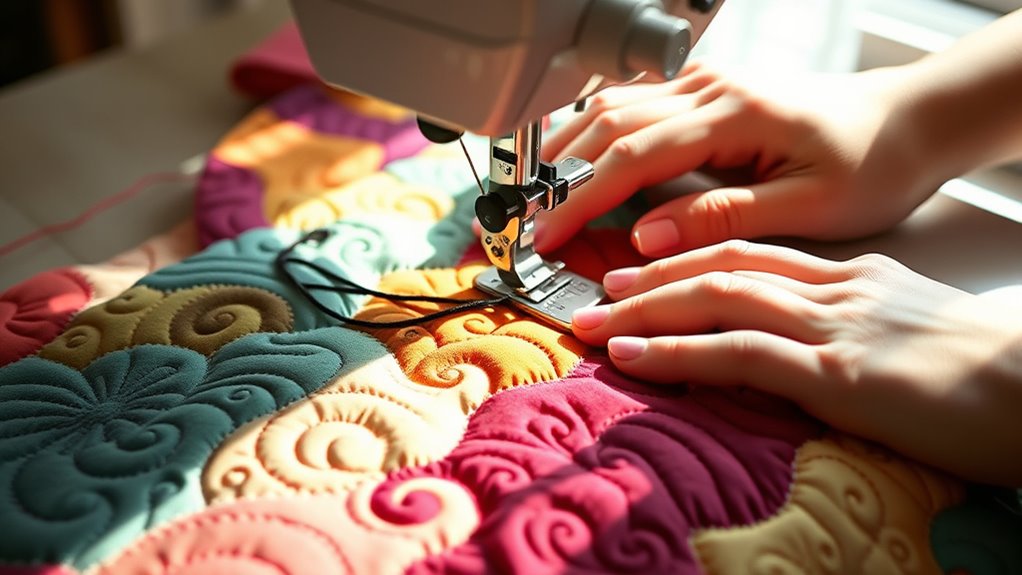
Free motion quilting is a creative technique that lets you control the sewing machine’s movement, allowing you to create intricate designs and patterns on fabric. It’s not just about sewing; it’s an avenue for creative expression and artistic freedom.
As you investigate unique patterns, you’ll find that each stitch tells a story, transforming a simple quilt into a piece of art.
This technique offers incredible stress relief, letting you lose yourself in the rhythmic flow of stitching. You’ll experience personal satisfaction as you develop your skills and watch your designs come to life.
Plus, it encourages design investigation, pushing you to try new ideas and techniques. Whether you’re a beginner or seasoned quilter, free motion quilting invites you to welcome your creativity and cultivate a fulfilling hobby.
Essential Tools for Free Motion Quilting
To bring your free motion quilting visions to life, having the right tools at your fingertips makes all the difference. First, invest in quality free motion feet. These specialized presser feet allow for smooth movement and control over your fabric.
You’ll find options like the open-toe foot, which offers better visibility and precision. It really helps you see exactly where your needle is going, so you can follow your design more easily.
Next, pay attention to your thread tension. Proper tension guarantees your stitches are even and secure, preventing frustration during your quilting journey.
It’s a good idea to practice and adjust your settings before starting your project. Taking a few minutes to test can save you a lot of hassle later.
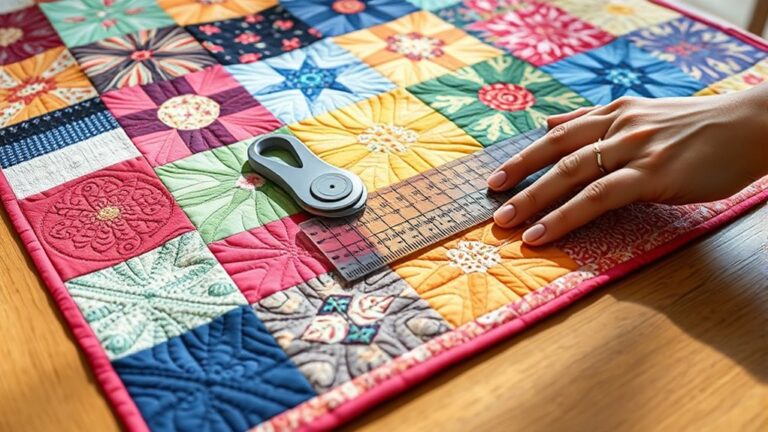
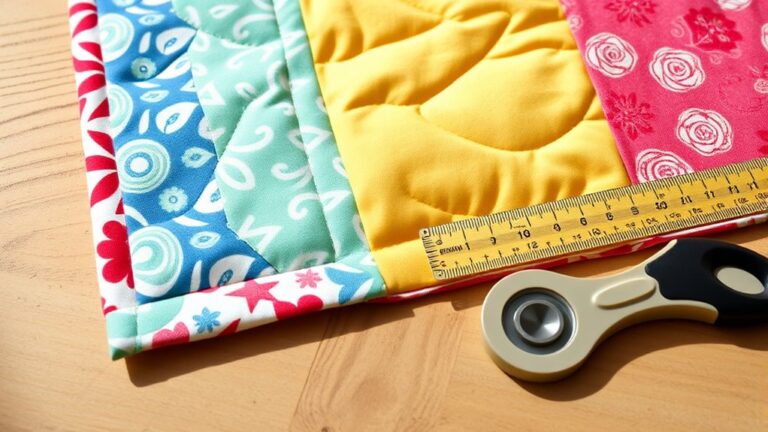
Don’t forget about a quilting ruler and a rotary cutter. These tools help you make precise cuts and maintain clean edges, which is so important for a polished look.
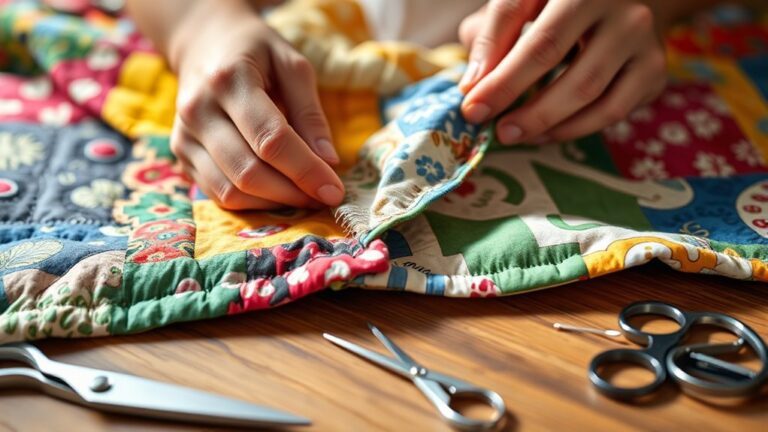
Finally, keep a good pair of scissors handy for trimming threads as you go. With these essential tools, you’ll be well-equipped to tackle your free motion quilting projects with confidence!
Preparing Your Sewing Machine for Free Motion Quilting
Preparing your sewing machine for free motion quilting is crucial for achieving beautiful results.
To set up your machine properly, follow these steps:
1. Choose the right foot: Use a free motion quilting foot to allow for better maneuverability.
2. Adjust your machine settings: Set the stitch length to zero for free motion.
Next, adjust the thread tension to match the thread and fabric.
3. Select the appropriate needle type: A quilting needle works best for thicker fabrics.
If you’re working with lighter materials, a universal needle is a great choice.
4. Create a practice space: Confirm you have ample room to move your fabric.
It also helps to use quilting gloves for better grip.
Don’t forget to perform maintenance checks, like cleaning and oiling your machine.
This will help keep everything running smoothly.
With these adjustments, you’ll be ready to tackle your free motion quilting confidently!
Choosing the Right Fabric and Batting for Your Quilt
When you’re picking out fabric for your quilt, it’s a good idea to think about how each type might affect your free motion quilting. Some fabrics are easier to work with than others, and your choice can make the quilting process smoother or a bit more challenging.
You’ll also want to spend a little time choosing the right batting. Batting isn’t just about warmth—it really changes the way your finished quilt looks and feels.
Fabric Types to Consider
Choosing the right fabric and batting for your quilt can make all the difference in its overall look and feel.
Here are some key fabric types to contemplate:
1. Cotton Blends:
They offer durability and ease of care, making them a popular choice.
2. Specialty Fabrics:
Investigate silk, linen, or even batik for unique texture variety and color selection.
3. Pre-Washed Fabrics:
These minimize shrinkage considerations, ensuring your quilt maintains its size and shape.
4. Fabric Weight:
Reflect on lightweight for intricate free motion quilting or heavier fabrics for a more substantial feel.
Be mindful of print patterns, since they can affect your design’s visual flow and might impact your quilting technique.
Choose wisely to improve your quilting project!
Batting Material Options
While selecting the right batting is essential for your quilt’s comfort and appearance, understanding the various material options can make things a lot easier. Here’s a quick overview to help with your batting selection:
| Batting Type | Batting Thickness | Batting Origin |
|---|---|---|
| Cotton | Low to Medium | Natural |
| Polyester | Medium to High | Synthetic |
| Bamboo | Low | Natural |
Consider batting blends if you want better durability and texture. Each batting type comes with its own care instructions, so always check before washing.
The right batting doesn’t just affect the quilt’s warmth—it also changes the overall look. Pay attention to batting thickness to get the finish you want!
Essential Techniques for Free Motion Quilting Success
Mastering essential techniques is fundamental for achieving success in free motion quilting.
By focusing on key areas, you’ll improve your skills and confidence.
Focusing on essential techniques will elevate your quilting skills and enhance your confidence in free motion quilting.
Here are four important techniques to take into account:
- Thread Tension: Adjust your thread tension for balanced stitches. Too tight or too loose can lead to issues.
- Stitch Length: Experiment with different stitch lengths to complement your quilting motifs. A consistent length creates a polished look.
- Machine Settings: Familiarize yourself with your machine settings, including quilting feet and thread types. Proper settings enhance your overall results.
- Fabric Preparation: Make sure your fabric is prepped properly. Press seams and use stabilizers when necessary to prevent puckering.
Incorporating these techniques into your practice routines will make a significant difference.
Seek design inspiration from various quilting patterns to keep your creativity flowing and boost your free motion quilting journey.
How to Improve Your Free Motion Quilting Skills
If you want to get better at free motion quilting, the key is regular and consistent practice. Try setting aside a little time each week just for stitching—it really makes a difference. And don’t be afraid to try out different designs, even if they seem a bit challenging at first. Mixing things up will help you hone your technique, and you might even discover some new creative ideas along the way.
Practice Regularly And Consistently
Regularly practicing your free motion quilting skills is vital for improvement.
By dedicating time to this art form, you improve stitch consistency and build muscle memory, which leads to greater creative expression.
Plus, it can serve as a form of stress relief and mindfulness quilting.
Here are four ways to guarantee consistent practice:
- Set a Schedule: Dedicate specific times each week for rhythm practice.
- Create a Comfortable Space: Designate an area that encourages creativity and exploration.
- Use a Variety of Fabrics: Experiment with different materials to boost design exploration.
- Track Your Progress: Keep a journal to reflect on your personal growth and comfort zone challenges.
Embrace the journey of free motion quilting; it’s an art therapy adventure!
Experiment With Different Designs
Immerse yourself in the world of creativity by experimenting with different designs in your free motion quilting. This is your chance for artistic expression!
Start by exploring various stitch patterns and thread choices to see how they affect your project. Motif exploration can lead to exciting pattern variations, so don’t hesitate to mix and match.
Here’s a quick guide to inspire your journey:
| Design Inspiration | Quilting Techniques |
|---|---|
| Geometric Shapes | Loop and Swirl Patterns |
| Nature Motifs | Echo Quilting |
| Abstract Designs | Stippling Techniques |
Embrace your creative freedom and let each project reflect your unique style! Remember, the more you experiment, the more confident you’ll become.
Common Free Motion Quilting Mistakes to Avoid
While free motion quilting can be a liberating and creative experience, it’s easy to fall into common pitfalls that can hinder your progress.
Here are some mistakes to watch out for:
- Neglecting Thread Tension: Incorrect tension can lead to puckering or loose stitches. Always check your settings before starting.
- Inconsistent Stitch Length: Varying stitch lengths can disrupt pattern consistency. Focus on maintaining a steady quilting rhythm for better results.
- Poor Design Planning: Jumping into quilting without a clear plan can result in chaotic designs. Spend time sketching out your ideas.
- Choosing the Wrong Fabric: Fabric choices matter! Some materials are more forgiving than others, so select wisely to minimize beginner challenges.
Creating Unique Free Motion Quilting Designs
Creating unique free motion quilting designs can elevate your projects and showcase your personal style.
To find design inspiration, investigate various sources such as nature, art, or even everyday objects.
Experimenting with pattern variations can lead to stunning results.
Here’s a simple table to visualize potential designs:
| Design Inspiration | Pattern Variation | Example Use |
|---|---|---|
| Leaves | Swirls | Table runners |
| Waves | Zigzags | Quilt borders |
| Flowers | Doodles | Pillow covers |
Don’t hesitate to combine different inspirations and variations for a more distinctive look.
Remember, practice makes perfect; the more you try different techniques, the more unique your creations will become.
Embrace your creativity, and let your quilts reflect who you are!
Keeping Your Quilting Supplies in Top Shape
To guarantee your quilting supplies last and perform at their best, it’s vital to establish a regular maintenance routine.
Here are some effective maintenance tips to keep your essential tools in top shape:
1. Clean Your Sewing Machine:
Regularly remove lint and dust from your machine.
This helps guarantee smooth operation every time you sew.
2. Check Needle Condition:
Replace needles frequently to avoid snags.
Fresh needles also guarantee clean stitching on your projects.
3. Organize Your Supplies:
Use storage solutions like bins or shelves.
This way, your fabrics, threads, and tools stay easily accessible and tidy.
4. Inspect Cutting Tools:
Sharpen rotary cutters and scissors regularly.
Keeping blades in top shape helps maintain precision in your cuts.
Inspiring Resources for Free Motion Quilters
As you start exploring free motion quilting, you’ll quickly discover there are tons of inspiring resources out there to help you grow your skills. You might want to check out online tutorials and videos—they’re great for getting step-by-step guidance right at your own pace. And if you prefer diving deep, books and guides can walk you through more advanced techniques, giving you a solid foundation.
It’s also a good idea to reach out to community groups and forums. Connecting with other quilters is a fantastic way to find support, pick up fresh ideas, and even share your own experiences. You’ll be amazed at how much you can learn just by chatting with fellow enthusiasts.
Online Tutorials and Videos
Online tutorials and videos have become invaluable resources for free motion quilters looking to improve their skills. With a wealth of online resources available, you can easily access video demonstrations and expert interviews that provide valuable insights.
Here are some key benefits you can investigate:
- Beginner Tips: Find straightforward advice to kickstart your quilting journey.
- Skill Building Sessions: Participate in online courses designed to refine your techniques.
- Quilting Challenges: Join communities that motivate you to push your limits.
- Tutorial Reviews: Read feedback on various tutorials to choose the best ones for your learning style.
Utilizing these resources will not only boost your confidence but also make your quilting experience more enjoyable!
Books and Guides
Books and guides serve as essential companions for free motion quilters who are eager to sharpen their craft.
They offer valuable insights, from beginner resources to advanced techniques, making it easier to explore quilt patterns and design inspirations.
Here’s a quick reference to some highly recommended reading:
| Resource Type | Examples | Purpose |
|---|---|---|
| Instructional Books | “Free Motion Quilting” | Techniques and patterns |
| Quilting Blogs | The Crafty Quilter | Tips, tutorials, and ideas |
| Expert Interviews | Podcasts with Quilters | Insights and experiences |
Additionally, think about enrolling in quilting workshops or checking out instructional videos.
These resources provide diverse perspectives that can spark your creativity and help you refine your skills.
Happy quilting!
Community Groups and Forums
Joining community groups and forums can greatly improve your free motion quilting journey.
You’ll find invaluable resources and support from fellow quilters enthusiastic to share their experiences.
Here are some key benefits:
- Skill Sharing: Learn new techniques and tips from seasoned quilters.
- Project Showcases: Share your work and get feedback to inspire your next creation.
- Technique Challenges: Participate in challenges that push your skills and creativity.
- Motivation Boosts: Connect with others who keep you motivated and provide troubleshooting advice when needed.
You’ll also encounter inspiration boards, beginner tips, and resource recommendations that help you troubleshoot and elevate your quilting.
Engaging with a community fosters a sense of belonging and accelerates your learning process.
Frequently Asked Questions
Can I Use Any Sewing Machine for Free Motion Quilting?
Yes, you can use many sewing machine types for free motion quilting, but there are some considerations.
Look for a machine with a drop feed option, which allows you to move the fabric freely. Furthermore, use a free motion quilting foot or a darning foot to help guide your stitches.
If your machine has these features, you’re set to start creating beautiful designs. Just make sure you practice to build your confidence!
How Do I Choose the Right Thread for Free Motion Quilting?
Choosing the right thread for free motion quilting is like picking the perfect paint for a canvas.
Opt for a high-quality cotton or polyester thread in a weight that suits your project. Remember, thread types vary; some glide effortlessly, while others might snag.
Pay attention to thread tension. If it’s too tight, you’ll create frustrating loops.
Experiment with different colors and textures to bring your quilt to life, making each stitch a masterpiece.
What Should I Do if My Stitches Are Uneven?
If your stitches are uneven, first check your stitch tension. Adjust it slightly to see if that helps.
Next, review your machine settings. Sometimes, the feed dogs need to be lowered for better control.
Make sure your fabric is feeding smoothly, and practice moving it at a consistent pace.
If you’re still struggling, consider experimenting with different threads, as some can affect the stitch appearance.
Keep practicing, and you’ll improve!
How Can I Prevent Fabric Bunching While Quilting?
To prevent fabric bunching while quilting, think of your fabric as a flowing river. Maintain even fabric tension by using proper quilting techniques.
Start by adjusting the presser foot pressure and make sure your feed dogs are lowered. Smooth out your fabric as you work, guiding it gently beneath the needle.
Keep your hands relaxed and steady. Let the fabric glide like water, and try to avoid any unnecessary pulls or tugs that could cause bunching.
Is Free Motion Quilting Suitable for Beginners?
Yes, free motion quilting is suitable for beginners! You can start by mastering basic techniques like creating simple designs and practicing on scraps.
Essential tools, such as a darning foot and quality thread, make a significant difference. Don’t be afraid to experiment; it’s all about building confidence.
With a bit of patience and practice, you’ll quickly develop your skills and create beautiful quilts that reflect your unique style. Enjoy the journey!
Conclusion
Now that you’ve dipped your toes into the vibrant world of free motion quilting, it’s time to release your creativity!
With the right tools and techniques, you’ll find yourself dancing across the fabric, stitching your dreams into reality.
Remember, practice makes perfect, and every quilt tells a story.
So grab your machine, trust your instincts, and let your imagination soar. Your masterpiece awaits, and with this free motion quilting guide for beginners, you’re well on your way.
Happy quilting!