7 Essential Tips for How Many Shirts for a T-Shirt Quilt
If you’ve ever found yourself staring at a pile of old t-shirts, unsure of how to turn those memories into a cozy quilt, you’re not alone. Many people struggle with knowing just how many shirts they’ll need for a t-shirt quilt, and it can feel overwhelming to start the project.
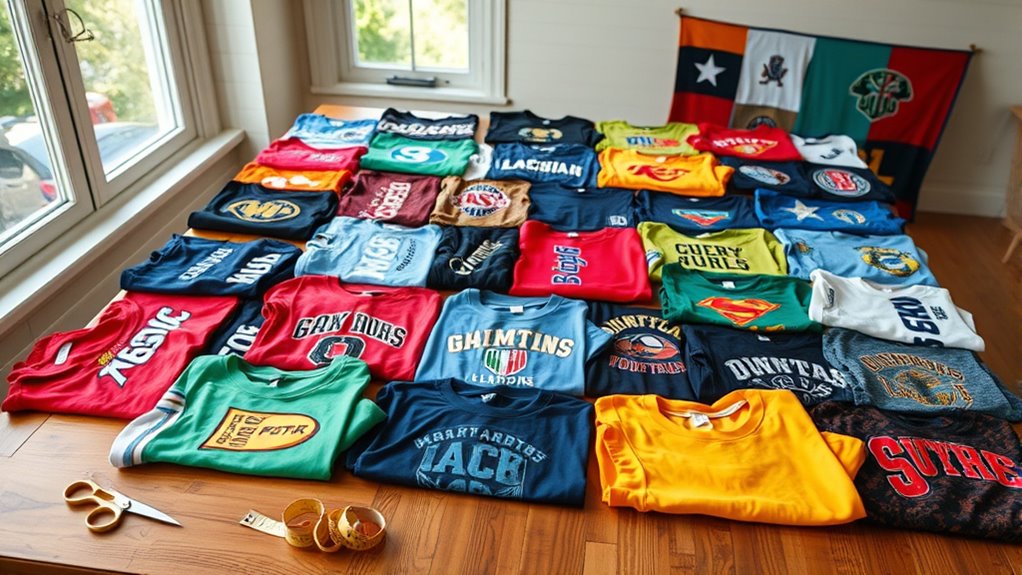
When creating a t-shirt quilt, aim for 12 to 20 shirts, depending on the quilt size and design. Consider your quilt’s purpose, whether it’s a throw or a full bed-size, and measure each shirt flat, factoring in seam allowances.
Mix sizes for visual interest and choose shirts that tell your personal story. Think about fabric types for balance and durability.
Keep these tips in mind, and you’ll uncover even more helpful insights for your quilt project.
Key Takeaways
- Determine the quilt size. A throw quilt needs fewer shirts than a full bed-size quilt, typically requiring 12 to 20 shirts.
- Measure each shirt flat and focus on the design dimensions. Be sure to include seam allowances for a balanced appearance.
- Sketch your design to visualize the layout. This will help clarify the number of shirts needed and ensure a cohesive theme and color palette.
- Consider mixing shirt sizes thoughtfully. Doing so can enhance visual interest and help maintain a unified look throughout the quilt.
- Pre-wash shirts to account for fabric shrinkage. This step helps make sure the final quilt remains both functional and visually appealing over time.
Consider the Size of Your Quilt: What’s Your Goal?
When planning your t-shirt quilt, have you thought about how big you want it to be?
The quilt dimensions play a vital role in determining how many shirts you’ll need.
Start by considering where you’ll display or use the quilt.
A throw size might only require a handful of shirts, while a full bed-size quilt will need a larger selection.
Next, think about your fabric choices.
Different fabrics can impact the overall look and feel of your quilt.
If you choose lightweight t-shirts, you might want to add a backing that provides some heft.
Also, consider whether you want to include borders or sashing, as these can affect the quilt’s final dimensions.
Estimating the Right Number of T-Shirts for Your Quilt
Estimating the right number of t-shirts for your quilt can feel overwhelming,
but it’s simpler than it seems. Start by considering the quilt style you want.
A lap quilt typically needs fewer shirts than a full-size quilt.
Generally, aim for at least 12 to 20 t-shirts for a standard size,
but this can vary based on your design.
Next, think about the fabric types. Thinner fabrics might require more shirts
to achieve your desired thickness, while heavier ones offer more warmth
with fewer pieces.
If you’re mixing different fabric types, keep in mind that they may behave
differently during the quilting process, which can impact how many shirts
you’ll need.
Finally, sketch out your design. This visual guide can help you see
how many shirts you’ll actually use, ensuring your quilt turns out
just the way you envision it.
Measuring T-Shirt Dimensions for the Best Fit
When you’re making your T-shirt quilt, picking the right shirt sizes really matters if you want everything to look balanced. It’s a good idea to pay close attention to where the designs are placed on each shirt, too, since that can make a big difference in how the quilt turns out overall. And, of course, remember to factor in seam allowances—those extra little bits of fabric can change your final measurements more than you might think.
Choosing T-Shirt Sizes
Choosing the right t-shirt sizes for your quilt is essential for achieving a balanced look.
Start by considering the fabric types of your shirts, as they can vary considerably.
For example, cotton tees offer a different drape than polyester blends.
You’ll want to mix sizes thoughtfully, especially if your shirts come from different origins, like concerts or sports events.
This variety can add character but may also lead to unevenness if not balanced well.
Aim for a harmonious blend of small, medium, and large shirts to create visual interest without overwhelming the design.
Measuring Design Placement
To guarantee your t-shirt quilt features a polished and professional look, accurate measurements of each shirt are essential.
Start by laying each t-shirt flat and measuring the dimensions of the design. Focus on the width and height, ensuring you capture the entire graphic without cutting any important elements.
This step helps achieve proper design alignment across all shirts in your quilt.
Keep in mind the visual balance of your layout. If some designs are larger than others, consider how they’ll fit together.
You want a cohesive look, so mix and match sizes thoughtfully. By measuring carefully, you’ll create a quilt that not only showcases your favorite shirts but also maintains an attractive and harmonious appearance.
Accounting For Seam Allowance
After measuring your shirt designs, it’s important to account for seam allowance to guarantee everything fits together perfectly. Not considering this can lead to uneven edges and a poorly constructed quilt.
Here are some tips to help you:
- Add at least ½ inch to each side of your fabric pieces for seam allowance.
- Consider fabric shrinkage when pre-washing your shirts; they might shrink more than you expect.
- Cut carefully, making sure your measurements include the allowance to avoid any surprises later.
- Pin or baste your squares together before sewing to check the fit and alignment.
Crafting a Thematic Quilt: Selecting Shirts That Reflect Your Journey
When you’re putting your quilt together, start by thinking about the memories attached to each shirt and the stories behind them. Each shirt represents a different moment in your life, so it’s fun to look back and remember what each one means to you.
As you’re picking out shirts, pay attention to the colors and designs—they don’t all have to match perfectly, but it helps if they look good side by side. That way, your quilt will feel unified instead of random.
It’s also a good idea to settle on a theme, whether it’s based on certain events, places, or just a color vibe you love. This will help all the pieces come together, and in the end, your quilt will be a unique reflection of your personal journey.
Personal Memories And Stories
Choosing shirts for your t-shirt quilt can be a journey through your personal memories and stories.
Each piece you select can evoke nostalgic memories and carry significant stories that shape your journey.
Here are some tips to guide your selection:
- Special Events: Choose shirts from concerts, family reunions, or vacations that remind you of cherished moments.
- Milestones: Include shirts from graduations or significant achievements that represent personal growth.
- Hobbies and Interests: Select shirts that reflect your passions, like sports teams or artistic pursuits.
- Travel Memories: Incorporate shirts from places you’ve visited, capturing the essence of your adventures.
These selections will not only create a quilt but also weave together the narrative of your life.
Color And Design Cohesion
As you begin creating your t-shirt quilt, focusing on color and design cohesion can improve its visual appeal and emotional resonance. Start by selecting a cohesive color palette that reflects your journey.
Choose shirts that share similar hues or complementary colors to create a unified look. This doesn’t mean every shirt has to match perfectly; variations can add depth and interest.
Pay attention to fabric textures as well. Mixing smooth and textured fabrics can elevate the quilt’s tactile experience.
Consider incorporating shirts from different occasions, making sure their colors and designs harmonize. This thoughtful selection will not only make your quilt visually stunning but also evoke cherished memories, making it a true representation of your story.
Theme Consistency Throughout Quilt
To create a truly meaningful t-shirt quilt, maintaining a consistent theme throughout can improve its significance.
By thoughtfully selecting shirts that reflect your journey, you’ll create a cohesive story.
Here are some tips to guarantee theme consistency while allowing for a bit of theme variation and fabric contrast:
- Personal Milestones: Use shirts from significant life events, like graduations or trips.
- Hobbies and Interests: Include shirts that showcase your passions, such as sports or art.
- Color Palette: Choose shirts that share similar colors to tie everything together.
- Graphic Style: Opt for shirts with a matching design aesthetic, whether vintage or modern.
These considerations will help you craft a quilt that’s not only visually appealing but also rich in personal meaning.
Balancing Looks and Function in Your Quilt Design
While you might be tempted to focus solely on aesthetics when designing your T-shirt quilt, balancing looks and function is vital for a successful final product.
Start by considering your fabric choices. Choose materials that not only complement each other visually but also work well together regarding durability and comfort.
Cotton is a popular choice, but blends can add unique textures.
Layering techniques play an important role in achieving both visual appeal and structural integrity. Experiment with different layers to improve the quilt’s overall design while ensuring it remains functional.
For example, use batting that provides warmth without adding too much weight.
Don’t forget about the quilt’s purpose. If it’s meant for everyday use, prioritize durability alongside beauty.
Customizing Your T-Shirt Quilt: Adding Extra Elements
When you’re customizing your T-shirt quilt, think about how adding extra elements can improve its uniqueness and personal touch. By incorporating various fabric choices and embellishment techniques, you can create a one-of-a-kind masterpiece.
Here are some ideas to get you started:
- Borders: Use contrasting fabrics to frame your T-shirts, enhancing their visibility and adding depth.
- Appliqué: Incorporate shapes or designs that represent your interests. This gives the quilt a fun and personalized flair.
- Stitching: Try out different stitching techniques, like decorative or contrasting thread, to add texture and visual interest.
- Pockets or Patches: Include pockets from old shirts for added functionality, or sew on patches that tell your story.
These extra elements not only showcase your creativity, but they also make your quilt a cherished keepsake.
Planning Ahead: Key Considerations Before You Start Cutting
Before you start cutting your T-shirts, it’s important to plan thoroughly.
First, consider the fabric types of your shirts. Different materials can affect how your quilt lays and holds up over time. Cotton blends are great for softness, while polyester may add durability but can be less breathable.
Next, think about your cutting techniques. Aim for consistency to guarantee all pieces fit together well. Use a rotary cutter for clean edges and a cutting mat to protect your surfaces.
Also, sketch a layout of your quilt design. This helps you visualize how each shirt will contribute to the overall aesthetic.
Don’t forget to account for seam allowances when cutting; it can save you a lot of frustration later.
Frequently Asked Questions
Can I Use Shirts of Different Fabric Types for My Quilt?
Yes, you can use shirts of different fabric types for your quilt, but you should consider fabric compatibility.
Mixing cotton with synthetic blends might cause uneven wear or different shrinkage rates. When selecting your shirts, aim for fabrics that feel similar to guarantee a cohesive look and feel.
It’s best to test a small piece first, so you know how they’ll behave together in your quilt.
Enjoy your creative project!
How Do I Care for My T-Shirt Quilt After It’s Made?
To care for your t-shirt quilt after it’s made, use t-shirt preservation techniques like washing it in cold water on a gentle cycle.
Avoid bleach and fabric softeners to protect the prints. For drying, lay it flat or tumble dry on low heat.
If you need to iron, use a low setting and place a cloth over the fabric.
Regularly check for any wear and treat stains promptly with quilt cleaning methods to keep it looking great.
What’s the Best Way to Store My T-Shirt Quilt?
To store your t-shirt quilt properly, try using breathable storage methods like cotton bags or acid-free boxes. Avoid plastic, as it can trap moisture and lead to mold.
Make sure the quilt’s clean and dry before storing it, ensuring ideal quilt maintenance. If you’re keeping it for a long time, consider laying it flat instead of folding to prevent creases.
Regularly check on it to keep it in great condition.
How Long Does It Typically Take to Make a T-Shirt Quilt?
It typically takes about 10 to 20 hours to make a t-shirt quilt, depending on your skill level and design complexity.
You’ll start with fabric selection, choosing shirts that resonate with you.
Then, you’ll cut, arrange, and sew each piece together.
If you’re new to quilt making, take your time and enjoy the process.
Don’t rush; each stitch adds to the quilt’s story and meaning, making it truly special.
Can I Include Non-T-Shirt Fabric in My Quilt Design?
Absolutely, you can include non-t-shirt fabric in your quilt design! Think of it as adding vibrant brushstrokes to a canvas.
When selecting fabric, consider how it complements your t-shirt patterns. Mixing textures and colors can enrich your overall design.
Just make sure the non-t-shirt fabrics are compatible in weight and durability. This blend can create unique design patterns that truly reflect your personality and memories, making your quilt even more special.
Conclusion
As you weave your memories into a cozy tapestry, keep in mind that each shirt tells a story.
With careful planning and a dash of creativity, your t-shirt quilt can become a vibrant patchwork of experiences.
Celebrate the journey, and let your quilt unfold like a cherished book.
Each square is a page filled with laughter, adventures, and nostalgia.
So, gather those shirts, and turn your dreams into a warm, wearable masterpiece.
With these tips for how many shirts for a t-shirt quilt, you can create something that wraps you in comfort and history.