Beginner’s Guide to Quilting Fabric: Step-by-Step
Getting started with quilting can feel overwhelming, especially when you’re faced with so many fabric choices and tools.
Maybe you’ve stood in a fabric store, unsure what to pick, or worried your quilt won’t turn out just right. You’re not alone—many beginners struggle with these same questions and concerns.
That’s why we’re here to break down the essentials and help you confidently begin your quilting journey.
If you’re starting with quilting, understanding fabrics is key.
Choose cotton or blends for versatility and always pre-wash to prevent shrinkage.
Invest in essential tools like rotary cutters, mats, and a reliable sewing machine for precise results.
Master basic techniques like stitching and pressing seams for a professional finish.
Color theory can help you select harmonious palettes.
With these fundamental tips, you’ll be well on your way to creating beautiful quilts.
There’s plenty more to discover!
Key Takeaways
- Understand various fabric types like cotton and blends, and choose appropriate weights for piecing and backing in your quilt.
- Pre-wash fabrics to remove chemicals, prevent shrinkage, and ensure consistent colors and sizes before cutting.
- Invest in essential tools such as rotary cutters, cutting mats, and measuring tools for precise quilting.
- Learn basic techniques like sewing straight lines, pressing seams, and basting layers together for effective quilt assembly.
- Experiment with color theory by choosing a dominant color and mixing patterns for visually appealing quilt designs.
Understanding and Choosing Quilting Fabrics
When you plunge into the world of quilting, choosing the right fabrics can feel overwhelming. Start by exploring different fabric types, like cotton, linen, and blends, each offering unique qualities.
Pay attention to quilting weights. Lighter fabrics work well for piecing, while heavier ones are great for backing.
Consider your pattern designs and how fabric choices can improve them. Dive into color theory to create harmonious combinations, ensuring your selections resonate together.
Explore how fabric selections enhance your pattern designs and embrace color theory for harmonious, resonant combinations.
Texture considerations matter too. A mix of smooth and textured fabrics can add depth to your quilt.
Don’t forget about print scales. Large prints can dominate a small quilt, while small prints may get lost in a larger piece.
Lastly, focus on fabric sourcing. Look for reputable shops, both online and local, to find quality materials that meet your needs.
Essential Quilting Tools for Beginners
When you’re just starting out with quilting, having the right tools really does make things a lot easier. You’ll want to get comfortable with some basic cutting tools—these help you cut your fabric pieces precisely, which is super important for any quilt. And don’t worry if you’re not familiar with your sewing machine just yet; learning the basics will help you stitch everything together smoothly.
Cutting Tools Overview
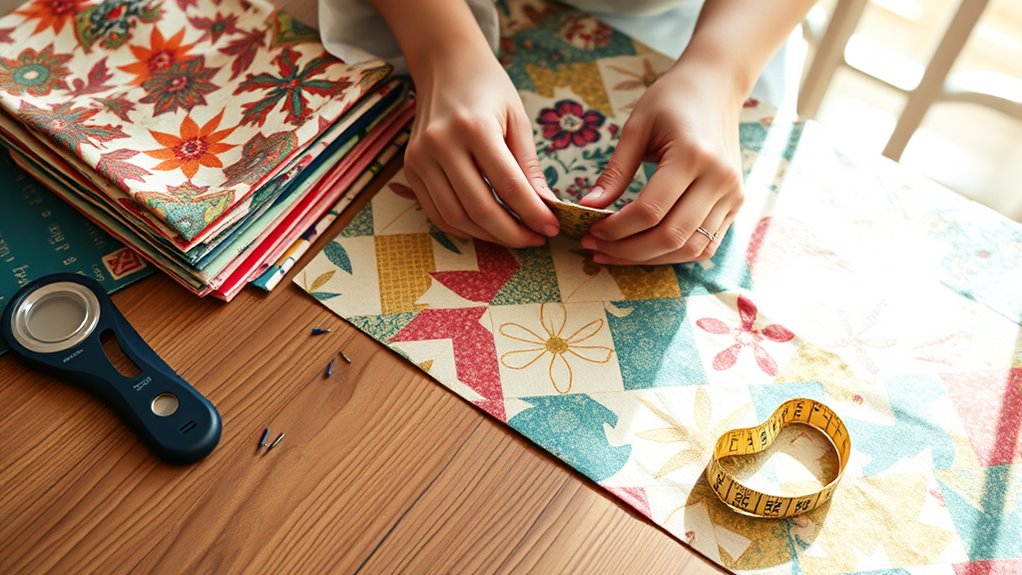
Cutting tools are the backbone of any quilting project, making precise cuts essential for achieving clean lines and accurate shapes.
You’ll want to invest in rotary cutters and fabric shears, as they offer the best cutting accuracy. Always use cutting mats to protect your surfaces and extend your tools’ life.
Familiarize yourself with safety rules, like keeping your fingers clear of the blade. Measuring tools are vital for proper project preparation, ensuring your fabric grain aligns correctly.
Utilize alignment techniques to achieve flawless results. Regular tool maintenance, like sharpening blades, will keep your tools in top shape.
With the right cutting tools and practices, you’ll set a solid foundation for your quilting journey.
Sewing Machine Basics
After mastering cutting tools, it’s time to explore one of the most vital components of quilting: your sewing machine.
There are various sewing machine types, including mechanical, electronic, and quilting-specific models. Each has its own features, so choose one that suits your needs and budget.
Once you’ve got your machine, understanding basic maintenance is essential. Regularly clean your machine, oil it as needed, and replace the needle frequently to guarantee smooth operation.
Familiarize yourself with the tension settings and stitch options to achieve the best results.
With the right sewing machine and proper care, you’ll be well on your way to creating beautiful quilts. Immerse yourself, and enjoy the process of bringing your fabric creations to life!
What Basic Quilting Techniques Should You Master?
Mastering basic quilting techniques sets the foundation for your creative journey.
Start with basic stitching, which includes straight lines, zigzags, and quarter-inch seams. These skills are vital for accurate piecing and guarantee your quilt holds together beautifully.
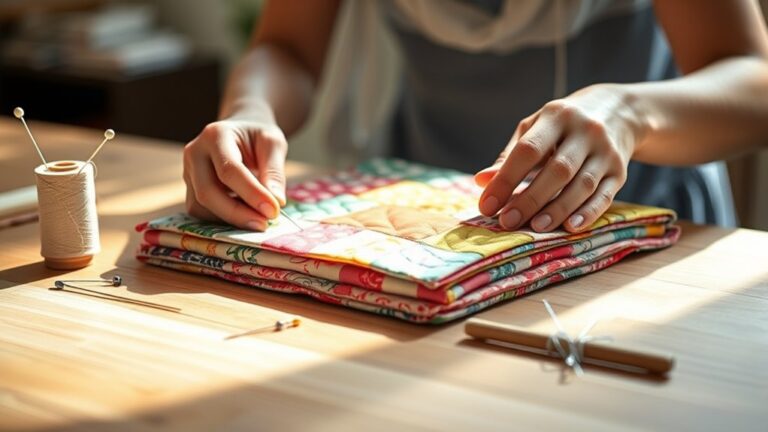
Next, practice quilt assembly. Begin by laying out your fabric pieces to visualize your design, then sew them together carefully.
Don’t rush—take your time to align edges and maintain consistent seam allowances.
Also, learn to press seams correctly; this helps your quilt lie flat and looks more professional.
Don’t forget to practice basting, as it’s important for holding layers together before quilting.
Finally, familiarize yourself with the basics of quilting layers: top, batting, and backing.
Mastering these techniques will not only boost your confidence but also improve the overall quality of your quilts.
Get ready to release your creativity!
How to Choose Colors and Patterns for Your Quilt
How can you guarantee your quilt stands out with the perfect colors and patterns?
Start by exploring color theory. Understand the color wheel and how complementary, analogous, and triadic colors work together.
Choosing a main color and selecting others that elevate it can create striking visuals.
Selecting a dominant color and complementary hues can transform your quilt into a captivating masterpiece.
Next, think about pattern mixing. Don’t shy away from combining different designs; just keep balance in mind.
For example, pair bold prints with softer ones to avoid overwhelming the eye. Stick to a limited color palette to maintain harmony while allowing for some contrast.
Gather swatches and experiment until you find combinations that excite you.
Remember, quilting is personal, so let your creativity shine. Trust your instincts and enjoy the process!
Preparing Your Fabric for Successful Quilting
Preparing your fabric is essential for a successful quilting experience.
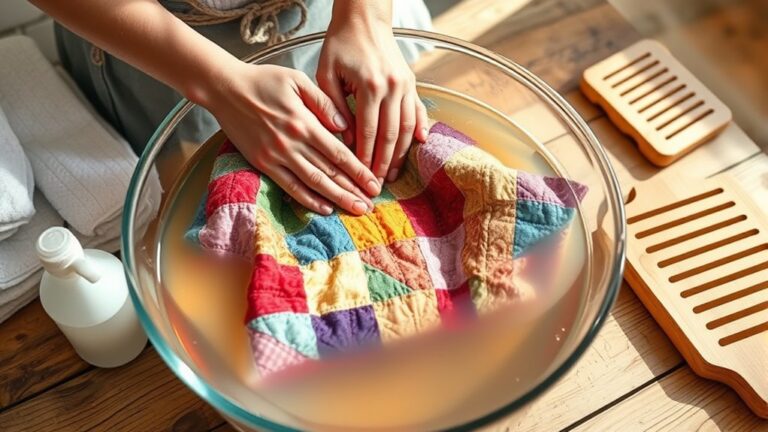
Start by fabric pre washing to remove any chemicals or sizing that might affect your quilt’s integrity.
This step helps prevent shrinking and fading later, ensuring your quilt maintains its beauty.
Once your fabric is clean and dry, it’s important to understand the fabric grain.
The grain refers to the direction of the threads in the fabric, and cutting along the straight grain will help your quilt pieces stay true to size and retain their shape.
Lay your fabric out flat and identify the grain lines; you’ll usually see a slight difference in texture or stretch.
When you cut your pieces, align them with the grain for best results.
Taking these steps will set a strong foundation for your quilting project, making it easier to assemble and ensuring a polished finish.
Cutting Fabric for Your Quilt
With your fabric prepped and the grain understood, it’s time to cut your pieces accurately for your quilt.
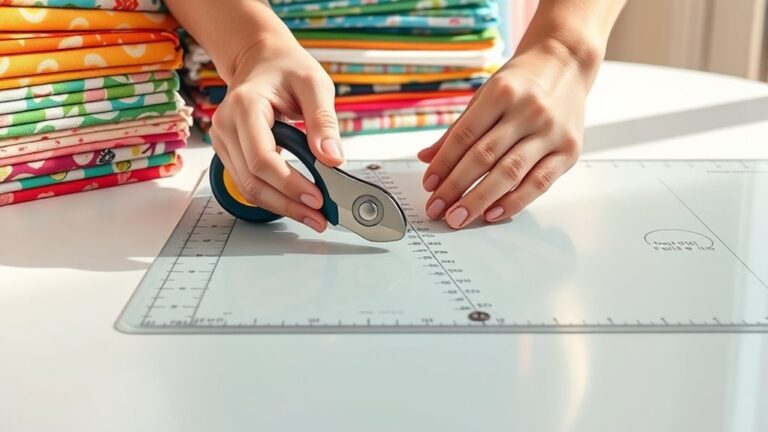
Start by using a rotary cutter and a cutting mat for precise cuts.
Always align your fabric with the grain to prevent distortion.
Pay close attention to cutting angles; they can greatly affect your quilt’s overall look.
Here’s a quick reference table to help you with cutting:
| Cut Type | Recommended Angle | Notes |
|---|---|---|
| Straight Cuts | 0° | Follow the grain |
| Bias Cuts | 45° | Ideal for curves |
| Cross Cuts | 90° | Used for squares/rectangles |
| Notches | Varies | For decorative edges |
| Triangles | 60° | Great for patchwork |
Ensuring accuracy in your cuts will set the foundation for a beautiful quilt!
Top Fabric Selection Mistakes Beginners Make
Selecting the right fabric for your quilt can feel overwhelming, especially when you’re just starting out.
One common mistake is ignoring fabric weight. Heavier fabrics may not drape well, affecting your quilt’s overall look and feel.
Always check the weight; it should match the purpose of your quilt.
Another pitfall is overlooking color theory. Beginners often choose colors they love without thinking about how they interact.
Colors that clash can make your quilt visually jarring. Instead, investigate complementary colors that improve the overall design.
Don’t forget to think about fabric types as well. Mixing fabrics like cotton with synthetics can lead to uneven wear and tear.
Stick to similar materials to guarantee longevity.
Caring for Your Quilting Fabrics
Taking care of your quilting fabrics is really important if you want them to look great for a long time. You’ll want to make sure you wash them gently, store them correctly, and iron them with care. By following a few simple steps, you can help your fabrics stay vibrant and in good shape, so they’re always ready whenever inspiration strikes for your next project. Let’s chat about the best ways to handle each step, so your fabric collection stays beautiful and ready to use.
Washing Your Fabrics
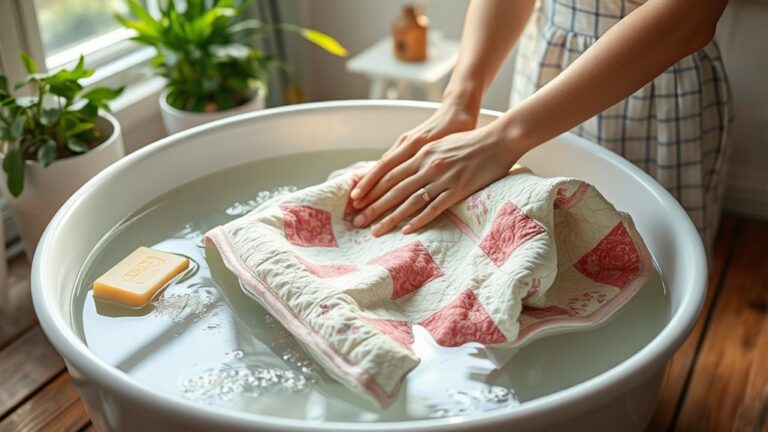
Before you plunge into your quilting project, it’s essential to wash your fabrics properly to guarantee they’re clean and ready for use.
Washing not only removes dirt and chemicals, but it also helps prevent fabric shrinkage after your quilt is complete.
This pre-wash benefits your project by making sure your fabrics maintain their colors and sizes.
Here’s a quick reference on washing techniques:
| Fabric Type | Washing Method | Drying Method |
|---|---|---|
| Cotton | Machine wash cold | Tumble dry low |
| Polyester | Machine wash warm | Hang dry |
| Linen | Hand wash | Lay flat |
| Blends | Machine wash cold | Tumble dry low |
Storing Fabrics Properly
Properly storing your fabrics is essential to keeping them in excellent condition, especially if you want to maintain their quality over time.
Effective fabric organization can make all the difference. Use these storage solutions to optimize space and protect your fabrics:
- Humidity control: Maintain a dry environment to prevent mold.
- Temperature management: Keep fabrics in a cool, stable area away from direct sunlight.
- Labeling systems: Clearly label bins or shelves for easy access and fabric rotation.
Ironing Techniques Explained
While you might think ironing is just about getting rid of wrinkles, it plays an essential role in preparing your quilting fabrics for the best results.
Proper fabric preparation guarantees that your pieces align correctly and stay flat during sewing.
Use pressing methods, like steam or dry pressing, depending on your fabric type.
For delicate materials, opt for a lower heat setting to avoid burns.
Always press seams open or to one side, as this gives your quilt a polished finish.
Remember to lift the iron instead of sliding it to prevent distortion.
Taking the time to expertly iron your fabrics will make a noticeable difference in your quilting projects, enhancing both appearance and durability.
Happy quilting!
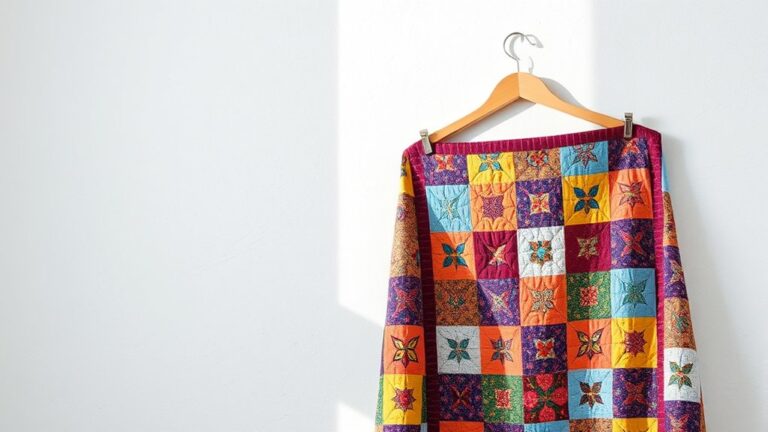
Inspiring Quilting Projects for Beginners
If you’re enthusiastic to immerse yourself in the world of quilting, there are plenty of beginner-friendly projects that can spark your creativity and build your skills.
You can start with simple patchwork designs that allow you to experiment with different fabric combinations and color palettes.
Here are three inspiring projects to reflect on:
- Easy Quilt: Look for quilt kits with beginner patterns that guide you step-by-step, ensuring a successful outcome.
- Scrap Quilts: Use leftover fabric selections from previous projects. This not only saves material but also lets you play with diverse colors and textures.
- Table Runner: Create a stylish table runner using simple patchwork techniques. It’s perfect for honing your skills while adding some flair to your home.
These projects will help you gain confidence and enjoy the creative process while learning the basics of quilting!
Frequently Asked Questions About Quilting Fabric
As you commence on your quilting journey, you might have questions about the fabrics you’ll be using. Understanding fabric types, weights, and textures can help you make informed choices.
Here’s a quick guide to clarify some essentials:
| Fabric Types | Characteristics |
|---|---|
| Cotton | Durable, versatile, easy to source |
| Batik | Unique patterns, dyed by hand |
| Flannel | Soft, warm, great for cozy quilts |
When considering fabric patterns, think about how they’ll complement each other in your design.
Pay attention to fabric weights, as they affect your quilt’s drape and durability.
Fabric pricing can vary, so shop around for the best deals.
Don’t forget to prewash your fabrics to avoid shrinking later on.
With these insights, you’re well on your way to selecting the perfect materials for your quilt!
Frequently Asked Questions
Can I Use Non-Cotton Fabrics for Quilting?
Yes, you can use non-cotton fabrics for quilting! Mixing fabrics can add texture and unique looks to your projects.
However, keep in mind that different fabric types behave differently. For instance, polyester might not hold up as well as cotton.
It’s a good idea to prewash your fabrics and test their compatibility. Choose wisely to guarantee your quilt’s durability and appearance, and enjoy the creative possibilities!
How Do I Wash My Quilting Fabric Before Use?
You should definitely wash your quilting fabric before use. Pre-washing helps remove chemicals, shrinkage, and excess dye, ensuring your finished quilt stays vibrant and intact.
To wash, use cold water and mild detergent, then air dry or tumble dry on low. This fabric preparation not only boosts your quilt’s longevity but also improves its overall feel.
Trust me, taking this step saves you headaches down the road and keeps your quilt looking its best.
What Is Fabric Shrinkage, and How Does It Affect Quilting?
Fabric shrinkage is the process where fabric reduces in size after washing.
It can affect quilting by altering your fabric’s dimensions, leading to uneven seams and misaligned patterns.
To prevent these issues, you should consider fabric pre-shrinking before you start your project.
Washing your fabric before cutting guarantees that you account for any shrinkage effects, helping maintain the integrity and appearance of your quilt in the long run.
How Do I Store Leftover Fabric Scraps?
To store leftover fabric scraps, you can use several scrap organization strategies.
First, sort your scraps by size, color, or type, then use clear bins or zip-lock bags for easy visibility.
Label each container for quick access. Consider a dedicated fabric drawer or a rolling cart as storage solutions to keep everything tidy.
Is There a Best Time of Year to Buy Quilting Fabric?
The best time of year to buy quilting fabric is during seasonal sales, especially around holidays like Black Friday or back-to-school events.
Did you know that fabric sales can spike by up to 30% during these times? You’ll find great deals and discounts that help you stock up.
Keep an eye on local quilt shops and online retailers for seasonal trends, as they often have special promotions that can save you money on your projects.
Conclusion
As you immerse yourself in the world of quilting, keep in mind that 70% of beginners often choose the wrong fabric, which can lead to frustration.
By understanding fabric types, mastering essential techniques, and selecting colors thoughtfully, you’ll set yourself up for success.
Don’t hesitate to experiment with patterns and textures; it’s all part of the creative journey!
Welcome your mistakes as learning opportunities, and soon, you’ll be crafting beautiful quilts that reflect your unique style.
Remember, this beginner’s guide to quilting fabric is here to help you every step of the way. Happy quilting!