How to Make a Patchwork Quilt: A Step-by-Step Guide
Ever feel overwhelmed by the idea of making a patchwork quilt? You’re not alone—many people want to create a cozy, handmade quilt but aren’t sure where to start or worry about getting lost in the details.
Choosing fabrics, cutting pieces, and assembling everything can seem daunting, especially if you’re new to quilting. Luckily, with the right products and some helpful guidance, anyone can turn their patchwork quilt dreams into reality.
To make a patchwork quilt, start by selecting inspiring fabrics that balance aesthetics and practicality. Gather essential tools like rotary cutters and quilting pins for accurate cutting.
Cut your fabric accurately, ensuring you account for seam allowances. Design your quilt layout by mixing colors and patterns for visual appeal, then piece it together.
Decide if you’ll quilt by hand or machine, and finish with binding for a polished look.
There’s so much more to investigate on each step!
Key Takeaways
- Select a variety of fabrics. Aim for a mix that balances aesthetics and practicality, so your quilt is both visually appealing and durable.
- Use essential tools like rotary cutters, rulers, and pins. These help ensure your pieces are cut and assembled accurately.
- Plan your quilt design by defining a theme. Try out different color combinations and fabric placements until you find a look you love.
- Choose batting and backing materials that suit your needs. Consider what will enhance warmth and texture, and decide if you’ll use hand or machine quilting techniques.
- Finish up with binding techniques for a polished look. To keep your quilt looking great, check it for wear regularly and use proper cleaning methods.
Understanding Fabric Types for Your Quilt
When diving into the world of patchwork quilting, knowing your fabric types is essential. Different fabrics have unique characteristics that can make or break your quilt.
For instance, cotton is a popular choice due to its softness and breathability. Its fabric durability guarantees your quilt withstands wear and tear, making it perfect for everyday use.
You might also consider blends, which often combine cotton with synthetic fibers. They can improve durability while providing a range of textures and colors.
On the other hand, fabrics like flannel offer warmth and coziness but may not hold up as well over time, so think about how you’ll use your quilt.
Ultimately, choosing the right fabric type involves balancing aesthetics with practicality. By understanding these fabric characteristics, you’ll create a quilt that’s not only beautiful but also durable and functional.
Essential Tools and Supplies for Patchwork Quilting
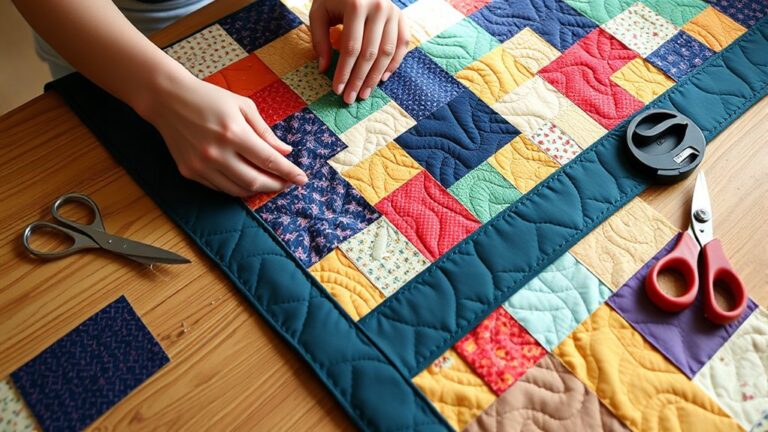
To create a stunning patchwork quilt, you’ll want to make sure you have the right tools and supplies on hand. First things first, pick out the fabrics that catch your eye and inspire you. Once you’ve got your fabric selection sorted, it’s time to gather some essential cutting tools—these will help you cut your pieces accurately and save you a lot of frustration down the line.
And while you’re at it, don’t forget to look for handy quilting accessories. Little things like pins, rulers, or a good rotary cutter can make the whole quilting process a lot smoother and way more enjoyable. With the right gear, you’ll be well on your way to creating a beautiful patchwork quilt!
Fabric Selection Tips
Choosing the right fabrics for your patchwork quilt can make all the difference in achieving a stunning final product.
Start by exploring various fabric color combinations that complement one another. Think about how different hues work together to create a cohesive look.
Don’t forget to take into account texture balance. Mixing smooth and textured fabrics adds depth and interest to your quilt.
When selecting fabrics, aim for a mix that combines prints and solids to improve visual appeal. You might also want to include a few contrasting fabrics to make your design pop.
Necessary Cutting Tools
Having the right cutting tools is vital for a successful patchwork quilt. Start with a rotary cutter, as it offers various options for different fabric types, ensuring cutting accuracy.
For smaller tasks, consider a scissors comparison; fabric scissors can complement your rotary cutter well. You’ll also need a cutting mat to protect your surfaces and prolong the lifespan of your tools.
Fabric rulers are essential for making precise cuts, so invest in a good one. As you work, remember some safety tips: always cut away from your body and keep blades sharp to avoid accidents.
With the right tools, you’ll streamline your cutting process and lay the groundwork for a beautiful quilt.
Quilting Accessories Overview
Quilting accessories play an essential role in elevating your patchwork experience. A good quilting tools overview includes items like rotary cutters, rulers, and mats.
These tools streamline your cutting process, ensuring precision and ease. You’ll also want quality threads and needles specifically designed for quilting, as they can greatly impact your final product.
Don’t overlook fabric storage solutions, either. Organizing your fabrics properly can save you time and frustration.
Drawer organizers or clear bins help keep your materials accessible and tidy. Finally, a dependable iron and ironing board are must-haves for pressing seams.
With the right accessories, you’ll find your patchwork journey smoother and more enjoyable, allowing you to focus on your creativity.
Preparing Your Fabric: Cutting and Organizing
Choosing the right fabrics is really the first step to making your quilt a success. Once you’ve picked out your materials, it’s time to focus on cutting—because how you cut your fabric will make a big difference in how well your pieces fit together later. Let’s talk about how to make smart choices and set up a workspace that keeps everything organized and easy to use.
Choosing Your Fabrics Wisely
In the context of creating a stunning patchwork quilt, selecting the right fabrics can make all the difference. Start by considering fabric color combinations that align with your vision.
Think about how different colors interact; complementary shades can create harmony, while contrasting colors add vibrancy. Next, pay attention to fabric pattern balance.
A mix of solids and prints will keep your quilt visually interesting without overwhelming the eye. Aim for a variety of scales in your patterns, with some larger and some smaller, to improve the overall texture of your quilt.
Once you’ve chosen your fabrics, organize them by color or pattern. This will help streamline your cutting process later on.
This thoughtful selection sets the stage for a beautiful finished product you’ll cherish.
Cutting Techniques Explained
Prepare to plunge into the cutting process, where precision is key to achieving those perfect patchwork pieces. Start by ensuring your fabric alignment is spot-on; this boosts cutting accuracy.
Use cutting templates for consistent shapes and practice pattern scaling to adjust sizes as needed. When layering your fabric, keep multiple layers aligned to save time.
A rotary cutter is your best friend here, but don’t forget about rotary safety. Always use a cutting mat and keep your fingers clear.
Remember to account for seam allowances in your cuts. With these techniques, you’ll master precision cutting, setting the foundation for a beautiful quilt.
Happy cutting!
Designing Your Quilt Layout: Tips and Inspiration
Designing your quilt layout can be one of the most enjoyable parts of the quilting process. It’s where your creativity shines!
Start by considering your theme selection. What do you want your quilt to express?
Investigate color combinations and pattern mixing for visual balance. You might be surprised by what works together.
Seasonal designs can inspire your choices, bringing warmth or coolness to your layout.
Here’s a quick table to spark your layout inspiration:
| Technique | Description |
|---|---|
| Contrast Techniques | Use light and dark fabrics |
| Fabric Placement | Arrange for harmony |
| Pattern Mixing | Combine different styles |
| Seasonal Designs | Reflect the season’s colors |
| Color Combinations | Play with complementary hues |
With these tips, you’ll find the perfect fabric placement and create a quilt that’s both beautiful and unique.
Happy designing!
How to Piece Your Quilt Top
With your quilt layout ready to go, it’s time to piece your quilt top together. Start by organizing your fabric color combinations to guarantee a balanced look.
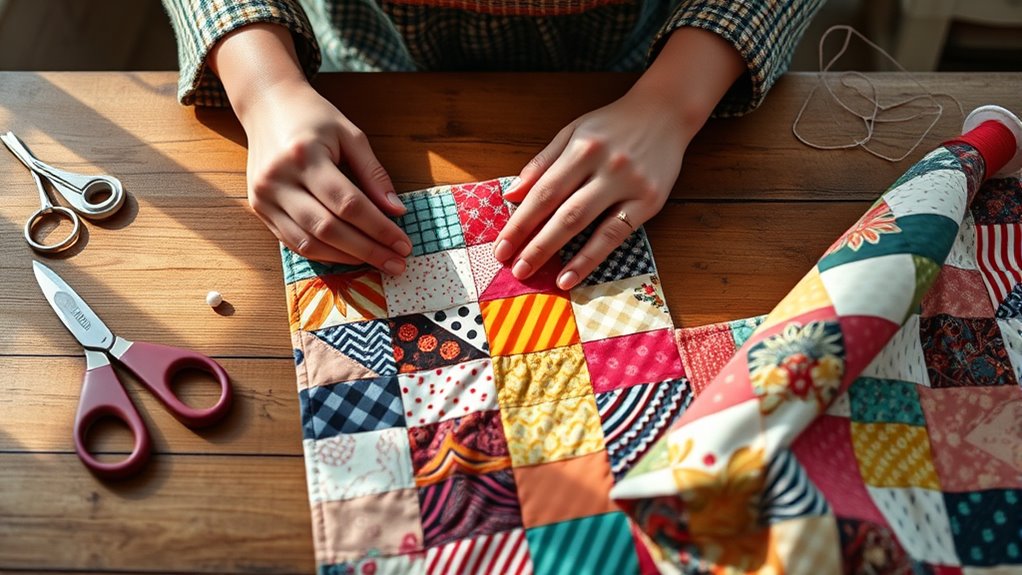
Lay out your chosen patchwork patterns in sections, making adjustments as needed to achieve your desired design.
Begin sewing the pieces together using quilt assembly techniques, like chaining your seams to save time. As you sew, focus on maintaining consistent seam allowances for a polished finish.
If you’re using various fabric types, apply fabric blending strategies to create a harmonious shift between colors and textures.
Once you’ve sewn all your sections, press the seams flat to eliminate any puckering. This step is essential for a smooth quilt top.
Finally, check your work for any missed seams or uneven edges, making necessary adjustments before moving on to the next phase of your quilting journey.
Adding Batting and Backing
Once you’ve completed your quilt top, it’s crucial to choose the right batting and backing to improve both warmth and aesthetics. The right batting types and backing options can elevate quilt durability and insulation materials.
Consider the following table for your choices:
| Batting Types | Backing Options | Quilt Layering Tips |
|---|---|---|
| Cotton | Solid Colors | Batting placement is key |
| Polyester | Prints | Pre-wash fabrics |
| Wool | Flannel | Match colors to top |
| Bamboo | Cotton Blend | Verify even layers |
| Cotton/Poly Blend | Texture Fabrics | Secure with safety pins |
Explore local fabric sources for quality materials. Choose backing colors that complement your quilt top, guaranteeing a unified look.
With the right batting and backing, your quilt will not only be functional but also a beautiful piece of art.
Should You Quilt by Hand or Machine?
How do you decide whether to quilt by hand or machine?
First, think about your personal preference.
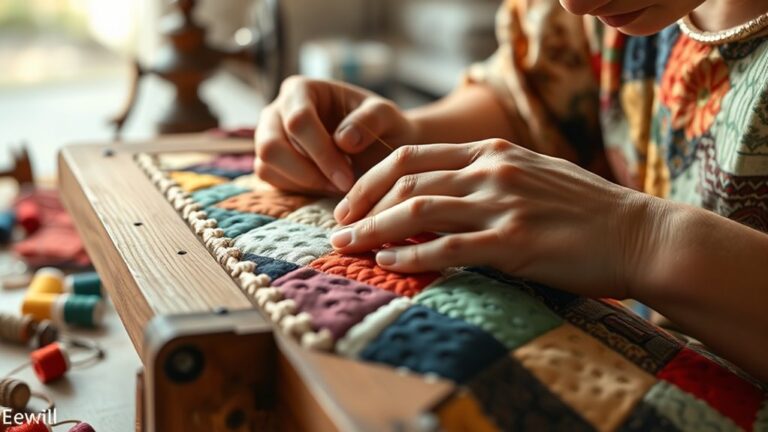
Hand quilting offers a tactile experience and allows for unique quilting styles, but it can be time-consuming.
Hand quilting provides a hands-on experience and the opportunity for distinctive designs, though it does require a significant time investment.
If you enjoy the process and have the skill level for intricate designs, it might be your best choice.
On the other hand, machine quilting is faster, making it ideal for larger projects or those with speed considerations.
Cost factors can also influence your decision; hand quilting may require more time but less investment in equipment.
Machine quilting can be more expensive upfront due to the need for a sewing machine, but it saves time.
Ultimately, consider the project scope.
If you’re working on a small lap quilt, hand quilting might be feasible.
For a larger bed quilt, machine quilting can help you finish it efficiently while still achieving beautiful results.
Binding Your Quilt: Methods and Finishing Touches
As you wrap up your patchwork quilt, binding it properly is vital for both aesthetics and durability. Start by choosing your binding fabrics; you’ll want them to complement your quilt through thoughtful color matching.
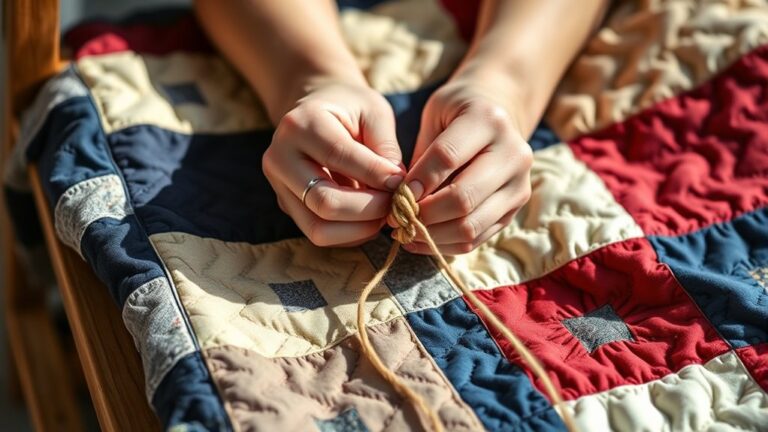
There are various binding techniques to investigate, including machine binding and hand stitching. If you opt for hand stitching, take care to secure the binding with neat edge stitching for a polished look.
Don’t forget about corner mitering, which gives your quilt a professional finish. For a personal touch, consider adding quilt labels to commemorate your effort.
Decorative trims can improve the overall design, making your quilt truly unique. Finally, evaluate your finishing options to guarantee everything aligns with your vision.
How to Fix Common Quilting Mistakes
Even the most experienced quilters encounter mistakes, but addressing them quickly can save your project.
Here are some common issues and how to fix them:
- Seam ripper usage: Don’t hesitate to use your seam ripper for pattern alignment fixes. It’s better to correct mistakes than to live with them.
- Tension adjustments: If your stitches look uneven, check your machine’s tension. This simple tweak can resolve many issues.
- Fabric distortion solutions: When your quilt top warps, use proper pressing techniques to flatten it out and restore shape.
Caring for Your Quilt: Maintenance and Storage Tips
After addressing any mistakes during the quilting process, it’s time to focus on how to maintain and store your quilt properly. Start with quilt care by regularly checking for wear and using repair methods like patching or stitching loose seams.
For cleaning techniques, hand wash or use a gentle cycle with mild detergent. It’s best to avoid harsh chemicals to protect the fabric.
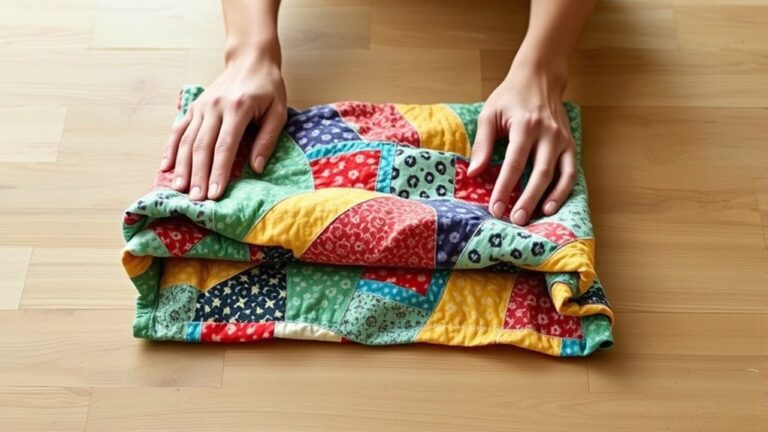
When it comes to storage solutions, consider seasonal storage in a cool, dry place. Use breathable fabric bags to prevent moisture issues, and avoid plastic, which can trap humidity.
For fabric protection, keep your quilt away from direct sun exposure to prevent fading. Implement pest prevention by using cedar blocks or lavender sachets to deter insects.
Finally, remember these preservation tips so your quilt remains a cherished keepsake for years to come.
Frequently Asked Questions
How Long Does It Typically Take to Complete a Patchwork Quilt?
Typically, it takes you anywhere from a few weeks to a few months to complete a patchwork quilt, depending on your experience and the quilt’s complexity.
When you’re project planning, consider factors like the size and design, as well as how much time you can dedicate each week.
If you stay organized and committed, you might finish quicker than you expect! Just enjoy the process and let your creativity shine.
Can I Use Recycled Fabric for My Quilt?
Absolutely, you can use recycled fabric for your quilt! It’s a treasure hunt, turning old clothes and linens into something beautiful.
Recycled fabric benefits not just your project but the environment too. For fabric sourcing tips, check thrift stores or ask friends for unused textiles.
Just make certain the fabric’s clean and in good condition, and you’ll create a unique quilt that tells a story while being eco-friendly.
What Is the Best Way to Store Unfinished Quilts?
To store unfinished quilts, you should keep them in a cool, dry place, away from direct sunlight.
Fold them neatly and use a breathable cotton bag or box for quilt storage to prevent dust accumulation.
Avoid plastic bags, as they can trap moisture and harm fabric preservation.
If you’ve got multiple projects, label each bag to stay organized and guarantee your fabrics remain vibrant and intact until you’re ready to complete your quilt.
How Do I Choose a Color Palette for My Quilt?
Choosing a color palette for your quilt is like picking the perfect playlist for a road trip. Each fabric combination should harmonize.
Start by understanding basic color theory. Complementary colors create contrast, while analogous colors offer a soothing vibe.
Lay out your fabrics and see how they interact. Don’t hesitate to play with shades and patterns.
Sometimes, the most unexpected combinations create the most stunning results. Trust your instincts, and have fun with it!
Are There Online Communities for Quilting Support and Inspiration?
Yes, there are plenty of online communities for quilting support and inspiration! You can join forums or social media groups where you’ll find fabric swapping opportunities and quilting tutorials.
These spaces let you connect with fellow quilters, share your projects, and get advice. Don’t hesitate to ask questions or share your experiences; everyone’s there to help each other grow.
Immerse yourself and get inspired by the creativity around you!
Conclusion
Now that you’ve tackled the steps to create your patchwork quilt, remember, “Stitch in time saves nine.”
Each piece you’ve sewn tells a story, blending colors and patterns into a cozy masterpiece.
Welcome your creativity, and don’t shy away from experimenting along the way.
With care and love, your patchwork quilt will not only keep you warm but also become a cherished heirloom for generations to come.
Happy quilting!