How Do You Wash a Quilt?
If you’ve ever wondered how to wash a quilt without ruining its softness or colors, you’re not alone. Many people struggle with keeping their favorite quilts looking fresh while avoiding damage or fading.
Maybe you’ve worried about shrinking, tearing, or just not knowing the best way to clean such a special item. The good news is that with the right steps, you can keep your quilt beautiful for years to come.
To wash your quilt, first check the care label for specific instructions. You can machine wash on a gentle cycle with cold water or hand wash it in cool water for 15-20 minutes.
Use a mild, eco-friendly detergent and avoid harsh chemicals. Air dry it flat or hang it up, and keep it out of direct sunlight.
Before you start, be sure to check for any common issues that might affect the washing process. There’s more to learn about keeping your quilt in great shape!
Key Takeaways
- Always check the care label for specific washing instructions before cleaning your quilt.
- Use a gentle cycle with cold water for machine-washable quilts. If you’re hand washing, soak your quilt in cool water instead.
- Choose eco-friendly, liquid detergents to reduce residue and help protect the fabric’s integrity.
- Air dry the quilt flat or hang it up, but try to avoid direct sunlight. This helps prevent the colors from fading.
- Inspect your quilt regularly for stains or signs of wear. Aim to wash it every season to keep it fresh, and address any issues as soon as you spot them.
Choosing the Right Washing Method for Your Quilt
When you’re ready to wash your quilt, it’s essential to choose the right method to preserve its beauty and integrity.
Start by checking the care label for specific instructions; this can guide you in selecting the best approach.
If your quilt is machine-washable, opt for a gentle cycle with cold water to prevent fading or shrinking.
Using a mild detergent is a quilt maintenance tip that helps keep colors vibrant.
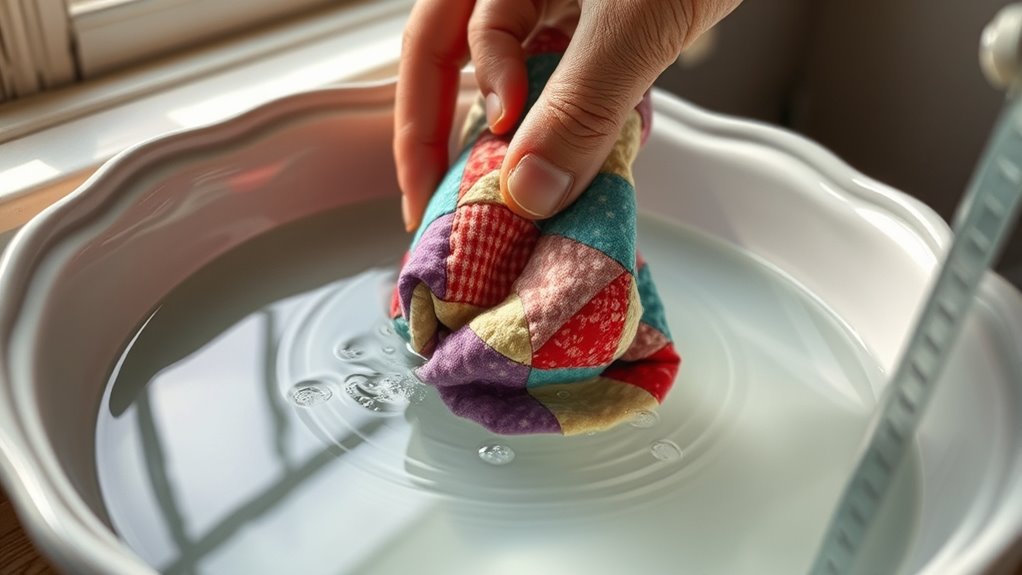
For hand washing, fill a bathtub with cool water, gently submerge the quilt, and let it soak for about 15-20 minutes.
Avoid wringing it out, as this can damage the fabric.
As for washing frequency, aim for every few months, depending on use.
Regular maintenance not only keeps your quilt looking great but also extends its lifespan, ensuring you can enjoy it for years to come.
What Common Issues Should You Look for Before Washing Your Quilt?
Before you toss your quilt into the wash, it’s crucial to inspect it for any common issues that could affect the cleaning process. Addressing these concerns will help preserve your quilt’s beauty and longevity.
- Color fading: Check for any signs of discoloration that might worsen during washing.
- Thread integrity: Look for loose or frayed threads that could unravel when exposed to water.
- Stitching wear: Examine the stitching for any weak spots that may need reinforcement.
Pay attention to fabric damage, batting issues, or shrinkage concerns, as these can greatly affect your quilt’s overall appearance.
Inspect for fabric damage, batting issues, or shrinkage, as these factors significantly impact your quilt’s aesthetics.
Odor buildup is another factor to take into account. A thorough inspection can help you identify any lingering smells.
Finally, if your quilt has embellishments, confirm they’re secure. Taking the time to check these details will make your washing experience smoother and keep your quilt in top shape.
How to Prepare Your Quilt for Washing
Having inspected your quilt for any potential issues, it’s time to prepare it for washing.
Start by shaking it out gently to remove any loose dirt or debris.
Next, check the label for fabric care instructions. This will guide you on the appropriate washing method.
If your quilt has delicate fabrics or embellishments, consider spot cleaning these areas instead of a full wash.
You might also want to secure any loose threads to prevent further damage during washing.
If your quilt is large, verify your washing machine can accommodate it without overloading.
Finally, consider using a mesh laundry bag for added protection during the wash cycle. This extra layer of care helps prevent snagging and maintains the quilt’s shape.
Best Detergents for Washing Quilts
Choosing the right detergent is essential for keeping your quilt clean and vibrant. Not all detergents are created equal, especially when it comes to delicate fabrics.
Here are some great options to explore:
- Eco-friendly detergents: These are gentle on your quilt and the environment. They ensure a sustainable clean every time.
- Hypoallergenic options: Perfect for sensitive skin, these detergents minimize irritation and keep your quilt safe for everyone.
- Liquid vs. powder: Liquid detergents dissolve more easily in water. This reduces the risk of residue on your quilt.
When selecting a detergent, prioritize those without harsh chemicals or fragrances. This way, you protect both your quilt’s colors and its fabric integrity.
Remember, using the right detergent can improve the longevity of your quilt. It helps keep your quilt cozy and beautiful for years to come.
Using the right detergent enhances your quilt’s longevity, keeping it cozy and beautiful for years to come.
Happy washing!
Hand Washing vs. Machine Washing: What’s Best for Your Quilt?
With regard to washing your quilt, understanding the differences between hand washing and machine washing can help you make the best choice.
Hand washing is often gentler, allowing you to control the process and soak your quilt without agitation. This method is ideal for delicate fabrics or quilts with intricate stitching that might be damaged in a machine.
You’ll want to fill a tub with cool water and a mild detergent, gently submerging and squeezing the quilt to clean it.
On the other hand, machine washing is quicker and more convenient, especially for larger quilts. Using a front-loading machine on a gentle cycle can be a safe option, but you should always check the care label first.
If you choose machine washing, consider placing your quilt in a mesh laundry bag to protect it.
Ultimately, the choice depends on your quilt’s material and your personal preference for care.
Ideal Water Temperature for Washing Your Quilt
The ideal water temperature for washing your quilt typically falls between cool and lukewarm,
around 30 to 40 degrees Celsius (86 to 104 degrees Fahrenheit). This range guarantees that you
effectively clean your quilt while also taking care of the fabric.
Using the right temperature helps maintain the quilt’s size and shape, so you can prevent shrinkage.
Cooler water also helps preserve vibrant colors and prevents fading, which means your quilt will
stay looking lively and fresh.
Gentle washing minimizes wear and tear on delicate fabrics, making sure your quilt lasts longer.
Always check the care label before washing, since specific fabrics may have unique requirements.
Remember, using water that’s too hot can damage the fibers and alter the quilt’s appearance.
By sticking to the recommended water temperature, you’ll keep your quilt looking fresh and beautiful
for years to come. Proper fabric care starts with understanding how water temperature affects your
quilt’s longevity.
Washing Different Quilt Fabrics: Key Tips
When you’re washing quilts, it’s really important to think about the kind of fabric you’re dealing with. For example, if you have a cotton quilt, you’ll want to treat it gently so it stays soft and cozy. On the other hand, quilts made from synthetic fabrics need a slightly different approach. By knowing what your quilt is made of, you’ll be able to care for it properly and help it look its best for years to come.
Cotton Quilts Care
Caring for cotton quilts is essential to keep them looking fresh and vibrant. By following a few simple quilt longevity tips, you can maintain their beauty for years to come.
Here are some key practices to contemplate:
Wash in cold water using a mild detergent to prevent fading. This gentle approach helps preserve the colors and fabric.
Avoid fabric softeners, as they can damage the cotton fibers. Keeping to mild products will extend your quilt’s life.
Store your quilts in a cool, dry place, using quilt storage solutions like breathable cotton bags. This helps prevent moisture buildup and keeps your quilts in great shape.
Synthetic Fabrics Washing
Synthetic fabrics require specific care to maintain their durability and appearance. When washing your synthetic quilt, use cold water and a gentle cycle to prevent damage.
Avoid bleach, as it can weaken the fibers and alter colors. Instead, opt for a mild detergent that’s suitable for synthetic materials.
After washing, it’s best to air dry your quilt to preserve its shape and avoid shrinkage. If you use a dryer, select a low heat setting, and consider adding dryer balls to reduce clumping.
Regular fabric care will help your quilt last longer while keeping it looking fresh. Remember, proper maintenance is key to maximizing synthetic durability, ensuring your quilt stays cozy and vibrant for years to come.
Tips for Drying Your Quilt Right
Drying your quilt properly is essential for maintaining its shape and softness.
To guarantee effective quilt care, consider these drying techniques:
Air Drying:
Lay your quilt flat on a clean surface or hang it over a clothesline.
This method prevents distortion and keeps the fabric intact.
Tumble Drying:
If you’re short on time, use a low heat setting.
Add clean tennis balls or dryer balls to fluff up the batting as it dries.
Avoid Direct Sunlight:
While drying, keep your quilt out of direct sunlight.
This helps prevent fading and damage to the fabric.
Common Mistakes to Avoid When Washing Your Quilt
When washing your quilt, it’s important to steer clear of common pitfalls that can lead to damage.
One major mistake is ignoring the care label. Always check for specific instructions to guarantee proper quilt care.
Another error is using hot water or harsh detergents, which can fade colors and weaken fibers.
Many people fall for washing myths, believing that a heavy-duty cycle is best. In reality, a gentle cycle works wonders without risking damage.
Also, don’t overload the washing machine. A cramped quilt won’t clean properly and may even tear.
Avoid skipping the rinse cycle, as detergent residue can irritate skin.
Finally, be cautious with drying. High heat can shrink your quilt.
Following these tips will help keep your quilt looking beautiful and lasting longer.
How Often Should You Wash Your Quilt?
When it comes to washing your quilt, timing really matters. You should think about things like the changing seasons, whether there have been any spills or stains, and what kind of material your quilt is made from. All of these factors play a part in how often you should wash it.
Seasonal Washing Guidelines
Although you might be tempted to wash your quilt every time you change your bedding, it’s generally recommended to wash it seasonally.
This approach not only keeps your quilt fresh but also helps with allergy prevention by reducing dust mites and allergens.
Consider these tips for seasonal washing:
- Inspect for damage: Check for any wear or tear before washing.
- Use gentle detergent: A mild detergent protects the fabric and stuffing.
- Properly dry: Confirm your quilt is completely dry to prevent mildew during seasonal storage.
Stains And Spills
Even if you wash your quilt seasonally, you’ll need to address stains and spills as they occur. Quick action is key to effective stain removal.
When a spill happens, grab a clean cloth and gently blot the area. Don’t rub, since this can set the stain.
For most spills, a mild detergent mixed with water works wonders. Apply it to the stain and let it sit for a few minutes before rinsing.
If the stain persists, consider a specialized stain treatment product suitable for your quilt’s fabric. Always test any solution on a hidden spot first.
Material Considerations
Choosing how often to wash your quilt depends largely on the materials used in its construction. Different fabric types and quilt batting can greatly influence care recommendations.
Here are some key points to take into account:
- Cotton Fabrics: These are generally durable and can withstand more frequent washing.
- Delicate Fabrics: Silk or specialty fabrics may need less frequent washing to avoid damage.
- Quilt Batting: The type of batting (such as polyester versus cotton) also affects how often you wash your quilt. Synthetic options might hold up better over time.
As a rule of thumb, think about washing your quilt every few months unless it’s heavily soiled. This keeps it fresh while ensuring that you protect the integrity of the materials.
Frequently Asked Questions
Can I Use Fabric Softener on My Quilt?
You shouldn’t use fabric softener on your quilt, as it can damage the fibers and reduce its absorbency.
Instead, consider fabric softener alternatives like white vinegar or baking soda during the rinse cycle.
To keep your quilt fresh, wash it every few months, but always check the care label first.
This way, you maintain its quality and comfort without risking any harm from harsh chemicals.
How Do I Remove Stains From My Quilt?
To remove stains from your quilt, act quickly.
Blot the stain gently with a clean cloth and cold water.
For tougher stains, mix a solution of mild detergent and water,
then apply it to the stained area. Let it sit for a few minutes.
After that, rinse the area thoroughly to remove any residue.
Always check the care label for any specific instructions.
Regular quilt care can help prevent stains from setting in,
so keep an eye on it!
Is It Safe to Bleach My Quilt?
It’s generally not safe to bleach your quilt, as harsh chemicals can damage the fabric and colors.
Instead, focus on quilt care by using gentle stain removers or natural alternatives like baking soda or white vinegar. These options can effectively brighten your quilt without risking damage.
Always test any solution on a small area first to guarantee it won’t cause fading or wear.
Treat your quilt with care to keep it beautiful for years!
Should I Wash My Quilt Before Storing It?
Imagine tucking away a treasured book, its pages whispering stories of warmth and comfort.
You should definitely wash your quilt before storing it. Clean quilts fend off dust mites and odors, preserving their charm like a well-loved tale.
Follow quilt maintenance tips: wash gently and dry thoroughly. For storage best practices, fold it neatly in a breathable bag.
This way, your quilt awaits, ready to share its stories again when you need it most.
How Do I Repair a Damaged Quilt Before Washing?
To repair a damaged quilt, start by identifying the quilt materials.
For small tears, use simple patch techniques like fabric patches or fusible webbing. Cut a piece of fabric that matches or complements your quilt, then secure it over the tear with fabric glue or sew it in place.
If you’re dealing with larger damage, consider hand-stitching a patch or using a sewing machine for a more durable fix.
After repairs, you can safely wash your quilt.
Conclusion
Washing your quilt can feel like steering through a delicate dance,
but with the right approach, it’s a breeze.
By choosing the right method, prepping properly,
and avoiding common mistakes, you’ll keep your quilt fresh and vibrant.
Remember, it’s all about treating it with care,
like a cherished memory.
So, don’t hesitate to give your quilt the love it deserves.
After all, a clean quilt not only looks good,
it feels good too—and knowing how to wash a quilt makes all the difference.