How Do You Craft a Hopper in Minecraft?
Are you tired of manually collecting items in Minecraft? You’re not alone; many players find this tedious and time-consuming. The good news is that there’s a simple solution: the hopper! This clever device can automate item collection, allowing you to focus on more exciting adventures.
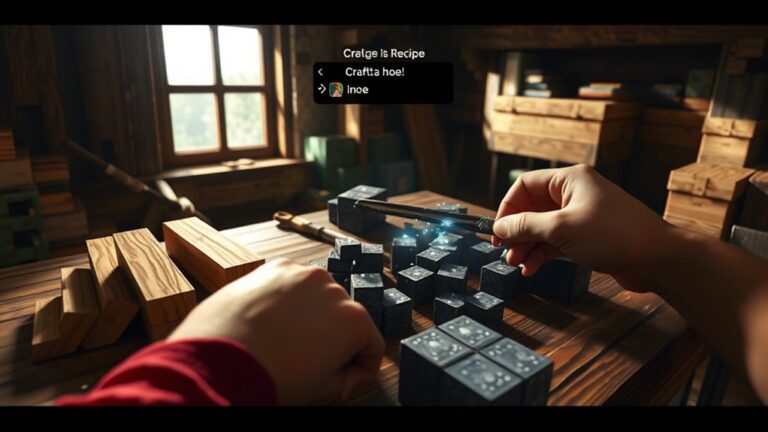
To craft a hopper in Minecraft, you’ll need five iron ingots and one chest. Open your 3×3 crafting grid, placing the chest in the center. Surround it with iron ingots on the top, bottom, left, right, and center bottom.
Once you arrange the materials, collect the hopper from the result box. This handy item automates your gameplay by collecting and transferring items efficiently.
Keep exploring to uncover tips on optimizing its use!
Key Takeaways
- Gather five iron ingots and one chest to craft a hopper in Minecraft.
- Open a 3×3 crafting grid to arrange the materials.
- Place the chest in the center of the grid.
- Surround the chest with iron ingots on all sides except the center top.
- Collect the hopper from the result box after arranging the materials.
What Is a Hopper and Why Do You Need It?
A hopper is a valuable component in Minecraft that helps automate item collection and transfer. Its primary functionality lies in its ability to move items from one container to another, saving you time and effort.
You can place a hopper beneath chests, furnaces, or even other hoppers, allowing for seamless item transfer. When you drop items near a hopper, it automatically collects them and sends them to the next designated location.
This means you can set up automated farms or sorting systems without constantly managing your inventory. Using hoppers effectively can streamline your gameplay.
They’re especially useful for large builds where you need to handle a lot of items, like in mob farms or storage systems. By understanding how hoppers work, you’ll improve your Minecraft experience and make your builds more efficient.
Crafting a Hopper: Step-By-Step Guide
To craft a hopper in Minecraft, you’ll need five iron ingots and one chest. Gather your hopper crafting materials before you start the process. Here’s how to do it step-by-step:
- Open Your Crafting Table: You’ll need a 3×3 crafting grid.
- Place the Chest: Position the chest in the center of the grid.
- Add Iron Ingots: Place the five iron ingots around the chest. Specifically, put one ingot in each of the four sides (top, bottom, left, right) and one in the center bottom.
- Collect Your Hopper: Once you’ve arranged the materials correctly, you’ll see the hopper appear in the result box. Drag it into your inventory.
And there you have it! You’ve successfully crafted a hopper, ready to be used in your Minecraft adventures.
How to Use a Hopper for Item Collection?
Using a hopper for item collection can greatly streamline your Minecraft gameplay. By placing a hopper underneath a chest or another container, you can automatically collect items that fall into its range.
Using a hopper beneath a chest allows for automatic item collection, enhancing your Minecraft gameplay efficiency.
This setup is perfect for managing your hopper inventory management efficiently. To use a hopper, simply direct it toward the chest or container you want to fill.
When items drop into the hopper’s vicinity, they’ll transfer directly into the connected container thanks to the hopper’s transfer speed. You can also connect multiple hoppers to create a more complex item collection system.
Keep in mind that hoppers have a limited transfer speed. If you’re collecting large quantities, consider using multiple hoppers to speed up the process.
Automating Farms With Hoppers
Automating your farms with hoppers is a game-changer! Seriously, it can save you a ton of time and effort, allowing you to focus on other things you enjoy. Imagine not having to manually collect your crops anymore—sounds great, right?
When you team up hoppers with redstone, you can whip up some really efficient crop collection systems. These setups not only streamline your farming process but also make it way more enjoyable. Plus, once you get the hang of it, you’ll be amazed at how much easier managing your farm becomes.
Benefits Of Hopper Automation
While you might think managing a farm in Minecraft is a hands-on task, integrating hoppers can greatly streamline the process.
With hopper automation, you can boost your hopper efficiency and simplify item transportation. Here are some key benefits:
- Time-Saving: Hoppers collect and transport items automatically, so you can focus on other tasks.
- Reduced Manual Labor: Bid farewell to constantly picking up dropped items; hoppers do the heavy lifting for you.
- Organized Storage: Hoppers can funnel items directly into chests, keeping your inventory tidy.
- Consistent Harvesting: Hoppers guarantee that your farm runs smoothly, allowing for continuous production without interruption.
Embrace these advantages, and watch your Minecraft farming experience transform!
Combining Hoppers With Redstone
By integrating hoppers with Redstone, you can take your farming automation to the next level.
This hopper redstone integration allows you to create efficient systems for collecting and processing items. You can use Redstone to manipulate hopper signals, enabling you to control when items are collected.
Here’s a quick overview of how these components work together:
| Component | Function |
|---|---|
| Hopper | Collects items from the ground |
| Redstone Signal | Activates the hopper |
| Comparator | Measures item quantity |
| Repeater | Extends signal distance |
| Redstone Lamp | Indicates hopper status |
With this setup, you can automate your farm. This ensures a steady supply of resources without constant manual effort.
Efficient Crop Collection Systems
To create an efficient crop collection system in Minecraft, you can harness the power of hoppers to streamline your farming process. With hoppers, you can guarantee better resource management and improve your yield.
Here are some tips for optimizing your automated planting:
- Implement crop rotation to boost soil health and prevent pests.
- Use irrigation systems alongside hoppers for consistent watering and growth.
- Plan for seasonal harvesting to maximize your crops’ potential.
- Incorporate pest control measures to protect your farm from unwanted threats.
Using Hoppers With Redstone: Techniques and Tips
When you mix hoppers with redstone, it opens up a whole new world of automation and efficiency. Seriously, once you get the hang of it, you’ll be amazed at what you can create! Understanding how redstone signals work is key here. They can help you build everything from automatic item sorting systems to nifty hopper clocks.
Redstone Signal Basics
Although it might seem complex at first, using hoppers with Redstone can greatly improve your Minecraft builds. Understanding redstone basics and signal types is key. Here are some essential tips to get you started:
- Powering Hoppers: Use a Redstone signal to activate hoppers. This allows you to control item flow effectively.
- Signal Strength: Keep in mind that Redstone signals weaken over distance. Make sure your signal reaches the hopper!
- Comparators: Utilize comparators for advanced control. They let you read hopper contents and adjust signals accordingly.
- Redstone Torches: These can serve as powerful switches to keep your hoppers in check. They provide a reliable activation method.
With these techniques, you’ll master using hoppers and Redstone like a pro!
Automatic Item Sorting
Using hoppers alongside Redstone opens up exciting possibilities for automating item sorting in Minecraft. With efficient hopper designs, you can create systems that automatically separate and store your items. Here’s a basic overview of how you can set up your automatic item sorting system:
| Component | Function | Notes |
|---|---|---|
| Hopper | Transfers items | Place at the top of the system |
| Comparator | Detects item presence | Connect to the hopper |
| Redstone Dust | Transmits signals | Link components together |
| Chest | Stores sorted items | Place at the end |
| Filters | Sorts specific items | Use with hoppers |
Hopper Clock Mechanism
To create a reliable hopper clock mechanism, you’ll need to harness the power of hoppers and Redstone effectively. This setup can help you time various actions in your builds. Here’s a simple way to get started with hopper clock designs:
- Gather Materials: You’ll need at least two hoppers, a Redstone comparator, and some Redstone dust.
- Position Hoppers: Place the hoppers facing each other, with one feeding into the other.
- Add a Comparator: Connect the comparator to the hopper that receives items.
- Tweak Timing: Adjust the number of items in the hopper to change the delay for your desired timing.
With these steps, you’ll master hopper redstone integration and create efficient timing mechanisms!
Avoid These Common Hopper Mistakes
When you’re working with hoppers in Minecraft, it’s easy to overlook some common mistakes that can lead to frustrating problems.
One of the biggest issues is improper hopper placement. If you don’t position your hoppers correctly, they won’t transfer items as intended.
Another common misconception is thinking that hoppers can directly pull items from any block. They can only extract from containers.
Hoppers can only extract items from containers, not directly from any block—keep this in mind for efficient setups.
This can result in efficiency pitfalls where you expect smooth item flow, but it gets interrupted.
Additionally, poor resource management can lead to wasted materials. Always verify you have enough hoppers for your setup.
Otherwise, you might find yourself scrambling for more mid-project.
By avoiding these mistakes, you’ll streamline your builds and make your Minecraft experience much more enjoyable.
Keep these tips in mind to improve your crafting and management skills!
Smart Storage Ideas With Hoppers
Transform your storage system with hoppers by implementing smart designs that maximize efficiency and organization.
You can create a streamlined setup that simplifies your gameplay and improves your inventory management. Here are four ideas for efficient sorting using hoppers:
- Item Sorter: Build an automatic item sorter that classifies your items into designated chests. Use filters to guarantee each item goes where it belongs.
- Overflow Storage: Connect a hopper to a secondary chest for overflow. This prevents items from being lost when your primary storage fills up.
- Crafting Stations: Set up hoppers to feed items directly into crafting tables or furnaces. This saves time and keeps your workflow uninterrupted.
- Mob Farms: Utilize hoppers in mob farms to collect drops automatically. This guarantees you gather resources without having to pick them up manually.
With these smart storage ideas, you’ll improve both your efficiency and enjoyment in Minecraft!
Tips for Optimizing Hopper Efficiency
Sure! Here’s a more conversational version of your text:
—
If you want to maximize your hopper efficiency, the placement is key. Seriously, think about where you set them up—it can really make a difference!
Plus, don’t forget about using redstone mechanics. They can give your hoppers a nice performance boost. And if you upgrade your storage systems, you’ll notice even better results.
Let’s dive into these strategies and see how you can elevate your hopper game!
Optimize Placement Strategy
While hoppers are versatile tools in Minecraft, their efficiency largely depends on how you place them. To maximize your hopper’s potential, consider these effective hopper placement techniques:
- Direct Connections: Always connect hoppers directly to the block you want to transfer items to. This ensures faster movement.
- Stacking Hoppers: Use vertical arrangements when possible. Stacking hoppers can create efficient layouts for multi-tiered systems.
- Avoid Overlapping: Don’t place hoppers too close to each other. Giving them space allows them to function without interference.
- Use Filters: Incorporate filters for sorting items. This can optimize the flow and organization of your resources.
Utilize Redstone Mechanics
Harnessing Redstone mechanics can greatly improve your hopper’s efficiency in Minecraft. By integrating redstone circuits, you can automate your hopper’s functions, reducing the need for manual interaction.
For instance, connect your hopper to a redstone clock to create a continuous flow of items. This ensures they’re transferred without delay. You can also use comparators to detect the hopper’s contents, triggering other mechanisms when it’s full or nearly empty.
This way, you optimize item movement and prevent bottlenecks in your system. Experiment with various redstone configurations to find what best suits your needs.
Mastering these hopper mechanics not only saves time but also elevates your overall gameplay experience. It makes your builds more efficient and effective!
Upgrade Storage Systems
Upgrading your storage systems can greatly boost your hopper efficiency in Minecraft. By implementing these hopper storage upgrades, you’ll improve both organization and efficient item retrieval:
- Use Double Chests: Stacking chests allows for more items. This reduces the need for multiple hoppers.
- Sort Your Items: Utilize item sorter systems to keep your storage organized. This makes it easier to find what you need.
- Add Filters: Consider using filters to direct specific items into designated chests. This streamlines your inventory management.
- Limit Hopper Connections: Reduce the number of hoppers connected to a single chest. This prevents bottlenecks and ensures a smoother flow of items.
Alternatives to Hoppers in Minecraft
If you’re looking for ways to move items without using hoppers, there are several alternatives in Minecraft that can be just as effective. You can utilize various methods for item transportation, making your builds more efficient.
| Method | Description | Best Use |
|---|---|---|
| Water Streams | Use flowing water to transport items. | Great for long distances. |
| Minecart Systems | Rails and minecarts for quick movement. | Ideal for bulk items. |
| Dropper Uses | Droppers release items into the world. | Useful for automated systems. |
| Dispenser Functions | Dispensers can place or drop items. | Handy for crafting setups. |
Consider these storage alternatives as you design your systems. Chest systems paired with funnel designs can help manage inventory without relying solely on hoppers.
Conclusion: Maximizing Hopper Use in Your Builds
While you can explore various alternatives, maximizing your use of hoppers can greatly improve the efficiency of your builds. Hoppers streamline item transport, making your Minecraft experience smoother and more enjoyable.
Maximizing hoppers enhances your builds, streamlining item transport for a smoother, more enjoyable Minecraft experience.
Here are some hopper design ideas to contemplate:
- Item Sorters: Create a complex system that organizes your resources automatically.
- Automatic Farms: Use hoppers to collect drops from automatic farms, guaranteeing you never miss a crop.
- Mob Farms: Set up hoppers to gather loot from mobs efficiently, maximizing your resource collection.
- Storage Systems: Build a centralized storage area where hoppers transport items from various locations for easy access.
Incorporating these ideas will not only improve your gameplay but also ensure your builds are optimized for efficient transport. So, plunge in and experiment with hoppers to take your Minecraft creations to the next level!
Frequently Asked Questions
Can Hoppers Be Moved by Pistons in Minecraft?
No, hoppers can’t be moved by pistons in Minecraft. When you try to use a piston to push a hopper, it simply won’t work due to hopper mechanics.
Instead, you’ll need to place or break the hopper manually. If you want to rearrange your setup, consider using other blocks or redstone components to achieve your goals without relying on piston interaction.
Keep experimenting to find creative ways to optimize your designs!
How Do Hoppers Interact With Other Containers?
Hoppers interact with various container types, allowing you to automate item transfers.
When you place a hopper next to a chest, furnace, or dispenser, it can pull items from or push items into these containers.
You can also funnel items directly into another hopper.
Remember, hoppers function based on their orientation. Make sure you position them correctly to guarantee efficient item flow.
This setup streamlines your inventory management in Minecraft!
Do Hoppers Work in the Nether or End Dimensions?
Yes, hoppers work in the Nether and End dimensions. Their hopper mechanics function just like in the Overworld, allowing for seamless item transfer between containers.
You can set up efficient farms or storage systems using hoppers in these dimensions. Just keep in mind the unique Nether logistics, like limited resources.
Make sure to account for dimension interactions when planning your builds. This can affect how you manage your items effectively.
Can Hoppers Transfer Items Between Different Dimensions?
Hoppers can’t transfer items between different areas.
Hopper mechanics only work within the same area, so if you try to send items from the Overworld to the Nether or End, they won’t make it.
Instead, you’ll need to set up a system in each area to manage your items separately. It’s essential to plan your storage and transfer methods wisely to keep everything organized across the areas.
What Happens if a Hopper Is Overloaded With Items?
If a hopper’s overloaded with items, it can’t handle the excess. You’ll see item overflow, causing items to spill out and be lost.
Its capacity is limited, typically holding up to five stacks. When you push more items than it can store, they won’t just vanish; instead, they’ll get ejected into the surrounding area.
Conclusion
In the grand tapestry of Minecraft, hoppers are the unsung heroes, tirelessly working behind the scenes while you bask in your pixelated glory.
Sure, you could manually collect items, but who has time for that?
Welcome the humble hopper—your new best friend in lazy automation. Just remember, with great power comes great responsibility.
Don’t let your hoppers become glorified trash cans!
So go ahead, craft, automate, and let your hoppers do the heavy lifting while you sip pixelated lemonade.