How Do You Craft a Clock in Minecraft?
In the vast world of Minecraft, keeping track of time can be a real challenge. You’re not alone if you’ve ever found yourself lost in exploration, wondering when day turns to night. Many players struggle to manage their time effectively, leading to unexpected encounters with hostile mobs.
That’s where a clock comes in handy, helping you stay on top of day and night cycles.
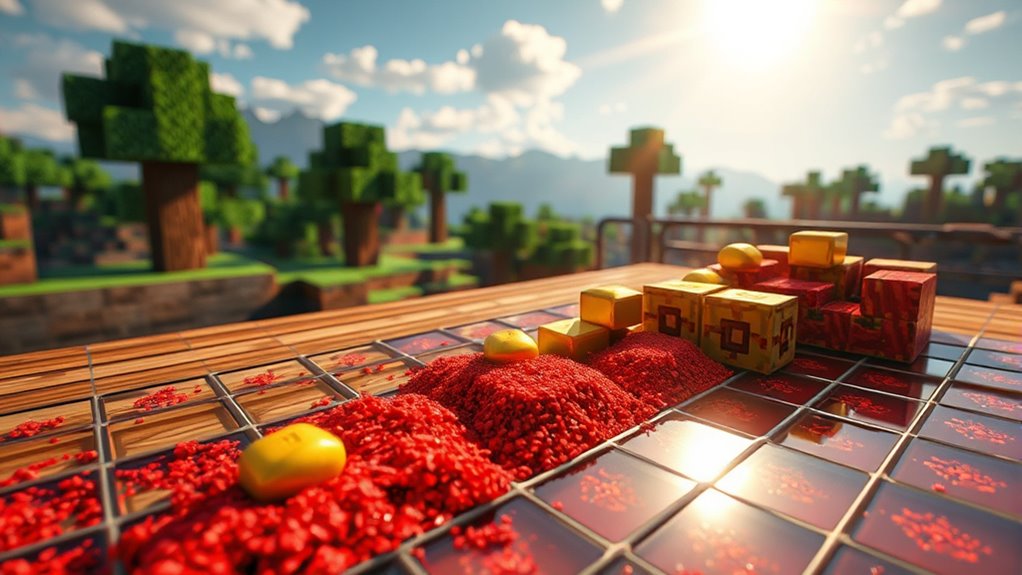
To craft a clock in Minecraft, you’ll need four gold ingots and one redstone dust. First, gather gold by smelting ore found between levels 2 to 29 and mine redstone dust from blocks located between levels 1 to 15.
Set up a crafting table, then place one gold ingot in the center, with four gold ingots around it and redstone dust at the bottom center.
Now that you’ve got the clock, let’s investigate its uses and other helpful tips.
Key Takeaways
- Gather 4 gold ingots and 1 redstone dust. Gold ingots come from smelting gold ore, while redstone dust is mined from redstone ore.
- Open a crafting table and access the 3×3 crafting grid.
- Place 1 redstone dust in the bottom center and 4 gold ingots in the cardinal directions, with 1 gold ingot in the center.
- Drag the crafted clock from the result box into your inventory.
- Use the clock to track the day/night cycle. This helps with resource gathering and planning your activities.
What Materials Do You Need for a Clock?
To craft a clock in Minecraft, you’ll need just two essential materials: gold ingots and redstone dust. Gold ingots are key materials that you can obtain by smelting gold ore.
To craft a clock in Minecraft, gather gold ingots and redstone dust from their respective ores.
You’ll find gold ore deeper in the world, typically between levels 2 to 29, so make sure to investigate caves or mine effectively.
Next, redstone dust is your other vital component. You can gather redstone by mining redstone ore, usually found around levels 1 to 15.
When you break the ore, it drops redstone dust, which you’ll need for crafting your clock.
With these materials in hand, you can create various clock variations by adjusting how you use them. A simple clock shows you day and night cycles, while other types can help you track time more precisely.
Gather Resources for Your Minecraft Clock
Once you’ve gathered your gold ingots and redstone dust, it’s time to investigate your surroundings for additional resources that can improve your clock-making experience.
Start by focusing on resource collection. While gold and redstone are key ingredients, consider mining for iron. This will help you with other crafting projects later on.
Next, scout for some nearby trees. Collecting wood is essential for crafting tools like axes, which can boost your crafting efficiency.
Don’t forget to gather some stone, too. It’s useful for making furnaces or crafting tables, which can streamline your overall crafting process.
Lastly, if you’re near water, consider fishing for food or collecting clay. These resources might not directly relate to your clock, but they’ll keep you well-fed and prepared for further adventures.
Be thorough in your collection to guarantee a smooth crafting journey ahead!
Step-by-Step: Crafting Your Clock
Alright, you’ve got all your materials ready—awesome! Now, let’s dive into crafting your clock. First things first, make sure your crafting table is set up just right. This is where all the magic happens, turning those resources into a functional timepiece.
Once you’ve crafted your clock, you’ll see how easy it is to keep track of time in your Minecraft world. It’s super handy, trust me! So, let’s get started on making that clock.
Required Materials For Crafting
Crafting a clock in Minecraft requires just a few essential materials. You’ll need four gold ingots and one redstone dust.
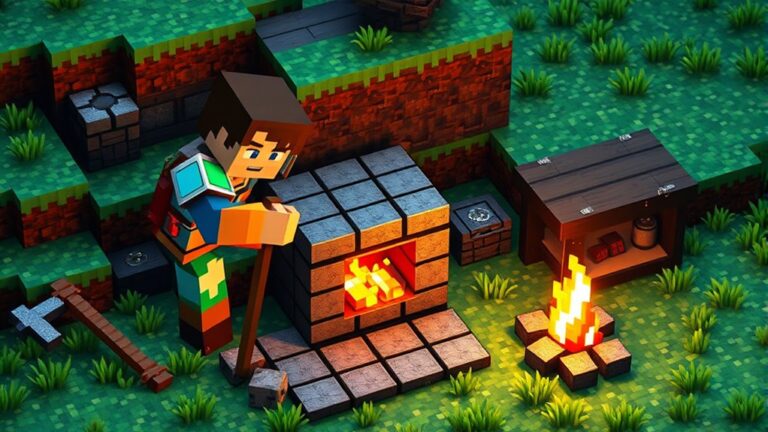
Gold ingots can be obtained by smelting gold ore in a furnace, while redstone dust comes from mining redstone ore.
Once you’ve gathered these items, you can start thinking about your clock design ideas. Whether you want a sleek, modern look or something more rustic, the clock’s aesthetics can enhance your environment.
Make sure to keep these materials handy, as they’re vital for crafting your clock. With everything prepared, you’ll be ready to proceed to the next step in making your very own timepiece in Minecraft!
Crafting Table Setup
Before you plunge into creating your clock, make sure you have your crafting table ready.
To set it up, place your crafting table on the ground in a well-lit area. Right-click on the table to open the 3×3 crafting grid.
You’ll need to arrange your materials according to the clock design: one gold ingot in the center square, surrounded by four more gold ingots—one in each cardinal direction, and one redstone dust in the bottom center square.
This arrangement is essential for crafting your clock successfully.
Once you’ve positioned everything correctly, drag the clock from the result box into your inventory.
Now, you’ve got your clock ready for the next step!
Using Your Clock
As you gather your materials, it’s important to know how to use your clock effectively in Minecraft. Your clock isn’t just a decorative item; it can improve your gameplay strategy. Here’s how to make the most out of your clock design:
Track Day/Night Cycle: Keep an eye on the time to avoid hostile mobs at night.
Plan Your Activities: Use the clock to schedule tasks like mining or exploring during safe daylight hours.
Coordinate with Friends: Share your clock to synchronize activities in multiplayer mode.
Set Up Traps: Use timings to activate redstone devices at specific times.
Create Timed Events: Organize events based on the day/night cycle for fun challenges.
Mastering these tips will enhance your Minecraft experience!
How Your Clock Works
Now that you’ve put your clock together, let’s dive into how it actually works. Your clock has some key components that team up to keep time in Minecraft. Knowing how this mechanism operates will definitely help you make the most of it in the game.
So, first off, let’s break down those components. Each part plays a role in tracking the time accurately, which can be super handy when planning your adventures or building. Understanding how they interact will give you an edge while you’re exploring the world of Minecraft.
Are you ready to learn more? Let’s explore the inner workings of your clock!
Components of a Clock
Understanding the components of a clock in Minecraft is vital for mastering timekeeping in your virtual world. The right clock design not only helps you track time but improves the overall time aesthetics of your gameplay.
Here are the key components you’ll need:
- Gold Ingots: These are important for crafting the clock.
- Redstone Dust: Essential for the clock’s function and connectivity.
- Crafting Table: You’ll use this to combine the materials.
- Creative Vision: A well-designed clock can be a stylish addition to your builds.
- Time Awareness: Knowing when to act can change your gameplay strategy.
Time Tracking Mechanism
While the clock in Minecraft may seem simple, its time-tracking mechanism plays an essential role in your gameplay.
This handy tool helps you monitor day cycles, ensuring you’re prepared for nightfall. Each tick of the clock corresponds to a time zone, reflecting the in-game time with precision.
Here’s how the clock functions:
| Time of Day | Description | In-Game Action |
|---|---|---|
| Dawn | Begins the day cycle | Start building/collecting |
| Midday | Full daylight | Farming or exploring |
| Dusk | Shift to night | Prepare for monsters |
| Midnight | Full night | Stay indoors or defend |
Understanding this mechanism helps you strategize effectively. It makes your Minecraft experience more enjoyable and successful.
Why You Need a Clock in Minecraft
A clock in Minecraft is an essential tool that can improve your gameplay experience. Understanding the importance of timekeeping is vital, especially when managing day and night cycles.
With a clock, you can make informed decisions about exploring or building during daylight. This helps you avoid dangerous mobs that come out at night.
Here are some reasons why you need a clock:
Plan Your Adventures: Know when to head out or stay in.
Avoid Monster Encounters: Stay safe by avoiding nightfall.
Coordinate with Friends: Keep everyone on the same schedule.
Efficient Resource Gathering: Maximize your time in the world.
Enhance Survival Strategy: Formulate better tactics for exploration.
With a clock, you can focus more on the fun aspects of the game without worrying about the time slipping away. So, start crafting and make the most of your Minecraft experience!
Tips for Using Your Clock Effectively
To use your clock effectively in Minecraft, keep it handy in your inventory. This way, you can quickly check the time whenever you need to. This simple tool helps with time management, allowing you to plan your activities more efficiently.
As day turns to night, you can decide when to head back to safety or when to engage in nighttime adventures.
Consider employing clock strategies like setting specific goals for each day. For example, gather resources during the daylight and focus on building or exploring at night. This approach maximizes your gameplay and keeps you organized.
Also, keep in mind that the clock only shows time in the Overworld. If you’re exploring other dimensions, adapt your strategies accordingly.
Keep an eye on your clock, and you’ll find that managing your time in Minecraft becomes a lot easier. This will enhance your overall experience.
Top Mistakes to Avoid When Crafting a Clock
Managing your time with a clock is great, but mistakes during its crafting can lead to frustration. Here are some common misconceptions and crafting errors to avoid when you’re making a clock in Minecraft:
Crafting a clock in Minecraft can be rewarding, but watch out for common mistakes to avoid frustration.
Using the Wrong Materials: Remember, you need gold ingots and redstone dust.
Incorrect Crafting Grid: Make certain you place your materials in the right pattern.
Overlooking Redstone Dust: Some players forget to include redstone, thinking it’s optional.
Not Checking Inventory Space: Confirm you have enough space to collect the clock after crafting.
Assuming Time Functions Differently: A clock only shows the day/night cycle, not specific time.
Avoid these pitfalls to make your crafting experience smoother and more enjoyable. With the right approach, you’ll have a functional clock in no time!
Using Redstone to Enhance Your Clock
Redstone can transform your clock from a simple timekeeping tool into a versatile gadget with various functions. By integrating redstone circuits, you can create intricate clock designs that serve multiple purposes.
For instance, you can set up a clock to activate redstone lamps or other devices at specific intervals. This makes it a helpful component for automated farms or traps.
To get started, connect your clock to a redstone circuit that triggers a signal when the time changes. You can experiment with different clock designs, like the pulse generator, which sends out a steady stream of signals.
This allows you to synchronize your devices perfectly. With creativity, your clock can become a central hub for various redstone contraptions, enhancing your gameplay experience.
Just remember to test your designs to guarantee everything works seamlessly. Happy crafting!
Other Timekeeping Tools in Minecraft
While clocks are a popular choice for keeping track of time in Minecraft, there are several other tools that can help you manage your day-night cycle.
Understanding these timekeeping mechanics can boost your game strategies and make scheduling tasks easier. Here are some alternative timers you might consider:
Mastering timekeeping mechanics can elevate your gameplay and streamline your task scheduling in Minecraft.
Daylight Sensors: These activate redstone mechanisms based on sunlight. They’re perfect for triggering automatic farms.
Redstone Clocks: Create loops to keep track of time. This allows for various automated functions in your builds.
Sundial Designs: Use shadows to indicate the time of day. It’s a fun and aesthetic way to monitor daylight.
Environmental Cues: Listen for ambient sounds like mobs or watch for changes in light. These can help you gauge the time effectively.
Timers with Observers: Set up observers to detect blocks changing state. This provides another way to control your activities.
These tools can greatly enhance your efficiency in the game!
FAQs About Crafting and Using Clocks in Minecraft
Got questions about crafting and using clocks in Minecraft? You’re definitely not alone! Let’s dive into what materials you need and how clocks actually work in the game. Plus, I’ll share some handy tips to help you make the most of your timekeeping.
First off, you’ll need a few key materials to craft a clock. It’s pretty simple, really. Just gather some gold ingots and some redstone dust. Once you have those, you can combine them in your crafting table. Easy peasy!
Now, how do clocks function in gameplay? Well, they’re super useful for keeping track of time in your Minecraft world. They show the time of day, which is especially handy when you’re out exploring or building. You definitely don’t want to be caught outside when nighttime hits!
And here’s a little tip: while clocks are great for tracking time, they don’t work in the Nether or the End. So, if you plan on venturing into those dimensions, make sure you’re prepared!
Clock Crafting Materials Needed
To craft a clock in Minecraft, you need specific materials that are both accessible and straightforward to gather. You’ll want to focus on these essential items:
- Gold Ingots (3 pieces)
- Redstone Dust (1 piece)
- Crafting Table (to combine your materials)
- Access to a Mine (to gather gold and redstone)
- Alternative Crafting Strategies (like trading with villagers for gold)
These materials allow you to create a clock, a handy tool for your timekeeping strategies in the game. Using a clock gives you a clear visual representation of day and night cycles.
Gather these materials, and you’ll be ready to craft your clock in no time!
Clock Functionality In Gameplay
Understanding how clocks work in Minecraft can improve your gameplay experience. A clock displays the in-game time, letting you know whether it’s day or night.
This is essential for effective time management, especially when exploring or building. Knowing when night falls can help you avoid hostile mobs, enhancing your gameplay strategy.
You can use a clock to plan your activities efficiently. For instance, if you’re mining, you might want to return to the surface before dark.
Moreover, clocks can be handy in multiplayer settings, helping you coordinate with friends. By keeping track of time, you can maximize your productivity and guarantee safer adventures.
Tips For Effective Use
Using a clock effectively can greatly improve your Minecraft experience. Knowing how to integrate it into your gameplay strategies is key. Here are some tips to elevate your clock design and usage:
Keep it handy. Always have your clock in your hotbar for quick access.
Plan your activities by using the clock to schedule adventures. Make sure you’re back before nightfall.
Coordinate with friends by sharing clock readings. This helps synchronize activities during multiplayer sessions.
Avoid danger zones. Use the clock to keep track of time when exploring caves or distant biomes.
Experiment with designs. Customize your clock’s storage and display for better organization.
Frequently Asked Questions
Can I Craft a Clock in Survival Mode?
Yes, you can craft a clock in survival mode! To do this, you’ll need four gold ingots and one redstone dust as your crafting materials.
Make sure you gather these resources first. Once you have them, head to your crafting table.
Arrange the gold ingots in a square with the redstone dust in the center. This survival tip will help you keep track of time while exploring your world!
How Do I Find Gold for the Clock?
To find gold for your clock, start gold mining in areas like mesas or badlands, where gold ore is more common.
You can also investigate caves and ravines, typically between levels 2 and 29. Look for exposed ore on the walls or dig down to find it.
Don’t forget to bring your pickaxe! Once you’ve gathered enough gold, you can craft that clock you’re aiming for.
Happy mining!
Does the Clock Work in All Dimensions?
No, the clock doesn’t work in all dimensions. For example, if you’re exploring the Nether, the clock won’t show you the time.
Time mechanics differ there. Instead, it only functions in the Overworld, where you can track day and night.
This highlights the dimension differences in Minecraft. It’s essential to rely on other methods for timekeeping in places like the Nether or the End.
Can I Dye My Clock Different Colors?
You can’t dye your clock in Minecraft. The clock’s aesthetics are fixed, so you won’t be able to change its color using dye materials.
While it’s fun to customize many items in the game, clocks remain unchanged and serve their purpose of indicating time.
If you’re looking to improve your builds, consider using colored blocks or other decorative items instead. This way, you can create a unique vibe around your clock!
What Happens if I Lose My Clock?
If you lose your clock, it can be a hassle since it helps you keep track of day and night in Minecraft.
Without it, you’ll have to rely on other methods, like counting time based on the sun’s position or using a bed to skip the night.
While you might find clock alternatives, like torches or lanterns for light, nothing beats the importance of having a clock for precise time management!
Conclusion
Now that you know how to craft a clock in Minecraft, you’re ready to take control of your time.
Just like in life, timing is everything. A well-timed action can mean the difference between success and failure.
With your new clock, you can plan your adventures and avoid those pesky mobs lurking in the dark.
So go ahead—tick tock your way to victory and make every moment count in your blocky world! With your clock in hand, you’ll always be one step ahead.