Beginners Guide to Hand Quilting With Ease
If you’ve ever felt overwhelmed by the idea of starting hand quilting, you’re not alone. Many beginners struggle with finding the right tools, selecting fabrics, or simply knowing where to begin. The good news? With the right guidance, anyone can create beautiful, handmade quilts—no experience required.
Hand quilting can be a fun and fulfilling craft you can easily master. Start by choosing the right lightweight fabrics for intricate patterns, and make sure to gather essential tools like a rotary cutter and comfortable needles.
Prepare your fabric by accurately cutting and layering it smoothly. Focus on maintaining consistent stitches for a polished look.
As you investigate different techniques, you’ll uncover tips and tricks that will improve your quilting skills for your next project.
Key Takeaways
- Choose high-quality cotton fabric and appropriate batting. This enhances durability and warmth in your quilt.
- Use essential tools like a rotary cutter, quilting ruler, and comfortable needles. These make fabric handling much more efficient.
- Pre-wash fabrics to prevent shrinkage. Doing so also helps ensure accurate cutting and smooth layering during quilt assembly.
- Maintain consistent stitch length and balanced tension. This helps avoid puckering and gives your quilt a polished finish.
- Select complementary binding fabric, and store quilts properly. These steps help preserve their quality and appearance over time.
Choosing the Right Materials for Hand Quilting
Choosing the right materials for hand quilting can make all the difference in your project’s success.
Start by considering fabric weight. Lighter fabrics work well for intricate patterns, while heavier ones add durability.
Consider fabric weight carefully; lighter fabrics enhance intricate designs, while heavier options provide added durability for your quilting projects.
For color selection, think about seasonal fabrics that reflect your theme. Vibrant hues work nicely for summer quilts, and muted tones are perfect for autumn.
Next, choose batting types that suit your project’s purpose. Cotton is great for warmth, while polyester offers loft.
Don’t overlook the importance of quality quilting thread. It should match your fabric and hold up well through stitching.
Pay attention to pattern scale. Larger patterns suit bigger quilts, while smaller patterns work for intricate designs.
Finally, keep your project budget in mind. Quality materials can be an investment, but they’ll guarantee your quilt lasts.
Essential Tools You Need to Get Started
Now that you’ve chosen your materials, let’s talk about the essential tools you’ll need to start hand quilting. First, you’ll want to gather a few must-have quilting tools—think of things like a good rotary cutter, a reliable quilting ruler, and a sturdy cutting mat. These basics make measuring and cutting your fabric much easier.
Next, let’s chat about fabric. When you’re just starting out, it’s a good idea to pick high-quality cotton, since it’s easy to work with and holds up well during stitching. And don’t forget about needles and thread! You’ll want to choose needles that feel comfortable in your hand, along with a strong, smooth thread that won’t tangle as you sew.
All in all, having the right tools from the beginning will help your first quilting project go smoothly. So, let’s take a closer look at what you need to get started on your quilting journey.
Must-Have Quilting Tools
When diving into hand quilting, having the right tools can make all the difference
in your experience. Here are three must-have quilting tools to get you started:
1. Marking Tools: Essential for design planning, these help you outline your
stitching styles clearly on various fabric types.
2. Thimble Choices: Protect your fingers while working with different batting
options. A comfortable thimble can improve your stitching efficiency.
3. Storage Solutions: Keep your quilting supplies organized, from quilting
frames to safety supplies, ensuring everything’s easily accessible.
With these tools in hand, you’ll be well-equipped for your quilting classes
and ready to create beautiful quilts with ease.
Happy quilting!
Essential Fabric Choices
Fabric selection plays an essential role in your hand quilting journey, impacting both the final look and feel of your quilt.
Reflect on various fabric types, such as cotton, which offers durability and ease of handling.
You’ll want to investigate color combinations and print selections that resonate with your vision.
Don’t forget to reflect on fabric weight; lighter fabrics are easier to work with, while heavier ones add texture variety.
Pre-washing fabrics is vital to prevent shrinkage later.
Seasonal fabrics can improve your quilt’s theme, while budget fabrics can help you stay within your financial limits.
| Fabric Type | Key Considerations |
|---|---|
| Cotton | Durable, easy to sew |
| Linen | Textured, breathable |
| Flannel | Soft, warm for winter |
| Batik | Unique prints, vibrant |
| Jersey | Stretchy, casual quilts |
Needles and Thread Options
Choosing the right needles and thread can make a significant difference in your hand quilting experience. To guarantee smooth stitching, consider these essential options:
- Needle Types: Opt for quilting needles. They have a tapered point designed to pierce through multiple layers of fabric without causing damage.
- Thread Weights: Use a medium-weight thread, like 40wt, for general quilting. It strikes a balance between strength and flexibility, making it ideal for handwork.
- Thread Material: Cotton thread is a popular choice for its durability and natural finish. Polyester offers extra strength and less lint, so that’s another good option.
With the right needles and thread, you’ll find hand quilting more enjoyable and satisfying. Happy quilting!
Preparing Your Fabric: Cutting and Layering
Preparing your fabric is an essential step in hand quilting. It sets the foundation for your project.
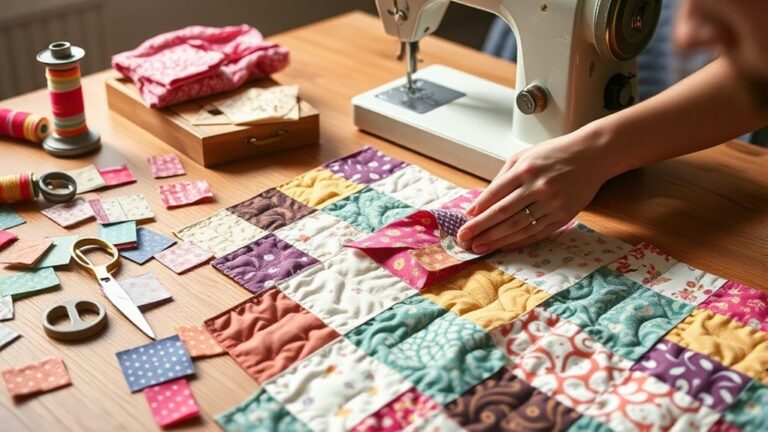
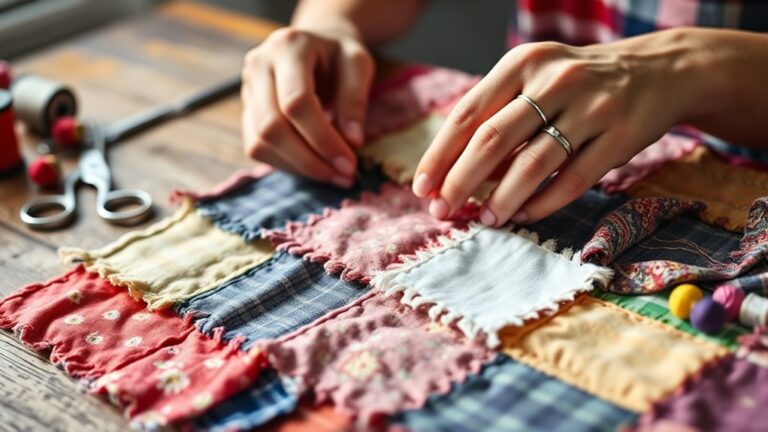
Start by gathering your fabric and cutting it into the desired shapes and sizes. Accurate cutting is vital for effective fabric preparation. It helps ensure your pieces fit together seamlessly.
Once your pieces are cut, you can use layering techniques to create your quilt sandwich. This means arranging the backing, batting, and top layer.
Here’s a quick overview of the steps:
| Step | Description | Tips |
|---|---|---|
| Cutting | Use a rotary cutter for precision | Measure twice, cut once |
| Layering | Arrange backing, batting, and top | Smooth out wrinkles |
| Pinning | Secure layers with pins | Use plenty of pins |
Master the Basic Hand Quilting Stitch
Mastering the basic hand quilting stitch is essential for creating beautiful quilts.
This foundational stitch sets the stage for your quilting journey.
To get started, focus on these key elements:
1. Stitch Length: Aim for consistent stitches, typically about 1/4 inch.
This uniformity improves the overall appearance of your quilt.
2. Fabric Tension: Keep a balanced tension as you pull your thread through the fabric.
Too tight can pucker, while too loose can lead to weak seams.
3. Needle Position: Insert the needle at a slight angle, allowing for smooth entry and exit through the fabric layers.
With practice, you’ll find your rhythm.
As you continue to quilt, you’ll discover your unique rhythm and style with every stitch you take.
Remember, the more you quilt, the more comfortable you’ll become with adjusting your stitch length and fabric tension.
Enjoy the process, and let your creativity shine through each stitch!
How to Keep Stitches Even
As you immerse yourself in hand quilting, keeping your stitches even is essential for achieving a polished look.
Start by establishing a consistent stitching rhythm. This means finding a pace that feels comfortable for you, allowing each stitch to flow naturally.
Practice makes perfect, so don’t hesitate to experiment until you uncover what works best.
Next, pay attention to your hand positioning. Hold your needle firmly but not too tightly, and make sure your fabric is taut without being stretched.
This balance helps maintain even tension, preventing uneven stitches. As you quilt, keep your eyes on your work, focusing on the space between each stitch.
If you notice any inconsistencies, pause and adjust your technique.
What Are the Different Hand Quilting Techniques?
Hand quilting offers a variety of techniques that cater to different styles and preferences.
Whether you lean toward traditional techniques or modern methods, there’s something for everyone.
Here are three popular hand quilting styles you might investigate:
1. Stitch Variations: Experiment with different stitches like running, back, or whip stitches.
This can add character to your patchwork designs and make each quilt feel unique.
2. Decorative Stitching: Use decorative stitching to improve your quilting.
It adds a unique flair and can transform simple patterns into stunning works of art.
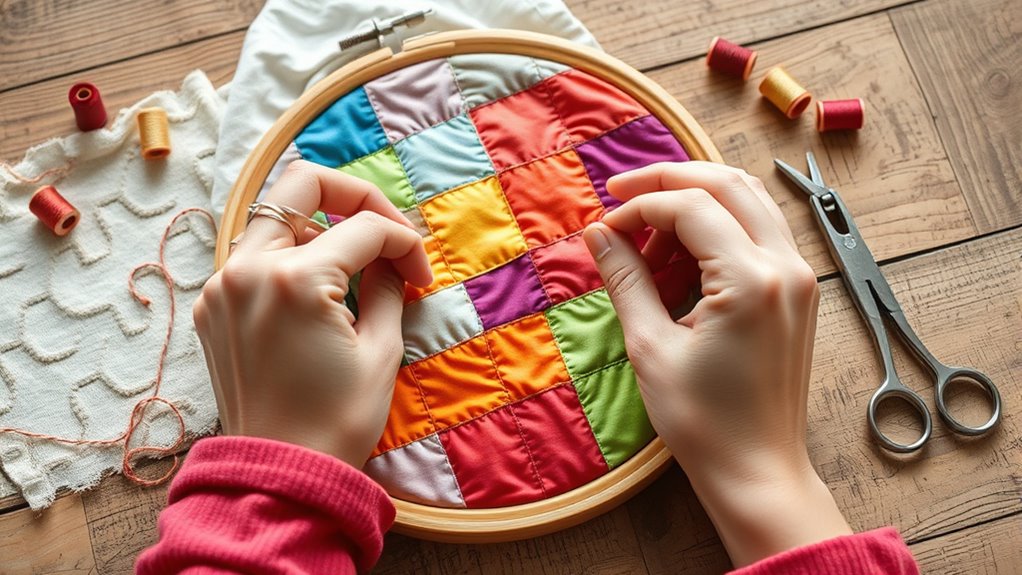
3. Hoop Usage: Employ a hoop for better fabric manipulation.
This helps your quilt stay taut while you practice your rhythm.
Knot tying is essential for securing your threads and maintaining stability.
Whichever technique you choose, remember to enjoy the process and let your creativity flow!
Creating Simple Quilting Patterns
So, you’ve gotten the hang of some hand quilting techniques—nice work! Now, let’s dive into creating simple quilting patterns together. It might surprise you, but even the most basic stitches can turn into really beautiful designs. There are so many popular patterns out there to spark your creativity, too. Ready to make your quilts stand out? Let’s jump right in and start making something uniquely yours!
Basic Stitching Techniques
Creating a beautiful quilt starts with mastering basic stitching techniques. Many beginners fall for quilting myths, thinking that complicated patterns are necessary. But simplicity often shines.
Here are three essential techniques to get you started:
- Running Stitch: This simple stitch is perfect for outlining shapes. Just push your needle in and out at even intervals.
- Backstitch: For added strength, use a backstitch. It creates a solid line that can withstand wear.
- Whip Stitch: Ideal for joining layers, the whip stitch offers a quick and effective way to secure your quilt’s edges.
Avoid common beginner mistakes like uneven stitches or skipping layers. With practice, these techniques will lay the foundation for your hand quilting journey!
Popular Pattern Ideas
Once you’ve got those basic stitching techniques down, it’s time to examine popular pattern ideas that can improve your quilting projects.
Start with simple shapes like squares and triangles to build your confidence. Geometric designs offer a modern aesthetic that’s visually striking.
For a touch of nature, consider motifs like leaves or flowers. Patchwork patterns can bring together various fabrics, while seasonal themes let you celebrate holidays with festive designs.
Traditional blocks, such as the log cabin or nine-patch, provide a classic touch. Don’t shy away from playful illustrations or abstract forms for a fun spin.
Finally, investigate color gradients to add depth and interest to your quilts, making them truly stand out.
Troubleshooting Common Hand Quilting Issues
While hand quilting can be a rewarding experience, it’s not uncommon to encounter a few issues along the way. Here are some common problems and their solutions:
1. Tension Issues:
If your stitches are uneven, check your thread tension. Adjust it to find a balance that allows for smooth stitching without thread breakage.
2. Fabric Puckering:
Confirm your stitch length is consistent. Too long or too short can cause puckering.
Moreover, use a hoop for better control.
3. Pattern Alignment:
If your patterns aren’t aligning, slow down your quilting speed. This gives you more control and helps maintain accuracy.
Using the right needle choice can also make a difference. Remember, troubleshooting is part of the learning process, so don’t get discouraged! With practice, you’ll refine your skills and enjoy the journey.
Finishing Your Quilt: Binding and Care Tips
Now that you’ve finished making your quilt, let’s talk about binding and how to keep it looking great. Picking out the right binding fabric is important—not just for how it looks, but also for making sure your quilt lasts. And once your quilt is all stitched up, knowing a few simple care tips will help it stay beautiful for years to come.
Choosing Binding Fabric
Choosing the right binding fabric can make a significant difference in your quilt’s overall appearance and durability.
To help you decide, consider these three key factors:
1. Colors & Patterns:
Choose binding fabric colors that complement your quilt.
Patterns can add visual interest, but make sure they don’t overwhelm the design.
2. Textures & Finishes:
Binding fabric textures should feel appealing and be durable.
Opt for finishes that improve the quilt’s overall look, like matte or glossy.
3. Widths & Quality:
Select binding fabric widths that suit your quilt’s style.
Prioritize high-quality fabrics for longevity, and source them from reputable suppliers to guarantee reliability.
With these tips, you’ll improve both the aesthetics and durability of your quilt’s binding!
Proper Quilt Care
After selecting the perfect binding fabric, it’s important to focus on proper quilt care to guarantee your creation lasts for years.
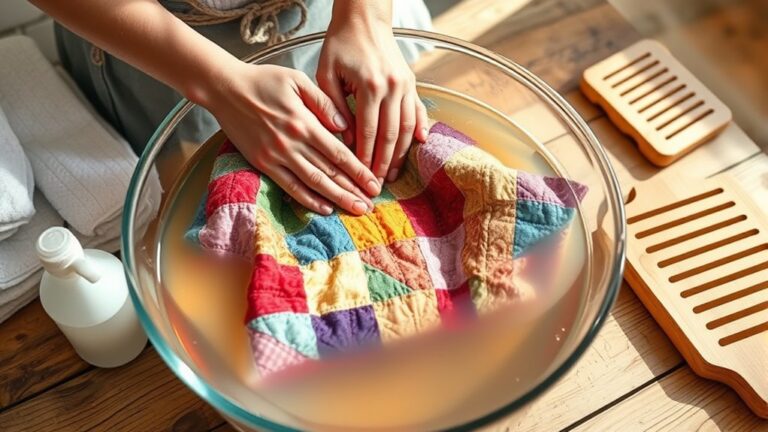
Start with quilt washing using cold water and a gentle detergent to preserve the fabric’s integrity.
For fabric storage, keep your quilt in a cool, dry place, and avoid direct sunlight.
When it comes to stain removal, treat spots immediately with a mild soap to prevent stains from setting.
Quilt preservation can be improved by rotating your quilts seasonally, which helps avoid uneven wear.
Finally, always make sure to dry your quilt properly by air-drying, or by using a low setting in the dryer.
Here’s a handy table to summarize:
| Care Tip | Recommendation | Frequency |
|---|---|---|
| Quilt Washing | Cold water, gentle detergent | As needed |
| Fabric Storage | Cool, dry place, no sunlight | Ongoing |
| Stain Removal | Mild soap, treat immediately | As needed |
| Quilt Preservation | Seasonal rotation | Seasonal |
Finding Inspiration for Your Next Quilting Project
How can you spark creativity for your next quilting project? Inspiration can come from various sources, so keep your eyes open!
Here are three ways to ignite your imagination:
- Explore Color Palettes: Immerse yourself in the world of fabric textures and choose colors that resonate with you. You can use seasonal inspirations or cultural influences to guide your selections.
- Research Design Themes: Look into historical patterns or modern quilting motifs. You might find designs that speak to your personal stories or experiences.
- Visit Local Craft Fairs: Check out handmade quilts and observe how different artisans incorporate unique elements. This kind of exposure can help you envision your own project.
Frequently Asked Questions
How Long Does It Take to Complete a Hand Quilt?
The quilt completion time varies widely based on your experience and the complexity of your design. If you’re using basic hand quilting techniques, you might finish a small quilt in a few days.
However, larger or more intricate quilts can take weeks or even months. Keep in mind that consistency in your stitching and the time you dedicate each day will greatly impact how quickly you see your quilt come together.
Can I Hand Quilt on a Sewing Machine?
Yes, you can use a sewing machine for quilting, often referred to as machine quilting. However, this is different from hand quilting, which involves stitching by hand for a more personal touch.
If you’re comfortable with your machine, you can create beautiful quilts quickly. Just keep in mind that while machine quilting saves time, hand quilting offers a unique charm and connection to the craft that many quilters cherish.
Choose what suits you best!
What Is the Best Fabric for Beginners?
Did you know that over 75% of quilters prefer cotton fabrics for their projects?
For beginners, cotton’s softness and versatility make it the ideal choice.
You’ll want to stick with pre-washed fabrics to guarantee they don’t shrink after your hard work.
Investigate various fabric choices in vibrant colors and patterns that complement your quilt patterns.
This way, you’ll create something beautiful while enjoying the process of hand quilting!
How Do I Store My Unfinished Quilt Projects?
To store your unfinished quilt projects effectively, prioritize project organization. Use clear plastic bins or fabric storage bags to keep materials together and visible.
Label each container with the project name and details for easy access. If you’re short on space, consider hanging organizers or repurposed shoeboxes for smaller items.
Avoid damp areas to prevent mold. With these storage solutions, you’ll keep your projects safe and ready for your next quilting session.
Are There Online Communities for Hand Quilters?
Absolutely, there are vibrant online communities for hand quilters! In fact, over 70% of quilters say they find inspiration and support through social media.
You can connect with others who share your passion for hand quilting techniques and beginner quilt patterns.
Join Facebook groups, forums, or dedicated quilting websites to exchange tips, showcase your projects, and ask for advice.
Engaging with these communities can enrich your quilting journey immensely!
Conclusion
So, you’re ready to plunge into the world of hand quilting, armed with all the right materials and tools.
Just remember, it’s not just about stitching fabric together; it’s about creating a masterpiece, one painstakingly uneven stitch at a time!
Welcome the chaos. Who needs perfection when you can have character?
After all, every quilt tells a story. And what’s a better tale than a few wonky stitches?
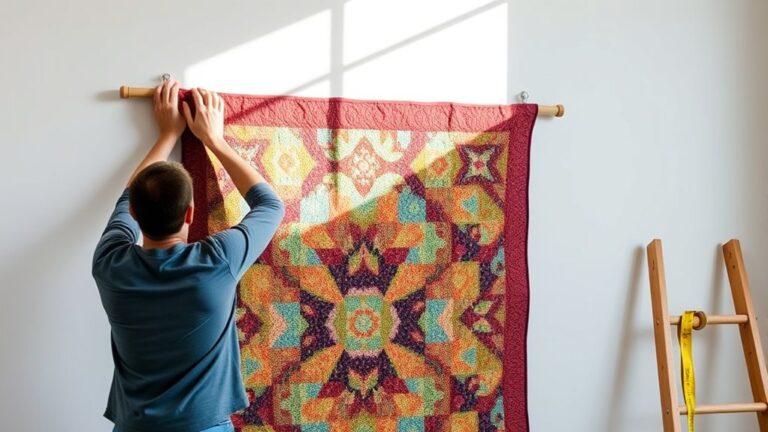
Happy quilting, and may your thread never tangle as you discover the joys of hand quilting!