How Much Fabric for a Queen Size Quilt?
If you’ve ever dreamed of making a cozy queen size quilt but felt overwhelmed by figuring out how much fabric you actually need, you’re not alone. Many people struggle with this first big step, and it’s easy to second-guess your measurements or worry about buying too much or too little.
The good news is that with a little guidance, you can confidently start your quilting journey.
To make a queen size quilt, you’ll need about 8 to 10 yards of fabric. This includes 6 to 7 yards for the quilt top and 7 to 8 yards for the backing.
It’s crucial to account for the batting, typically measuring 90 inches by 108 inches.
When choosing your fabrics, think about patterns and textures to improve your design.
If you’re curious about specifics like borders and binding, there’s more to investigate.
Key Takeaways
- A standard queen size quilt requires a top fabric of 6 to 7 yards.
- For backing, it’s best to use 7 to 8 yards of fabric to ensure you have enough.
- The batting size should be 90 inches by 108 inches for proper coverage.
- In total, you’ll need approximately 8 to 10 yards of fabric for a queen quilt.
- Always remember to account for pre-washing your fabric. This helps prevent future shrinkage.
How Much Fabric Do You Need for a Queen Size Quilt?
When you’re planning to make a queen size quilt, you’ll typically need about 6 to 7 yards of fabric for the top, plus additional yardage for the backing and batting.
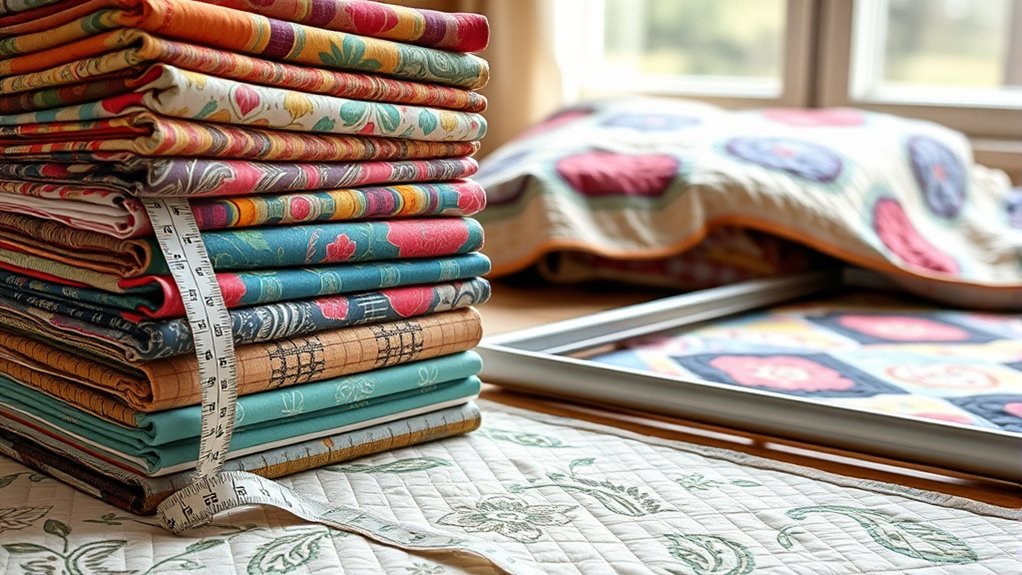
Choosing the right fabric patterns can really bring your quilt to life. Think about your favorite quilt themes, whether it’s floral, geometric, or abstract, as these ideas will help guide your fabric selection.
For the backing, you’ll usually want about 7 to 8 yards, depending on the width of your fabric. Don’t forget the batting, which generally requires 90 inches by 108 inches for a queen size.
If you’re mixing different fabric patterns, calculate how much of each you’ll need to maintain balance and harmony in your design.
Proper planning guarantees you have enough fabric without overbuying. This makes your quilting process smoother and much more enjoyable.
Understanding Queen Size Quilt Dimensions
To create a queen size quilt, you need to understand its dimensions, as they play an essential role in your design and planning.
A standard queen size quilt typically measures 90″ x 90″. Knowing this helps you visualize the size and layout of your quilt design.
You’ll want to take into account how fabric patterns will interact with the dimensions and make sure they flow well together.
Here’s a quick reference table for your convenience:
| Quilt Type | Dimensions | Fabric Requirement |
|---|---|---|
| Queen Size Quilt | 90″ x 90″ | 8-10 yards |
| Throw Quilt | 50″ x 60″ | 3-4 yards |
| Twin Quilt | 66″ x 90″ | 6-8 yards |
| King Quilt | 108″ x 90″ | 10-12 yards |
Understanding these dimensions allows you to choose the right fabric and create a quilt that feels just right.
Choosing the Right Fabric for a Queen Size Quilt
Now that you have a solid understanding of queen size quilt dimensions, it’s time to focus on selecting the right fabric. Start by considering the fabric patterns that resonate with your style.
Whether you prefer florals, geometrics, or solids, choose patterns that complement each other well. This will not only improve the visual appeal but also make the quilt distinctly yours.
Next, think about color combinations. Opt for a cohesive palette that brings warmth and harmony to your design.
You might mix a few bold colors with softer shades to create depth and interest. Don’t shy away from experimenting, but make sure the colors flow together seamlessly.
Finally, remember the fabric’s texture and weight. Different materials affect the quilt’s drape and durability.
Cotton is a popular choice for its ease of use and comfort. With the right fabric choices, your queen size quilt will be a beautiful, functional centerpiece for your bedroom.
Quick Guide to Fabric Yardage for Quilt Tops
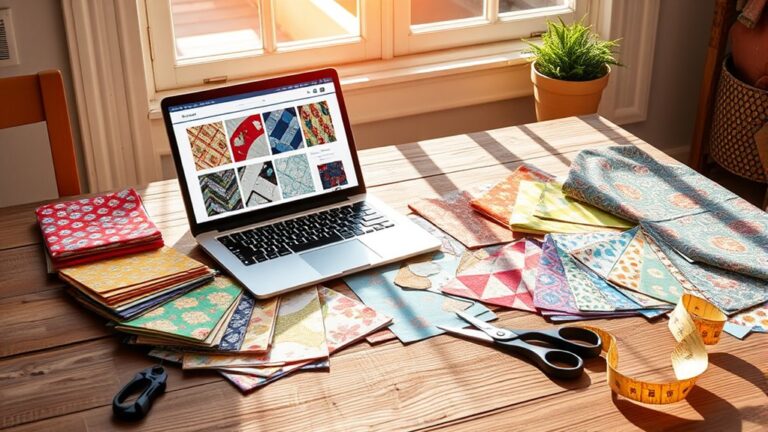
When you’re getting ready to make a queen size quilt, figuring out how much fabric you need is super important. First things first, you’ll want to decide on the size of your quilt top and think about the kinds of fabrics you’d like to use. Different fabrics can affect how much you’ll need, so it’s good to keep that in mind as you plan. Let’s walk through the basics of what you’ll need, so you can start your quilting project with confidence!
Fabric Requirements Overview
Understanding fabric requirements is essential for any quilting project, especially when making a queen-size quilt. Knowing how much fabric you need can save you time and frustration.
Here are some quick tips to guide your fabric selection and layout:
- Choose a mix of fabrics to add depth and interest.
- Consider your quilt layout ideas before buying fabric.
- Typically, you’ll need around 6 to 8 yards for the top.
- Don’t forget to account for backing and batting!
Calculating Quilt Sizes
How can you guarantee you have the right amount of fabric for your queen-size quilt? Start by understanding your fabric layout and quilt patterns.
For a standard queen quilt, you’ll typically need around 8 to 10 yards of fabric, depending on your design. To calculate yardage, consider the size of your blocks and any borders or sashing you plan to include.
If you’re using a specific quilt pattern, check its guidelines for fabric requirements, as they often provide detailed measurements.
Remember to account for shrinkage and waste, especially if you’re working with intricate designs.
Once you have your calculations sorted, you can confidently choose your fabrics and get started on creating a beautiful quilt!
Types of Fabrics
Choosing the right fabric for your queen-size quilt can make all the difference in its appearance and durability.
When selecting fabrics, consider various aspects to achieve the perfect quilt.
- Fabric textures: Smooth, soft, or quilted options can add dimension.
- Fabric patterns: Choose from florals, stripes, or solids to suit your style.
- Fabric weights: Heavier fabrics provide warmth, while lighter ones are great for layering.
- Fabric colors: Pick colors that complement each other for cohesive designs.
Don’t forget about fabric care and sourcing sustainable materials.
Experiment with fabric combinations to create stunning visuals while staying mindful of fabric sustainability.
The right choices will guarantee your quilt lasts for years to come!
How Much Backing Fabric Do You Need?
When you’re getting ready to make a queen size quilt, one of the big questions is how much backing fabric you’ll need. It’s something every quilter has to figure out before heading to the fabric store. There are a couple of things to keep in mind—like the size of your quilt and the width of the fabric you plan to use for the backing.
Let’s talk about how to figure it all out, step by step, so you can be sure you have enough fabric for your project.
Fabric Requirements Overview
While planning your queen size quilt, it’s essential to take into account how much backing fabric you’ll need to guarantee a polished finish. The right backing not only complements your quilt design but also improves its durability.
Here are some fabric selection tips to keep in mind:
- Choose fabric that matches your quilt design inspiration.
- Opt for a single piece of fabric to avoid seam lines.
- Take into account the weight and texture for added comfort.
- Pre-wash the fabric to prevent shrinkage later.
Calculating Backing Width
To guarantee your queen size quilt has the right backing, you’ll need to calculate the fabric width carefully.
Start by measuring your quilt’s dimensions. Typically, a queen size is about 60×80 inches.
You’ll want your backing fabric to extend at least 4-6 inches beyond the quilt edges for proper coverage.
If you’re using wide backing fabric, a single piece might suffice. But if you’re piecing together smaller widths, consider how the seams will impact your overall dimensions.
Add up the total width required, and don’t forget to account for any design you want on the back.
What’s the Best Batting for Your Quilt?
Choosing the right batting for your quilt can make a significant difference in both its appearance and feel. You’ll want to evaluate various factors, including batting materials and thickness, to achieve the desired results.
Here are some key points to guide your decision:
- Batting Thickness: Thicker batting offers more loft, while thinner options provide a flatter finish.
- Temperature Control: Natural fibers like cotton excel at regulating heat, keeping you comfortable year-round.
- Quilt Durability: Polyester batting tends to be more durable and resistant to wear. That makes it ideal for frequently used quilts.
- Eco-Friendly Batting: Look for brands that offer sustainable options so you can reduce your environmental impact.
Popular batting brands include Hobbs, Warm & Natural, and Quilter’s Dream. By weighing these factors, you’ll find the perfect batting to improve your quilt’s beauty and functionality.
Additional Fabric for Borders and Binding
When you’re planning your quilt, it’s easy to focus just on the main design, but don’t forget about the borders and binding. These finishing touches can really take your quilt to the next level and change the whole look.
Think about how wide you want your borders to be—are you going for something bold and wide, or maybe something a bit slimmer and subtle? That choice will affect how much extra fabric you need. And then there’s the binding, which frames your quilt and keeps everything neat. It’s always a good idea to figure out how much binding fabric you’ll need before you start cutting.
Also, it’s worth spending a little time picking the right fabric for both borders and binding. Some fabrics not only look great, but they also hold up better over time, so your quilt stays beautiful for years to come.
Border Size Considerations
While borders can improve the overall look of your quilt, they also require careful planning regarding fabric amounts.
Consider how your chosen border styles, colors, and patterns will impact the total fabric needed.
The width of your borders can greatly affect the quantity, so decide on your border widths early.
Think about different border techniques to enrich your design.
Select border fabrics that complement your quilt’s main fabric.
Plan for border placements to guarantee balance.
Experiment with various border designs to find what suits you best.
Binding Fabric Requirements
To complete your queen size quilt, you’ll need to contemplate the binding fabric requirements alongside any additional fabric for borders.
Typically, you’ll want about 1/2 yard of fabric specifically for binding. This may vary depending on the binding techniques you choose, such as straight or bias-cut binding, so plan accordingly.
When selecting fabric colors, consider how they’ll complement your quilt’s overall design. A contrasting color can add a striking finish, while a matching hue can create a seamless look.
Don’t forget to choose a fabric that’s durable, as the binding will endure wear and tear. Investing a little extra thought into your binding fabric can improve the quilt’s aesthetic and longevity greatly.
Fabric Type Recommendations
Choosing the right fabric type for your queen size quilt’s borders and binding can improve the overall look and durability.
You’ll want to take into account both fabric color and fabric texture to create a cohesive design. Here are some recommendations to guide your choices:
- Cotton: It’s durable, easy to sew, and offers a wide range of colors and textures.
- Linen: This adds a unique texture and sophisticated look, but it can be less forgiving if you’re a beginner.
- Cotton Blend: Combining cotton with polyester gives you strength while maintaining softness.
- Batiks: These fabrics offer vibrant colors and intricate patterns, perfect for making your quilt stand out.
Choosing wisely guarantees your quilt not only looks great but lasts for years.
Tips for Buying Fabric: Pre-Cuts vs. Yardage
When you’re ready to buy fabric for your queen size quilt, understanding the difference between pre-cuts and yardage can save you both time and money.
Pre-cuts, like charm packs or jelly rolls, offer convenience and often come in coordinated fabrics. This makes it easy to create a cohesive look.
Their main advantage is that they save you from cutting fabric yourself, so you can start sewing right away.
However, yardage gives you more flexibility. If you have a specific design in mind or need custom sizes for blocks, buying yardage allows you to choose the exact amount you need.
Consider your project’s requirements: if you want quick assembly, pre-cuts might be the way to go.
But if you prefer to experiment with designs or need specific cuts, yardage will serve you better.
Weigh the pros and cons based on your quilting goals to make the best choice.
Common Mistakes in Estimating Fabric Needs
One common mistake quilters make is underestimating how much fabric they really need for a queen size quilt.
This often leads to fabric estimation errors that can derail your project. You might think you can get by with less, but that can lead to frustration and regret.
Here are some common fabric misconceptions to watch out for:
- Ignoring seam allowances: Always factor in the fabric you’ll lose to seams.
- Not accounting for pattern direction: Some fabrics require more yardage if they have a specific pattern.
- Overlooking shrinkage: Pre-wash your fabric to avoid surprises later on.
- Forgetting about the backing: The backing fabric needs to be added to your total estimate.
Creative Uses for Leftover Fabric From Your Quilt
While you might be tempted to toss leftover fabric from your queen size quilt, there are plenty of creative ways to put those scraps to good use. Consider diving into scrap projects like patchwork pillows or tote bags. These items not only utilize your fabric but also add a personal touch to your home.
You can even make fabric coasters or simple quilts for pets, keeping your creativity flowing.
If you’ve got a bit of extra time, try your hand at fabric storage solutions. Create small bins or pouches to organize your sewing supplies, turning leftover fabric into functional storage that looks great.
Another idea is to make a fabric-covered journal or scrapbook to showcase your quilting journey. By repurposing your leftover fabric, you’ll not only reduce waste but also improve your sewing space with unique, handcrafted items.
Don’t let those scraps go to waste. Get creative!
Frequently Asked Questions
Can I Use Different Fabric Types for a Queen Size Quilt?
Yes, you can use different fabric types for a queen size quilt. Just keep fabric compatibility in mind; combining materials like cotton and flannel can create interesting texture differences.
Make sure the fabrics behave likewise when washed and quilted, so your quilt stays together nicely.
Mixing textures can add a unique flair, but it’s essential to contemplate how they’ll interact.
Experimenting can lead to beautiful results, so don’t hesitate to try!
How Should I Pre-Wash My Fabric Before Quilting?
To pre-wash your fabric, start by filling a tub with warm water, letting the colors swirl like a painter’s palette. Add a mild detergent, then soak your fabric for about 30 minutes.
This helps prevent fabric shrinkage and removes any chemicals.
Rinse thoroughly and hang it to dry, ensuring it’s ready for quilting preparation.
You’ll love the soft feel and vibrant colors, making your quilt truly stand out when you’re finished!
What Tools Do I Need for Cutting Fabric Accurately?
To cut fabric accurately, you’ll need a few essential tools. Start with a rotary cutter for smooth, precise cuts.
Fabric rulers guarantee you measure accurately, preventing errors in your project. A cutting mat protects your surfaces and keeps your blades sharp.
Practice different cutting techniques, like straight cuts and angles, to improve your skills.
With these tools, you’ll get consistent results and make your quilting experience much more enjoyable.
How Do I Calculate Fabric Needs for a Quilt With Multiple Colors?
Did you know that choosing the right colors can boost your mood by 60%?
To calculate fabric needs for your multi-colored quilt, start with your fabric layout. Decide on your blocks and how many colors you want.
Then, measure the total area of your quilt and divide that by the area of each piece. This’ll give you a better idea of how much fabric you’ll need for each color.
Happy quilting!
Can I Use Fabric Scraps for a Queen Size Quilt Design?
Absolutely, you can use fabric scraps for a queen size quilt design! In fact, a scrap quilt can be a creative way to use up leftover material.
For fabric selection, choose a mix of colors and patterns that complement each other. You can create a unique quilt that tells a story with your scraps.
Just make sure you have enough fabric to cover the queen size dimensions, and you’ll be all set!
Conclusion
To sum up, planning your queen size quilt is like piecing together a beautiful puzzle. Every fabric choice matters.
By understanding the dimensions, choosing the right fabric, and calculating your yardage accurately, you’ll set yourself up for a successful project.
Don’t forget to account for backing, borders, and binding to make sure your quilt turns out just the way you envisioned.
With a bit of foresight, you’ll create a quilt that’s both stunning and functional.
Remember, knowing how much fabric for a queen size quilt is essential for bringing your vision to life and achieving a beautiful final result.
Happy quilting!