Mastering Hand Quilting Like a Pro
If you’ve ever felt frustrated by tangled threads, uneven stitches, or quilts that just don’t turn out the way you envisioned, you’re not alone. Many aspiring quilters struggle with mastering hand quilting, wishing for smoother results and a more enjoyable process.
The good news is that with the right approach and some handy tools, you can overcome these common hurdles and create beautiful, lasting quilts.
Mastering hand quilting lets you transform fabric into beautiful art while connecting with tradition.
Start by gathering essential tools, like quality needles and a reliable thimble.
Choose the right fabric for ease and compatibility, then prepare your quilt sandwich carefully to avoid common mistakes.
Practice basic stitches like running and backstitch for consistency in your work.
As you progress, you’ll uncover techniques and projects that will enhance your quilting skills even further.
Key Takeaways
- Choose the right tools, including quality needles and a comfortable thimble. This will really enhance your hand quilting experience.
- Select compatible fabrics and prepare a well-layered quilt sandwich. Doing this helps ensure a smooth quilting process from start to finish.
- Master basic stitches like running, backstitch, and whip stitch. These will give you consistent and polished results every time.
- Avoid common mistakes such as measurement errors and tension issues. This step can really improve your quilting outcomes.
- Finish your quilt with attention to binding options and final inspections. Taking time here gives you a professional-looking product.
How to Start Hand Quilting: A Timeless Craft
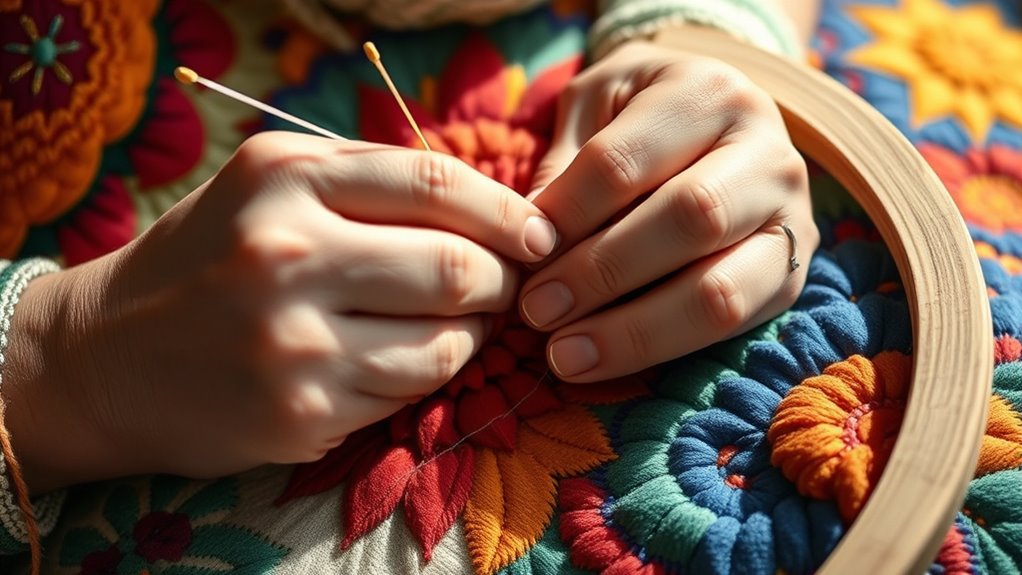
Hand quilting is a timeless craft that allows you to create beautiful, personalized pieces with just a needle and thread.
As you immerse yourself in this art form, you’ll uncover numerous hand quilting benefits.
Not only does it enrich your creativity, but it also promotes mindfulness and relaxation.
Understanding quilt history deepens your experience, connecting you to generations of quilters who’ve come before you.
Connecting with quilt history enriches your journey, linking you to the generations of quilters who have shaped this beautiful craft.
Each stitch you make carries the weight of tradition, and you’ll find joy in preserving that legacy.
To start, gather your materials: fabric, thread, and a needle.
Choose a simple pattern that resonates with you, and don’t be afraid to experiment.
As you stitch, you’ll develop your technique and gain confidence.
Remember, it’s about the journey, not perfection.
Enjoy every moment, and soon you’ll create pieces that tell your own story, blending history with your unique touch.
Essential Tools Every Hand Quilter Needs
To create stunning hand-quilted pieces, having the right tools is key. With the right equipment, you’ll improve your quilting comfort and tackle those intricate stitch patterns with ease.
Here are three essential tools every hand quilter needs:
- Quality Needles: Invest in various needle sizes suited for different thread types. This guarantees your stitches remain consistent and neat.
- Thimble: A good thimble provides quilting safety, protecting your fingers while sewing through multiple layers of fabric.
- Fabric Storage Solutions: Keep your fabrics organized and in pristine condition. Proper fabric care prevents wrinkles and degradation, allowing you to focus on your quilting.
Choosing the Right Fabric for Your First Quilt
When you’re picking out fabric for your very first quilt, it can feel a bit overwhelming because there are so many options out there. It really helps to start by getting familiar with the different types of fabric you’ll come across. Don’t worry, you don’t have to know everything right away!
As you look around, think about the colors and patterns that you naturally like. After all, your choices will shape how your finished quilt looks and feels, so it’s worth taking your time with this part. The best part is, you get to make it your own.
Fabric Types Overview
Choosing the right fabric for your first quilt can make all the difference in both the process and the final product.
Here are three key factors to take into account:
- Fabric Weight: Lighter fabrics like cotton are easier to handle and quilt. Heavier fabrics provide extra durability, so think about what works best for your needs.
- Fabric Blend: Consider blends, such as cotton-polyester, if you want improved durability and easier care. Blended fabrics can make maintenance simpler.
- Fabric Texture: Smooth textures are great for beginners. Textured fabrics can add dimension, but they might make the quilting process a bit more complicated.
Make certain to think about fabric compatibility with your chosen batting and backing.
Pay attention to fabric prints as well, since they can affect the overall look.
Finally, always check fabric sourcing to guarantee quality for your project.
Color and Pattern Selection
With the right fabric types in mind, selecting colors and patterns can truly improve your quilting project.
Start by considering color harmony; choose hues that complement each other to create a cohesive look.
Think about warm and cool tones, and don’t shy away from mixing shades for depth.
Next, focus on pattern balance.
If you opt for bold prints, pair them with solid colors or smaller patterns to avoid overwhelming your quilt.
Aim for a mix that keeps the eye engaged without distraction.
Ultimately, your choices should reflect your personal style.
Test combinations with swatches before committing, and enjoy the creative process.
The right colors and patterns will not only uplift your quilt but also make it distinctly yours.
Basic Hand Quilting Stitches You Must Master
Now that you’ve picked out your fabric, let’s talk about the stitches that will really make your quilt stand out. We’ll go over the must-know quilting stitches, chat about how to get each one just right, and share some handy tips for keeping your stitches evenly spaced. Once you get the hang of these basics, you’ll be all set to dive into your hand quilting adventure with confidence.
Essential Quilting Stitches Explained
Mastering essential quilting stitches is crucial for creating beautiful hand-quilted projects.
These stitches form the foundation of your work, whether you’re using historical quilting methods or exploring advanced stitch techniques.
Here are three key stitches you should master:
- Running Stitch: The most basic stitch, perfect for outlining and adding texture.
- Backstitch: This stitch offers durability and strength, ideal for seams or intricate designs.
- Whip Stitch: Used for finishing edges and joining layers, it’s necessary for a polished look.
Focusing on these essential stitches will improve your skills and raise your quilting projects.
With practice, you’ll find your confidence growing, and you’ll be ready to tackle more complex designs and techniques in no time!
Techniques For Perfect Stitches
Building on your understanding of basic quilting stitches, applying the right techniques can really elevate your hand quilting.
Focus on stitch consistency and thread tension to get that professional look you’re after.
Here’s a quick reference table to help you out:
| Technique | Description |
|---|---|
| Stitch Consistency | Keep your stitches even in size. |
| Thread Tension | Adjust tension for smooth stitching. |
| Needle Positioning | Hold the needle at a slight angle. |
Tips For Even Spacing
To achieve even spacing in your hand quilting, it’s essential to focus on the rhythm of your stitching.
Consistent spacing techniques not only improve your quilt design but also enhance the overall aesthetic of your work.
Here are three tips to help you maintain that rhythm:
- Use a template: Create a guide for spacing, ensuring your stitches follow a uniform path.
- Practice your stitches: Before starting your quilt, practice your hand stitches to develop a natural flow and consistency.
- Mark your fabric: Lightly mark lines or dots on your fabric to serve as visual cues for where each stitch should go.
Preparing Your Quilt Sandwich for Success
As you prepare your quilt sandwich, the right foundation is essential for a successful hand quilting experience.
Start with thorough fabric preparation, including fabric washing to prevent shrinkage.
Choose seasonal fabrics that inspire you and layer them effectively with batting choices that improve quilt stability.
Here’s a handy table to guide you through the process:
| Step | Tips |
|---|---|
| Fabric Preparation | Wash and iron your fabrics |
| Quilt Layering | Layer top, batting, backing |
| Pinning Techniques | Use safety pins or quilting clips for secure hold |
| Thread Selection | Match thread to fabric colors |
Essential Hand Quilting Stitches for Beginners
Now that your quilt sandwich is all set up, let’s talk about the essential hand quilting stitches you’ll need. These basic stitches are really the foundation of hand quilting, and knowing them will make the whole process a lot smoother. Plus, it’s important to get familiar with the tools that go along with each technique, so you can quilt comfortably and confidently.
Basic Quilting Stitches Explained
Hand quilting is an art that combines creativity and skill. For beginners, it’s essential to master a few basic stitches.
By learning these foundational hand quilting techniques, you’ll be ready to explore quilt stitch variations that add personality to your projects.
Here are three key stitches you should start with:
- Running Stitch: The simplest stitch, ideal for outlining and basic patterns.
- Backstitch: Offers a stronger seam, perfect for more durability in your quilting.
- Whip Stitch: Great for joining layers or finishing edges neatly.
Focusing on these stitches will build your confidence and improve your overall quilting experience.
Once you’ve mastered them, you’ll find endless possibilities to express your creativity through hand quilting!
Tools For Hand Quilting
Mastering the basic stitches lays a solid foundation for your hand quilting journey, but having the right tools can enhance your experience even more.
Here’s a handy reference for essential tools:
| Tool | Description | Purpose |
|---|---|---|
| Thread Types | Cotton, polyester, or silk | For various stitching needs |
| Needle Sizes | 8 to 12, depending on fabric | To suit your batting options |
| Quilting Frames | Hoop or lap frame | To keep fabric taut |
Don’t forget your marking tools for precision, thimble choices for comfort, and quilting gloves for grip.
Investigate different stitching patterns to boost your skills and enjoy the process!
Avoid These Common Rookie Quilting Mistakes
Have you ever found yourself frustrated by uneven stitches or fabric puckering?
Frustrated by uneven stitches or puckering fabric? You’re not alone—many beginners face these common challenges.
You’re not alone! Many beginners face common pitfalls that lead to these issues.
Avoiding rookie mistakes can make your quilting journey much smoother.
Here are three common blunders to watch out for:
1. Measurement Errors: Always double-check your measurements.
Inaccurate cuts can lead to pattern mistakes that compromise your project.
2. Tension Issues: If your stitches are too tight or too loose,
you might experience stitch inconsistencies. Adjust your thread tension to find that sweet spot.
3. Fabric Missteps: Using incompatible fabrics can cause technique errors.
Make sure your fabrics work well together to avoid puckering.
Maintaining Your Quilting Supplies for Longevity
To guarantee your quilting supplies last, it’s essential to establish a maintenance routine. Start with effective supply organization; keep your tools and materials sorted in labeled containers.
Invest in quality storage solutions that protect your fabrics from dust and moisture, ensuring material preservation. Regularly assess your inventory management to identify items that need replacing or special care.
Incorporate cleaning techniques into your routine, like wiping down your tools after each use to prevent rust and buildup.
For needles and scissors, proper tool care is crucial. Keep them sharp and clean for peak performance.
Create replacement strategies for worn-out supplies so you’re never caught off guard. By staying proactive with these maintenance routines, you’ll enjoy a longer lifespan for your quilting essentials, allowing you to focus more on your creative projects.
Finishing and Binding Your Quilt
While you may feel a sense of accomplishment once your quilt top is complete, finishing and binding your quilt is what truly brings your creation to life. To guarantee your quilt looks stunning, focus on these key steps:
- Choose Binding Options: Decide between bias or straight-grain binding techniques. Each offers unique edge treatments, so pick what suits your quilt best.
- Add Finishing Touches: Consider adding creative embellishments like embroidery or fabric labels to enhance your quilt presentation.
- Conduct a Final Inspection: Before you finish, check for any loose threads or uneven edges. Proper quilt care now will guarantee longevity.
Once you’ve completed these steps, your quilt will not only be functional but also a beautiful piece of art.
Enjoy the satisfaction of knowing every detail has been lovingly crafted!
Inspiring Hand Quilting Projects for Beginners
Completing the binding on your quilt is just the beginning of your hand quilting journey. Now’s the perfect time to check out inspiring hand quilting projects that will spark your creativity.
Here are some project ideas to get you started, each designed to help you improve your skills and offer plenty of fabric inspiration.
| Project Idea | Difficulty Level |
|---|---|
| Simple Pillow Cover | Easy |
| Table Runner | Medium |
| Baby Quilt | Medium |
| Wall Hanging | Challenging |
| Quilt-as-You-Go | Advanced |
These projects give you the chance to experiment with different fabrics and techniques as you build your confidence with each stitch.
Feel free to mix and match fabrics to create pieces that are truly your own. Remember, each project is another opportunity to learn something new, so enjoy the journey and let your creativity shine!
Frequently Asked Questions
How Do I Choose the Right Thread for Hand Quilting?
To choose the right thread for hand quilting, start by considering thread types like cotton, polyester, or silk.
Cotton’s often preferred for its strength and ease of use.
Next, think about thread tension; you want it to be just right. Too tight and it’ll pucker, too loose and it’ll snag.
Test your choice on a scrap piece to guarantee it glides smoothly through the fabric, making your quilting experience enjoyable and successful.
Can I Hand Quilt on a Sewing Machine?
Imagine a painter blending colors on a canvas; your sewing machine can be that brush for hand quilting techniques!
Yes, you can use a sewing machine to replicate hand quilting effects.
Choose sewing machine options with decorative stitches to mimic hand-stitched designs.
You’ll still create that cozy, personal touch while speeding up the process.
Just remember, each stitch tells a story, whether by hand or machine!
What Is the Best Way to Store My Quilts?
The best way to store your quilts is to keep them in a cool, dry place away from direct sunlight.
Use breathable cotton or linen storage bags to protect them from dust and pests. Avoid plastic, as it can trap moisture and lead to mildew.
For fabric care, make sure your quilts are clean before storing, and consider folding them loosely to prevent creasing.
This way, your quilts stay beautiful and last longer!
How Do I Fix Mistakes While Hand Quilting?
“Measure twice, cut once” applies here too! When you spot mistakes while hand quilting, don’t panic.
Start by carefully unraveling stitches in the mistake area. This lets you assess the damage.
Once you’ve got a clean slate, patch the errors by re-stitching with precision. If needed, consider adding a decorative touch to mask the error.
Can I Combine Hand and Machine Quilting Techniques?
Yes, you can definitely combine hand and machine quilting techniques! Many quilters find that integrating machine quilting into their projects improves the overall look.
You can use machine quilting for larger areas and hand quilting for smaller details or borders. This combination adds texture and visual interest.
Just be sure to choose complementary threads and patterns to keep everything cohesive. Experiment with both methods to find what works best for your style!
Conclusion
Now that you’ve got the essentials down, you’re ready to plunge into the world of hand quilting! With a little practice, you’ll be creating stunning quilts that could make even your grandma jealous.
Remember, every stitch you take is a step closer to mastering this timeless craft. So grab your needle and thread, and let your creativity flow.
Because who says you can’t quilt like a pro in a world dominated by machines? Happy quilting, and enjoy every moment as you master hand quilting like a pro!