How Do You Quilt With a Sewing Machine?
If you’ve ever felt overwhelmed trying to quilt with a sewing machine, you’re not alone. Many crafters struggle to get smooth, even stitches or find themselves frustrated by tangled threads and puckered fabric.
The good news? With the right tools and guidance, you can master machine quilting and create beautiful projects you’ll be proud of.
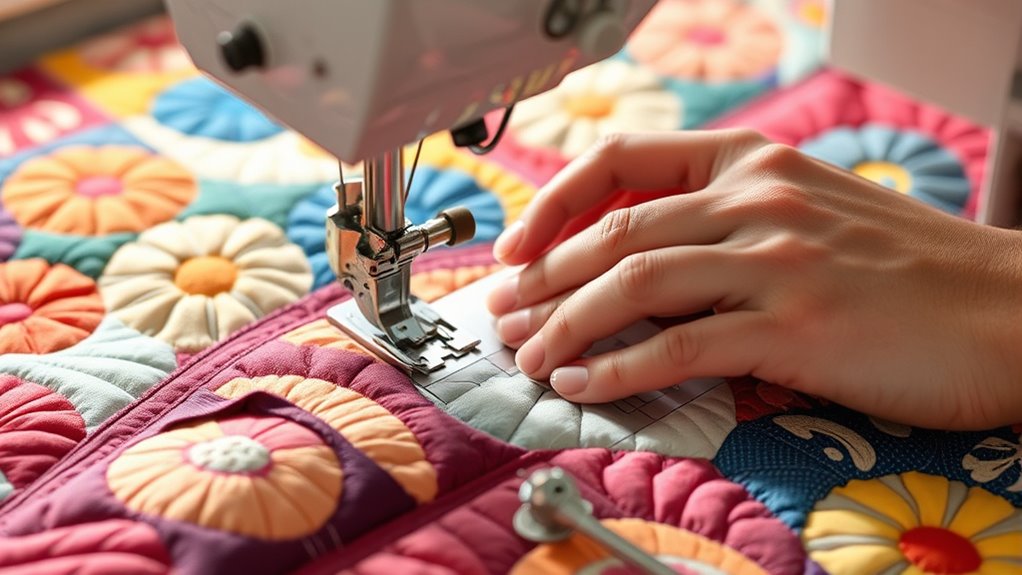
To quilt with a sewing machine, you’ll need essential tools like a quality sewing machine, cutting tools, and the right quilting feet. Start by selecting fabrics that match your project’s purpose and theme.
Prepare your machine by checking thread tension and using appropriate needles. Measure and cut fabric accurately, and layer your quilt pieces carefully.
Be ready to tackle common issues like tension and puckering. Keep going, and you’ll uncover more tips for perfecting your machine quilting skills.
Key Takeaways
- Use a quality sewing machine with adjustable thread tension and appropriate quilting feet for precise fabric handling.
- Select fabrics that mix prints and solids. Think about the quilt’s purpose and theme to add visual interest.
- Measure and cut fabric accurately with a rotary cutter. This helps ensure proper alignment and seam allowances for even edges.
- Adjust machine settings for stitch length and speed based on design complexity. Remember to keep the machine clean and oiled for best results.
- Finish quilts with complementary binding, and care for them by washing gently. Store them in breathable bags to maintain quality.
Essential Tools for Machine Quilting
To plunge into machine quilting, you’ll need a few essential tools to make the process smooth and enjoyable. First, a quality sewing machine is vital, preferably one that offers adjustable thread tension.
To embark on machine quilting, a quality sewing machine with adjustable thread tension is essential for achieving polished results.
This feature helps you achieve the perfect stitch, ensuring your quilt looks polished. Next, invest in various quilting feet, such as walking feet and free-motion feet.
These specialized attachments make maneuvering fabric easier and more precise. Don’t forget about a good rotary cutter and mat; these tools will help you cut fabric accurately and efficiently.
Moreover, have a ruler on hand for measuring and cutting straight lines. Finally, some quality quilting thread can make all the difference in the final product.
With these essentials, you’ll set yourself up for a successful machine quilting experience, allowing your creativity to shine.
How to Choose Fabric for Your Quilt
Choosing fabric for your quilt can be a delightful adventure, filled with endless possibilities. Start with your fabric color selection.
Think about the mood you want to create. Vibrant colors can energize a space, while softer hues offer calmness. Don’t hesitate to mix and match prints and solids to add depth and interest.
Next, pay attention to fabric texture considerations. Different textures can dramatically affect the final look of your quilt.
For instance, combining smooth cottons with coarser fabrics can create a unique tactile experience. Consider how these textures will interact when you quilt. Some may require different techniques or thread types.
Finally, always keep your quilt’s purpose in mind. A cozy throw may benefit from warmer, softer fabrics, while a wall hanging can afford to be more decorative.
How to Prepare Your Sewing Machine for Quilting Success
Before diving into your quilting project, it’s crucial to verify your sewing machine is ready for the task at hand.
Start by checking the thread tension to confirm it matches your fabric selection and batting options.
Choose the right needle types; a universal or quilting needle works well for most projects.
Next, install the appropriate quilting feet to help guide your fabric smoothly.
Adjust your machine settings, including stitch length and quilting speed, to suit the complexity of your design. A longer stitch length is often better for quilting, providing stability.
Don’t forget to establish a maintenance routine, confirming your machine is clean and oiled.
Finally, organize your workspace to keep everything within reach, making your quilting experience more enjoyable.
With these preparations in place, you’re set for quilting success!
How to Choose Quilt Patterns for Your Projects
What factors should you consider when selecting quilt patterns for your projects? Start by determining your skill level. If you’re a beginner, look for beginner quilt patterns that introduce basic techniques.
For those with more experience, advanced quilting designs can offer a satisfying challenge. Next, think about your fabric color combinations. Choose colors that complement each other and fit your style.
Consider the season, too. Seasonal quilt themes can add a festive touch to your home decor. You might also want to investigate modern quilt styles that incorporate contemporary designs, or you could stick with traditional quilt techniques for a classic feel.
Don’t forget to check various quilt pattern sources, like books and online platforms, for inspiration. Finally, consider personalizing quilt patterns to make each project distinctively yours.
This way, your quilts not only showcase your skills but also reflect your personality.
Accurate Measuring and Cutting Techniques
Accurate measuring and cutting are essential for achieving a polished quilt. Start by using a clear ruler and a rotary cutter for precision.
Measure your fabric against the grain, as cutting along the fabric grain guarantees stability and prevents distortion. Always account for seam allowances; typically, you’ll want to leave a quarter-inch for most quilt patterns.
Measuring your fabric against the grain ensures stability and prevents distortion, so always remember to account for seam allowances.
When you cut, make certain your fabric lies flat without wrinkles. Wrinkles can lead to uneven edges.
Double-check your measurements before cutting each piece. It’s easier to correct mistakes on paper than on fabric.
If you’re working with multiple layers, pin them securely to prevent shifting.
Lastly, keep a consistent cutting technique to maintain uniformity in your quilt pieces. With practice, these techniques will help you create beautifully crafted quilts that fit together seamlessly.
Mastering Quilt Piecing Techniques
As you plunge into quilt piecing, mastering the technique is vital for creating a cohesive and attractive design. Start by ensuring your quarter inch seams are precise; this accuracy greatly influences your quilt’s overall integrity.
Investigate various fabric types and textures, as they can improve color blending and add depth to your design layout.
Incorporate effective pressing techniques after each seam to flatten your blocks, ensuring they lay perfectly in your quilt layout.
When arranging your blocks, pay attention to block arrangement and pattern repetition, which can create visual harmony.
Keep in mind that proper seam allowances are essential, as they maintain the intended dimensions of your quilt.
Essential Machine Quilting Stitches You Need to Know
When you plunge into machine quilting, understanding the essential stitches can make all the difference in your project’s outcome.
Start by mastering straight stitches, which are fundamental for any quilt. Then, investigate free motion techniques, allowing you to create intricate designs freely.
This technique lets you guide the fabric at your own pace, adding beautiful textures and patterns.
Next, consider your walking foot options. A walking foot helps evenly feed multiple layers of fabric, making it ideal for straight-line quilting.
Experiment with different stitch lengths and widths to find what works best for your style.
Lastly, don’t overlook decorative stitches! These can add flair to your quilt and enhance your design.
Layering Tips for Quilting
When you’re ready to layer your quilt, picking out the right fabric layers really makes a difference in how your finished project looks. It’s not just about the fabric, though—getting the hang of good pinning techniques will help keep everything steady while you sew. Let’s take a closer look at how these steps can make quilting smoother and a lot more enjoyable.
Choosing Fabric Layers
Choosing the right fabric layers is essential for a successful quilt. You’ll want to reflect on various factors to achieve quilt stability and a beautiful finish.
Here are some tips to guide you:
- Fabric Types: Experiment with different fabric blends for unique textures and aesthetics.
- Color Coordination: Select colors that complement each other, enhancing your quilt’s overall appeal.
- Pre-Washing Fabrics: Always pre-wash your fabrics to prevent shrinkage and maintain vibrant fabric prints.
When layering, think about fabric weight and how it interacts with quilt batting. Lighter fabrics can create a delicate feel, while heavier ones add durability.
Use layering techniques that suit your design, ensuring every layer contributes to the quilt’s beauty and functionality.
Pinning Techniques Effectively
After you’ve carefully layered your fabrics, the next step is pinning them effectively to secure your design. Use smart pinning strategies to maintain proper fabric alignment and prevent shifting while you sew.
Start by placing pins at regular intervals along the edges, ensuring each layer stays in place. For curved seams, pin more frequently to help guide the fabric smoothly.
Remember to pin perpendicular to your seam line; this makes it easier to remove the pins as you sew. Don’t hesitate to adjust pins as needed to keep everything aligned.
A well-pinned quilt top will make your sewing process much smoother, resulting in a more polished finished project.
Happy quilting!
Common Machine Quilting Problems and How to Fix Them
Although machine quilting can be a rewarding experience, you may encounter some common problems along the way. Here are a few issues to watch out for and how to fix them:
- Tension issues: If your stitches look uneven, check your machine’s tension settings. Adjust them until you achieve balanced stitches.
- Thread breakage: This can happen due to poor needle selection or incorrect threading. Make sure you’re using the right needle for your fabric and rethread your machine carefully.
- Fabric puckering: To avoid puckering, maintain a steady quilting speed and use a walking foot for even feed.
Regular machine maintenance is essential. Clean your machine often, check for bobbin problems, and replace needles frequently to reduce skipping stitches.
Finishing Touches: Binding and Quilt Care Tips
When it comes to finishing your quilt, picking the right binding fabric really matters—not just for how your quilt looks, but also for how long it’ll last. The binding is like the frame for your masterpiece, so you want something that complements your quilt and can handle lots of love and use.
But your work doesn’t stop after the last stitch. Taking care of your quilt is just as important if you want it to stay beautiful for years to come. With a little know-how and some simple habits, you can keep your quilt looking fresh and cozy for a long time. Let’s go over some practical tips to help you protect your hard work and enjoy your quilt well into the future.
Choosing Binding Fabric Wisely
How do you choose the right binding fabric for your quilt?
Selecting the perfect binding fabric types is essential
for achieving color harmony and enhancing your quilt’s overall aesthetic.
Consider these tips:
– Contrast with the Quilt: Choose a binding that stands out
against your quilt’s main colors, drawing the eye.
– Match the Theme: Pick fabric that complements the quilt’s style,
whether it’s modern, traditional, or playful.
– Test Swatches: Lay out fabric swatches next to your quilt
to see how they work together.
Proper Quilt Maintenance Tips
To keep your quilt looking beautiful and lasting for years, it’s crucial to follow proper maintenance tips.
Start with quilt cleaning: wash your quilt gently in cold water using a mild detergent.
Avoid bleach to prevent fading.
Always air dry your quilt; this will help maintain its shape and prevent shrinkage.
For storage solutions, keep your quilt in a cool, dry place, away from direct sunlight to avoid discoloration.
Use breathable cotton bags instead of plastic to prevent moisture buildup.
If you’re stacking quilts, make sure to lay them flat to avoid creasing.
Finally, inspect your quilt regularly for loose threads or wear, and mend any issues promptly to guarantee its longevity.
Frequently Asked Questions
Can I Use Any Sewing Machine for Quilting?
Yes, you can use many sewing machines for quilting, but not all are ideal.
Look for features like a larger throat space to handle bigger quilt sizes and a walking foot for even stitching.
If you plan on tackling larger projects, consider a machine designed specifically for quilting. It’ll make your experience smoother and more enjoyable.
Always check the machine’s capabilities to verify it meets your quilting needs.
How Do I Clean My Sewing Machine After Quilting?
To clean your sewing machine after quilting, start by unplugging it. Remove the throat plate and bobbin case, then use a small brush to clear out lint and dust.
Check the thread tension and adjust if necessary. Wipe down the exterior with a soft cloth, and oil the moving parts as recommended.
Regular machine maintenance not only keeps your machine running smoothly but also guarantees your projects turn out beautifully!
What Is the Best Thread Type for Machine Quilting?
For machine quilting, you’ll want to choose a thread that balances weight, material, and color.
A medium-weight thread, like 40 or 50-weight, works well. Polyester or cotton threads are great options, as they offer durability and flexibility.
Keep an eye on thread tension; it should be just right to avoid puckering.
As for color, pick one that complements your fabric, enhancing your quilt’s overall look without overwhelming it.
How Do I Avoid Fabric Puckering When Quilting?
To avoid fabric puckering when quilting, focus on maintaining proper fabric tension. About 80% of quilters experience puckering, often due to mismatched tensions.
Use a high-quality batting type, since low-density options can actually make puckering worse.
Also, make sure your quilt sandwich is smooth and even before you start.
Adjust your sewing machine’s tension settings for a balanced stitch. Don’t forget to use a walking foot for better control while quilting.
Can I Quilt Without a Walking Foot?
Yes, you can quilt without a walking foot! You’ll just need to adjust your machine settings for free motion quilting.
Choose the right fabric and batting options to minimize puckering. Experiment with different quilting techniques, keeping your stitch length consistent for best results.
Practice on scraps to build confidence, and don’t forget to lower your feed dogs for smooth movement.
Enjoy the creative freedom that comes with quilting without a walking foot!
Conclusion
Now that you’ve learned the essentials of machine quilting, aren’t you excited to bring your creative visions to life? With the right tools, fabrics, and techniques, you can transform ordinary materials into stunning quilts that tell your story.
Remember, every stitch you make is a step toward mastery. So, gather your supplies, welcome the process, and let your imagination soar.
When you quilt with a sewing machine, your next masterpiece is just a few stitches away.