Crafting a Composter in Minecraft – Step-by-Step Guide
Crafting in Minecraft can be a bit overwhelming, especially when it comes to creating the right tools for your farming needs. You’re not alone in feeling this way; many players struggle to optimize their gameplay.
One essential item that can significantly enhance your farming efficiency is the composter. Let’s dive into how you can craft one and make the most of your Minecraft experience!
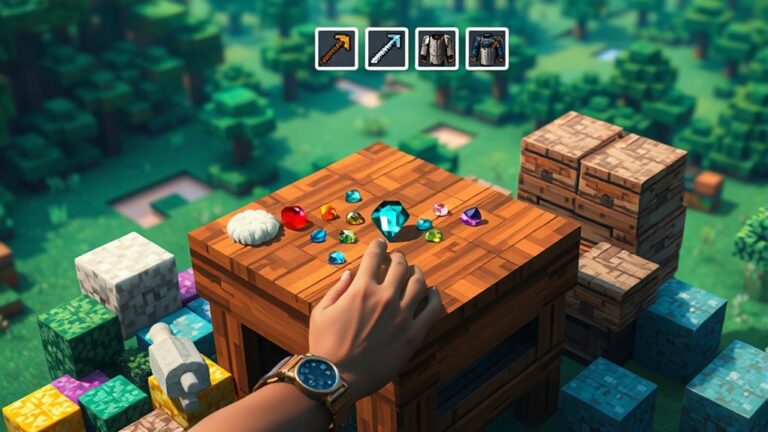
To craft a composter in Minecraft, you’ll need seven wooden slabs, which you can make from any type of wood.
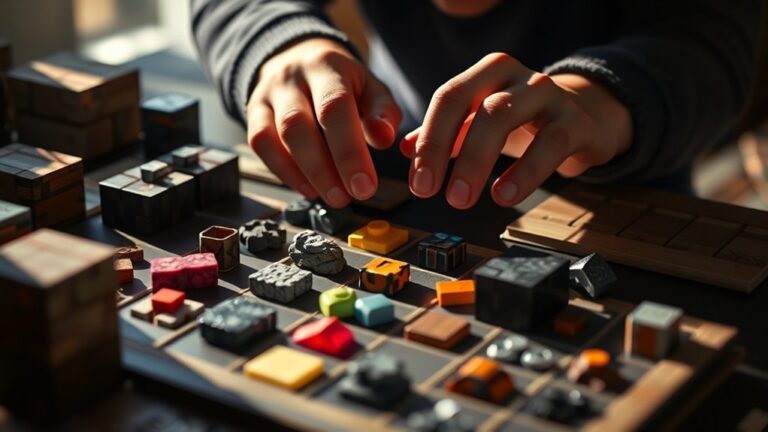
Open your crafting table and arrange the slabs in a U-shape: three on top, two on the sides of the middle, and two on the sides of the bottom row.
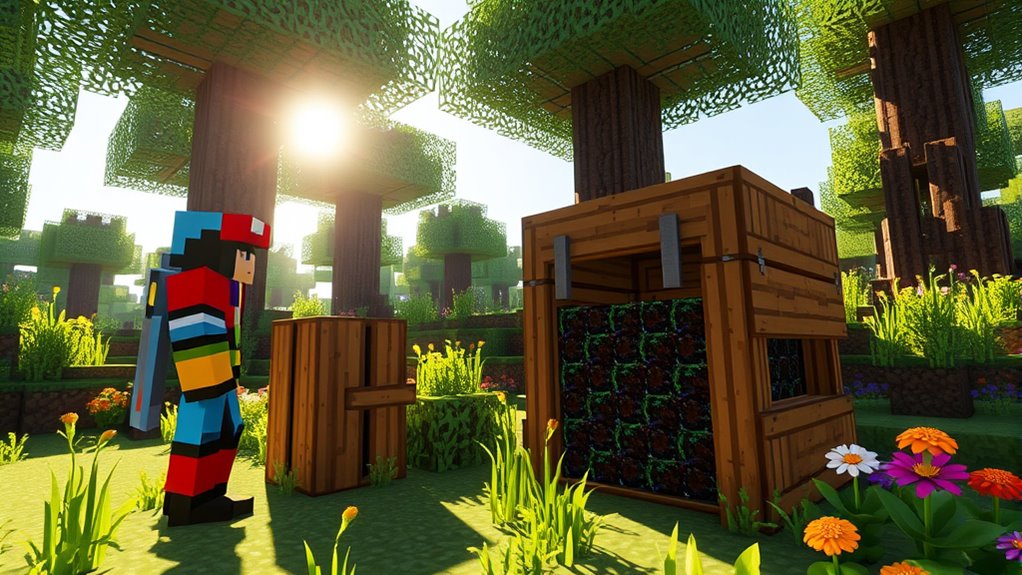
Once it’s crafted, place it in an accessible location and start adding organic materials.
This simple process boosts your farming efficiency and improves your gameplay in exciting ways. Keep going to uncover more tips!
Key Takeaways
- Gather seven wooden slabs from any wood type, or use cobblestone or stone as alternatives for crafting.
- Open the crafting table and arrange the slabs in a U-shape: three on top, two on the sides of the middle row, and two on the sides of the bottom row.
- Place the crafted composter in a convenient location for easy access and efficient composting.
- Add organic materials like food scraps, leaves, and grass to the composter for faster decomposition.
- Harvest bone meal by right-clicking the full composter to enhance your farming efforts.
Why You Should Craft a Composter in Minecraft
Crafting a composter in Minecraft can greatly enrich your gameplay experience.
Not only does it enhance your resource management, but it also brings environmental benefits to your virtual world.
Enhancing resource management while contributing to a vibrant virtual ecosystem makes composting a valuable practice in Minecraft.
When you compost, you recycle organic materials like food scraps and plant matter, turning waste into valuable resources.
This process helps you create bone meal, a powerful fertilizer that boosts crop growth.
With bone meal, your farms become more productive and efficient.
What Materials Do You Need for a Composter?
To craft a composter in Minecraft, you’ll need some essential materials. It’s pretty straightforward, but knowing which organic items work best can really make a difference. Plus, there are alternative resources you can explore to get started.
Essential Materials Overview
Creating a composter in Minecraft requires just a handful of essential materials that are easy to gather. You’ll need seven wooden slabs, which can be crafted from any type of wood you find in the game.
These slabs are vital for building your composter, as they form its structure. Remember, using different wood types won’t affect the composter’s functionality, so feel free to mix and match.
Once you’ve collected your materials, you can enjoy the composting benefits, like turning organic waste into valuable bone meal. Keep these crafting tips in mind to guarantee a smooth building process. You’ll be one step closer to enhancing your farming experience in Minecraft!
Organic Items To Use
While you’ve built your composter, knowing which organic items to use is essential for maximizing its efficiency. To get the most out of composting, focus on materials like food scraps, leaves, and grass clippings.
Fruits and vegetables, such as apples and carrots, break down quickly, providing great composting benefits. Avoid using dairy or meat, as these can attract unwanted pests.
Mixing dry materials like straw with wet items improves organic efficiency, promoting faster decomposition. Eggshells are also beneficial, adding calcium to your soil.
Alternative Crafting Resources
Crafting a composter requires specific materials that are easy to gather in your Minecraft world. You’ll need seven wooden slabs, which can come from any type of wood.
To create these slabs, simply use alternative crafting techniques, like placing three wooden planks in a crafting grid. If you’re looking for unique resource combinations, consider using cobblestone or stone instead.
Although it won’t yield a composter, it can help you experiment with other crafting recipes. Moreover, you might find it useful to collect leaves or grass blocks nearby, as they contribute to your overall composting efforts.
Step-by-Step: Crafting Your Composter
To make a composter in Minecraft, you’ll need just seven wooden planks of any type. Open your crafting table and place the planks in a U-shape: three along the top row, two on the sides of the middle row, and two on the sides of the bottom row.
This arrangement activates the composter mechanics, allowing you to create a useful item for your farming adventures. Once crafted, you can use the composter to turn organic materials into bone meal, a fantastic resource for speeding up plant growth.
Crafting a composter lets you transform organic waste into bone meal, enhancing your farming efficiency and plant growth.
The composting benefits are plentiful. Not only do you recycle waste, but you also improve your farming efficiency. Plus, it keeps your inventory tidy by reducing excess materials.
After placing your composter in a convenient spot, you’re ready to start composting and enjoying the fruits of your labor!
Gathering Organic Materials for Composting
With your composter ready, the next step is gathering organic materials to fill it. You’ll want to collect various types of organic waste, such as leaves, grass clippings, and food scraps.
These materials break down nicely and provide essential nutrients for your Minecraft garden. Look for fallen leaves around trees or gather excess crops from your farms.
Even the bones of defeated skeletons can be turned into bone meal later, enhancing your compost benefits.
Remember, not all waste is suitable. Avoid adding items like cooked food or animal products.
How to Place and Use Your Composter
When you’re ready to dive into composting, the first step is to find just the right spot for your composter. You want to make sure it’s in a location that maximizes efficiency. Think about sunlight, drainage, and accessibility—it makes a difference!
As you start adding organic materials, do so strategically. This little trick can really speed up the process and get things cooking! And once your composter is full, you’re in for a treat. Harvesting bone meal is not just satisfying; it’s also an exciting way to boost your gardening game! Happy composting!
Ideal Location For Composter
Finding the ideal location for your composter can make all the difference in your Minecraft experience.
Consider placing it close to your farm or garden. This not only boosts composter efficiency but also improves its aesthetics.
An area with plenty of sunlight helps speed up the composting process. So, avoid shaded spots from trees or buildings.
Furthermore, situating your composter near other farming tools and resources streamlines your gameplay. You might also want to keep it away from high-traffic areas to prevent accidental spills.
Adding Materials Effectively
To maximize your composter’s efficiency, you need to know how to add materials effectively. Start by employing smart composting strategies. Mix various organic materials to achieve the ideal material ratios.
For instance, combine plant matter like leaves, grass, and crops with more nitrogen-rich items like food scraps or compostable flowers. This balance accelerates decomposition.
Keep in mind that some items, like saplings and mushrooms, break down quicker than others. Avoid overloading your composter with too many of one type. Diverse inputs improve the composting process.
As you add materials, monitor the composter’s progress to gauge how well your strategies are working. Fine-tuning your approach will lead to more efficient compost production. This will help you create that precious bone meal down the line.
Harvesting Bone Meal
Place your composter strategically in your Minecraft world to maximize its utility. Once you’ve added organic materials, you can start harvesting bone meal. This valuable resource improves your farming efficiency, giving you a robust advantage in growth.
To effectively use your composter and reap bone meal benefits, follow these composting strategies:
| Organic Material | Composting Time | Bone Meal Yield |
|---|---|---|
| Leaves | Fast | 1-2 |
| Seeds | Moderate | 1 |
| Rotten Flesh | Slow | 1-2 |
After the composting process, simply right-click on the composter to collect your bone meal. Each batch can greatly boost your crop production, helping you become a more successful Minecraft farmer!
What Organic Materials Can You Compost?
Composting in Minecraft is a great way to recycle organic materials and create valuable fertilizer for your plants. You can compost a variety of items, including food scraps like apples, carrots, and melons, as well as leaves, grass, and flowers.
These organic materials not only reduce waste but also provide significant compost benefits. They turn your excess into something useful.
Understanding the composting mechanics is essential. When you place these items in a composter, they have varying chances of increasing the compost level.
For instance, a cake gives a high chance, while a single seed offers less. Once the composter fills up, you can convert it into bone meal, which is perfect for speeding up plant growth.
Efficient Bone Meal Usage: Tips and Techniques
While you might think bone meal is just a quick fix for growing crops, using it efficiently can maximize your farming efforts. To improve your bone meal efficiency, consider these composting strategies:
| Crop Type | Bone Meal Use | Tips |
|---|---|---|
| Wheat | 1-3 per growth | Use on fully grown plants |
| Carrots | 1-2 per growth | Apply when soil is tilled |
| Trees | 3-5 for saplings | Bone meal accelerates growth |
Focus on using bone meal when your crops are ready for harvest. This way, you save resources and guarantee a bountiful yield.
Avoid These Common Composting Mistakes
Even seasoned players can make mistakes regarding composting in Minecraft, which can hinder their farming efficiency.
One common error is believing composting only works with certain items. In reality, many organic materials, like leaves and food scraps, can break down effectively.
Don’t fall for composting myths that limit your options.
Another mistake is neglecting to monitor your composter’s fill levels. If you overload it, you’ll decrease its efficiency and miss out on those valuable composting benefits.
Remember, balancing your inputs is key to maximizing output.
Finally, some players forget to use bone meal wisely after composting. This powerful fertilizer can greatly improve your crop yields, so make sure you’re putting it to good use.
Maintaining Your Composter for Optimal Performance
To keep your composter running smoothly, it’s important to regularly add ingredients. This helps maintain a steady flow of materials, which is super important for the process.
You’ll also want to keep an eye on the moisture levels. It’s a bit of a balancing act—too dry, and your compost won’t break down; too soggy, and it can get smelly.
And don’t forget to check the quality of your compost every now and then! Making sure it’s breaking down properly means you’re on the right track. Happy composting!
Regular Ingredient Addition
Maintaining your composter in Minecraft requires regular ingredient addition to guarantee it operates efficiently. To maximize your composting strategies, focus on using a variety of regular ingredient types.
Here are some great options to keep your composter active:
- Vegetable scraps like carrots and potatoes
- Leaves from trees or bushes
- Flowers for a colorful boost
- Fruits such as apples or melons
Monitor Moisture Levels
Regular ingredient addition keeps your composter running smoothly. But monitoring moisture levels is just as important for peak performance.
Achieving a proper moisture balance guarantees that your composting benefits are maximized. If your composter’s too dry, the breakdown process slows down. Excess moisture can lead to a smelly mess.
To maintain that balance, check your composter regularly. If it feels dry, add some water or moist ingredients like grass clippings or fruit scraps. On the flip side, if it’s too wet, mix in dry materials such as leaves or straw.
Check Compost Quality
While you’re keeping an eye on moisture levels, it’s just as essential to check the quality of your compost. Quality compost maximizes benefits and improves your farming efficiency. Here are some quick tips to maintain peak compost quality:
Check the color: Dark, rich soil indicates good decomposition.
Smell it: A fresh, earthy scent means it’s healthy; a foul odor signals problems.
Texture matters: Crumbly and well-mixed compost shows a successful process.
Monitor temperature: Warm compost indicates active decomposition, while cold may need more materials.
How Does Composting Enhance Your Minecraft Gameplay?
Composting in Minecraft not only provides a sustainable way to manage waste but also enhances your gameplay experience by introducing new strategies for resource management. By turning organic materials into bone meal, you boost your farming efficiency and create a loop of sustainability that benefits your in-game environment.
| Gameplay Benefits | Sustainability Strategies |
|---|---|
| Boosts crop growth speed | Reduces waste accumulation |
| Provides a renewable resource | Encourages eco-friendly practices |
| Increases inventory space | Supports long-term farming goals |
Utilizing composting allows you to make the most of your resources while contributing to the overall health of your world. As you master these sustainability strategies, you’ll find that your gameplay benefits extend beyond mere survival. It enriches your creative and strategic endeavors in Minecraft.
Frequently Asked Questions
Can I Use a Composter in Multiplayer Mode?
Yes, you can use a composter in multiplayer mode! It’s a great way to improve your multiplayer strategies.
By composting organic materials, you’ll generate bone meal, which can help everyone grow crops faster. You might even collaborate with friends to gather materials, making the process more efficient.
Plus, sharing composting tips can strengthen your team’s farming skills. Enjoy the benefits of composting while having fun with your fellow players!
Does Rain Affect My Composter’s Efficiency?
Yes, rain does benefit your composter’s efficiency. When it rains, the composter fills up faster due to increased moisture, enhancing composter mechanics.
You’ll notice that adding organic materials during rainy weather can lead to quicker composting. So, if you see rain in the game, take advantage of it!
Just keep feeding your composter, and you’ll see those materials turn into bone meal in no time.
What Happens if I Use Non-Organic Materials?
Using non-organic materials in your composter? You might as well toss in a metal spoon and call it a gourmet meal!
Seriously, it won’t work. Composting benefits come from breaking down organic waste, not plastic wrappers or glass bottles.
If you throw in those non-organic items, you’ll just end up with a sad, empty composter.
Stick to food scraps and plant matter, and watch your compost thrive!
How Long Does Composting Take in Minecraft?
Composting in Minecraft takes about 30 seconds to a minute, depending on the materials you use.
To boost your composting mechanics, try using high-value organic items like melons or pumpkins. They increase efficiency, so remember, the more valuable the material, the faster it breaks down.
Keep an eye on your composter, and don’t forget to check back frequently for that precious bone meal! Happy composting!
Can I Move My Composter Once Placed?
Yes, you can move your composter once it’s placed. Just break it with your tool, and it’ll drop as an item, allowing you to store it in your inventory.
Keep in mind that moving your composter won’t affect its contents; those will be lost. When you’re ready, find a new spot for your composter placement, and you can easily set it down again wherever you like.
Happy composting!
Conclusion
Crafting a composter in Minecraft isn’t just a handy trick; it’s like opening a treasure chest of possibilities! With the right materials and a bit of patience, you can transform organic waste into valuable bone meal that boosts your farming game.
By following these tips and avoiding common mistakes, you’ll keep your composter running smoothly. So plunge into it and watch your Minecraft world flourish. Your crops will thank you for this green-thumbed adventure with a composter!