What Are the Big Dimensions of a Baby Quilt?
Finding the right baby quilt size can be surprisingly tricky. Many parents and caregivers worry about whether their quilt will actually fit the crib or provide enough room for playtime, and you’re not alone if you feel overwhelmed by all the options out there.
The good news? Many people struggle with this, and there are clear guidelines to help you choose the perfect quilt for your little one.
When you’re looking for big dimensions for a baby quilt, expect common sizes like 40 by 60 inches for playtime and 36 by 52 inches for crib quilts. These measurements offer a cozy fit while ensuring safety and comfort for your little one.
If you want something snugger, consider quilts around 36 by 46 inches. Customizing sizes is also an option to fit your nursery decor.
There’s more to learn about selecting and caring for baby quilts as you investigate further.
Key Takeaways
- The standard crib quilt measures approximately 36 by 52 inches, ideal for cribs and bassinets.
- Larger playtime quilts can range from 40 by 60 inches. This size provides ample space for activities.
- A snug fit for smaller quilts is around 36 by 46 inches, making them suitable for cozy environments.
- Stroller quilts typically vary from 30 by 36 inches to 40 by 50 inches. This ensures comfort on the go.
- Custom dimensions can be tailored to match nursery decor and specific uses, which really enhances versatility.
What Size Baby Quilt Do You Need?
What size baby quilt do you actually need?
It depends on how you plan to use it.
For a crib, a quilt around 36 by 48 inches is common.
But you can also find various baby quilt styles to suit your needs.
If you want something a bit larger for playtime or snuggling,
consider a size like 40 by 60 inches.
When choosing a quilt, think about the quilt pattern ideas that appeal to you.
Whether you prefer playful animals or classic geometric designs,
Explore delightful patterns that resonate with you, from whimsical animals to timeless geometric designs.
the right pattern can improve your nursery decor.
Always remember, a baby quilt should be cozy yet practical,
making it versatile for multiple uses.
You want something that keeps your little one warm
but is also easy to wash.
So, take your time exploring styles and sizes
to find the perfect fit for your baby’s needs.
Ideal Dimensions for Crib Quilts
When you’re picking out a crib quilt, it helps to know the typical sizes that work best for most cribs. Usually, sticking with standard dimensions makes things simple, but if you want something unique, you can always look into custom options to match your nursery’s style.
At the same time, safety is super important. You’ll want to make sure the quilt fits well so your little one can stay comfortable and secure all night long.
Standard Crib Quilt Size
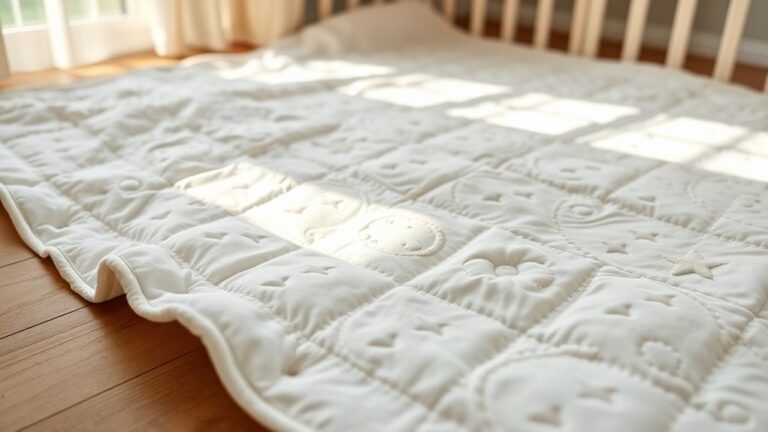
A standard crib quilt typically measures around 36 by 52 inches, making it the perfect size for your little one’s crib.
This dimension not only fits snugly but also provides ample coverage.
When choosing a crib quilt, you’ll want to reflect on various crib quilt patterns and color choices that match your nursery decor.
- Soft, breathable fabrics guarantee comfort.
- Playful patterns stimulate your baby’s imagination.
- Gentle colors create a calming environment.
- Versatile designs can grow with your child.
With the right crib quilt, you’ll add a personal touch to your nursery while making certain your baby stays cozy and warm.
Enjoy the process of selecting a quilt that reflects your style and your baby’s personality!
Custom Quilt Dimensions Options
If you’re looking for something unique, custom quilt dimensions provide flexibility to fit your specific needs.
You can create a crib quilt that perfectly complements your nursery decor with a custom design tailored just for you.
Consider the ideal size for your crib, typically ranging from 36 by 52 inches, but you can adjust based on your preferences.
With a variety of fabric choices, you can mix and match to reflect your style. Choose soft, breathable materials for comfort and easy maintenance.
Whether you want a larger quilt for versatility or a smaller one for a cozy feel, customizing dimensions guarantees your quilt is not only beautiful but also functional for your baby’s needs.
Safety Considerations for Size
Choosing the right dimensions for crib quilts is vital for guaranteeing your baby’s safety and comfort. Overly large quilts can pose risks, so it’s important to keep size in mind.
Adhering to safety standards is critical for creating a secure sleeping environment. Here are some key considerations for baby quilt measurements:
- Size: Aim for dimensions around 36″ x 46″ to fit snugly without excess fabric.
- Weight: Opt for lightweight materials to avoid overheating and guarantee breathability.
- Design: Select simple patterns without small parts that could pose choking hazards.
- Washability: Choose fabrics that are easy to clean, guaranteeing hygiene and safety.
Best Sizes for Stroller Quilts
When you’re picking out a stroller quilt, it’s helpful to know what size works best for both comfort and coverage. Most parents find that a quilt measuring somewhere between 30 and 40 inches is just right. This size is big enough to keep your little one cozy, but not so large that it bunches up or gets in the way.
It’s also a good idea to think about the fabric weight when choosing a stroller quilt. If you’ll be out and about during warmer days, a lighter material will help keep things comfortable. On the other hand, for those chilly outings, you might want to go with something a bit heavier to provide extra warmth. This way, your stroller quilt will be just right no matter the weather.
Ideal Dimensions For Stroller Quilts
While stroller quilts can vary in size, the ideal dimensions typically range from 30 by 36 inches to 40 by 50 inches. Choosing the right size guarantees that your little one stays cozy while providing enough room for movement.
Here are some things to reflect on when selecting your stroller quilt:
- Stroller quilt patterns that complement your style.
- Stroller quilt materials that are soft and durable for comfort.
- A size that easily fits into your stroller without excess bulk.
- The ability to double as a play mat when out and about.
These dimensions not only make it practical, but also allow for versatility in use. Happy quilting!
Consider Fabric Weight Options
As you consider fabric weight options for your stroller quilt, it’s vital to strike a balance between warmth and breathability.
Lightweight fabrics, like cotton, offer excellent breathability, making them ideal for warmer days. However, if you want more insulation, consider medium-weight options like flannel, which also provides fabric durability.
When selecting your materials, think about your color choices too. Bright, cheerful colors can boost the quilt’s appeal, while darker shades might hide stains better.
Always keep in mind that the right fabric weight can improve comfort and usability, ensuring your stroller quilt remains a cozy companion for your little one in various weather conditions.
Prioritize both functionality and aesthetics for the best outcome.
Playtime Quilt Dimensions for Infants
Creating the perfect playtime quilt for infants involves understanding the ideal dimensions to guarantee comfort and safety.
Typically, a playtime quilt should measure around 40 x 40 inches. This provides ample space for your little one to investigate.
This size allows for movement while being manageable for both you and your baby.
Consider these elements when designing your quilt:
- Soft, breathable fabric to keep your baby comfortable during playtime.
- Playtime patterns that engage your infant’s attention and stimulate visual investigation.
- Sensory textures to encourage tactile engagement, fostering developmental skills.
- Lightweight filling that offers cushioning without overheating.
How to Customize Your Baby Quilt Size
When designing a baby quilt, it’s important to contemplate how to customize the size to fit your needs and preferences.
Start by considering the specific use for the quilt, like if it’s for the crib, playtime, or travel. This will help guide your quilt size customization.
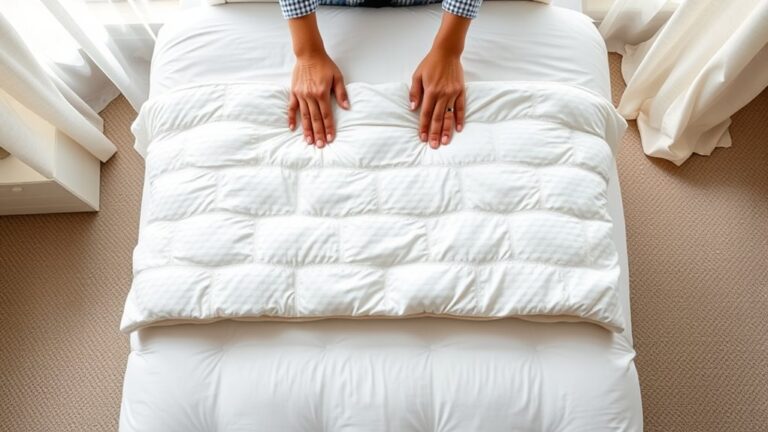
Next, use measuring techniques to guarantee accuracy. Measure the area where you plan to use the quilt, and add a few extra inches for comfort and coverage.
For a crib quilt, a standard size is about 36×52 inches. Of course, you can always adjust this based on your needs.
Don’t forget to think about how the quilt will be used as your baby grows. You might want a larger size for versatility.
Whatever dimensions you choose, make sure they’re practical and fit your lifestyle. Customizing your baby quilt size lets you create something truly unique and functional for your little one.
Best Fabrics for Different Baby Quilt Sizes
When you’re choosing fabrics for your baby quilt, cotton really stands out as a great option because it’s soft and lets air flow through easily. It’s important for little ones to be comfortable, after all!
Now, besides the fabric you use on the outside, you’ll also want to think about batting—the material that goes inside the quilt. Picking the right batting can help keep your quilt warm and cozy, but not so heavy that it feels bulky or stiff.
All in all, both your fabric and batting choices work together to make sure your baby quilt is comfy, long-lasting, and just right for snuggling.
Cotton Fabric Benefits
Cotton fabric stands out as an ideal choice for baby quilts, thanks to its softness and breathability.
You’ll appreciate how it combines comfort with durability, making it perfect for little ones.
Here are some key benefits:
- Softness: Gentle against delicate skin, ensuring comfort during naps.
- Breathability: Promotes airflow, helping to regulate your baby’s temperature.
- Durability: Cotton withstands regular washing, maintaining its quality over time.
- Hypoallergenic: Reduces the risk of allergic reactions, providing peace of mind.
Choosing Batting Materials
Choosing the right batting material is essential for creating a cozy and functional baby quilt. Different batting types can greatly affect your quilt’s warmth and overall feel.
For a lightweight option, consider cotton or bamboo batting. They provide breathability and softness, perfect for warmer climates.
If you want extra warmth, polyester batting is a great choice. It’s lightweight yet insulating and ideal for cooler weather.
For a balanced approach, try a blend of cotton and polyester. This gives you the softness of cotton combined with the durability of polyester.
Always check the batting’s loft and density to verify it meets your quilt’s size and intended use. With the right batting, your baby quilt will be both comforting and practical.
Why Quilt Weight and Thickness Matter for Your Baby
Understanding quilt weight and thickness is essential for your baby’s comfort and safety. These factors can greatly impact how well your little one sleeps.
The right combination guarantees ideal quilt insulation while maintaining fabric breathability. This helps keep your baby cozy without risking overheating.
Consider these key points:
- Warmth: A thicker quilt provides better insulation for cooler nights.
- Breathability: Lightweight fabrics allow for airflow, reducing the risk of overheating.
- Weight: A balanced weight guarantees your baby feels secure without being weighed down.
- Versatility: Choosing the right thickness means your quilt can adapt to different seasons.
Common Mistakes When Measuring Baby Quilts
Measuring baby quilts can be tricky, especially if you overlook some common pitfalls. One major mistake is not using consistent measuring techniques. Always measure from the same point, like a corner, to guarantee accuracy.
Also, don’t forget about fabric allowances. You’ll need to account for seams and hems in your final measurements.
Another common error is assuming that all fabric is the same width. Different materials can vary, so check each fabric type before cutting.
Assuming all fabric is the same width can lead to costly mistakes; always verify each type before cutting.
It’s also easy to miscalculate the dimensions if you’re in a rush. Take your time and double-check your numbers to avoid frustration later.
Lastly, don’t neglect to measure the batting if you’re planning to include it in your quilt. By being mindful of these common mistakes, you’ll create a perfectly sized baby quilt that’s both functional and beautiful.
Caring for Your Baby Quilt
After ensuring your baby quilt is the right size, caring for it properly is key to maintaining its beauty and functionality. Here are some quilt maintenance tips to keep your quilt looking fresh:
Follow washing instructions:
Always check the care label for specific washing guidelines. This will help you avoid any accidental damage.
Use gentle detergents:
Opt for mild, baby-safe detergents to protect the fabric and colors. Harsh chemicals can wear out the quilt over time.
Air dry when possible:
Instead of using a dryer, hang your quilt to air dry. This helps preserve its shape and softness.
Store properly:
When not in use, keep your quilt in a cool, dry place. Ideally, wrap it in cotton to prevent dust accumulation.
How to Transform Baby Quilts Into Cherished Keepsakes
While baby quilts are often loved for their cozy functionality, they can also be transformed into cherished keepsakes that capture precious memories.
To start, consider framing a section of the quilt, showcasing the fabric patterns or embroidery. This not only preserves the memory but also adds a touch of decor to your home.
Consider framing a section of the quilt to showcase its beautiful patterns, preserving memories while enhancing your home decor.
You can also create a memory book, pairing photos of your baby with snippets of the quilt’s fabric. This increases its sentimental value, allowing you to relive those early moments.
Another idea is to turn small squares of the quilt into decorative pillows, giving you a cozy reminder of those cherished years.
If you’re feeling creative, consider repurposing the quilt into a wall hanging or a soft toy. Each transformation serves as a lasting tribute, ensuring memory preservation while keeping the spirit of the quilt alive for years to come.
Frequently Asked Questions
Can I Use a Baby Quilt for Toddlers?
Yes, you can use a baby quilt for toddlers. While baby quilts are smaller, they can still provide comfort for your little one as they shift to a toddler bed.
Just keep in mind that the quilt size should fit the bed properly, ensuring it covers the mattress without being too small.
A cozy quilt can improve toddler comfort, making bedtime feel safe and inviting for your growing child.
What Patterns Are Best for Baby Quilts?
Modern designs with bold colors and geometric shapes add a fun touch to baby quilts, making them visually appealing.
On the other hand, traditional motifs like nursery rhymes or animals bring a classic charm that never goes out of style.
You can even mix and match these styles to create a unique quilt that reflects your taste.
Just remember to choose materials that are soft and safe for your little one!
How Do I Choose Colors for a Baby Quilt?
To choose colors for a baby quilt, start by considering soothing color schemes that create a calm environment.
Think pastels or soft primary colors.
You can mix fabric combinations like floral prints with solid colors to add interest.
Don’t be afraid to use a pop of brighter color for a playful touch.
Always keep the baby’s room decor in mind, ensuring your color choices complement the overall theme.
Happy quilting!
Are There Safety Concerns With Baby Quilts?
When you’re thinking about baby quilt safety, it’s wise to reflect on potential crib hazards. Soft quilts can pose risks like suffocation or overheating, so it’s better to keep them out of the crib for infants under one year.
Instead, use them for cuddling or decoration. Always verify the quilt isn’t too bulky or heavy.
How Long Does It Take to Make a Baby Quilt?
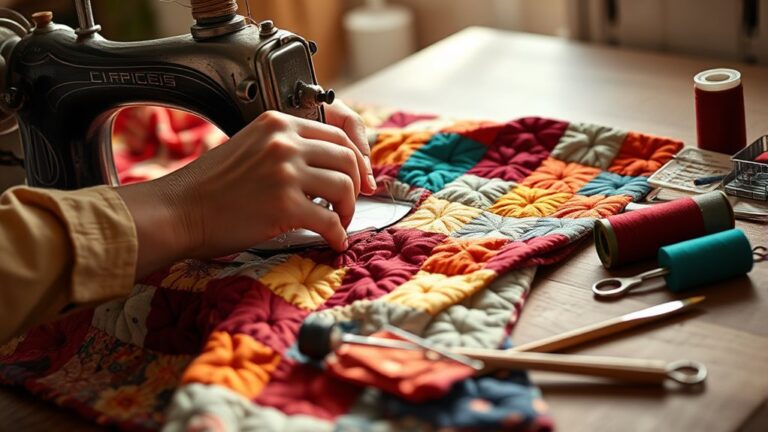
It usually takes you about 10 to 20 hours to make a baby quilt, depending on your fabric choices and quilting techniques.
If you’re a beginner, it might take a bit longer as you get familiar with the process.
Choosing the right fabrics can inspire creativity and help make your project more enjoyable.
Mastering techniques like patchwork or hand quilting will improve your skills over time.
Enjoy the journey. Each quilt is a unique treasure that reflects your effort!
Conclusion
In the world of baby quilts, the right size can wrap your little one in comfort and love.
Whether you’re crafting a crib quilt or a stroller blanket, each dimension holds a purpose, like a gentle hug.
Remember to customize and consider weight for warmth.
With a bit of care, your quilt can transform from a cozy accessory into a cherished keepsake.
It’s amazing how something as simple as the big dimensions of a baby quilt can help weave memories that last a lifetime.
So, immerse yourself and create something special for your baby, starting with the perfect size!