How Do You Start Hand Quilting?
If you’ve ever admired a beautiful, hand-stitched quilt but felt overwhelmed at where to begin, you’re not alone. Many people struggle with knowing how to start hand quilting, wishing for guidance and confidence as they take their first stitches.
To start hand quilting, gather your essential tools like needles, thread, and cutting instruments. Choose fabric that suits your style, preferably cotton for ease.
Prepare your quilt sandwich by layering backing, batting, and quilt top, pinning to keep everything in place.
Master foundational stitches like the running stitch for even results. Don’t forget to hide knots neatly and troubleshoot common issues.
There’s so much more to discover in mastering this art!
Key Takeaways
- Gather essential tools like needles, thread, cutting tools, quilting hoops, and sewing frames. These basics will help you get started on your hand quilting project.
- Choose fabrics and batting wisely. Consider using cotton for breathability, and select the right density to achieve your desired loft and appearance.
- Prepare your quilt sandwich by layering the backing fabric, batting, and quilt top. Make sure everything is aligned, then secure the layers with pins or basting.
- Practice foundational stitches such as the running stitch and backstitch. This helps you build confidence and create even, consistent stitches throughout your quilt.
- Care for your finished quilt by washing it gently and drying it carefully. Store your quilt in a cool, dry place to help maintain its quality over time.
Understanding Hand Quilting: Benefits and Unique Features
When you plunge into hand quilting, you’ll uncover a craft that not only offers a creative outlet but also fosters a deeper connection to your work.
The rich hand quilting history reveals how artisans have passed down techniques through generations, transforming fabric into cherished pieces of art.
You’ll find that each stitch tells a story, connecting you to the past while allowing your unique voice to shine through.
Each stitch weaves a narrative, linking you to tradition while showcasing your individual creativity.
As you delve into this craft, you’ll draw creative inspirations from various sources, like nature, culture, or even personal experiences.
Hand quilting encourages you to slow down and appreciate the process, enhancing mindfulness and focus.
You’ll appreciate the tactile nature of fabric and thread, making each project a sensory experience.
Plus, the intimacy of hand quilting can lead to a sense of accomplishment and pride as you complete each piece, knowing it’s crafted with care and dedication.
Essential Tools for Hand Quilting
Getting started with hand quilting is much easier when you have the right tools on hand. First off, picking the right needles and thread really makes a difference in how smoothly your stitches come together. You’ll also want to have some reliable cutting tools, since neat, accurate cuts help everything fit perfectly.
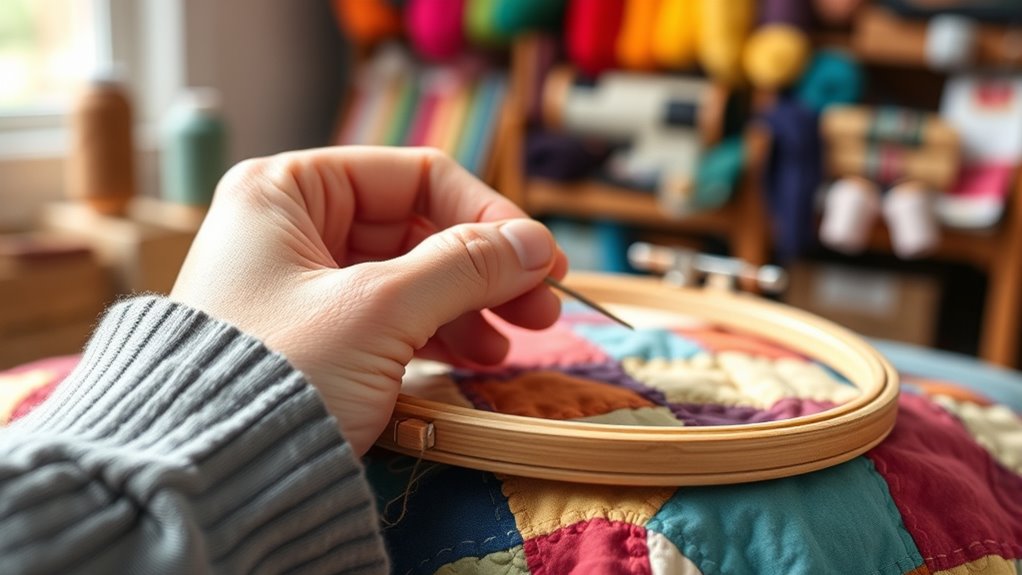
And don’t forget about quilting hoops or frames—they’re super helpful for keeping your fabric taut while you work. With these essentials, your quilting experience will be a lot more enjoyable and you’ll get better results, too.
Needles and Thread Choices
Selecting the right needles and thread is essential for successful hand quilting.
You’ll want to choose wisely to guarantee smooth stitching and a beautiful finish.
Here are some key considerations:
1. Needle Types: Use quilting needles, as they have a tapered point that easily penetrates multiple layers of fabric.
2. Thread Weights: Opt for 40-weight thread for a balance between strength and ease of use.
Thicker threads can create bulk, while thinner ones may not provide enough durability.
3. Thread Material: Cotton thread is popular for its strength and matte finish.
However, polyester blends offer durability and less lint.
Quilting Hoops and Frames
Having the right needles and thread sets the stage for your hand quilting, but tools like quilting hoops and frames play an essential role in the process.
Choosing the right quilting hoop types can greatly improve your comfort and efficiency. While hoops keep your fabric taut, frames provide additional support for larger projects.
Here’s a quick comparison:
| Tool Type | Advantages | Best For |
|---|---|---|
| Quilting Hoop | Lightweight, portable | Small to medium projects |
| Sewing Frame | Sturdy, holds larger quilts | Large or complex designs |
| Adjustable Frame | Customizable tension | Various fabric thicknesses |
Selecting the right tool can make your quilting experience enjoyable and productive, so consider your project size and style before diving in!
Essential Cutting Tools
Cutting tools are essential for achieving precision and accuracy in hand quilting. With the right tools, you’ll streamline your process and guarantee clean edges.
Here are three must-have cutting tools:
- Rotary Cutters: These are perfect for slicing through multiple layers of fabric quickly and accurately.
- Cutting Mats: A self-healing cutting mat protects your surfaces and extends the life of your rotary cutter.
- Fabric Scissors: Invest in a good pair of fabric scissors for detailed cuts and trimming.
Don’t forget to use marking tools, safety rulers, and cutting templates to help you create precise patterns and designs.
With these essential cutting tools, you’ll set yourself up for quilting success.
Choosing the Right Fabric for Your Quilt
Picking out fabric for your quilt is a big part of getting the look and feel you’re after. There are a lot of fabric types out there, so you’ll want to think about what works best for your project. And, of course, color and pattern can totally change the mood of your quilt, so it’s worth spending some time playing with different options. Let’s talk through some ways you can make your fabric choices really work for you.
Fabric Types Overview
Selecting the right fabric for your quilt can make all the difference in both appearance and durability.
Understanding fabric types is essential, especially focusing on fabric weight considerations and fabric blend types.
Here are three key points to keep in mind:
1. Cotton: This is the most popular choice for quilts due to its breathability and ease of handling.
It comes in various weights, so select one that suits your project.
2. Polyester Blends: These fabrics are durable and resist wrinkles, making them great for everyday quilts.
The blend can add strength while maintaining softness.
3. Wool: If you want warmth, wool is an excellent option.
It has a heavier weight and adds a unique texture to your quilt.
Choose wisely, and your quilt will shine!
Color and Pattern Selection
With the right fabric types in hand, you’ll want to focus on the colors and patterns that will bring your quilt to life.
Start by exploring color theory. Understanding how colors interact can help you create visual interest and emotion.
Choose a dominant color to set the tone. Then select complementary and analogous shades to improve harmony.
Next, consider pattern harmony. Mixing patterns can add depth, but aim for balance, since too many busy designs can overwhelm.
Start with a few key fabrics and build from there, making sure they work well together.
Don’t shy away from experimenting. Sometimes the best combinations arise from unexpected choices.
Ultimately, trust your instincts to create a quilt that reflects your unique style!
Selecting the Best Batting for Your Quilt
In regard to batting for your quilt, finding the right material can make all the difference in your project’s final look and feel.
You’ll want to take into account various batting types and their density to achieve the desired outcome. Here are three key factors to keep in mind:
- Material: Choose from cotton, polyester, or wool. Each offers unique qualities, like breathability or warmth.
- Batting Density: Thicker batting provides more loft, creating a puffy look. Thinner options give a flatter finish, so consider the style you want!
- Loft: Decide on high, medium, or low loft. High loft is ideal for a quilt that stands out, while low loft is better for a sleek, modern appearance.
How to Prepare Your Quilt Sandwich
Preparing your quilt sandwich is an essential step in the hand quilting process. Start by laying out your backing fabric, right side down, on a clean, flat surface.
Smooth out any wrinkles, then place your batting on top. Make sure the batting is slightly larger than your quilt top for effective coverage.
Next, lay your quilt top on the batting, right side up, aligning all edges. For effective fabric layering techniques, pin or baste the layers together at regular intervals to prevent shifting while you quilt.
Use safety pins or large stitches for basting, ensuring they’re easy to remove later. Remember these quilt preparation tips: always check for any puckers or uneven areas before you begin quilting, as they can affect your final design.
Once everything’s secure and smooth, you’re ready to immerse yourself in the stitching process!
Master Basic Stitches for Hand Quilting
Mastering basic stitches for hand quilting is essential to achieving beautiful, consistent results.
With a few key stitching techniques, you can improve your quilt patterns and create stunning pieces.
Start by practicing these foundational stitches:
1. Running Stitch: This simple stitch is the backbone of hand quilting.
It involves passing the needle in and out of the fabric, creating a straight line of small stitches.
2. Backstitch: Perfect for reinforcing seams, backstitches provide strength and durability.
They’re made by stitching backward, creating a solid line that won’t unravel.
3. Whip Stitch: Use this stitch for joining layers or finishing edges.
It’s a quick, effective way to secure fabric without being too visible.
Focusing on these stitches will build your confidence and skill.
Once you’ve mastered them, you’ll see an improvement in the overall quality of your hand quilting projects.
Techniques for Even Stitches and Proper Tension
Achieving even stitches and proper tension is essential for beautiful hand quilting. To guarantee stitch consistency, start by using a consistent needle size and thread type.
Achieving even stitches and proper tension is crucial for beautiful hand quilting; consistent needle size and thread type ensure stitch uniformity.
This helps maintain uniformity in your stitches, making your quilt look professional. As you quilt, keep your fabric taut but not overly stretched. This balance allows for better control over your stitches.
When you notice inconsistencies, don’t hesitate to make tension adjustments. If your stitches are too loose, tighten your grip on the fabric. If they’re too tight, relax your hold and allow the thread to flow more freely.
Remember to practice your technique on scrap fabric before starting on your actual quilt. This way, you can refine your skills and find the right balance between tension and stitch length.
Focus on these techniques, and you’ll create beautiful, even stitches that improve your quilting project.
Knotting and Finishing Your Threads
As you finish your quilting project, knowing how to properly knot and secure your threads is essential for a polished look.
Effective thread management guarantees your hard work stays intact and looks professional.
Here’s a simple guide for knot tying and finishing your threads:
1. Create a Knot:
After your last stitch, make a small loop and pass the needle through it, pulling tight to form a secure knot.
2. Hide the Knot:
Insert the needle back into the quilt and pull it through a few layers of fabric to conceal the knot, which keeps it from showing on the front.
3. Trim Excess Thread:
Once you’ve secured the knot, carefully trim any excess thread, leaving just enough to prevent unraveling.
Troubleshooting Common Hand Quilting Issues
When you’re hand quilting, it’s pretty common to run into a few bumps along the way—things like trouble threading your needle or noticing that your stitches look a bit uneven. It can definitely feel frustrating in the moment, but don’t worry! With a few simple tweaks, you’ll be back to quilting smoothly in no time. Let’s chat about some of these typical issues and go over some easy fixes you can try.
Needle Threading Problems
When you’re diving into hand quilting, needle threading issues can really throw a wrench in your progress.
To tackle these problems, consider the following tips:
1. Choose the Right Needle Type: Different needle types, like sharps or embroidery needles, suit various fabrics.
Make certain you’re using the right one for your project.
2. Use Effective Threading Techniques: Try the “double thread” method for added strength or use a needle threader if your eyesight isn’t what it used to be.
3. Keep Thread Tension in Check: Confirm your thread isn’t too thick for the needle’s eye.
If it’s hard to thread, it might be too heavy for the needle type you’re using.
With these strategies, you’ll keep your quilting moving smoothly!
Uneven Stitch Tension
Uneven stitch tension can easily disrupt your hand quilting project, but you can quickly address this issue with a few adjustments.
Start by examining your thread and needle. The wrong combination can lead to inconsistent stitches.
Make necessary tension adjustments on your thread or quilting frame to guarantee it’s not too tight or too loose.
As you quilt, focus on stitch consistency. Aim for even spacing and size.
If you notice one side pulling more than the other, gently adjust your grip.
Practice makes perfect, so don’t hesitate to rip out a few stitches if needed.
With some patience, you’ll achieve the balanced look your quilt deserves, enhancing both its beauty and durability.
Caring for Your Finished Hand Quilted Quilt
Caring for your finished hand quilted quilt is essential to preserve its beauty and longevity.
Proper maintenance guarantees your quilt remains a cherished piece for years to come.
Here are some tips to help you care for it:
1. Washing Techniques:
Always use cold water and a gentle detergent.
Hand wash or use a delicate cycle in your machine to prevent damage.
2. Drying:
Avoid direct sunlight and high heat.
Lay your quilt flat to dry, or use a low heat setting in the dryer.
Check frequently to avoid over-drying.
3. Quilt Storage:
Store your quilt in a cool, dry place.
Use a cotton storage bag or acid-free tissue paper to prevent creasing and protect it from dust.
Frequently Asked Questions
How Long Does It Take to Hand Quilt a Project?
The hand quilting duration varies greatly based on your project complexity. If you’re tackling a simple quilt, it might take a few days to complete.
However, more intricate designs can stretch that time to weeks or even months. You’ll find that the size of the quilt and your stitching speed also play significant roles.
Can I Hand Quilt Without a Sewing Machine?
Absolutely, you can hand quilt without a sewing machine! You’ll just need some essential hand quilting tools, like needles, thread, and a thimble.
Start by selecting your quilting fabric carefully. Choosing quality fabric makes a difference in durability and appearance.
Once you’ve got your tools and fabric ready, you can plunge right into the hand quilting process. Enjoy the rhythm and creativity that comes with hand stitching each piece together!
What Is the Best Thread Type for Hand Quilting?
The best thread type for hand quilting is typically cotton, as it offers durability and great stitch definition.
You’ll also find that polyester blends can work well for added strength.
Pay attention to thread tension; too tight can cause puckering, while too loose can lead to uneven stitches.
Experiment with different thread materials to see what feels best for your project, ensuring a smooth quilting experience.
How Do I Choose a Quilting Pattern?
Choosing a quilting pattern can feel overwhelming, but it’s all about finding your design inspiration. Start by exploring various styles, like traditional, modern, or even abstract.
You might uncover pattern variations that really resonate with you. Consider the fabric and colors you’ll use, since they can influence your choice.
Don’t rush; let your creativity flow. As you sift through options, you’ll find the perfect pattern that sparks joy and excitement in your quilting journey.
Is Hand Quilting Suitable for Beginners?
Yes, hand quilting is suitable for beginners! You’ll find that the hand quilting basics are easy to grasp with a bit of practice.
Start with simple patterns and gather beginner tools like a needle, thread, and thimble. Choose a small project to build your confidence.
As you stitch, you’ll develop a rhythm and enjoy the process. Don’t worry about perfection; focus on having fun and creating something unique!
Conclusion
Now that you’re equipped with the essentials of hand quilting, you can plunge in with confidence.
Imagine creating a cozy quilt for a friend’s wedding, pouring your heart into every stitch. The personal touch of hand quilting not only warms the body but also the soul, making your gift truly unforgettable.
So grab your tools, choose your fabric, and let your creativity flow. There’s a beautiful quilt waiting to be made, and with hand quilting, every project becomes a one-of-a-kind treasure.