Crafting a Trapdoor in Minecraft – Step-by-Step Guide
Unlocking Creativity in Minecraft: Crafting Trapdoors
Are you looking to elevate your Minecraft builds but feeling stuck with basic designs? You’re not alone. Many players struggle to add unique features that make their creations stand out. One fantastic solution is crafting a trapdoor!
To craft a trapdoor in Minecraft, you’ll need either wooden planks or iron ingots, along with a crafting table.
First, convert your wood into planks or smelt iron ore into ingots.
Next, open the crafting table and arrange your materials in two vertical columns on the grid.
Grab your new trapdoor once it appears.
Trapdoors can improve your builds with secret entrances and creative designs.
Stick around to find out more tips and tricks for your Minecraft adventures!
Key Takeaways
- Gather materials: Choose between wooden planks or iron ingots. Make sure you have a crafting table accessible.
- For wooden trapdoors, arrange six wooden planks in two vertical columns on the crafting table.
- For iron trapdoors, place six iron ingots in the same vertical configuration on the crafting table.
- Drag the crafted trapdoor into your inventory once it appears in the result box.
- Use trapdoors creatively for hidden entrances, furniture, or in redstone contraptions to enhance your builds.
What Is a Trapdoor and Why Use One?
A trapdoor is a versatile block in Minecraft that adds both functionality and flair to your builds. You can use trapdoors for a variety of purposes, thanks to their unique mechanics. They can serve as hidden entrances, allowing you to create secret rooms or passages that surprise your friends.
When you place a trapdoor, it opens and closes seamlessly, blending perfectly with your surroundings. Beyond functionality, trapdoors have decorative uses too. They come in various materials, from wood to iron, giving you plenty of options to match your aesthetic.
You can use them as makeshift tables or to create stylish fences and barriers. Their ability to be placed vertically or horizontally allows for creative design choices in your structures. So, whether you’re looking to improve your security or uplift your decor, incorporating trapdoors into your builds is a smart move.
Benefits of Crafting Trapdoors
Crafting trapdoors offers numerous advantages that boost your gameplay experience.
First, trapdoor mechanics provide you with versatile options for creating hidden entrances or clever barriers. You can easily incorporate them into your builds, allowing you to control access to certain areas without sacrificing space.
Additionally, they improve your design aesthetics. With various materials available, you can match trapdoors to your overall theme, whether you’re going for a rustic cabin or a sleek modern base. Their ability to open and close seamlessly lets you create dynamic spaces that feel more alive.
Moreover, trapdoors can be used in various redstone contraptions, adding functionality to your creations. You’ll find that they’re perfect for secret doors or intricate traps, further enriching your gameplay.
Gather the Right Materials to Start
Before you can start making trapdoors, you’ll need to gather a few essential materials. Depending on the trapdoor functionality you want, you’ll either need wooden planks or iron ingots.
For wooden trapdoors, collect any type of wood, like oak or birch, and chop down some trees. If you prefer iron trapdoors, you’ll need to mine iron ore and smelt it into ingots.
Consider your crafting strategies as you gather these items. Remember, wooden trapdoors are easier to craft and can be activated by players. Iron trapdoors, on the other hand, require a Redstone signal to open.
Think about how you want to use your trapdoor—whether for hidden entrances or as a decorative element in your builds. With these materials in hand, you’ll be ready to create a trapdoor that fits your needs perfectly!
Step 1: Crafting Wooden Planks or Iron Ingots
To craft a trapdoor, you’ll first need either wooden planks or iron ingots. Each material has its own perks, so it’s worth considering which one suits your build best.
Let’s take a closer look at the crafting process and your options! What do you think? Are you leaning towards wood for that rustic vibe, or do you prefer the sleek look of iron?
Required Materials Overview
While you can create a trapdoor using either wooden planks or iron ingots, the choice depends on the resources you have at hand. Understanding trapdoor mechanics can improve your builds, so consider these crafting tips:
Wooden Planks: Easily accessible and perfect for beginners.
Iron Ingots: Offers durability and is ideal for advanced players.
Crafting Table: Essential for creating your trapdoor.
Inventory Space: Make sure you have enough room to work.
Aesthetic Preference: Choose materials that match your design.
Gathering the right materials not only simplifies your crafting journey but also adds a personal touch to your creations. With these insights, you’re one step closer to mastering trapdoor crafting in Minecraft!
Crafting Process Explained
Crafting your trapdoor begins with gathering the right materials, specifically wooden planks or iron ingots. These components are essential for understanding trapdoor mechanics and achieving your desired design aesthetics.
| Material Type | Crafting Recipe | Usage |
|---|---|---|
| Wooden Planks | 6 Wooden Logs → 6 Planks | Basic trapdoor design |
| Iron Ingots | 6 Iron Ingots | Durable and stylish option |
| Oak Planks | 6 Oak Logs → 6 Planks | Common wood type |
| Spruce Planks | 6 Spruce Logs → 6 Planks | Rustic look |
Choose the material that best suits your style. Once you’ve collected enough, you’re ready to move on to crafting your trapdoor!
Choosing Between Wood/Iron
When deciding between wood and iron for your trapdoor, consider your gameplay style and the aesthetics you want to achieve. Each option has its perks, and knowing them can help you make the right choice.
Wood Trapdoor Advantages: They’re cheaper and easy to craft. Plus, they blend seamlessly with natural builds.
Iron Trapdoor Durability: They resist explosions and are harder to break. This makes them perfect for secure entrances.
Aesthetics: Wood offers a warm, rustic feel, while iron gives a sleek, modern look.
Mob Interactions: Mobs can’t open wooden trapdoors, adding a layer of safety to your builds.
Crafting Efficiency: You’ll gather wood quickly, while iron requires more effort in mining.
Ultimately, choose what fits your needs and vision best!
Step 2: Accessing the Crafting Table
Alright, now that you’ve got your wooden planks or iron ingots ready, it’s time to track down that crafting table. Just make sure you’ve gathered all the necessary materials first.
Once you’ve got everything, you’ll be ready to dive into the crafting interface. This step is super important if you want to whip up your trapdoor efficiently!
Finding Your Crafting Table
To create a trapdoor, you’ll need to locate your crafting table, an essential piece of equipment in your Minecraft journey. Finding your crafting table can be a thrilling adventure, especially when you’re using maps to navigate your world.
If you’ve misplaced it, don’t worry! Here’s what to look for:
- Your cozy base, where you first set up shop
- Nearby villages, often bustling with resources
- Mineshafts, hiding treasures and crafting spots
- Abandoned structures, where you might find surprises
- Your inventory, if you crafted one earlier
Keep your eyes peeled and investigate different locations. Soon enough, you’ll have your crafting table ready, setting the stage for your trapdoor creation!
Gathering Required Materials
Gathering the required materials for your trapdoor is essential. This step can be done quickly at your crafting table. You’ll need specific items to guarantee your trapdoor not only functions well but also fits into your design aesthetics.
Here’s a simple table to help you keep track of what you need:
| Material | Quantity | Purpose |
|---|---|---|
| Wooden Planks | 6 | Basic trapdoor mechanics |
| Iron Ingots | 6 | Durable trapdoor variant |
| Trapdoor Type | 1 | Design aesthetics preference |
With these materials at hand, you’re set to create a trapdoor that suits your needs. Make sure to select the type that aligns with your overall build style!
Navigating the Crafting Interface
With your materials ready, it’s time to craft your trapdoor. First, access your crafting table. This is where the magic happens!
Here are some crafting tips to make your interface navigation smoother:
- Stay focused: Avoid distractions while crafting.
- Organize your materials: Keep them within reach for quick access.
- Experiment: Don’t hesitate to try different combinations.
- Use the grid wisely: Place materials strategically for best results.
- Practice: The more you craft, the easier it gets!
Once you’ve opened the crafting table, position your materials in the 3×3 grid. Follow the recipe for your trapdoor and watch as it takes shape! Happy crafting!
Step 3: Placing Materials in the Crafting Grid
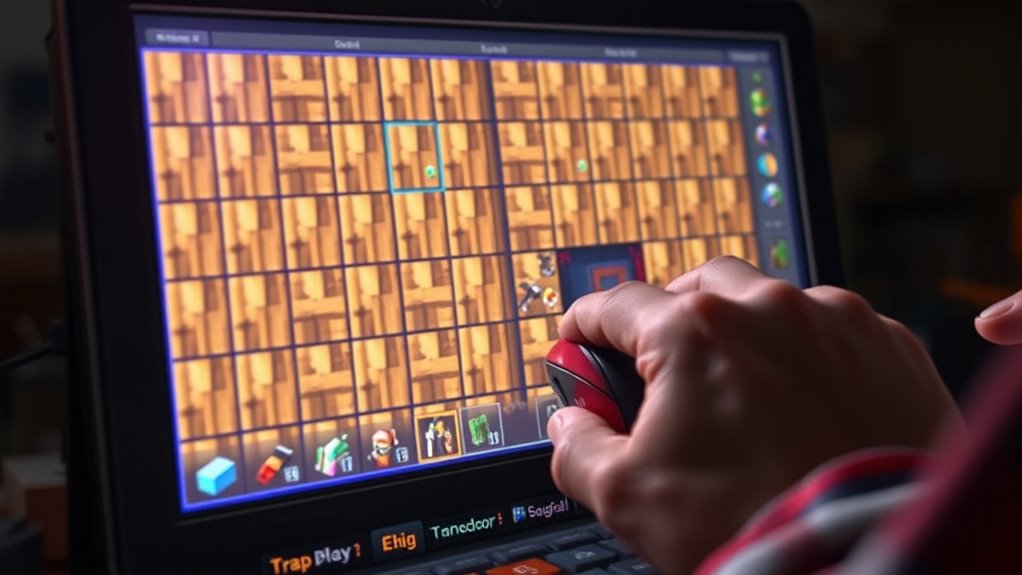
Now that you’ve collected all the necessary materials, it’s time to arrange them in the crafting grid. Open your crafting interface, and you’ll see a 3×3 grid.
For a wooden trapdoor, place six wooden planks in two vertical columns on the left and right sides of the grid. This arrangement maximizes crafting efficiency and follows trapdoor mechanics.
If you’re using iron, replace the wooden planks with iron ingots, keeping the same vertical configuration. Remember, the specific material you choose will determine the trapdoor’s durability and appearance.
Once you’ve positioned everything correctly, you’ll see the trapdoor appear in the result box. Simply drag it into your inventory, and you’re all set!
This straightforward process ensures you’ve crafted your trapdoor efficiently and are ready for your next building project.
How to Use Your New Trapdoor
Utilize your new trapdoor to improve your builds and add functionality to your space. Mastering trapdoor mechanics can transform your gameplay, giving you both practicality and style. Here’s how you can make the most of it:
Create hidden entrances for secret rooms or storage areas.
Enhance your builds’ aesthetics by using different materials, like wood or iron, to match your design.
Add a unique touch to your homes or farms, making them stand out from the typical structures.
Incorporate trapdoors in redstone contraptions, providing a seamless way to open and close mechanisms.
Use them as decorative elements, adding depth and interest to your structures.
Experiment with these ideas to see how trapdoor mechanics can boost your Minecraft experience. With a blend of functionality and trapdoor aesthetics, you’ll create spaces that are both practical and visually appealing.
Creative Ways to Integrate Trapdoors in Your Builds
Trapdoors can really boost your creativity in Minecraft builds in ways you might not have thought of! They’re super handy for crafting hidden entrances and exits, and they can even serve as cool decorative wall features that’ll catch your visitors off guard. So, let’s dive into some fun ways to make the most of these versatile blocks in your designs!
First off, think about using trapdoors to create secret pathways. Imagine a wall that looks completely normal, but with a quick flick, it opens up to reveal a hidden room! It’s like having your very own magical door. Plus, you can blend them in with other materials to match your build’s aesthetic.
And don’t forget about their decorative potential! Trapdoors can be a stylish way to add texture to your walls or even serve as unique furniture pieces. You can use them as tables or shelving too! The possibilities are pretty much endless, and they can really elevate your space.
Hidden Entrances and Exits
While exploring creative design in Minecraft, integrating hidden entrances and exits can improve your builds to new heights. Using trapdoors cleverly, you can create secret passages and hidden rooms that surprise and delight your friends.
Here are some ideas to get you started: Conceal trapdoors behind paintings for a mysterious entrance. Use redstone to create a hidden switch that activates your secret passage.
Design a false wall that opens to reveal a hidden room. Incorporate trapdoors in the floor for sneaky escapes. Blend trapdoors with natural elements, like foliage, to make them less noticeable.
These creative methods not only add intrigue but also boost your gameplay, making your builds truly unforgettable!
Decorative Wall Features
Integrating trapdoors into your wall designs can transform ordinary spaces into visually striking features. You can use trapdoors to create decorative patterns that improve wall aesthetics.
For instance, placing trapdoors in alternating directions forms unique geometric designs that draw the eye. Consider using different materials, like wood or iron, to add texture and contrast.
You can also pair trapdoors with other blocks, like fences or glass, to create interesting shifts and layered effects. Using trapdoors as accents around windows or doorways adds depth and character to your builds.
Experiment with colors and designs, and don’t be afraid to mix and match! With a bit of creativity, trapdoors can raise your walls from basic to breathtaking.
Top 5 Mistakes to Avoid When Crafting Trapdoors
When you’re crafting trapdoors in Minecraft, it’s easy to overlook some common pitfalls that can lead to frustration.
Avoiding these mistakes can save you time and improve your trapdoor aesthetics and crafting efficiency. Here are the top five blunders to watch out for:
- Ignoring Material Choices: Different woods and metals offer unique looks. Don’t just pick the first option you see.
- Neglecting Placement: Remember, trapdoors can open in specific directions. Plan your layout carefully to avoid mishaps.
- Overlooking Redstone Mechanics: If you’re using trapdoors in contraptions, ensure they interact correctly with redstone.
- Failing to Test: Always test your trapdoors in-game. This way, you can make sure they function as intended.
- Forgetting About Light Sources: Trapdoors can block light, so consider this for your build’s ambiance.
Happy crafting!
Troubleshooting Common Trapdoor Issues?
Have you ever faced issues with your trapdoors not functioning as expected? Don’t worry; it happens to the best of us!
Understanding trapdoor mechanics and activation methods can help you troubleshoot common problems.
| Issue | Possible Cause | Solution |
|---|---|---|
| Trapdoor won’t open | Wrong activation method used | Check your redstone signal |
| Trapdoor opens but closes immediately | Blocked by other objects | Confirm no blocks obstruct it |
| Trapdoor doesn’t respond | Power source is off | Verify the power source is active |
| Trapdoor opens in the wrong direction | Incorrect placement | Reposition the trapdoor |
Frequently Asked Questions
Can Trapdoors Be Used as a Secret Entrance?
Absolutely, trapdoors can be used as secret entrances! You can create hidden passages that lead to secret rooms by placing trapdoors cleverly within your builds.
When you open them, they blend seamlessly into the surroundings, making it tough for others to spot. Just remember to hide the mechanism or ensure you have a quick way to access them.
With a little creativity, you’ll have a stealthy way to navigate your Minecraft world!
How Do Trapdoors Interact With Redstone?
Trapdoors interact with redstone activation by responding to redstone signals. This allows you to control them remotely.
When you power a trapdoor using a redstone signal, it toggles between open and closed states. You can use levers, buttons, or redstone dust to activate them.
This mechanic makes trapdoors useful for secret entrances or hidden pathways. It adds an exciting layer to your builds.
Just remember to place your redstone components strategically for the best effect!
Are There Differences Between Wooden and Iron Trapdoors?
You’d think all trapdoors are created equal, but you’d be mistaken!
Wooden and iron trapdoors have distinct functionality differences. Wooden trapdoors can be activated by players and redstone, while iron trapdoors require a redstone signal to open.
Regarding trapdoor materials, wooden ones are cheaper and easier to craft. On the other hand, iron trapdoors provide more durability and security.
Can Trapdoors Be Stacked or Layered?
No, trapdoors can’t be stacked or layered directly. Trapdoor mechanics in Minecraft limit how you place them.
You can only have one trapdoor on top of another, but it won’t function as a layered object. Instead, you can place them side by side, allowing for some creative designs.
Keep in mind the stacking limitations when building your structures. They’ll affect functionality and aesthetics in your Minecraft world.
What Happens if a Trapdoor Is Underwater?
If you place a trapdoor underwater, it functions normally but can affect underwater visibility. You’ll notice that trapdoors can be opened and closed, allowing you to create air pockets or control water flow.
The trapdoor mechanics still apply, so you can use them creatively for underwater builds. However, keep in mind that when closed, they can obscure your view, making navigation a bit tricky.
Enjoy experimenting with your aquatic designs!
Conclusion
You’ve just released the secret to crafting trapdoors like a pro! With these simple steps, you’ve transformed your Minecraft world into a domain of endless possibilities.
Imagine trapdoors popping open like magic, revealing hidden treasures or secret hideaways! You’re now equipped to dazzle your friends with your architectural genius.
So go ahead, let loose your creativity and make your builds unforgettable. After all, who wouldn’t want a trapdoor that could rival the grandest castles?
Adventure awaits, and crafting trapdoors is your gateway to new experiences!