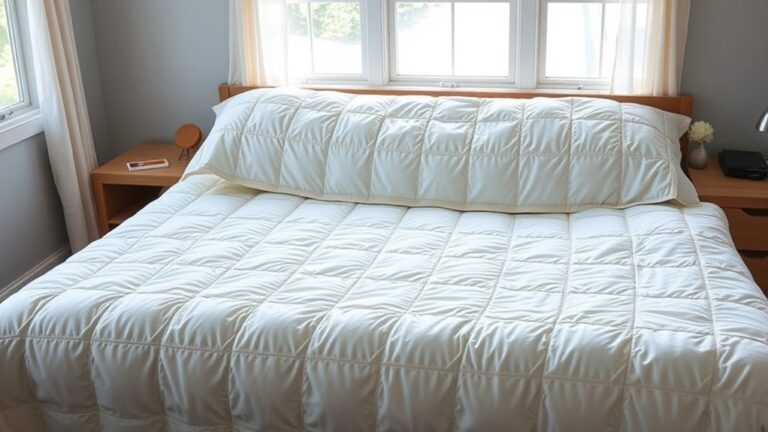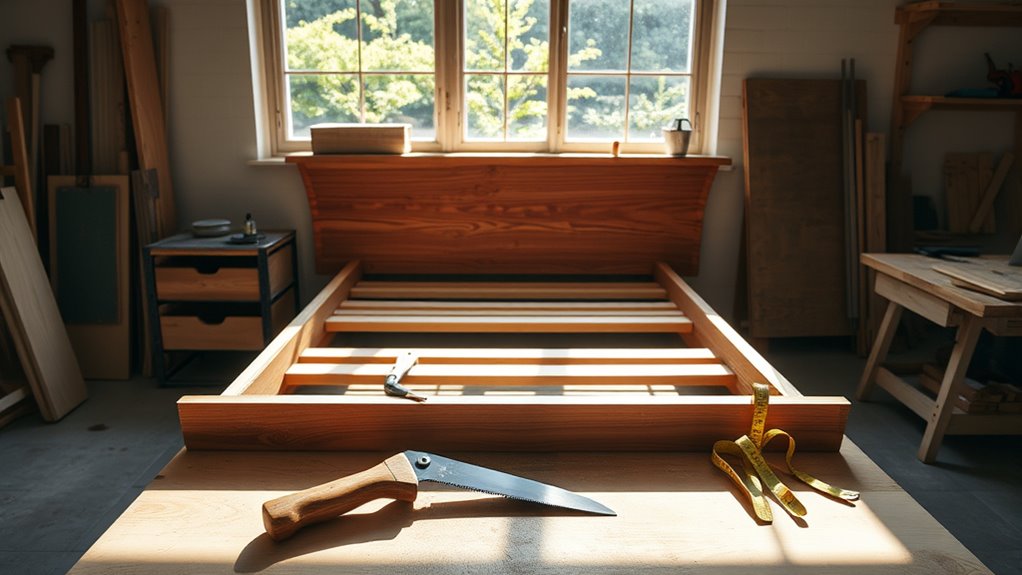
Craft Your Own Bed in 7 Simple Steps
Create Your Dream Bed: A DIY Project You’ll Love
Are you tired of overpriced furniture that doesn’t quite fit your style? You’re not alone. Many people struggle to find the perfect bed that combines quality, design, and affordability.
Building your own bed is a fun and rewarding project that saves you money and allows for complete customization.
Start by gathering quality materials like lumber and tools such as a power drill.
Once you’ve brainstormed design ideas, measure your space accurately to guarantee a perfect fit.
Assemble the frame securely. Choose a headboard style that complements your design, and protect your work with stain or paint.
Stick around, and you’ll find more tips to make your DIY bed perfect!
Key Takeaways
- Building your own bed saves money and allows for customization in style, size, and finish.
- Essential materials include quality lumber, wood screws, sandpaper, measuring tape, and a power drill.
- Measure your space accurately to ensure the bed fits comfortably with room for other furniture.
- Follow assembly steps carefully for a sturdy frame. Choose a headboard style that complements your decor.
- Select and apply a durable stain or paint. Make sure to allow for proper curing to ensure long-lasting protection.
Why Build Your Own Bed?
Building your own bed can be a rewarding experience that offers both practicality and personalization.
First off, you’ll enjoy significant cost savings compared to store-bought options. By choosing eco-friendly materials, you can create a sustainable piece that’s good for the planet.
Personal customization is another major perk. You can select the exact style, size, and finish that fits your space and taste.
Personal customization allows you to choose the perfect style, size, and finish to suit your unique space and taste.
This isn’t just a project; it’s a chance for creative expression, allowing you to design something truly unique. Plus, with hands-on involvement, you maintain quality control throughout the process.
This ensures durability and comfort.
Whether you opt for a minimalist frame or a more elaborate design, building your own bed gives you the freedom to craft a piece that reflects your personality and lifestyle.
Welcome the journey and create a bed that’s not just functional, but also a statement in your home.
Gather Your Materials and Tools
To kick off your bed-building adventure, you’ll need to gather a few essential materials and tools. Choosing the right material types will guarantee your bed is sturdy and stylish.
Here’s what you’ll need:
- Lumber: Opt for quality wood like pine or oak for a solid frame.
- Wood screws: These are vital for securing your bed together.
- Sandpaper: To smooth out rough edges and prevent splinters.
- Measuring tape: Accurate measurements are key to a successful build.
- Power drill: A must-have tool essential for drilling and assembling.
With these materials and tools in hand, you’re ready to start your project.
Make certain you take your time selecting the right options, as they’ll impact both the look and durability of your new bed.
Happy building!
DIY Bed Design Ideas for Every Space
When it comes to designing your ideal bed, you have so many options to choose from! Whether you’re working with a tiny studio or a spacious bedroom, there’s something for everyone.
For instance, if you’re into a clean and modern vibe, a minimalist platform bed could be just the thing. It offers a sleek look that can really elevate your space. On the flip side, if you love a cozy, inviting atmosphere, a rustic wooden frame might be more your style. It adds warmth and character to any room.
And hey, if you’re short on space, don’t worry! A space-saving loft bed can work wonders. It maximizes your area and gives you that extra room you need for other activities.
Minimalist Platform Bed
If you’re looking to create a serene sleeping space without unnecessary clutter, a minimalist platform bed might be the perfect solution.
This design captures minimalist aesthetics, allowing you to enjoy a clean and open atmosphere. Plus, there are plenty of budget-friendly options available!
Consider these elements for your minimalist platform bed:
Sleek, low-profile design.
Neutral color palette (whites, grays, or soft pastels).
Simple, straight lines for a modern touch.
Built-in storage drawers for added functionality.
Natural materials like plywood or reclaimed wood.
With just a few materials and some creativity, you can craft a stylish bed that improves your space while keeping it calm and inviting.
Capture simplicity and enjoy restful nights!
Rustic Wooden Frame
For those seeking a warm and inviting atmosphere, a rustic wooden frame can beautifully complement your minimalist platform bed. This design adds rustic charm and brings a touch of nature indoors.
Start by selecting reclaimed wood or timber with natural finishes to enrich the organic feel. You can opt for a simple rectangular design or incorporate unique elements like a weathered headboard for added character.
To build your frame, measure the mattress dimensions and cut the wood accordingly. Sand the edges to achieve a smooth finish, then assemble the frame using sturdy screws.
Finally, finish it with a protective coat of natural oil or wax to showcase the wood’s beauty. This rustic wooden frame will not only uplift your bedroom but also create a cozy retreat.
Space-Saving Loft Bed
Transforming a small room into a functional living space can feel challenging. A space-saving loft bed offers a clever solution.
With its raised design, you’ll maximize floor space while enjoying the many loft bed benefits. You can create a cozy sleeping nook above, leaving the area below for other essentials.
Consider using these loft bed materials for your project:
- Sturdy plywood for a solid frame
- Metal brackets for stability
- Soft foam mattress for comfort
- Vibrant curtains for privacy
- Stylish shelving to improve storage
Measure and Prepare Your Space
Before you dive into building your bed, it’s super important to measure the space where it’s going to live. You definitely want to consider the dimensions of your bed and how it fits into your room.
And hey, while you’re at it, think about access and layout too! You want to make sure everything flows smoothly and feels comfortable. It’ll make a big difference in how your space works for you!
Determine Bed Dimensions
As you begin crafting your own bed, measuring your space accurately is essential to guarantee a perfect fit. Start by determining which bed sizes suit your needs and the mattress types you’ll use.
Here’s how to get the dimensions right:
Use a measuring tape to find the length and width of your intended area.
Consider the height of the bed frame and mattress combined.
Leave space for bedside tables or other furniture.
Remember to account for any headboards or footboards you plan to add.
Also, keep in mind the clearance for under-bed storage if needed.
Assess Available Room Space
How do you guarantee your new bed fits perfectly in your space? Start by measuring your room dimensions.
Grab a tape measure and jot down the length and width of your area. Don’t forget to account for any furniture and obstacles that could affect your bed layout.
Once you have those numbers, visualize how your bed will fit. Consider the flow of the room and make sure there’s enough space to walk around comfortably.
Knowing your room dimensions helps you avoid surprises when your bed arrives. Think about where you want to position it for maximum comfort and functionality.
This preparation sets the stage for a seamless bed crafting experience you’ll enjoy for years to come.
Consider Access and Layout
While you’re excited about crafting your bed, it’s essential to contemplate access and layout to guarantee everything fits smoothly.
Consider how you’ll move around the space, ensuring bed accessibility for ease of use. Think about layout optimization to maximize your room’s functionality and comfort.
A cozy reading nook by the window is a great touch. Nightstands within arm’s reach can make a big difference.
An open pathway for easy movement is key. You’ll want adequate space for a dresser, too.
And don’t forget a well-placed lamp for warm lighting.
Let’s Build Your Bed Frame Together
Building your own bed frame can be an exciting project that transforms your space and gives you a sense of accomplishment.
To get started, choose from various bed frame styles like platform, canopy, or sleigh. Each style brings a unique flair to your room, so pick one that resonates with you.
Here are some assembly tips to guide you:
| Step | Action | Tip |
|---|---|---|
| 1 | Gather materials | Make sure you have everything before starting. |
| 2 | Cut pieces to size | Double-check measurements for accuracy. |
| 3 | Assemble frame | Use clamps to hold pieces together while securing. |
With these tips in hand, you’ll find building your bed frame not only manageable but also enjoyable.
Jump in, and soon you’ll have a personalized piece that enhances your bedroom.
Choose a Headboard Style That Complements Your DIY Bed
Choosing a headboard style that complements your DIY bed can greatly improve the overall aesthetic of your bedroom. Start by considering different headboard materials, like wood, metal, or upholstered options. Each offers a unique vibe.
Next, think about headboard colors that match your decor. Soft neutrals, bold hues, or even patterned fabrics can create striking contrasts.
Here are some popular headboard shapes and styles to inspire you:
Classic rectangular for a timeless look.
Arched or curved for a touch of elegance.
Wingback for added drama and comfort.
Tufted for a plush, sophisticated feel.
Rustic reclaimed wood for a cozy farmhouse aesthetic.
Protect Your Bed With Stain or Paint
Once you’ve settled on a headboard style that matches your vision, it’s time to think about how to protect your bed and improve its appearance with stain or paint.
Start by choosing a stain that accentuates the wood grain while providing stain durability. A good stain not only beautifies but also shields your bed from wear and tear.
Choose a stain that highlights wood grain and offers durability, enhancing beauty while protecting against wear and tear.
If you prefer paint options, select a high-quality paint that’s designed for furniture. Look for finishes that resist scratches and chips, ensuring your bed stays looking fresh.
Before applying, make sure to sand the surface for better adhesion and use a primer if needed.
Once you’ve applied your chosen finish, let it cure completely to maximize protection. Regular maintenance, like cleaning with a gentle solution, will help maintain the look.
With these steps, your DIY bed will be a stunning and durable centerpiece in your room.
Frequently Asked Questions
What Type of Wood Is Best for a DIY Bed Frame?
For a DIY bed frame, pine and oak are both great options.
Pine’s lightweight and budget-friendly, making it easy to work with. Oak’s durability provides a sturdy frame that lasts.
If you’re looking for an economical choice, consider plywood. It’s versatile and can be used for both the frame and slats.
Weigh the pros and cons of each to find what suits your style and needs best!
How Long Does It Take to Build a Bed?
Building a bed can take anywhere from a few hours to a weekend, depending on your skills and how many “helpful” friends you’ve invited.
If you’re juggling time management like a circus performer, consider these bed assembly tips: measure twice, cut once, and maybe don’t start at midnight.
You’ll thank yourself when you’re not wrestling with lumber in the dark.
Can I Disassemble the Bed Easily for Moving?
Yes, you can disassemble the bed easily for moving. Use simple disassembly techniques like unscrewing bolts and detaching parts.
Before you start, gather tools like a screwdriver and an Allen wrench. Label the pieces and keep screws in labeled bags to avoid confusion later.
When you’re ready to move, follow some moving tips. Wrap parts in blankets for protection and secure them in your vehicle to prevent damage. It’ll make your move smoother!
What Tools Are Essential for Beginners?
For beginners, essential tools include a tape measure, screwdriver, saw, and a level.
You’ll also want a drill for assembly and disassembly.
While gathering design inspiration, consider your personal style and how it fits your space.
Budget considerations are vital too; prioritize quality tools that can last through multiple projects.
Investing in a good set makes your crafting experience smoother and more enjoyable. It helps you create something you’ll love.
How Do I Ensure the Bed Is Sturdy and Safe?
You’d think a bed just needs a mattress, right?
To guarantee yours is sturdy and safe, focus on bed stability techniques like using corner brackets and cross supports.
Don’t skimp on safety hardware options; secure bolts and screws are essential for preventing wobbles or collapses.
Regularly check for any loose parts, too. It’s a small effort that pays off in a solid night’s sleep and peace of mind.
Conclusion
Building your own bed transforms your space into a cozy sanctuary. It’s like crafting a warm hug from wood and fabric.
With just a few simple steps, you’ve woven creativity into your home. As you lay down at night, your unique creation cradles you in comfort.
It whispers tales of craftsmanship and care. So roll up your sleeves, welcome the journey, and let your imagination soar.
Your dream bed awaits to wrap you in its warmth. Get ready to craft your own bed!