DIY Decorating: Transform Your Space Yourself
Are you feeling overwhelmed by the idea of decorating your space? You’re not alone. Many people struggle to bring their vision to life while balancing style and budget.
Luckily, DIY decorating offers a fantastic opportunity to transform your space and reflect your unique style without breaking the bank.
DIY decorating lets you transform your space to reflect your unique style.
Start by identifying your aesthetic, like bohemian or minimalist, and set a realistic budget for projects.
Avoid common mistakes by planning ahead and creating a timeline.
Choose quality materials and investigate budget-friendly painting techniques to refresh your rooms.
Incorporate smart storage solutions and unique lighting to improve your ambiance.
There’s so much more to uncover about creating your perfect space.
Key Takeaways
- Identify your personal aesthetic by exploring various styles like bohemian, minimalist, and coastal. This will help you create a unique space that reflects your personality.
- Set a realistic budget for materials and prepare for unexpected costs. This way, you can avoid overspending on your DIY projects.
- Plan thoroughly and create a project timeline. This ensures organized execution and timely completion of your DIY endeavors.
- Choose quality, eco-friendly materials and explore creative painting techniques. These choices will enhance your decor while being sustainable.
- Upcycle old furniture, incorporate DIY lighting solutions, and use smart storage. This not only maximizes space but also adds character to your home.
Discover Your DIY Style: What’s Your Aesthetic?
Have you ever wondered how to pinpoint your DIY style? Identifying your aesthetic can transform your space into a true reflection of you.
If you’re drawn to bohemian vibes, think bold colors and layered textiles. A minimalist approach accepts simplicity with clean lines and neutral palettes.
You might love the vintage charm of antique finds or the modern elegance of sleek furniture.
If you enjoy an eclectic mix, combine different styles for a unique look. Rustic touches, like reclaimed wood and earthy tones, add warmth to any room.
Coastal inspiration brings breezy colors and natural elements, perfect for a relaxed vibe. Finally, urban chic speaks to those who favor industrial details and contemporary flair.
Investigate these styles to see what resonates, and soon you’ll have a DIY aesthetic that truly feels like home.
Setting Your Budget: Essential Tips for DIY Projects
Setting a budget for your DIY projects is super important if you want to avoid overspending. Trust me, it’s easy to get carried away! So, start by taking a good look at your financial limits. What can you realistically spend?
Next, think about what supplies you absolutely need. Prioritizing those essentials will help keep your costs in check. And hey, don’t forget to set aside a little extra for those unexpected costs that always seem to pop up. You definitely don’t want to be caught off guard!
Assess Your Financial Limits
Establishing a clear budget is essential for any DIY project. It helps you allocate resources effectively and avoid overspending.
Start by identifying your budget constraints and set a realistic limit based on your financial planning. Conduct a thorough cost analysis of all materials and tools you’ll need, ensuring you account for unexpected expenses.
Use expense tracking methods, like spreadsheets or budgeting apps, to monitor your spending throughout the project. This way, you can adjust your plans if you start approaching your limit.
Don’t forget to factor in any labor costs if you’re enlisting help. Sticking to your budget keeps your project manageable and brings a sense of accomplishment when you see the transformation you’ve achieved.
Prioritize Essential Supplies
When you’re diving into a DIY project, prioritizing essential supplies can make all the difference in staying within your budget.
Start by identifying your supply essentials. Make a list of the items you’ll need, focusing on quality over quantity.
Must-have tools like a good paintbrush, measuring tape, and a sturdy ladder should top your list. Investing in these items can save you money in the long run, as you’ll avoid frequent trips to the store.
Don’t forget to check what you already own; sometimes, you might have the perfect tool hiding in your garage.
Plan For Unexpected Costs
As you begin your DIY journey, planning for unexpected costs is essential to keep your budget intact. Hidden expenses can arise, so it’s vital to adopt smart budgeting strategies.
Set aside an emergency fund to cover potential cost overruns, like unexpected repairs or project delays. When sourcing materials, always conduct price comparisons to guarantee you’re getting the best deals while allowing for any unforeseen costs.
Factor in the possibility of needing extra supplies or tools that may not be in your original budget. By anticipating these expenses, you’ll navigate your DIY projects with more confidence and less stress.
Avoiding Common DIY Mistakes
Before you dive into your DIY project, it’s super important to plan things out. Trust me, it’ll save you a lot of headache later on. Choosing quality materials can really change the game when it comes to the final result. So, don’t cut corners on the essentials!
Let’s chat about how these steps can help you avoid those pesky mistakes and save you time and frustration down the road. It’s all about setting yourself up for success!
Planning Before You Start
Planning your DIY project carefully can save you from costly mistakes down the line. Start with a thorough space assessment to understand your needs.
Create a project timeline to keep you on track, and gather design inspiration from various sources. Make certain to define a cohesive color palette and layout planning that complements your space.
Don’t forget to conduct trend research to guarantee your design remains relevant.
Here’s a quick table to streamline your planning:
| Task | Action Steps | Deadline |
|---|---|---|
| Space Assessment | Measure & Evaluate | Week 1 |
| Design Inspiration | Collect Ideas | Week 1 |
| Color Palette | Choose Colors | Week 2 |
| Layout Planning | Sketch Layout | Week 3 |
| Material Sourcing | List & Buy Supplies | Week 4 |
Delegate tasks to simplify the process!
Choosing Quality Materials
Selecting quality materials can make or break your DIY project. Start by considering sustainable materials and eco-friendly options that look great and benefit the planet.
Pay attention to texture choices. Combining different finishes can add depth to your design.
Don’t overlook durability factors; invest in materials that withstand wear and tear. Verify color compatibility across your selections to create a cohesive look.
Local sourcing can also improve your project. It supports your community while reducing your carbon footprint.
Experiment with various material combinations to achieve unique effects, but always prioritize quality. By choosing wisely, you’ll avoid common DIY mistakes and create a space you’ll love for years to come.
Happy decorating!
Essential Tools and Materials for DIY Decorating
A well-stocked toolkit can make all the difference in your DIY decorating projects. Start with essential tools like a level, tape measure, and a sturdy hammer.
When selecting tools, consider your skill level and the tasks at hand. For sourcing materials, aim for budget-friendly options that fit your aesthetic choices.
Create a list of materials that aligns with your design inspiration while keeping an eye on your budget.
As you map out project timelines, ensure you allocate enough time for each phase, including those important finishing touches.
Don’t forget safety precautions; wear gloves and goggles when needed. With the right tools and materials, you’ll tackle any project with confidence, transforming your space into a reflection of your style.
How to Refresh a Room: Budget-Friendly Painting Techniques?
When you’re thinking about refreshing a room, choosing the right colors can really change the vibe. It’s amazing how a simple coat of paint can breathe new life into your space! So, why not explore some creative painting techniques? They’re not just budget-friendly; they can also add a unique flair that makes your room truly yours.
With a bit of inspiration and some elbow grease, you can transform any area without emptying your wallet. Whether it’s a fun accent wall or a playful pattern, there are so many ways to get creative. So, roll up those sleeves and let’s dive into some awesome ideas!
Choosing The Right Colors
Choosing the right colors can dramatically transform your space while sticking to a budget.
Start by considering color psychology; different hues evoke various emotions. For a calm atmosphere, opt for neutral tones. Vibrant colors can energize a room.
Investigate color combinations that harmonize well, using accent colors to create focal points. Seasonal palettes can keep your decor fresh, so don’t shy away from changing colors with the seasons.
Stay updated on color trends but always factor in your personal preferences. Remember, mood setting is key—choose colors that reflect how you want to feel in the space.
With thoughtful selection, you can achieve a stylish look without breaking the bank. Happy decorating!
Creative Painting Techniques
Ready to refresh your room on a budget? Get creative with these painting techniques!
Try sponge painting for a soft texture or go for ombre effects to create a stunning gradient.
Stenciled patterns add a unique touch, while color washing can soften bold hues.
For a touch of elegance, consider metallic finishes that catch the light beautifully.
Want something modern? Experiment with geometric designs using painter’s tape for crisp lines.
Chalk paint is perfect for a matte finish and easy touch-ups.
Use texture techniques to add depth, or layer colors for a dynamic look.
If you’re feeling adventurous, create DIY murals to make a statement.
With these budget-friendly ideas, your space will feel fresh and inviting!
Breathe New Life Into Your Old Furniture
Transform your old furniture into stunning focal points with a bit of creativity and effort. Start with furniture upcycling; a fresh coat of paint can turn a tired piece into a vibrant statement.
Investigate vintage restoration techniques to maintain its character while adding modern finishes for a chic look. Consider color matching to harmonize your newly revamped pieces with existing decor.
Mixing textures can create visual interest. Pair a sleek, painted surface with rustic wood for a striking contrast. Don’t forget about functional designs; sometimes, simply refinishing a drawer or adding new hardware can breathe new life into a piece.
Lastly, choose eco-friendly options whenever possible, ensuring your creative efforts are sustainable. By combining these elements, you’ll not only rejuvenate your furniture but also infuse your space with unique charm and personality.
Accept the process and watch as your old furniture transforms into cherished statement pieces!
Personalize Your Space With DIY Decor
Everyone loves a space that reflects their personality. DIY decor is the perfect way to achieve that.
By adding personal touches, you can create a home that truly feels like yours. Consider using upcycled materials to craft meaningful artifacts or seasonal updates that keep your space fresh.
| DIY Decor Ideas | Description |
|---|---|
| Themed Decor | Choose a theme that resonates with you. |
| Texture Contrasts | Mix materials to create visual interest. |
| Color Stories | Select colors that evoke the right emotions. |
| Creative Expressions | Let your personality shine through your creations. |
Incorporating these elements improves your space and allows for creative expressions that make you feel at home. Cherish the joy of crafting a personalized environment that tells your unique story!
Brighten Your Space With DIY Lighting Solutions
Lighting can dramatically change the mood and atmosphere of your space. So why not create your own unique fixtures?
Start with ambient lighting using string lights. Drape them across your walls or ceiling for a cozy vibe.
Consider upcycled fixtures, like turning vintage jars into charming pendant lights. Experiment with color temperature to find the perfect warmth that suits your style.
DIY lampshades can add a personal touch to your floor lamps or wall sconces. Use fabric or paper to create shades that reflect your personality.
Pay attention to light placement. Strategically position your fixtures to improve mood lighting, making areas feel inviting and functional.
Whether you’re crafting a statement piece or a subtle accent, each DIY lighting solution can transform your space. Welcome your creativity and let your personality shine through your lighting choices!
Organizing Your Space: Smart DIY Storage Solutions
A well-organized space can make a world of difference in how you feel at home. To achieve this, consider implementing smart DIY storage solutions that maximize your space.
Use minimalist storage and multifunctional furniture to keep things tidy while looking stylish. Here are some effective strategies:
| Storage Solution | Description |
|---|---|
| Vertical Organization | Utilize wall space with shelves. |
| Upcycled Containers | Transform jars and boxes into decor. |
| Decorative Bins | Store items in style. |
Incorporate hidden compartments in furniture for extra storage. You might also consider creative shelving for both functionality and flair.
Label your organizers for ease, and don’t forget seasonal storage hacks to keep your space clutter-free. With these strategies, you’ll create an organized and inviting home!
DIY Focal Points: Unique Wall Art and Statement Pieces
After organizing your space, it’s time to improve it with DIY focal points that truly make a statement.
Consider creating distinctive wall art that reflects your personality. Use artistic techniques like painting or collage to incorporate bold colors and mixed materials, ensuring your pieces pop.
Explore eclectic styles that blend different cultural influences, adding depth to your decor. Mix textiles with wood or metal to create textural contrasts that draw the eye.
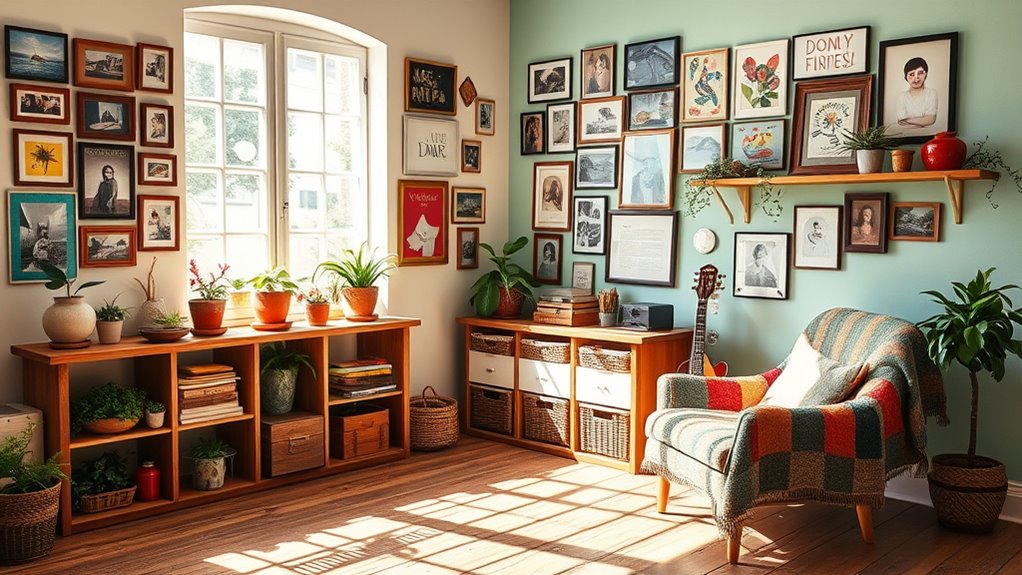
Layered designs can elevate visual interest. Try stacking smaller frames or canvases to form a gallery wall that feels dynamic.
Don’t forget to add personal touches. Whether it’s a family photo or a piece that tells your story, these elements make your space feel distinctly yours.
With these DIY focal points, you’ll transform any room into a vibrant expression of your creativity.
Frequently Asked Questions
How Do I Choose the Right Paint Colors for My Space?
To choose the right paint colors for your space, consider color psychology. Think about how different hues make you feel.
Blues can be calming, while yellows are energizing. Test samples on your walls to see how they look in various lighting.
Don’t forget about paint finishes; a matte finish softens colors, while a glossy finish can make them pop. Trust your instincts and create an atmosphere that reflects your personality!
What Are Some Eco-Friendly DIY Materials I Can Use?
You can use several eco-friendly DIY materials to create a sustainable space.
Consider natural fibers like jute or hemp for textiles, and upcycled wood for furniture or shelves.
Biodegradable paints are great for walls, while recycled glass can add unique accents.
For fabrics, choose sustainable options like organic cotton or linen. Finish your projects with organic finishes that are safe for the environment.
These choices not only beautify your space but also protect the planet.
How Can I Incorporate Plants Into My DIY Decor?
Imagine your home as a canvas, and plants are the vibrant colors that bring it to life.
To incorporate plants into your decor, think about strategic plant placement. Start small with succulents on shelves or create indoor gardens in corners.
Hanging plants can add height and drama, while a vertical garden serves as a stunning focal point.
What Are the Best Ways to Repurpose Old Decor Items?
You can repurpose old decor items in various creative ways.
Start by transforming upcycled furniture into unique statement pieces. Paint it, reupholster it, or add new hardware for a fresh look.
Look for vintage finds; a worn-out suitcase can become a stylish storage solution. Old frames can be used for art displays, adding character to your walls.
Don’t forget to mix textures and styles. This creates a cohesive look that reflects your personality and breathes new life into your space.
How Do I Ensure My DIY Projects Are Safe and Durable?
To guarantee your DIY projects are safe and durable, think of your workspace as a well-tuned orchestra.
Start with project planning, selecting materials wisely to suit your vision. Organize your tools like a maestro conducts a symphony. Tool safety is essential.
Don’t skip durability testing after assembly. Always keep proper ventilation in mind while working.
With these steps, you’ll create masterpieces that stand the test of time and safety.
Conclusion
Transforming your space yourself is like turning a blank canvas into a vibrant masterpiece. With a little creativity and the right tools, you can breathe life into dull corners and create cozy nooks.
Imagine the satisfaction of crafting your own decor while avoiding common mistakes. By blending personal touches with budget-friendly solutions, you’ll not only beautify your home but also create a sanctuary that reflects who you are.
In the end, DIY decorating allows you to craft an oasis of style in a chaotic world.