Top 12 Best 3D Printer For Carbon Fiber Filament Revealed!
Working with carbon fiber filament can be challenging due to its abrasive nature and need for precise printing conditions. Finding a reliable machine that handles these materials without frequent wear or failed prints is often the biggest hurdle.
The best 3d printer for carbon fiber filament combines durability, advanced features, and consistent quality to meet these demands. Such printers are designed for users who want strong, lightweight, and high-performance parts, whether for prototypes or functional pieces. This review will explore several models suited for carbon fiber filament, highlighting their build quality, compatibility, and print results.
By the end, you’ll have a clearer idea of which 3d printer matches your specific needs and budget.
Unlocking Precision and Strength: Top Picks for Printing with Advanced Composite Materials
| Image | Product | Price |
|---|---|---|
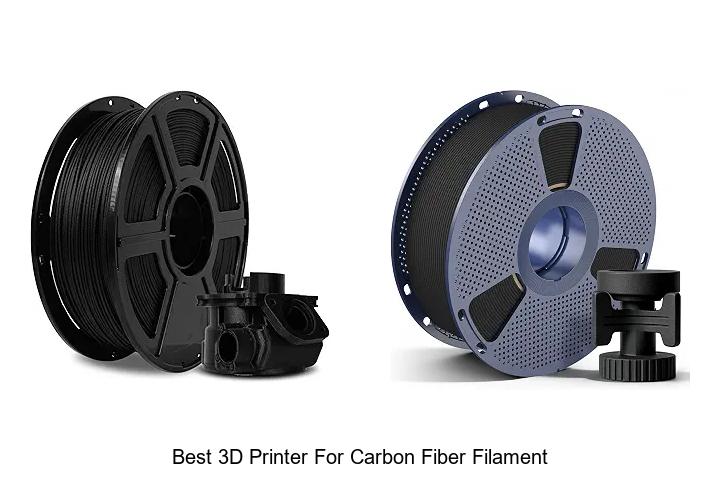
Our Top Picks 1  | FLASHFORGE Carbon Fiber PETG Filament 1.75mm, Carbon Fiber PETG 3D | Check Price |
Our Top Picks 2  | SUNLU Carbon Fiber PETG 3D Printer Filament, 1KG Matte Black | Check Price |
Our Top Picks 3  | FLASHFORGE Carbon Fiber PETG Filament 1.75mm Black, Reinforced 3D Printer | Check Price |
1. FLASHFORGE Carbon Fiber PETG Filament 1.75mm, Carbon Fiber PETG 3D
Discover enhanced durability and precision with the FLASHFORGE Carbon Fiber PETG Filament 75mm.
It’s an ideal choice when rigidity and quality surface finish are essential.
Perfect for industrial and creative projects alike, the filament’s reinforced composition withstands more wear and tear than standard PETG, while maintaining excellent impact resistance. Expect impressive performance for demanding applications like drone frames, automotive parts, and tools.
FLASHFORGE’s carbon fiber-infused PETG filament combines robust material characteristics that improve your prints’ structural integrity. Its dimensional stability means parts retain exact measurements after printing, reducing the need for post-processing.
Manufactured to be clog-free and bubble-free, the filament ensures a steady extrusion stream. Pre-dried and vacuum-sealed, it’s protected from moisture, which helps maintain print consistency throughout the spool. This attention to quality reduces common printing issues like nozzle blockages and bubbles.
Additional features include tangle-free spool winding and broad printer compatibility, working seamlessly with 99% of FDM printers. The improved flowability enhances print reliability and reduces filament breakage during use, making it suitable for both beginners and experienced users.
Pros
- Enhanced strength and heat resistance from carbon fiber reinforcement
- Excellent dimensional stability and smooth surface finish
- Clog-resistant and pre-dried for consistent, bubble-free printing
Cons
- Requires a hardened nozzle to prevent wear from carbon fiber particles
Overall, the FLASHFORGE Carbon Fiber PETG Filament offers a dependable solution for users seeking robust, high-quality 3D printed parts with strong mechanical properties. Its carefully engineered blend makes it a practical choice for industrial and hobby projects demanding extra toughness and precision. Compared to many general-purpose filaments, it provides significant improvements in strength and thermal stability, justifying its position as a preferred material for carbon fiber filament printing.
Compared to many general-purpose filaments, it provides significant improvements in strength and thermal stability, justifying its position as a preferred material for carbon fiber filament printing.
| Brand Name | FLASHFORGE |
|---|---|
| Material | Carbon Fiber Reinforced PETG |
| Diameter | 1.75 mm |
| Unit Weight | 35.27 Ounces |
| Manufacturer | Zhejiang Flashforge 3D Technology Co., Ltd |
| Compatibility | Works with 99% of FDM 3D Printers |
From personal experience, this filament offers a great balance between strength and ease of printing when paired with the right nozzle setup. It’s an efficient option for those who want to experiment with carbon fiber materials without compromising print quality or reliability. Consider upgrading your nozzle for best results when using this filament.
2. SUNLU Carbon Fiber PETG 3D Printer Filament, 1KG Matte Black
Elevate your 3D printing projects with the SUNLU Carbon Fiber PETG filament, designed for strength and durability. Its 10% carbon fiber fill boosts rigidity and toughness, making it a reliable choice for demanding applications requiring enhanced mechanical properties.
The filament features a sleek matte black finish that combines style with functionality. Ideal for users aiming to print stronger and more impact-resistant parts, it caters well to professionals and hobbyists alike.
The SUNLU Carbon Fiber PETG is engineered to provide exceptional toughness through a carbon fiber infusion that resists cracking and damage. Printed models achieve a high impact strength of 19kJ/m², supporting structural applications such as drone frames, automotive parts, and tools.
Heat resistance is another key attribute, with the filament withstanding temperatures up to 70°C without losing integrity. This feature makes it suitable for outdoor equipment or any project exposed to fluctuating heat conditions.
Its unique matte texture offers a subtle, textured grip that enhances the aesthetic appeal without sacrificing performance. The filament also boasts excellent dimensional accuracy with a diameter tolerance of +/- 03mm, ensuring consistent quality for most
75mm FDM printers.
Designed for reliable and smooth printing, it minimizes issues like nozzle clogging and stringing. However, this filament is not recommended for use with AMS or AMS Lite multi-color systems due to its abrasive nature.
Printing is recommended at nozzle temperatures between 240-250°C and a bed temperature of 50-70°C. Proper filament drying before use promotes optimal results, emphasizing stability and surface quality.
Compatibility extends beyond SUNLU products, fitting popular brands like Bambu, Ender 3, and others, broadening its usability.
Pros
- Enhanced strength and rigidity with 10% carbon fiber content
- High impact resistance of 19kJ/m² suitable for structural parts
- Unique matte finish providing a premium look and textured grip
Cons
- Not compatible with AMS and AMS Lite multi-color feeding systems
Offering a well-balanced combination of strength, durability, and visual appeal, the SUNLU Carbon Fiber PETG filament stands out for industrial and hobby use. Its mechanical robustness and heat resistance are ideal for demanding 3D printed components that require long-lasting performance.
| Specification | Details |
|---|---|
| Brand | SUNLU |
| Material | PETG with 10% carbon fiber infusion |
| Color | Matte Black |
| Diameter | 1.75mm ± 0.03mm |
| Nozzle Temperature | 240-250°C |
| Bed Temperature | 50-70°C |
| Heat Distortion Temperature | Up to 70°C |
| Impact Strength | 19kJ/m² |
| Packaging | Vacuum sealed with desiccant pack |
| Compatibility | Most 1.75mm FDM printers (excluding AMS systems) |
From practical feedback, users appreciate its ease of printing and consistent results without frequent jams or stringing. This filament offers great value for projects needing extra durability and a professional finish, especially when compared to standard PETG options that lack carbon fiber reinforcement.
3. FLASHFORGE Carbon Fiber PETG Filament 1.75mm Black, Reinforced 3D Printer
Experience enhanced durability and precision with the FLASHFORGE Carbon Fiber PETG Filament. Designed for demanding 3D printing projects, this filament delivers remarkable strength and heat resistance. It is an excellent choice for creating robust and long-lasting parts that require superior mechanical properties.
It is an excellent choice for creating robust and long-lasting parts that require superior mechanical properties.
This filament combines PETG’s ease of use with carbon fiber reinforcement. The result is a smooth printing process yielding dimensionally stable and abrasion-resistant components. Ideal for technical applications, it offers a reliable solution for both hobbyists and professionals.
The FLASHFORGE Carbon Fiber PETG Filament significantly improves the strength and rigidity of printed objects. Thanks to carbon fiber content, parts can bear substantial loads while maintaining structural integrity.
Wear resistance is another advantage, extending the lifespan of parts subjected to friction and mechanical stress. This filament also excels in tensile and impact resistance, enhancing durability in demanding environments.
Manufactured by Zhejiang Flashforge 3D Technology Co., Ltd.
75mm diameter and is compatible with a wide range of 3D printers. It balances performance with ease of use, making it suitable for users who require reliable, high-strength prints without complicated processing.
This product is particularly useful when creating functional prototypes, gears, and high-friction components.
Pros
- Enhanced mechanical strength and rigidity for durable parts
- Improved heat and wear resistance for demanding applications
- Reduced warping and stable printing performance with smooth finishes
Cons
- Carbon fiber content may cause increased nozzle wear over time
Combining strength, heat resistance, and reliable print quality, this filament addresses specialized 3D printing needs efficiently. It stands out among reinforced filaments by delivering consistent results without complex handling. Below is a specification overview to assist with technical considerations.
| Specification | Details |
|---|---|
| Brand Name | FLASHFORGE |
| Material | Carbon Fiber Reinforced PETG |
| Diameter | 1.75mm |
| Color | Black |
| Manufacturer | Zhejiang Flashforge 3D Technology Co., Ltd. |
| Net Weight | 35.27 Ounces |
From a user perspective, this filament delivers impressive toughness and consistent print quality. It simplifies producing functional parts that require strength and thermal stability without complex adjustments. Its ability to maintain shape and surface smoothness during printing makes it a valuable material to have on hand for technical projects.
Its ability to maintain shape and surface smoothness during printing makes it a valuable material to have on hand for technical projects.
4. LANDU Carbon Fiber PLA Filament 1.75mm Black 1KG, PLA-CF Strong

Designed for precision and durability, the LANDU Carbon Fiber PLA Filament blends strength with smooth printing performance. Its unique carbon fiber reinforcement adds rigidity without sacrificing ease of use, making it perfect for demanding projects.
The filament suits a variety of functional parts needing toughness and visual appeal. With a sleek matte finish and reliable extrusion, it enhances both professional prototypes and everyday creations.
The LANDU Carbon Fiber PLA merges the simplicity of PLA with reinforced mechanical properties. It delivers superior strength and impact resistance, suitable for items such as drone frames, automotive parts, and gears. Each spool undergoes 24-hour pre-drying and vacuum sealing, which prevents moisture absorption and ensures clog-free printing.
Each spool undergoes 24-hour pre-drying and vacuum sealing, which prevents moisture absorption and ensures clog-free printing.
Excellent layer adhesion reduces warping and guarantees precise dimensional results. Its matte texture gives prints a professional and polished look that performs well in functional and aesthetic applications. The filament diameter holds a tight tolerance of ±
02mm, providing consistent feeding on most 3D printers.
Users benefit from tangle-free winding and reduced printing interruptions. Recommended print temperatures are 210–230°C with a bed temperature of 50–60°C. Applying a hardened steel nozzle further enhances durability and print quality due to the abrasive nature of carbon fibers.
Applying a hardened steel nozzle further enhances durability and print quality due to the abrasive nature of carbon fibers. Ideal for engineers and hobbyists needing lightweight yet robust components.
Pros
- Reinforced with carbon fiber for high strength and stiffness
- Pre-dried and vacuum sealed to prevent moisture-related issues
- Excellent layer bonding with smooth matte finish
Cons
- Requires hardened steel nozzle to prevent abrasion wear
LANDU’s carbon fiber PLA filament provides balanced durability and precision, making it suitable for intricate and functional parts requiring toughness. Its moisture-resistant packaging and consistent diameter contribute to reliable printing experiences. Compared to standard PLA filaments, the added carbon fiber increases rigidity while maintaining a clean finish that highlights detailed designs.
Compared to standard PLA filaments, the added carbon fiber increases rigidity while maintaining a clean finish that highlights detailed designs.
| Specification | Details |
|---|---|
| Brand | LANDU |
| Filament Type | PLA-CF (PLA Carbon Fiber Reinforced) |
| Diameter | 1.75 mm (±0.02 mm) |
| Color | Black |
| Spool Weight | 1 KG |
| Recommended Nozzle Temp. | 210–230°C |
| Recommended Bed Temp. | 50–60°C |
| Packaging | Vacuum sealed with desiccant |
| Nozzle Recommendation | Hardened steel nozzle ≥ 0.4 mm |
For projects that demand strength without complex handling, this PLA-CF filament stands out as a reliable choice. Its blend of printability and reinforced durability supports a wide range of applications, enabling users to produce robust components with minimal hassle.
5. Polymaker Fiberon PA612-CF15 Filament Black 1.75mm 0.5KG | Strong, Low

Polymaker Fiberon PA612-CF15 brings strength and durability to 3D printing with its carbon fiber-reinforced nylon composition. Designed to offer low moisture sensitivity alongside excellent mechanical properties, it stands out for quality and consistency in printing high-performance parts.
This filament excels in compatibility and printability, suitable for various industrial and automotive applications. Its user-friendly packaging and thoughtful design simplify handling and storage.
Crafted for robust and reliable results, the Fiberon PA612-CF15 filament features a blend that reduces moisture absorption compared to conventional nylon types. Its superior strength makes it ideal for detailed, hard-wearing models.
The filament guarantees smooth extrusion with minimal warping or distortion, promoting clean prints from the first layer.
Optimized for high-speed printing, it works well with most common desktop and entry-level 3D printers. The broad temperature range accommodates diverse printing setups, ensuring flexibility and versatility. The cardboard spool protects the filament from dust and damage during storage, increasing its lifespan.
Users will appreciate the vacuum-sealed ziplock bag with desiccant, which maintains filament quality and prevents tangling thanks to its carefully wound design. This packaging innovation supports longer periods of inactivity without compromising performance. Fiberon PA612-CF15 is especially suitable for users needing strong, dimensionally stable components in tooling or automotive parts.
Pros
- Carbon fiber reinforcement enhances strength and stiffness
- Lower moisture sensitivity than typical nylon filaments
- Vacuum-sealed packaging with desiccant prevents filament damage and tangling
Cons
- Requires precise temperature control for optimal results
Polymaker Fiberon PA612-CF15 is an excellent choice for those seeking durable, carbon fiber-infused nylon filament capable of delivering precise and consistent prints. While requiring attention to printing conditions, it offers reliable strength and dimensional accuracy unmatched by many standard filaments.
| Brand Name | Polymaker |
|---|---|
| Material | Carbon fiber-reinforced nylon (PA612-CF15) |
| Diameter | 1.75 mm |
| Spool Weight | 0.5 KG (17.64 Ounces) |
| Printing Temperature | Wide temperature range (compatible with most consumer printers) |
| Packaging | Vacuum-sealed ziplock bag with desiccant, cardboard spool with reinforced edges |
In comparison with similar filaments, this option excels in balancing cost-effectiveness with mechanical performance. Its lower moisture sensitivity reduces common nylon printing issues, making it practical for both beginners and experienced users aiming for functional parts.
6. FLASHFORGE Carbon Fiber PLA Filament 1.75mm Volcanic Rock Gray, Reinforced

FLASHFORGE Carbon Fiber PLA Filament in Volcanic Rock Gray offers an impressive blend of strength and lightweight design. Its carbon fiber reinforcement boosts mechanical durability while preserving ease of use familiar to PLA printing.
Ideal for demanding applications needing robust performance without added bulk.
The filament’s enhanced rigidity allows it to withstand pressure and load, making it suitable for functional parts like gears and automotive components. Despite the increased strength, it remains lightweight, aiding projects where reducing mass is critical. The carbon fiber also improves wear resistance, ensuring parts last longer against friction and abrasion.
The carbon fiber also improves wear resistance, ensuring parts last longer against friction and abrasion.
One advantage of this filament lies in its printing behavior, mirroring regular PLA with no need for extreme bed temperatures or elevated nozzle heat. It experiences minimal warping, providing dimensional stability during printing sessions.
Manufactured by Zhejiang Flashforge 3D Technology Co., Ltd, known for quality materials, the filament maintains consistent diameter at
It suits professionals and hobbyists working on industrial models or prototypes demanding enhanced mechanical properties without complex printing setups. Its combination of strength, durability, and ease of use makes it a competitive choice among reinforced filaments.
Pros
- High mechanical strength due to carbon fiber reinforcement
- Lightweight, ideal for aerospace and automotive uses
- Easy printing with properties similar to standard PLA
Cons
- May require hardened steel nozzle to avoid wear during printing
Combining durability and smooth finish, this filament excels in producing sturdy, wear-resistant 3D prints without difficult printing conditions. Its consistent quality supports reliable project outcomes across various industries.
| Specification | Details |
|---|---|
| Brand | FLASHFORGE |
| Material | PLA with Carbon Fiber Reinforcement |
| Diameter | 1.75mm |
| Color | Volcanic Rock Gray |
| Unit Weight | 35.27 Ounces |
| Compatibility | Standard FDM 3D Printers |
| Manufacturer | Zhejiang Flashforge 3D Technology Co., Ltd |
For users seeking strong, lightweight filament without complicated printing parameters, this option stands out. It offers a balance of performance and user-friendliness not always found in carbon fiber reinforced materials.
7. Creality Carbon Fiber Filament 1.75mm, 3D Printer Filament, 1kg (2.2lbs)

Experience superior 3D printing precision with Creality Carbon Fiber Filament 75mm. Designed to deliver enhanced toughness and resist warping, this filament elevates your creative projects.
Designed to deliver enhanced toughness and resist warping, this filament elevates your creative projects. Achieve smooth layers and vibrant, consistent colors for professional-looking results every time.
Ideal for printers requiring strong yet lightweight material, this carbon fiber filament combines durability and ease of use. Its environmental protection advantages make it a reliable choice for diverse applications.
Creality Carbon Fiber Filament features low shrinkage that minimizes warping and blistering, ensuring prints maintain intricate details and accurate dimensions. Its uniform line diameter guarantees stable extrusion, providing consistent layers and clean finishes on each print.
The filament’s pure color enhances visual appeal without fading during processing.
The strong hardness of this filament allows smooth feeding into most FDM 3D printers, preventing clogging and making shaping tasks more straightforward. Made from carbon fiber material, it offers excellent weather and chemical resistance, ideal for producing parts exposed to varying environments. The filament emits no odor and is non-toxic, creating a safer workspace while reducing environmental impact.
Compatibility covers popular models such as the Creality Ender and CR series, MK3, ELEGOO, Anycubic, and more, providing flexibility for different setups. This filament supports a wide range of prints, from mechanical components to artistic designs, making it suitable for hobbyists and professionals alike.
Its durability combined with ease of use delivers value and satisfaction with every project.
Pros
- Low shrinkage reduces warping and ensures dimensional accuracy
- Strong hardness allows clog-free feeding and smooth printing
- Carbon fiber material offers excellent weather and chemical resistance
Cons
- Requires dry and ventilated storage conditions to maintain quality
Creality Carbon Fiber Filament stands out for its balance of durability, print quality, and easy compatibility across many 3D printers. It is a dependable choice for those seeking to print strong, high-detail parts with reduced risk of warp or blister.
| Specification | Details |
|---|---|
| Brand Name | Creality |
| Material | Carbon Fiber |
| Diameter | 1.75 mm |
| Weight | 1 kg (2.2 lbs) |
| Compatible Printers | Creality Ender & CR Series, MK3, ELEGOO, Anycubic, others |
From my perspective, this filament offers excellent value for those working with reinforced materials. Its smooth feed and strong mechanical properties make it ideal for both functional and decorative prints. For users needing sturdy, dimensionally stable results, this filament performs reliably without complicated setup requirements.
8. Creality PLA Carbon Fiber Filament 1.75mm-Halloween Gifts, Hyper PLA-CF 3D

Experience enhanced strength and precision with Creality PLA Carbon Fiber Filament 75mm-Halloween Gifts, Hyper PLA-CF 3D.
Ideal for creating durable, high-quality models, it stands out in flexible strength and impact resistance.
Crafted with environmental responsibility in mind, the filament uses premium raw materials and eco-friendly packaging. Its tight manufacturing tolerance and high dimensional accuracy ensure smooth extrusion and excellent layer adhesion, making it a dependable choice for various FDM 3D printers.
Creality’s Hyper PLA-CF filament increases mechanical performance by up to 30% over standard PLA. This improvement includes enhanced flexural strength, modulus, and impact toughness.
The material combines higher tensile strength than ABS with greater toughness than conventional PLA, resulting in prints that better endure stress and maintain shape.
Manufactured with a consistent 75±
The filament is broadly compatible with popular printers such as MK3, Ender 3 variants, and K1 series models, ensuring versatility across projects.
Its environmentally friendly packaging supports sustainability without compromising filament quality. Suitable for users needing enhanced structural integrity in 3D prints, it performs well in printing demanding parts where durability counts.
Pros
- 30% higher mechanical properties than standard PLA
- Excellent dimensional accuracy with ±0.03mm tolerance
- Wide compatibility with most 1.75mm FDM 3D printers
Cons
- Requires printer capable of handling composite filaments
The Creality PLA Carbon Fiber Filament excels at producing strong, precise, and consistent 3D prints. It successfully bridges the gap between toughness and printability while supporting a greener manufacturing approach.
Users seeking a reliable filament for demanding prints will find this option rewarding. Below is a detailed specification table for quick reference.
| Specification | Details |
|---|---|
| Brand | Creality |
| Material Type | PLA Carbon Fiber (Hyper PLA-CF) |
| Diameter | 1.75 ± 0.03 mm |
| Weight | 35.27 Ounces |
| Compatibility | Most 1.75mm FDM 3D Printers (MK3, Ender 3 models, K1 series, etc.) |
| Key Features | High tensile strength, excellent toughness, environmentally conscious packaging |
In my experience, this filament provides solid performance for printing parts that require additional strength and durability compared to regular PLA. Its environmental packaging is an added bonus for sustainability-minded users. It’s ideal for those who want reliable results without excessive setup complications.
It’s ideal for those who want reliable results without excessive setup complications.
9. Carbon Fiber Filament, PRILINE Carbon Fiber Polycarbonate 3D Printer Filament

Experience exceptional strength and precision with PRILINE’s Carbon Fiber Polycarbonate 3D printer filament. Designed to combine the rigidity of carbon fiber with the versatility of polycarbonate, it offers a remarkable balance of hardness and toughness. This filament is crafted for demanding projects that require structural integrity and outstanding durability.
This filament is crafted for demanding projects that require structural integrity and outstanding durability.
Reliable and environmentally considerate, this filament produces no unpleasant odors during printing. Its weather and chemical resistance make it a dependable choice for long-lasting prints. Whether creating functional prototypes or durable engineered parts, it stands out as a superior material for professional-grade 3D printing projects.
Whether creating functional prototypes or durable engineered parts, it stands out as a superior material for professional-grade 3D printing projects.
The PRILINE carbon fiber polycarbonate filament is engineered to meet the needs of professional 3D printing projects requiring impressive strength. Infused with high-strength chopped carbon fiber, it lends your prints superior stiffness without sacrificing toughness. This filament performs well in structural parts that demand reliability and endurance.
This filament performs well in structural parts that demand reliability and endurance.
Precision manufacturing ensures that each spool delivers consistent diameter control, minimizing printing issues related to filament inconsistency. Its thorough drying process prior to packaging helps maintain filament integrity, especially given polycarbonate’s sensitivity to moisture.
Adequate storage is recommended to preserve quality better.
Offering excellent weather and chemical resistance, the material maintains its properties even in challenging environments. While dialing in parameters might require some patience, the payoff is strong, high-quality prints that justify the effort. Suitable for users aiming for engineering-grade results, this filament combines advanced material technology with solid print performance.
Pros
- High stiffness and strength ideal for structural applications
- Excellent weather and chemical resistance enhances durability
- Consistent dimensional accuracy with well-dried filament spools
Cons
- Requires careful moisture management and printing parameter adjustments
PRILINE’s carbon fiber polycarbonate filament offers robust mechanical properties and versatility that suit demanding 3D printing tasks. Its reliable composition balances strength with ease of finishing. Those who prioritize quality and structural functions will find this filament a worthwhile investment for advancing their projects.
| Specification | Details |
|---|---|
| Brand Name | PRILINE |
| Material | Carbon Fiber Polycarbonate Alloy |
| Diameter | 1.75 mm |
| Unit Weight | 35.27 ounces |
| Included Components | Printer Filament Spool |
In comparison to similar filaments, PRILINE offers a notable blend of strength and environmental consideration. Its dryness control and dimensional precision give an advantage during printing.
Overall, it is an excellent choice for users who need structural-grade parts with enhanced longevity.
10. TINMORRY Carbon Fiber PETG Filament 1.75 mm, High Rigidity &

Experience superior durability and precision with TINMORRY Carbon Fiber PETG Filament 75 mm. Designed to enhance your 3D printing projects, this filament combines the strength of carbon fiber with the flexibility of PETG.
Designed to enhance your 3D printing projects, this filament combines the strength of carbon fiber with the flexibility of PETG. It promises lightweight yet robust prints suitable for high-performance applications.
This filament significantly improves print quality and reliability. It supports higher speed printing without sacrificing detail, offering an optimal blend of toughness and finish for demanding models and parts.
TINMORRY Carbon Fiber PETG is a composite of PETG infused with 15% short-cut carbon fiber masterbatch. This unique blend reduces nozzle clogging and clumping often seen in traditional carbon fiber filaments.
Printing is recommended between 240℃ and 270℃ with a heated build platform of 75℃ to 90℃. For optimal results, cooling fans should be turned off for the first few layers.
The filament demands a wear-resistant steel nozzle, preferably 6 mm, to handle the carbon fiber content safely.
Pros
- High rigidity with 15% carbon fiber for strong and durable prints
- Reduced nozzle clogging and excellent Z-adhesion for consistent quality
- Supports high-speed printing up to 300 mm/s for efficient production
Cons
- Requires wear-resistant steel nozzle, not compatible with standard brass nozzles
Offering an outstanding combination of strength, speed, and precision, this filament is a practical choice for professionals and hobbyists alike. The need for specialized nozzles is outweighed by the improved print performance and durability.
| Specification | Details |
|---|---|
| Brand Name | TINMORRY |
| Material | PETG with 15% Short-Cut Carbon Fiber |
| Diameter | 1.75 mm |
| Recommended Printing Temperature | 240℃ – 270℃ (260℃+ for BAMBU P1P/X1) |
| Build Platform Temperature | 75℃ – 90℃ |
| Nozzle Compatibility | Wear-resistant steel nozzles ≥ 0.4 mm (0.6 mm recommended) |
| Printing Speed | Up to 300 mm/s |
| Weight | 35.27 Ounces |
| Compatible Printers | BAMBU LAB, Creality K1C, QIDI MAX3, FLASHFORGE Adventurer 5M, Prusa MK4, VORON, AnkerMake M5C |
In my experience, this filament stands out for delivering high-quality, durable prints with excellent speed. It offers great value for users seeking enhanced mechanical properties beyond standard PETG filaments. Just remember to use the proper nozzle to unlock its full potential safely.
Just remember to use the proper nozzle to unlock its full potential safely.
11. Creality Carbon Fiber PLA Filament 1.75mm 1KG, Hyper PLA-CF for

Creality Carbon Fiber PLA Filament 75mm delivers impressive strength and precision for advanced 3D printing applications. Designed specifically for users working with carbon fiber materials, this filament supports high-speed printing while maintaining quality and detail.
Its unique composition offers enhanced mechanical properties, making it ideal for demanding projects that require durability and lightweight parts. This filament strikes a perfect balance between efficiency and performance.
Offering printing speeds up to 300 mm/s, the filament ensures swift production without sacrificing the finesse of the finished model. It maintains high layer adhesion and strength, boasting 30% better mechanical properties than regular PLA, including improved flexural and impact resistance.
These qualities make it suitable for structural components such as drone parts, aircraft joints, and machinery drives.
Compatibility extends to all Creality closed and open 3D printers, along with most machines available on the market. The filament is engineered to be self-supporting, which simplifies removal of support structures and leaves a smooth surface finish.
Users will also find the filament easy to use thanks to its consistent extrusion and reliability during both high-speed and normal printing modes. The after-sales team of over 20 engineers provides dedicated support, allowing users to quickly resolve any technical challenges. Given its versatility and quality, this filament fits well in the toolkit of professionals and hobbyists focused on functional, high-performance 3D prints.
Pros
- Supports fast printing speeds up to 300 mm/s without quality loss
- 30% higher mechanical strength compared to standard PLA
- Wide compatibility with Creality and most other 3D printers
Cons
- May require hardened nozzle to prevent wear due to abrasive carbon fibers
Creality’s Carbon Fiber PLA filament enhances 3D printing projects by combining speed, strength, and ease of use in one material. It stands out in its class by providing excellent mechanical properties and smooth surface results.
Compared to other filaments, it offers a more robust solution for engineering parts without compromising print speed or finish quality.
| Specification | Details |
|---|---|
| Brand Name | Creality |
| Material | Carbon Fiber Enhanced PLA (Hyper PLA-CF) |
| Diameter | 1.75 mm |
| Weight | 1 kg |
| Printing Speed | Up to 300 mm/s |
| Compatibility | Creality closed and open printers, most other 3D printers |
| Mechanical Enhancements | 30% increase in flexural strength, modulus, and impact strength vs. PLA |
From my perspective, this filament delivers excellent value for anyone seeking to create durable, precise, and lightweight parts. It balances fast printing speeds with superior material properties, making it a solid choice for professionals and serious hobbyists looking to work with carbon fiber filaments.
12. SUNLU PA6-CF 20% Carbon Fiber Nylon 1.75mm 3D Printing Filament,

Discover exceptional durability and high heat resistance with SUNLU PA6-CF 20% Carbon Fiber Nylon filament. Designed for demanding 3D printing projects, it delivers enhanced stiffness and strength that supports complex industrial and engineering applications.
This filament stands out by blending 80% nylon with carbon fiber to create parts that withstand high stress and elevated temperatures, offering reliability for functional components and prototypes.
SUNLU PA6-CF filament combines carbon fiber reinforcement with nylon’s flexibility, resulting in prints with remarkable toughness and longevity. It adheres well between layers, ensuring structural integrity for gears, helmets, and mechanical parts.
The filament’s heat distortion temperature reaches up to 209°C, making it suitable for applications exposed to elevated temperatures such as motor covers and exhaust components. Its stiffness provides superior mechanical performance compared to standard filaments.
Printing requires precise temperature control, with recommended nozzle settings between 270°C and 290°C and a heated bed temperature of 50°C to 70°C. To enhance heat resistance and durability, annealing the finished print at 80°C to 130°C is suggested.
Compatible with most FDM 3D printers supporting 75mm filament and spool dimensions adhering to industry standards, it allows seamless integration without hardware modification. However, this filament is not compatible with multi-material systems like AMS due to brittleness concerns.
However, this filament is not compatible with multi-material systems like AMS due to brittleness concerns.
Recommended drying before use eliminates moisture issues, while using abrasion-resistant nozzles can reduce wear during printing. These considerations help users achieve optimal performance and print quality consistently.
Pros
- Exceptional stiffness, strength, and heat resistance.
- Excellent layer adhesion suitable for mechanical parts.
- Vacuum-sealed packaging to maintain filament dryness.
Cons
- Not compatible with multi-material systems like AMS.
The SUNLU PA6-CF filament is a reliable choice for users needing robust, heat-resistant parts for industrial-quality prints. Its superior material composition delivers long-lasting and strong components that meet various mechanical demands.
| Specification | Details |
|---|---|
| Brand Name | SUNLU |
| Material Composition | 80% PA6 Nylon, 20% Carbon Fiber |
| Filament Diameter | 1.75 mm ± 0.03 mm |
| Recommended Nozzle Temperature | 270°C – 290°C |
| Bed Temperature | 50°C – 70°C |
| Heat Distortion Temperature | Up to 209°C |
| Filament Length | 1 KG Spool |
| Annealing | 80°C – 130°C for 5-12 hours recommended |
| Spool Compatibility | Standard 203.2 mm diameter, 63.5 mm width |
Users seeking a filament to produce tough, thermally stable parts will appreciate SUNLU PA6-CF’s performance. It balances strength and printability well, although attention to drying and nozzle choice is necessary. Compared to carbon fiber filaments lacking nylon reinforcement, this option offers improved toughness and heat endurance.
Top 3D Printers for Carbon Fiber Filament in 2024
Material compatibility and extruder requirements
When choosing a 3D printer capable of working with abrasive filaments like carbon fiber, paying attention to the extrusion system is fundamental. Printers equipped with hardened steel or wear-resistant nozzles stand out because they can withstand the abrasive nature of carbon fiber materials without degrading quickly.
Additionally, the extruder must handle higher temperatures since carbon fiber filaments typically require elevated heat settings compared to standard filaments. These attributes combined allow for smoother printing processes and extended durability of machine components. Such printers can be particularly useful for producing strong, lightweight parts used in applications like automotive, aerospace, or functional prototyping where material strength and precision are key factors.
Printer frame and durability
Choosing a 3D printer that can handle abrasive materials like carbon fiber filament requires paying close attention to the build quality and mechanical parts. A sturdy frame helps minimize vibrations during printing, which leads to more precise and consistent results. High-quality mechanical components contribute to the printer’s overall stability and smooth operation, preventing issues that could arise from the extra wear and tear caused by abrasive filaments.
Durability over time is essential since printing with such materials tends to be more demanding on the equipment, so a printer designed with robust construction will offer better longevity and reliability for long-term projects.
Software and connectivity
When selecting a 3D printer suitable for carbon fiber filament, the software and connectivity features greatly influence the overall user experience. Many machines support a range of slicing software, often including popular options that come with pre-configured profiles tailored for carbon fiber materials, enabling smoother print preparation and reducing the need for manual adjustments.
Connectivity options typically encompass USB ports for wired connections, SD card slots for standalone printing, and increasingly common WiFi capabilities, offering flexibility depending on how the printer is operated. These features not only enhance convenience but also contribute to a more seamless workflow when dealing with advanced filaments.
Heating and bed adhesion features
When choosing a 3D printer suitable for working with carbon fiber filament, the heated print bed plays a pivotal role in achieving successful prints. A bed that can consistently reach and maintain temperatures compatible with the filament type helps prevent warping and enhances overall print quality. Surfaces designed to adhere well to carbon fiber composites, such as those featuring specialized coatings or build materials, contribute to better first-layer adhesion without the need for additional adhesives.
Temperature control precision allows for fine adjustments, which is essential given that carbon fiber blends can respond differently based on exact heat settings. Paying attention to the range of the hotbed heater and how accurately it maintains setpoints will improve reliability and reduce print failures, especially during longer or more complex projects.
This combination of heated bed specifications and surface compatibility creates the right environment for strong bonding and dimensional stability in prints utilizing carbon fiber enhanced filament.
Build volume and print size
When selecting a 3D printer suitable for carbon fiber filament, paying close attention to the print bed dimensions is beneficial as it influences the size of the projects you can undertake. A stable and appropriately sized print bed ensures that prints adhere well and maintain structural integrity during the process. The choice between enclosed and open-frame build chambers also impacts print quality and safety; enclosed chambers help maintain a consistent temperature which is especially helpful for carbon fiber composites that can be sensitive to temperature fluctuations, reducing warping and improving layer bonding.
Additionally, layer resolution and print accuracy play a significant role in the final appearance and strength of printed parts. Higher resolution allows for finer detail and smoother surfaces, which is valuable for functional prototypes or parts requiring precision.
Combining these factors will help in selecting a 3D printer that not only handles the unique demands of carbon fiber filament but also matches the specific requirements of your projects, resulting in durable, high-quality prints.
Budget and maintenance considerations
When selecting a 3d printer designed to handle carbon fiber filament, understanding how the initial investment compares to the long-term value can help make a smart choice. Machines equipped with hardened nozzles and sturdy frames tend to cost more upfront but offer better durability and print quality with abrasive filaments like carbon fiber. Availability and affordability of replacement parts should also be examined since components such as nozzles, extruders, and build plates may wear out faster due to the abrasive nature of carbon fiber blends.
Availability and affordability of replacement parts should also be examined since components such as nozzles, extruders, and build plates may wear out faster due to the abrasive nature of carbon fiber blends. A model with widely accessible spare parts can reduce downtime and repair costs. Maintenance routines for these printers usually involve regular nozzle and extruder checks to prevent clogs and ensure material flow remains smooth, which can vary in complexity depending on the printer’s design.
Some printers feature user-friendly maintenance that requires minimal tools and effort, while others might demand more frequent and technical servicing. Balancing the upfront price with ongoing expenses and ease of upkeep will contribute to a satisfying and efficient 3d printing experience when working with carbon fiber filaments.
People Also Asked
What Features Should I Look For In A Printer To Effectively Print With Carbon Fiber Filament?
Look for a printer with a hardened steel or carbide nozzle to resist abrasive wear from carbon fiber filament, and a heated bed with good temperature control for proper adhesion. Additionally, a sturdy frame and enclosed build area help maintain stable printing conditions and reduce warping.
What Are The Common Challenges When Printing With Carbon Fiber Filament, And How Can The Right Printer Help Overcome Them?
Common challenges when printing with carbon fiber filament include nozzle wear, poor layer adhesion, and warping due to the material’s abrasiveness and thermal properties. The right printer, equipped with a hardened steel nozzle and precise temperature control, can help overcome these issues by ensuring durability and consistent print quality.
How Does Printing With Carbon Fiber Filament Differ From Standard Filaments Like Pla Or Abs?
Printing with carbon fiber filament differs from standard filaments like PLA or ABS by offering increased strength, stiffness, and heat resistance due to the embedded carbon fibers, but it requires a hardened steel nozzle to prevent abrasive wear and often demands higher printing temperatures and specialized settings. Additionally, carbon fiber filaments tend to be more brittle and can cause more nozzle clogging if not handled properly.
Are There Specific Nozzle Types Or Printer Upgrades Recommended For Optimal Carbon Fiber Filament Printing?
Yes, hardened steel or ruby-tipped nozzles are recommended for carbon fiber filament to withstand its abrasive nature. Additionally, upgrading to an all-metal hotend and ensuring a stable heated bed can improve print quality and durability.
Which Printers Are Considered The Best For Printing With Carbon Fiber Composite Materials?
The best printers for carbon fiber composite materials are typically industrial-grade FDM 3D printers equipped with hardened steel nozzles and high-temperature extruders, such as the Markforged Mark Two or Ultimaker S5 with composite print cores. These printers are specifically designed to handle abrasive, high-temperature filaments like carbon fiber-infused polymers for optimal strength and precision.
Conclusion
Choosing the best 3d printer for carbon fiber filament involves balancing durability, precision, and compatibility with reinforced materials. These printers typically offer robust build platforms and hardened nozzles to handle abrasive carbon fiber blends, resulting in strong, lightweight parts ideal for engineering or industrial use. While they can be more expensive and require some calibration expertise, the investment pays off for those seeking superior mechanical properties and dimensional accuracy.
While they can be more expensive and require some calibration expertise, the investment pays off for those seeking superior mechanical properties and dimensional accuracy. This type of printer is best suited for professionals and serious hobbyists focused on high-performance applications rather than casual users. By carefully evaluating print quality, material support, and reliability, buyers can confidently select a 3d printer that meets the demands of carbon fiber filament without compromising on functionality or value.